 Bellingham Exterior
 Roof Repair Built for Happy Valley's Conditions
Happy Valley sits close enough to Bellingham Bay to catch salt-laden air off the water, and far enough into the trees that shade and moisture linger on rooflines most of the year. That combination — salt air, driving rain off the Sound, and a moss season that can run from October through May — wears on roofs differently than it does in drier parts of Whatcom County. A roof repair here isn't just patching a leak; it's addressing the specific way this microclimate attacks shingles, flashing, and fasteners.
We work on homes throughout Bellingham, and Happy Valley's mature tree canopy and proximity to the bay mean we see the same handful of failure patterns over and over. Knowing what to look for — and what actually fixes it versus what just delays the next call — is the difference between a repair that lasts and one you're paying for again in two years.
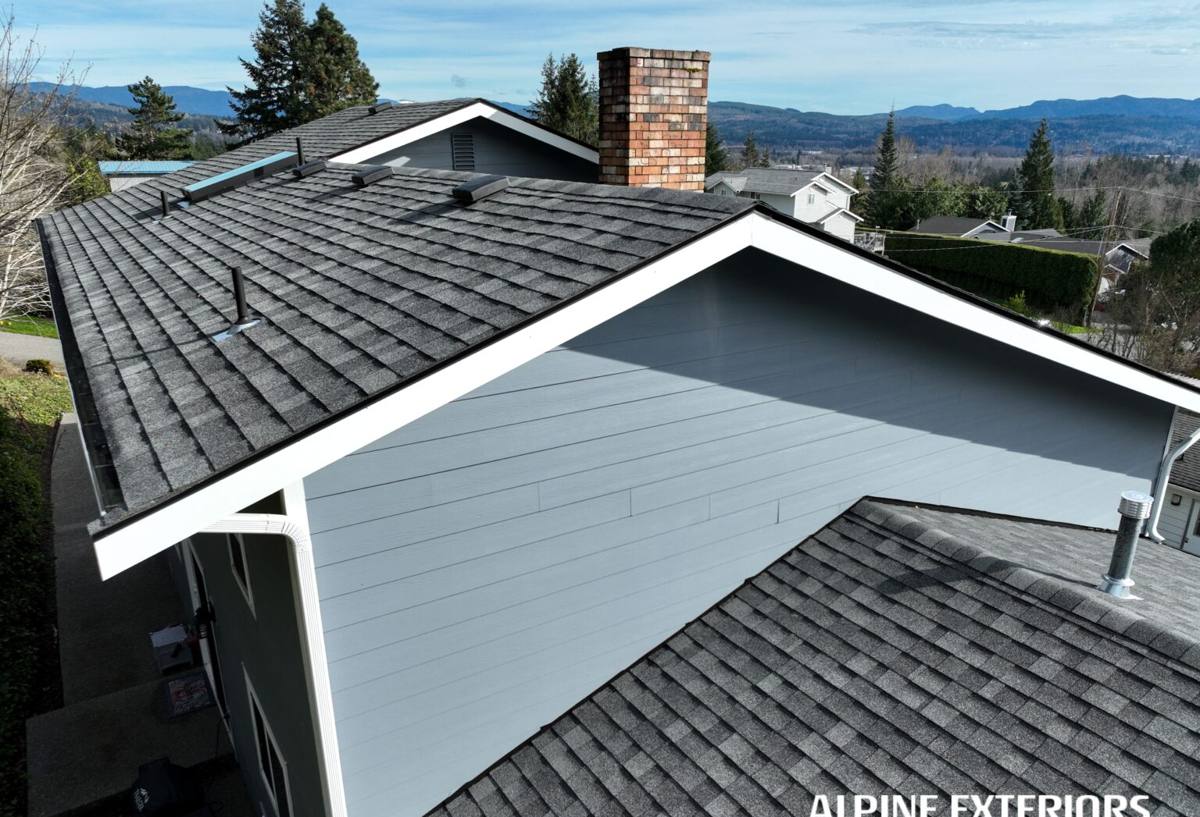
Why Local Climate Matters More Than Most Homeowners Realize
Salt Air and Metal Fatigue
Salt air accelerates corrosion on exposed metal — flashing, valley metal, nail heads, gutter fasteners. On homes closer to the water, we routinely find flashing that's pitted or thinned well before the shingles around it show any wear. A repair that reuses corroded flashing instead of replacing it is a repair that fails again within a season or two.
Driving Rain and Wind-Driven Moisture
Storms coming off the Strait of Georgia don't just fall straight down — wind pushes rain sideways and up under shingle edges, especially around dormers, chimneys, and low-slope transitions. Standard shingle coverage assumes mostly vertical rainfall. Homes exposed to driving rain need extra attention to underlayment laps, ice-and-water shield in vulnerable zones, and properly sealed exposed nail heads.
Moss and Tree Cover
Happy Valley's tree-lined lots keep roofs shaded and damp longer after every rain, which is exactly what moss needs to establish. Moss isn't just cosmetic — its root structure lifts shingle edges, holds water against the roof deck, and works granules loose over time. A roof that looks fine from the ground can have moss doing real damage underneath the mat.
What a Correct Roof Repair Actually Involves
A proper repair starts with figuring out why the roof failed in the first place, not just covering the symptom. We look at:
- The source of the leak — which is often several feet upslope from where water shows up inside the house
- Condition of the roof deck underneath — soft or delaminated sheathing needs to be addressed, not just covered
- Flashing at every penetration — chimneys, vent pipes, skylights, and roof-to-wall transitions
- Underlayment condition in the surrounding area, not just directly at the damage
- Moss and organic growth that may be trapping moisture nearby
- Gutter and downspout function, since backed-up water is one of the most common causes of "roof" leaks that are actually drainage problems
Skipping any of these steps means treating a symptom instead of the cause — which is how the same leak reappears a year later in a slightly different spot.
Common Repair Scenarios We Handle in Happy Valley
Flashing Failures
Chimney and valley flashing take the brunt of both salt exposure and driving rain. When flashing corrodes or was improperly sealed to begin with, water finds its way under the shingle field even though the shingles themselves are fine. This is one of the most common non-shingle causes of interior leaks we find on repair calls.
Moss-Related Shingle Damage
Where moss has been established for a season or more, we typically find lifted shingle edges and granule loss underneath the growth. Repair here means removing the moss carefully (not power-washing, which drives water and debris under the shingles), assessing the shingles for damage, and replacing what's compromised rather than just clearing the moss and leaving damaged material in place.
Wind and Storm Damage
Gusts off the water can lift shingle tabs or work fasteners loose, especially on roof faces with less tree buffering. These repairs are usually straightforward if caught early — left alone, a lifted tab becomes a wind-driven-rain entry point through the next storm.
Valley and Low-Slope Leaks
Roof valleys collect the most water volume on any roof, and low-slope sections common on additions or dormers are the most vulnerable to wind-driven rain intrusion. These areas need closed or metal-lined valley construction and careful underlayment work — a patch job here rarely holds.
Repair Approach Comparison
| Approach | What It Solves | Where It Falls Short |
|---|---|---|
| Surface patch / sealant only | Stops an active leak temporarily | Doesn't address deck moisture or flashing corrosion underneath; short lifespan |
| Spot shingle replacement | Fixes isolated storm or wear damage | Won't catch flashing failures nearby unless inspected separately |
| Flashing replacement with matched shingle repair | Addresses the actual leak source at penetrations and valleys | Requires removing surrounding shingles carefully to tie in correctly |
| Moss treatment + damaged shingle replacement | Removes the ongoing moisture trap and repairs existing damage | Needs follow-up maintenance to prevent regrowth in shaded areas |
| Deck repair + full section re-roof | Necessary when sheathing has soft spots or rot | More involved and costly than a standard repair, but the only real fix once the deck is compromised |
Our Repair Process
- Inspection. We check the whole roof, not just the reported leak location — because the entry point and the interior symptom are often in different places.
- Diagnosis and explanation. We tell you what's actually wrong, in plain terms, before any work starts.
- Scoped estimate. You get a clear picture of what's included and why, so there's no guessing about what you're paying for.
- Repair. Flashing, decking, underlayment, and shingle work done to match the existing roof as closely as possible.
- Cleanup and check. Debris and moss removal, gutters checked for clear drainage, and a final look to confirm the fix holds under the next rain.
Cost Factors for Roof Repair
Every roof is different, but the price of a repair generally depends on a handful of factors rather than a flat rate:
| Factor | Why It Affects Cost |
|---|---|
| Extent of deck damage | Soft or rotted sheathing must be replaced before new roofing goes back on |
| Roof pitch and access | Steeper or harder-to-access roof sections take more time and safety setup |
| Flashing vs. shingle-only repair | Flashing work involves more tear-back and precise tie-in to existing material |
| Moss and organic buildup | Heavier growth requires careful removal before damage can even be assessed |
| Material matching | Matching older or discontinued shingle colors/profiles can take longer to source |
We give a straightforward estimate after inspection rather than a phone-quote guess, because two roofs with the same square footage can need very different work depending on what's actually happening underneath.
Why a Crew That Works Happy Valley Regularly Matters
A roofer who works this specific area knows what to check first: the flashing condition on homes with bay exposure, the shaded roof faces where moss builds fastest, and the valley and low-slope details that take the worst of wind-driven rain. That's not something you can fully judge from a listing of services — it comes from having been up on enough Bellingham roofs to know where the trouble usually starts.
Local also means accountability. A contractor working across Whatcom County day to day has a reputation in the community to protect and is easy to reach if something needs a second look after the repair. That matters more with roofing than almost any other exterior work, since problems don't always show up until the next hard rain.
Simple Maintenance Checklist for Happy Valley Homeowners
- Clear moss and debris from shaded roof sections at least once a year, ideally before the wet season starts
- Keep gutters and downspouts clear — clogged drainage is one of the most common causes of "roof" leaks
- Check flashing around chimneys and vents for rust or lifting after major storms
- Trim back tree limbs that keep sections of the roof shaded and damp
- Look for interior water stains after heavy wind-driven rain events, even if nothing is visibly wrong outside
- Have a professional inspection every couple of years, even without a known leak, since flashing and deck issues aren't always visible from the ground
Get an Honest Look at Your Roof
If you're dealing with a leak, spotting moss buildup, or just want a second opinion before a small issue becomes a bigger one, we're glad to take a look. We'll give you a straight assessment of what's actually going on and what it would take to fix it right — no pressure, no upsell. Fill out the form below for a free estimate.