 Bellingham Exterior
 Siding That Has to Work Year-Round in Birchwood
Birchwood homes sit inside one of the more demanding siding environments in Whatcom County. You get moist Pacific air pushing in off Bellingham Bay, long stretches of driving rain through fall and winter, and a moss season that can run most of the year on shaded north- and west-facing walls. Add in the salt content that travels with coastal air even a few miles inland, and you have a combination that punishes siding materials that aren't built for it. Paint fails early. Seams open up. Wood-based products swell, split, or start hosting moss and mildew within a few seasons of a fresh coat of paint.
This page is specifically about installing James Hardie fiber cement siding on Birchwood homes — what the climate demands, what a correct installation actually involves, and why a crew that already works this neighborhood catches problems that an out-of-town or one-time crew often misses.
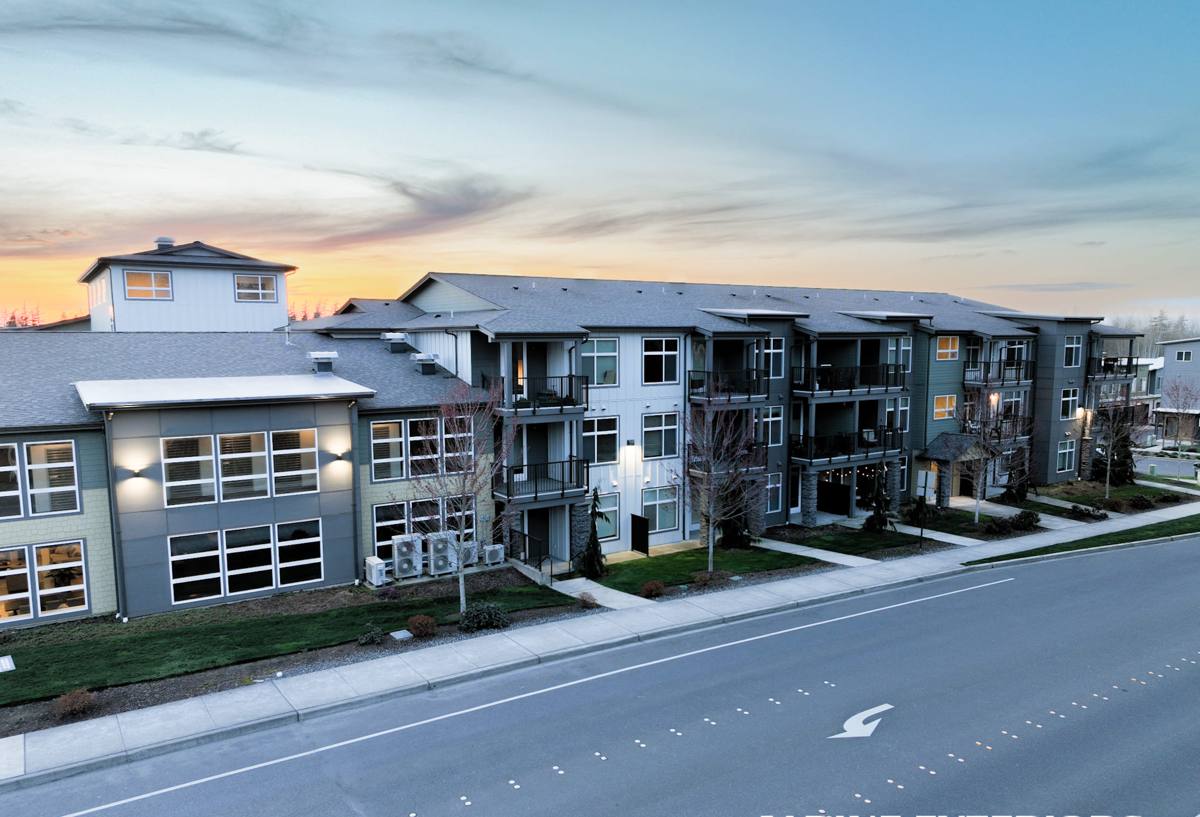
Why Birchwood's Climate Is Harder on Siding Than It Looks
Whatcom County doesn't get hurricanes or extreme heat, so it's easy to underestimate what the local climate does to a building envelope over time. The real damage comes from slow, repeated exposure rather than any single storm:
Moisture That Never Fully Dries Out
Long stretches of low-intensity rain, combined with limited summer sun on shaded elevations, mean some wall sections stay damp for days at a time. Materials that absorb water — or that rely on a paint film to keep water out — are working against the climate from day one.
Moss and Organic Growth
Moss doesn't just look bad. It holds moisture against the siding surface, and on porous or wood-based materials that moisture eventually finds its way into seams, fastener holes, and end cuts. A moss season that runs eight months or more out of the year means this isn't an occasional cleaning issue — it's a constant condition the siding has to tolerate.
Salt Air and Coastal Exposure
Homes in and around Bellingham don't have to sit on the waterfront to feel the effects of salt-laden air. Salt accelerates corrosion on fasteners and trim, and it degrades lower-quality paint and coatings faster than inland exposure would. Over years, that shows up as chalking, fading, and premature caulk failure.
Why We Install Only James Hardie Fiber Cement
We don't install vinyl siding, LP SmartSide, Cemplank, Allura, primed spruce, or cedar. That's a deliberate standard, not a lack of options. Each of those products has legitimate strengths, but in a climate like Birchwood's, each also comes with a real-world weakness that we've decided isn't worth putting on a customer's home:
| Material | Where It Struggles Locally | Typical Maintenance Burden |
|---|---|---|
| Vinyl siding | Can warp or crack in temperature swings; seams allow moisture behind the panel with no rigid backing | Low, but limited lifespan and repair often means visible mismatched panels |
| LP SmartSide (engineered wood) | Wood-strand core is vulnerable if the factory coating is breached; edges and cuts need diligent sealing | Moderate — periodic caulk and touch-up inspection |
| Cedar / primed spruce | Natural wood absorbs moisture, is a prime host for moss and mildew, and needs repainting on a real cycle | High — repainting, moss treatment, and rot monitoring |
| Cemplank / Allura (other fiber cement) | Similar core material to Hardie, but without Hardie's climate-specific HZ engineering or ColorPlus finish track record | Low to moderate, depending on finish quality |
| James Hardie fiber cement | Engineered for wet climates; non-combustible; factory finish resists moisture and UV | Low — periodic rinsing and inspection |
James Hardie's fiber cement is cement, sand, and cellulose fiber — not wood, not vinyl. It doesn't absorb water the way wood does, it won't warp the way vinyl can in a hard freeze-thaw cycle, and it's non-combustible, which matters increasingly to insurers across Washington. The ColorPlus factory finish is baked on under controlled conditions rather than field-painted, which gives it far more consistent moisture and UV resistance than a job-site paint job — a real advantage in a place where the siding rarely gets a long dry stretch to cure a fresh coat properly.
The Right Hardie Product Line for a Birchwood Home
James Hardie engineers its siding by climate zone, and this region calls for the HZ5 line, built for areas with significant moisture exposure and freeze-thaw cycling. Within that line, most Birchwood homes are well served by:
- HardiePlank lap siding — the most common choice, available in several exposure widths and textures, and the workhorse product for most home styles in the neighborhood
- HardieShingle siding — for homes wanting a shingle or shake look without the moisture problems of real wood shingles
- HardieTrim boards — used around windows, doors, corners, and fascia to match the durability of the field siding instead of pairing it with a wood trim that will fail on a different timeline
- HardiePanel vertical siding — used selectively for accent sections, gables, or contemporary designs
Color selection matters too. ColorPlus finishes are formulated to hold up under UV and moisture exposure far longer than field-applied paint, and because the color is baked on at the factory, touch-up product is formulated to match rather than approximated on site.
What a Correct Installation Actually Involves
Fiber cement siding is only as good as the installation behind it. Most of the siding failures we get called out to inspect on older homes aren't a materials problem — they're an installation problem that the climate eventually exposed. A correct Hardie install in this climate includes:
Water Management Behind the Siding
A weather-resistant barrier and properly lapped flashing at every window, door, and penetration — installed so water that gets behind the cladding has somewhere to go rather than sitting against the sheathing.
Correct Fastening and Clearances
Hardie specifies fastener type, spacing, and minimum clearance from grade, roof lines, and horizontal surfaces like decks and patios. Skipping these clearances is one of the most common shortcuts that leads to moisture problems years later, even with a top-tier material.
Properly Sealed Joints and Cuts
Factory edges are pre-sealed, but every field cut exposes the raw substrate. Cut ends need to be sealed before installation, and joints need the right gap and caulk — not just for appearance, but because unsealed cuts are where moisture finds its way in first.
Rainscreen or Drainage Gap Where Appropriate
On walls with heavy rain exposure or limited drying potential, a drainage gap behind the siding gives any incidental moisture a path to escape instead of trapping it against the wall assembly — a detail that matters more in a climate like this than in a drier region.
Our Process on a Birchwood Job
- On-site assessment — we look at the existing siding, sheathing condition, moisture history, and any trouble spots specific to the home's orientation and exposure
- Product and color selection — matching the right Hardie product line, exposure, and ColorPlus color to the home's style and the site's moisture and sun exposure
- Removal and substrate check — old siding comes off and we inspect the sheathing underneath before anything new goes up; hidden rot or moisture damage gets addressed before it's covered over again
- Weather barrier and flashing installation — the water-management layer that determines how the home performs over the next several decades, not just the next few years
- Siding installation to Hardie's fastening and clearance specifications — including trim, corners, and any transitions
- Final inspection and cleanup — checking seams, caulk lines, and clearances before we consider the job finished
Living With Hardie Siding in a Moss-Prone, Salt-Air Climate
Hardie siding is low-maintenance, not no-maintenance. In Birchwood's climate, a simple annual routine keeps it performing the way it's designed to:
- Rinse the siding once or twice a year, focusing on shaded, north-facing, and tree-covered walls where moss and mildew are most likely to establish
- Keep gutters clear so overflow doesn't run down the face of the siding and keep it perpetually damp
- Trim back vegetation and tree limbs that hold moisture against the wall or shade a section so it never fully dries
- Check caulk lines at trim and penetrations every year or two, and re-caulk before a gap becomes an entry point for water
- Watch for chalking or fading on sun- and salt-exposed elevations, and address it early rather than letting it progress
None of this is heavy lifting compared to what wood or vinyl siding demands in the same conditions — that's the point of the material — but skipping it entirely will shorten the life of any siding product, including this one.
Why a Crew That Already Works Birchwood Makes a Difference
Installation quality is the single biggest variable in how long siding lasts, and local experience shapes that quality in ways that are hard to substitute. A crew that has worked homes in this specific neighborhood already knows which elevations take the worst weather, where moss tends to establish first, and how the area's moisture load should change flashing and drainage decisions compared to a drier part of the state. That's knowledge you don't get from a manufacturer's install manual alone — it comes from having done the work here, on homes with the same exposure, the same rain patterns, and the same building stock.
It also means a shorter feedback loop if anything ever needs a follow-up look. A contractor who works Bellingham and greater Whatcom County regularly isn't traveling in from out of the area for a warranty check or a minor adjustment.
Signs Your Birchwood Home May Be Ready for Hardie Siding
- Visible paint failure, chalking, or fading that returns within a year or two of repainting
- Soft spots, swelling, or visible rot at seams, corners, or the bottom edge of the siding
- Persistent moss or mildew staining that comes back quickly after cleaning
- Warped, cupped, or separating panels or boards
- Rising energy bills that may point to a compromised weather barrier behind aging siding
- Siding that's simply reached the end of its practical service life and is due for replacement regardless of visible damage
Warranty and Long-Term Value
James Hardie backs its fiber cement products with a strong, transferable limited warranty, and ColorPlus finishes carry their own separate finish warranty — a structure built around the fact that the factory finish, not a field-applied coat, is doing the long-term work of protecting the board. For a Birchwood homeowner, that combination of non-combustible material, climate-engineered HZ5 product, and a factory finish built to hold color and resist moisture is what makes Hardie the product we're willing to put our name behind, and the reason we don't install alternatives that ask a homeowner to accept more maintenance or more risk for a lower upfront cost.
If your Birchwood home's siding is showing its age, or you're planning ahead for a replacement, we're happy to take a look and walk you through what correct James Hardie installation would involve for your specific home. Fill out the form below for a free, no-pressure estimate.