 Bellingham Exterior
 Why Birchwood Siding Takes a Different Approach Than Inland Jobs
Birchwood sits close enough to Bellingham Bay and the surrounding waterways that homes here deal with a specific combination of stresses most inland Whatcom County properties don't see as intensely: salt-laden air, wind-driven rain that gets pushed sideways into wall assemblies, and a moss and algae season that can run most of the year in shaded, north-facing spots. None of this is dramatic on its own. It's the accumulation over years — moisture that never fully dries out between storms, siding finishes that chalk and fade faster near the water, fasteners and trim that corrode ahead of schedule — that separates a siding job that looks fine at year three from one that's still performing at year twenty.
A correct installation in this neighborhood isn't just about nailing boards to a wall. It's about choosing a material and a set of installation details that account for how much moisture this climate actually throws at a house, year after year, and how that moisture wants to move once it's behind the cladding.
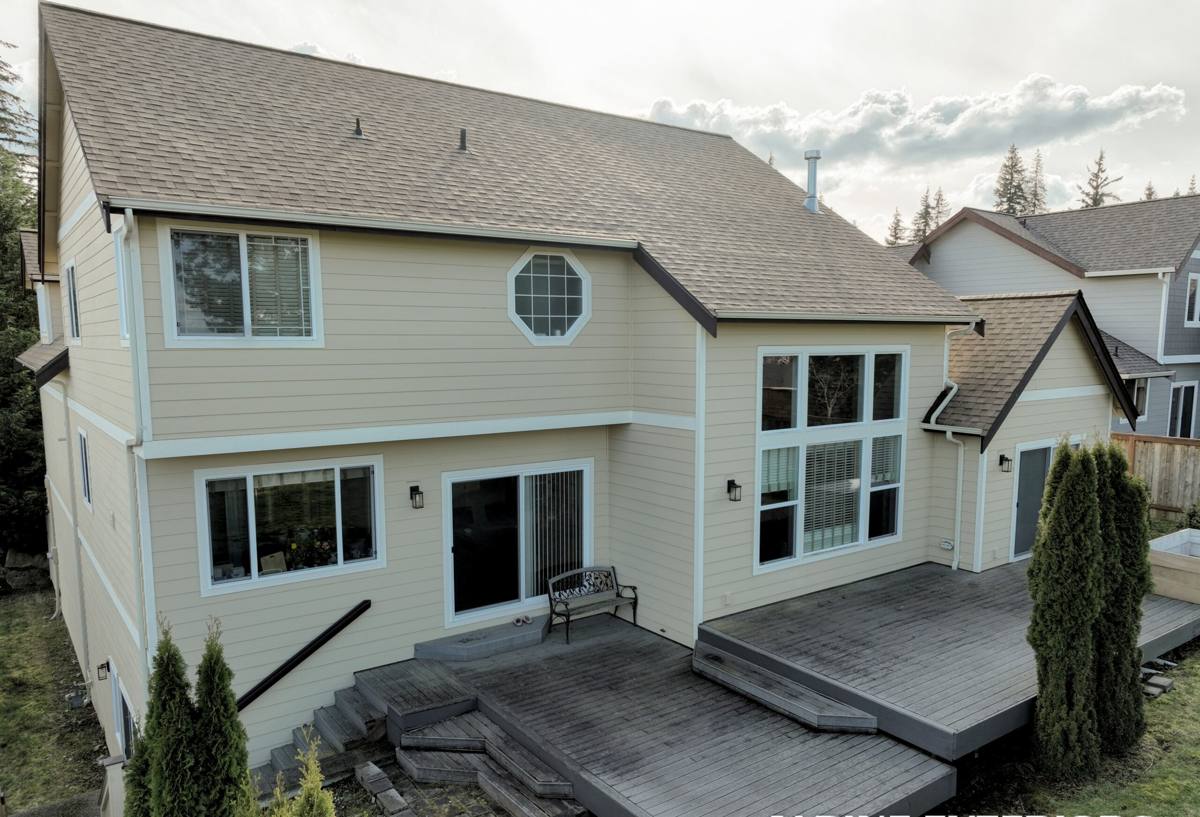
What Correct Siding Installation Actually Involves
The Weather-Resistive Barrier and Flashing Come First
Siding itself is the least important layer for keeping a house dry — it's the first line of defense against wind and impact, but the weather-resistive barrier behind it, and the flashing at every window, door, deck ledger, and roofline intersection, is what actually stops water from reaching the sheathing. In a climate with as much driving rain as this one, gaps or shortcuts in flashing details are where problems start. We install and lap house wrap correctly, flash every penetration, and make sure water has a clear path down and out rather than a place to pool or wick sideways into the wall.
Fastening and Clearances Matter More Near the Water
Fiber cement siding has specific fastening requirements — nail type, spacing, and placement all affect how the material performs over time, and getting them wrong is one of the most common causes of premature cracking or fastener pop. Ground clearance and clearance from roof lines, decks, and hardscaping also matter more here than in a drier climate, because any spot where siding sits too close to grade or a roof surface is a spot that stays wet longer and invites moss growth.
Caulking and Trim Details Are Where Jobs Fail Early
Most premature siding failures aren't a material problem — they're a joint that wasn't sealed correctly, a butt joint that wasn't backed properly, or trim that was caulked instead of flashed. We treat these details as structural, not cosmetic, because in a wet climate a bad joint is a slow leak, not a maybe.
Why We Install James Hardie Fiber Cement — And Nothing Else
This company made a deliberate decision to install only James Hardie fiber cement siding. We don't install vinyl, LP SmartSide, or other fiber cement brands, and that's not a marketing position — it's a standard we hold because of what this climate does to siding over a 15-, 20-, and 30-year timeline. James Hardie's HZ product lines are engineered specifically for climate zones like ours, meaning the formulation is designed to handle sustained moisture exposure without the swelling, delamination, or edge deterioration that can affect wood-based composite products in wet regions. Fiber cement is also non-combustible, which matters for wildfire-adjacent insurance considerations even this far north and west.
The ColorPlus factory finish is a meaningful part of why we standardized on Hardie for a neighborhood like this one. A factory-applied, baked-on finish holds color and resists the chalking and fading that field-applied paint shows first, especially on siding that's constantly getting rinsed by rain and exposed to salt air. It also gives homeowners a real, transferable warranty on both the substrate and the finish — something that matters when you're making a 20-plus-year investment in the exterior of a home this close to the water.
Choosing the Right Hardie Product for a Birchwood Home
Lap Siding
HardiePlank lap siding is the most common choice for this kind of home — it gives a traditional horizontal profile, comes in a range of widths and textures, and is available in the HZ5 formulation built for our climate zone specifically.
Panel and Shingle Options
Some homes benefit from HardiePanel vertical siding on gable ends or accent areas, or HardieShingle for a more textured, traditional look on porches and dormers. The right mix depends on the home's architecture and how much of the wall is exposed to direct weather versus sheltered areas.
ColorPlus vs. Field-Applied Paint
We steer most Birchwood homeowners toward ColorPlus factory finishes rather than primed siding that gets painted on site. The factory process bonds color more consistently and holds up longer against UV and moisture exposure than a field-applied coat, which typically needs repainting well before a ColorPlus finish needs attention.
Our Process From Estimate to Finished Job
- Walkthrough and assessment — we look at the existing siding, sheathing condition, trim, and flashing details, and identify any areas with moisture damage before we ever talk about product.
- Honest tear-off recommendation — if there's rot or trapped moisture behind the existing siding, we don't cover it up. It gets addressed before new siding goes on, because installing over a compromised wall just hides the problem.
- Weather barrier and flashing installation — house wrap, flashing at every penetration, and proper laps before a single piece of siding goes up.
- Siding installation to manufacturer spec — correct fastening, clearances, and joint treatment, following James Hardie's installation instructions rather than shortcuts that might look fine initially.
- Trim, caulking, and detail work — the finish details that determine how the job performs in year five, not just how it looks on day one.
- Final walkthrough — we go over the finished work with the homeowner and make sure everything meets what was promised in the estimate.
Common Issues We Find on Older Birchwood Siding
When we're called out to look at existing siding in this area, a handful of patterns show up repeatedly. Moss and algae staining tends to concentrate on north- and west-facing walls and anywhere siding sits close to trees or fencing that blocks sun and airflow. Older caulk joints fail well before the siding material itself does, and once that happens, water gets behind boards and stays there longer than it should in a climate that doesn't dry out quickly. We also regularly find siding that was installed with insufficient ground clearance, which keeps the bottom courses damp far more of the year than the rest of the wall. None of these are unusual problems — they're the predictable result of a wet, coastal-influenced climate combined with installation details that didn't account for it.
What Drives the Cost of a Siding Installation
Every home is different, but the same handful of factors tend to move the price up or down on a Birchwood siding job:
| Factor | Why It Matters |
|---|---|
| Tear-off vs. new construction | Removing and disposing of old siding, plus repairing any sheathing damage found underneath, adds labor and material cost |
| Home size and stories | More square footage and multi-story walls mean more material, more labor, and often more scaffolding or lift access |
| Trim and architectural detail | Gables, dormers, bump-outs, and decorative trim take more time to flash and finish correctly than a simple rectangular wall |
| Product line and finish | Panel and shingle accents, wider plank profiles, and ColorPlus finish tiers vary in material cost |
| Access and site conditions | Tight lots, mature landscaping, or limited equipment access can add time to a job |
We walk every factor through with homeowners during the estimate so there aren't surprises once work starts.
Maintaining Your Siding After Installation
Fiber cement siding is low-maintenance compared to wood or vinyl, but "low-maintenance" isn't "no-maintenance," especially in a climate that stays damp for large stretches of the year. A few habits go a long way:
- Rinse siding down once or twice a year, especially on shaded sides, to slow moss and algae buildup before it takes hold
- Keep gutters clear so overflow doesn't run down the face of the siding repeatedly
- Trim back trees and shrubs that keep siding shaded and damp longer than necessary
- Check caulking at trim joints and penetrations every couple of years and have any failing joints resealed promptly
- Inspect after major storms for impact damage, since fiber cement resists most weather but can chip from debris strikes
Why a Crew That Already Works Birchwood Matters
Siding installation isn't one-size-fits-all, even within a single city. A crew that regularly works in Birchwood and the surrounding Bellingham area already understands how wind and rain exposure varies from a waterfront-adjacent lot to a more sheltered inland block, what permitting through the City of Bellingham and Whatcom County typically involves, and which details tend to get overlooked on homes built to older code standards. That familiarity translates into fewer surprises during the job and a finished exterior that's actually built for the conditions it has to survive here, not for a generic climate zone.
If you're weighing a siding replacement or new installation for a Birchwood home, we're happy to walk the property with you, look at what's there now, and give you a straight assessment of what it needs. Reach out for a free, no-pressure estimate — there's no obligation, and you'll leave the conversation with a clearer picture of your options either way.