 Bellingham Exterior
 Roofing in Birchwood: A Climate That Doesn't Cut Roofs Any Slack
Birchwood sits close enough to Bellingham Bay that salt-laden air reaches its rooftops, and far enough into the Pacific Northwest's rain belt that most homes see well over 30 inches of rain a year, a lot of it driven sideways by wind off the water. Add the mature tree canopy that shades much of the neighborhood and you get the third ingredient: moss. Together, salt air, driving rain, and a long moss season put more stress on a roof here than in drier, sunnier parts of the country, and they do it every year, not just during storms.
A new roof installed for Birchwood needs to be built with all three of those conditions in mind from the start, not retrofitted after the first leak. That means paying close attention to fasteners and metals that resist corrosion, underlayment and flashing details that shed wind-driven rain instead of just shingles laid flat and hoping for the best, and material choices that don't turn into a moss farm within a few years of installation.
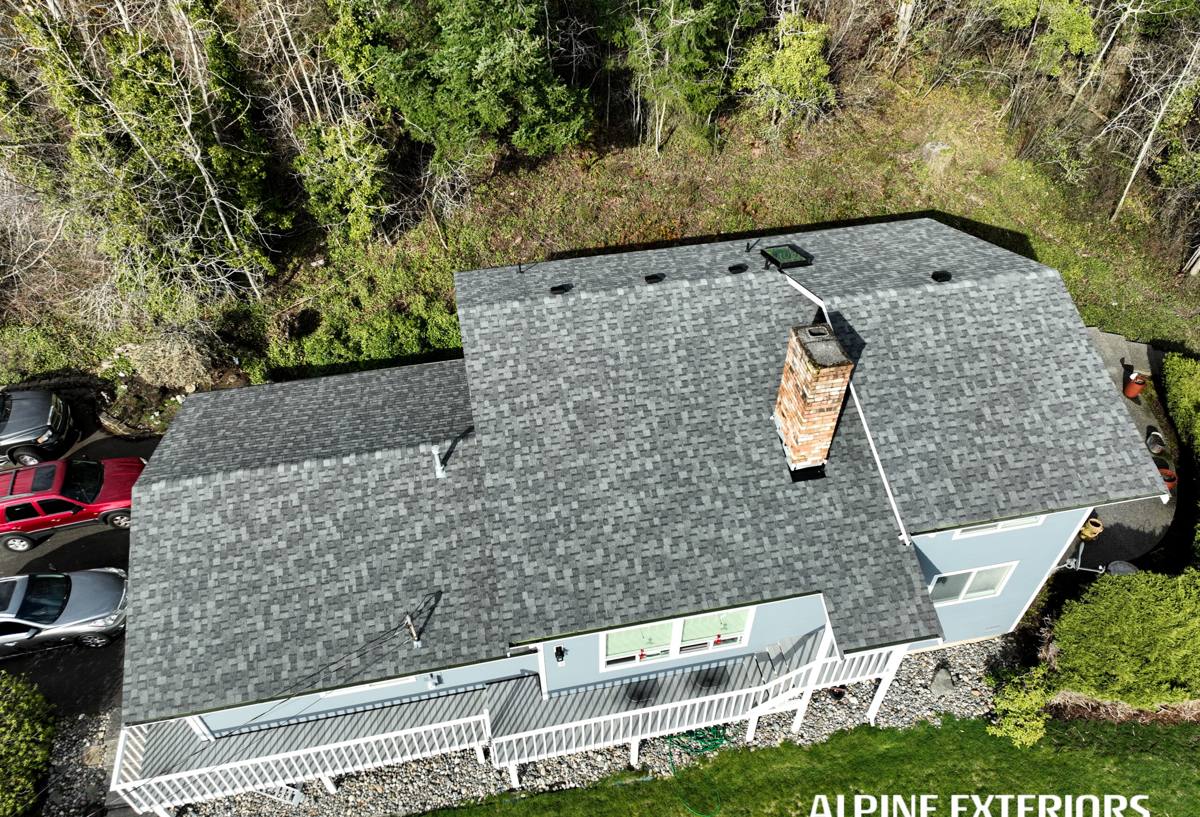
What a Correct New Roof Installation Actually Involves
A roof replacement is more than swapping old shingles for new ones. The work that happens underneath and around the visible surface is what determines whether the roof performs for its full expected life or starts causing problems in year five.
Full Tear-Off and Deck Inspection
We remove the old roofing down to the deck on every new roof install, rather than layering over existing material. That's the only way to see the actual condition of the sheathing underneath. In Birchwood, where damp shade and moss are common, it's not unusual to find soft or delaminated plywood under an old roof, especially around valleys, chimneys, and eaves where moisture has been sitting. Any compromised decking gets replaced before a single new shingle goes down, since installing new roofing over a weak deck just hides the problem for a while.
Underlayment and Water-Entry Protection
Given how much wind-driven rain this area sees, we don't treat underlayment as an afterthought. Self-adhered ice-and-water membrane goes in the vulnerable spots — eaves, valleys, around penetrations, and low-slope sections — with synthetic underlayment covering the rest of the deck. This layer is what protects the house if wind ever drives rain up under the shingles, which happens more often here than most homeowners realize.
Flashing at Every Transition
Chimneys, skylights, sidewalls, and roof-to-wall transitions are where roofs actually fail; the field of shingles rarely leaks on its own. We install new step flashing, counter-flashing, and valley metal on every replacement rather than reusing old, corroded pieces. In a salt-air environment, flashing metal choice matters: some metals corrode faster near the water than others, and using the wrong one shortens the life of an otherwise good roof.
Ventilation That Matches the Climate
A roof that can't breathe traps moisture in the attic, which speeds up sheathing rot and, indirectly, moss growth on the underside of the deck. We size intake and exhaust ventilation to the specific roof, balancing soffit vents with a ridge vent or properly spaced box vents, rather than installing whatever was there before out of habit.
Choosing the Right Roofing Material for This Climate
Every roofing material has trade-offs. Our job is to lay those out honestly so a Birchwood homeowner can choose based on their budget, their home's sun or shade exposure, and how much maintenance they're willing to do, not based on a sales pitch.
| Material | How It Handles Salt Air & Rain | Moss & Algae Behavior | Typical Lifespan |
|---|---|---|---|
| Architectural asphalt shingles (algae-resistant) | Good with proper flashing and corrosion-resistant fasteners | Copper- or zinc-infused granules slow algae staining; still needs periodic moss removal in shaded areas | 25–30 years |
| Standing-seam metal | Excellent when finished and fastened correctly; sheds rain fast | Smooth surface resists moss better than any other option | 40–50+ years |
| Cedar shake | Attractive but needs consistent upkeep in wet, shaded conditions | Most moss-prone option; requires regular treatment and cleaning | 20–25 years with upkeep |
| Synthetic composite shingles | Good corrosion resistance since fasteners are concealed | Comparable to algae-resistant asphalt | 30–50 years |
We don't push cedar shake for heavily shaded Birchwood lots — not because it's a bad product, but because the maintenance burden it carries in a wet, tree-covered climate is real, and most homeowners underestimate it until they're the ones scraping moss off a ladder every spring. If a homeowner wants that look and understands the upkeep, we'll install it correctly. Otherwise, algae-resistant architectural shingles or standing-seam metal are usually the better match for how this neighborhood actually experiences weather.
Building In Moss and Salt-Air Resistance From Day One
Moss doesn't just sit on top of a roof — its root structure holds moisture against the shingle surface, and over years that moisture works its way into the mat and the deck below. The best defense is designed in during installation, not added after moss shows up.
- Copper or zinc strips at the ridge, which release trace metal ions that wash down the roof with every rain and discourage moss regrowth
- Algae-resistant shingle granules on any asphalt roof, which resist the staining common under Bellingham's tree cover
- Corrosion-resistant fasteners and flashing throughout, since standard fasteners degrade faster this close to salt water
- Adequate roof pitch and proper valley design so water and debris don't sit and collect in low spots
- Trim recommendations for overhanging branches where practical, since shade and leaf litter are what let moss take hold in the first place
None of this makes a roof moss-proof forever — nothing does in this climate — but it buys years of extra life and cuts down on how often a homeowner needs moss professionally removed.
Our Installation Process, Start to Finish
- On-site inspection and estimate. We look at the existing roof, attic ventilation, and any problem areas before quoting, rather than pricing off square footage alone.
- Material selection. We walk through the options above with the home's actual pitch, shade exposure, and budget in mind.
- Permitting. We handle the paperwork required for the job so the homeowner isn't left tracking it down.
- Tear-off and deck repair. Old roofing comes off, the deck is inspected, and any soft or damaged sheathing is replaced.
- Underlayment, flashing, and ventilation installed. This is the part of the job that doesn't show once the roof is finished, and it's the part that matters most for how the roof performs in wind-driven rain.
- New roofing installed to manufacturer specification. Nail patterns, exposure, and fastening all follow the manufacturer's requirements, which is what keeps warranties valid.
- Cleanup and final walkthrough. The job site and gutters are cleared of debris, and we walk the finished roof with the homeowner.
Signs a Birchwood Roof May Need Replacement, Not Repair
Not every roofing issue calls for a full replacement, but certain signs mean patching is just delaying a bigger job.
- Granules collecting in gutters and downspouts in noticeable amounts
- Shingles cupping, curling, or cracking across large sections of the roof
- Soft spots or sagging visible from inside the attic or from the ground
- Moss or algae growth that returns quickly after cleaning
- Daylight visible through the roof deck from inside the attic
- A roof already at or past its material's expected lifespan, especially if it's never been re-flashed
- Recurring leaks in the same spot despite prior repairs
Why Local Experience in Birchwood Matters
A crew that's worked roofs across Bellingham and Whatcom County knows which details actually matter here versus what a generic installation guide assumes for a drier climate. That shows up in small decisions — which underlayment to prioritize in shaded valleys, how much extra flashing to add at a north-facing wall that never fully dries out, which fastener spec holds up closest to the water. None of that is exotic knowledge, but it only comes from doing the work in this specific climate, on this kind of terrain, repeatedly.
It also means knowing what doesn't need to be oversold. Not every home in Birchwood needs the most expensive material on the market; plenty of homes do perfectly well with a well-installed algae-resistant asphalt roof and correct flashing, and we'll say so.
What a New Roof Typically Costs
Exact pricing depends on roof size, pitch, tear-off complexity, and material choice, but the factors below give a general sense of where cost comes from on a typical Birchwood home.
| Cost Factor | Why It Moves the Price |
|---|---|
| Roof size and number of layers to remove | More tear-off labor and disposal, especially with multiple existing layers |
| Roof pitch and accessibility | Steeper or harder-to-access roofs require more time and safety equipment |
| Material selection | Asphalt, metal, and cedar carry very different material and labor costs |
| Deck repair needs | Rot or delamination found during tear-off adds material and labor |
| Flashing and ventilation upgrades | Bringing older flashing and ventilation up to current standards adds upfront cost but reduces future repairs |
We provide a written estimate that breaks these factors out, rather than a single lump-sum number, so a homeowner can see exactly what they're paying for.
If your Birchwood roof is showing its age, or you just want a straight answer on whether it needs repair or full replacement, we're happy to take a look. Use the form below to request a free, no-pressure estimate.