 Bellingham Exterior
 Metal Roofing in Birchwood: What the Climate Actually Demands
Birchwood sits inside the same weather pattern that shapes every exterior decision in Bellingham and across Whatcom County: salt-laden air moving in off the water, rain that arrives sideways as often as it falls straight down, and a moss season that runs longer here than almost anywhere else in the state. A roof in this neighborhood isn't dealing with an occasional hard storm — it's dealing with sustained, low-grade exposure to moisture and salt, month after month, year after year. That's the environment any roofing material has to survive, and it's why the right choice of material and installation detail matters more here than it would somewhere drier.
Metal roofing has become a common choice for homeowners in this part of Whatcom County precisely because it holds up well against that combination when it's specified and installed correctly. This page focuses specifically on what metal roofing means for Birchwood homes — not roofing in general, and not metal roofing in a generic climate, but what a correct metal roof looks like on a house dealing with Bellingham's particular mix of salt, rain, and moss.
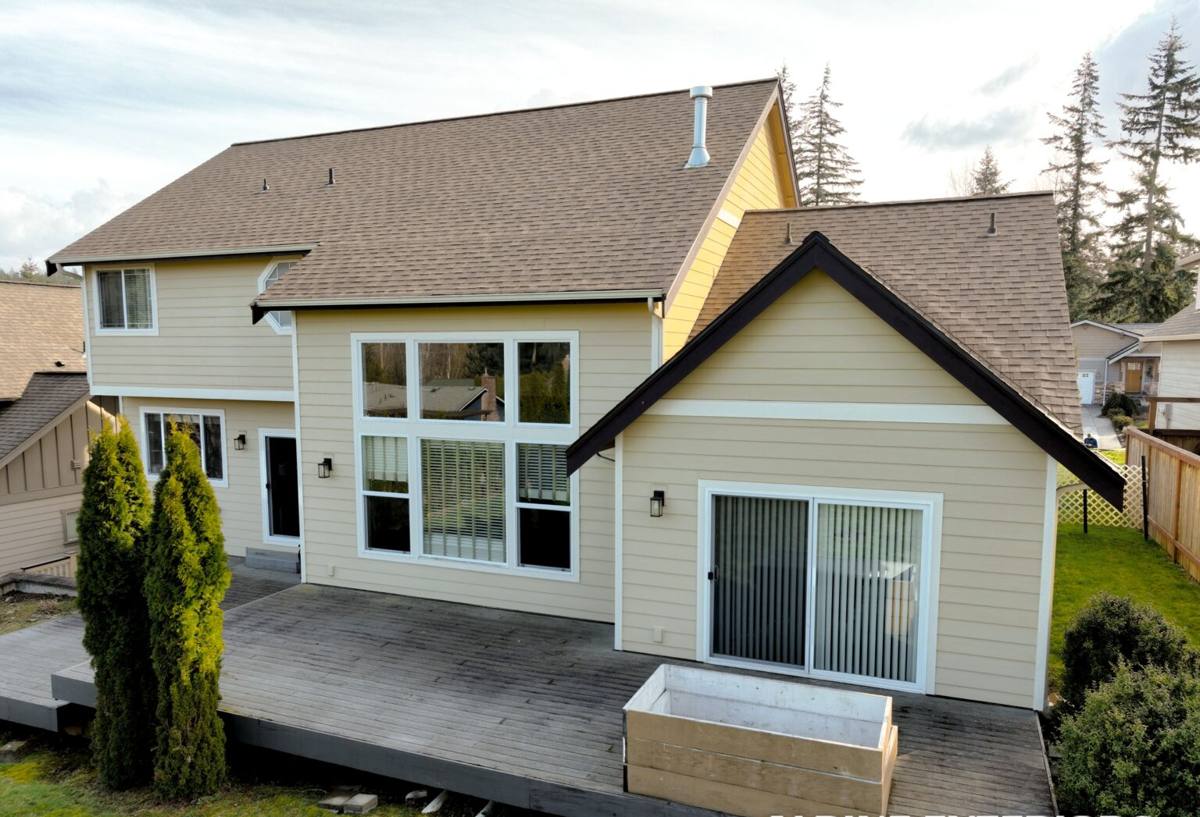
What Salt Air, Driving Rain, and a Long Moss Season Do to a Roof
Salt Air and Metal Fatigue
Salt in the air doesn't stay near the water — it drifts inland and settles on every exposed surface, including roofing. On any metal roof, that means the coating system and the corrosion resistance of the base metal and fasteners matter far more than they would in an inland climate. A panel or fastener that isn't rated for coastal exposure can start showing surface corrosion years before it should, usually starting at cut edges, fastener heads, and anywhere the protective coating has been scratched or compromised during handling or installation.
Wind-Driven Rain and Where Roofs Actually Leak
Rain that's pushed sideways by wind behaves differently than a straight-down shower. It gets forced up under panel laps, around penetrations, and into any gap at flashing details that a calmer climate wouldn't stress-test as hard. Most roof leaks — metal or otherwise — don't happen out in the open field of the roof. They happen at transitions: valleys, chimneys, vent pipes, wall-to-roof intersections, and eaves. Wind-driven rain finds those weak points faster and more reliably than gravity alone would.
Moss, Debris, and Shaded Slopes
North-facing slopes, shaded valleys, and anything under tree cover stay damp longer through the fall, winter, and much of spring, which is exactly the condition moss needs to take hold. On a metal roof, moss itself doesn't root into the material the way it can on wood or asphalt, but moss and trapped debris still hold moisture against the surface, block proper drainage at valleys and eaves, and can accelerate coating breakdown or corrosion in the spots where it collects. A roof design that ignores drainage and airflow on shaded slopes is setting up a maintenance problem regardless of what material sits on top.
Why Metal Roofing Is a Strong Fit for This Climate
Done right, metal roofing addresses several of the specific pressures this climate creates. It sheds wind-driven rain efficiently because panels run in long continuous runs with far fewer seams and overlaps than shingle roofing. It doesn't absorb water the way wood shakes or aging asphalt can, so it doesn't feed moss growth the way a damp, porous surface does. And a quality coating system is built to resist UV and salt exposure over a long service life rather than needing repeated recoating.
Standing Seam vs. Exposed-Fastener Panels
Not all metal roofing is built the same way, and the difference matters most in exactly this kind of climate. Standing seam panels use concealed clips and interlocking seams, with no exposed fasteners punched through the panel face — which means no fastener heads for salt air to attack and no penetration points for wind-driven rain to work into over time. Exposed-fastener panels are less expensive up front but rely on gasketed screws driven through the panel face, and those gaskets and fasteners are the parts that eventually need attention as they age in a wet, salty environment. We walk homeowners through this trade-off honestly rather than defaulting to whichever system is cheaper to install.
What a Correct Metal Roof Installation Involves
Metal roofing performs the way it's engineered to only when the details underneath it are handled correctly. The panels themselves get the attention; the underlayment, flashing, and fastening details are what actually determine whether the roof stays watertight for decades or starts leaking within a few years.
- Correct panel and coating specification rated for coastal, high-moisture exposure — not a generic inland-grade product
- A full synthetic or self-adhered underlayment as the roof's real waterproofing layer, since panels alone are not the final barrier
- Properly lapped and sealed flashing at every valley, penetration, chimney, and wall intersection
- Fastener type, spacing, and torque set to the panel manufacturer's actual specification, not shortcuts
- Ventilation and drainage planned for shaded or north-facing slopes where moss and standing moisture are most likely
- Clean, consistent panel seams and trim work, since gaps and misalignment are where wind-driven rain finds its way in
Skipping or rushing any one of these steps can undercut the material's real-world performance, no matter how good the panels themselves are. This is the part of a metal roofing job that's easy to overlook from the ground and expensive to fix later if it's done wrong the first time.
Comparing Metal Roofing Options for Birchwood Homes
| Panel System | Performance in This Climate | Typical Trade-Off |
|---|---|---|
| Standing seam (concealed fastener) | No exposed fastener heads for salt air to attack; excellent water shedding at seams | Higher material and labor cost than exposed-fastener systems |
| Exposed-fastener panel | Sheds rain well in open field areas; performance depends heavily on gasket condition over time | Fasteners and gaskets are the maintenance point in a salt-air, high-rain environment |
| Steel with quality coating system | Strong corrosion resistance and coating durability when properly specified for coastal exposure | Coating quality varies significantly between product tiers |
| Aluminum | Naturally corrosion-resistant, a common choice directly along salt-exposed coastal areas | Generally a higher material cost than comparable steel systems |
Cost Factors on a Metal Roofing Project
Metal roofing costs more up front than asphalt shingles, and homeowners deserve a straightforward explanation of why, rather than a number without context. Broadly, most metal roof replacements land somewhere in the moderate-to-upper end of residential roofing costs, with the final number driven less by the metal itself and more by the specifics below.
| Cost Factor | Why It Moves the Price |
|---|---|
| Panel system chosen | Standing seam runs higher than exposed-fastener panel systems |
| Roof complexity | Valleys, dormers, and multiple roof planes add labor and flashing detail |
| Existing roof condition | Tear-off, decking repair, or structural issues found underneath add cost |
| Underlayment and flashing quality | Better waterproofing materials cost more but matter most in this climate |
| Access and roof pitch | Steep or hard-to-access roofs take longer and require more safety setup |
We give homeowners a specific, written number based on their actual roof — not a rough estimate pulled from a national average that doesn't account for Whatcom County conditions.
Our Process for Birchwood Metal Roofing Projects
We start with an on-site inspection of the existing roof, checking not just the surface but the decking, ventilation, and drainage underneath it, since a metal roof installed over compromised decking or poor ventilation will never perform to its potential. From there we walk the homeowner through panel and coating options honestly, including the real trade-offs between systems rather than steering toward whichever is easiest to install. Once a system is chosen, we handle tear-off if needed, underlayment, flashing, panel installation, and trim work to the manufacturer's actual specification — then walk the finished roof with the homeowner before calling the job done.
Maintenance: What Homeowners Should Expect After Install
A correctly installed metal roof in this climate is genuinely low-maintenance compared to most alternatives, but "low-maintenance" doesn't mean "no maintenance." Gutters and valleys should be kept clear of debris so water and moss have somewhere to go rather than pooling. Shaded and north-facing slopes are worth a periodic visual check for moss buildup, since catching it early is a five-minute cleanup rather than a bigger job. Beyond that, a quality metal roof installed to spec shouldn't need the recurring recoating, patching, or panel replacement that lower-grade systems often do within a decade or two.
Why Hiring a Crew That Already Works Birchwood Matters
A roofing crew that works regularly in Birchwood and the surrounding Bellingham area already understands how local wind exposure, tree cover, and drainage patterns tend to play out on real roofs in this neighborhood — not just in a manufacturer's spec sheet written for a national average climate. That familiarity shows up in decisions like where extra flashing attention pays off, which slopes need more ventilation planning, and how a given roof's orientation will actually perform through a full Whatcom County year. It's the difference between a roof that's technically installed correctly and one that's installed correctly for this specific place.
If you're weighing a metal roof for a Birchwood home, we're glad to walk the roof with you and put together a straightforward, no-pressure estimate — just fill out the form below to get started.