 Bellingham Exterior
 Why Birchwood Siding Wears Differently Than Siding Inland
Birchwood sits close enough to the water and the weather patterns that move through Whatcom County that its homes take a different kind of beating than a house forty miles inland. Salt-laden air off the Sound corrodes fasteners and finishes faster than plain moisture alone. Wind-driven rain doesn't just fall on siding here — it gets pushed sideways into laps, corners, and trim joints where standing water and slow-drying wood have time to do damage. And the long, gray stretch of fall through spring keeps north-facing and shaded walls damp for weeks at a time, which is exactly the environment moss, algae, and mildew need to take hold.
None of this means Birchwood is a bad place to own a home — it means the siding on that home has a harder job to do than siding in a drier climate. Products and installation details that are "good enough" elsewhere start to show their limits here within a handful of years. That's the lens we bring to every siding replacement we quote in this neighborhood.
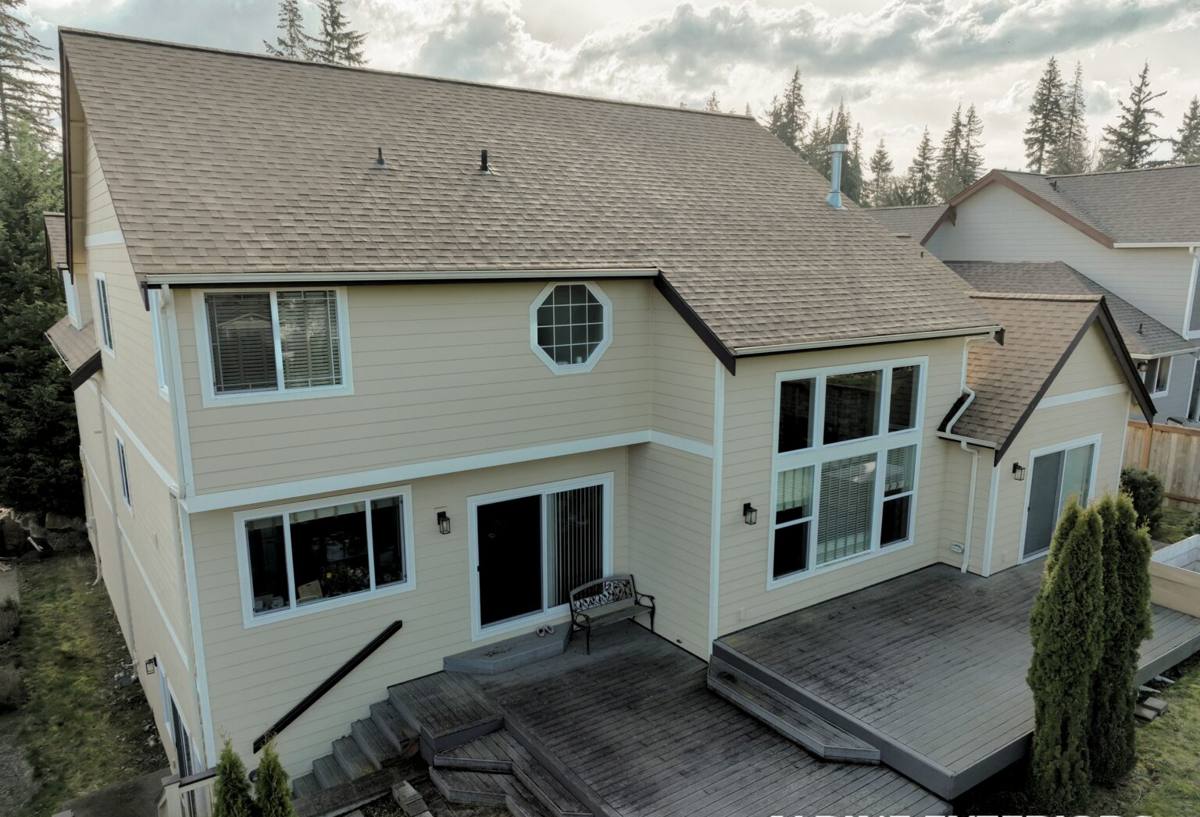
Signs Your Birchwood Home Is Telling You It's Time
Siding failure is usually gradual, and homeowners often live with early warning signs for a season or two before calling anyone. Here's what we look for, and what you can check yourself from the ground:
- Soft or spongy spots when you press on siding, especially near the bottom courses and around window and door trim
- Paint that's peeling, bubbling, or needing repainting far more often than it used to
- Persistent moss or dark green-black streaking on shaded or north-facing walls that comes back within weeks of cleaning
- Visible warping, cupping, or separation at the seams of lap siding
- Gaps opening up around window and door trim, or caulk that's cracked and pulling away
- A musty smell in an adjacent interior room, which can point to moisture getting behind the siding rather than just sitting on top of it
Any one of these on its own might just mean a repair. Several together, especially on a home more than 20-25 years old, usually means the siding system as a whole has reached the end of its useful life.
What a Correct Siding Replacement Actually Involves
Siding replacement done right is not just swapping old boards for new ones on the same wall. In a climate that pushes rain sideways and keeps walls damp for months, what's underneath the siding matters as much as the siding itself.
Full Tear-Off, Not Overlay
We remove the old siding down to the sheathing rather than installing new siding over the old. Overlaying traps whatever moisture or rot is already present and hides it from view — which in a wet climate is how small problems become expensive ones.
Sheathing Inspection and Repair
With the old siding off, we can actually see the wall. Any soft, water-damaged, or rotted sheathing gets cut out and replaced before anything new goes up. Covering damaged sheathing with new siding just resets the clock on the same problem.
Weather-Resistive Barrier and Drainage Plane
A properly lapped weather-resistive barrier, correctly integrated with window and door flashing, is what keeps wind-driven rain from reaching the sheathing even when it gets past the siding surface. In a driving-rain climate like Bellingham's, this layer does more day-to-day work than most homeowners realize.
Flashing at Every Penetration
Windows, doors, hose bibs, vents, light fixtures — every penetration through the siding is a potential entry point for water. Correct flashing detail at each one is what separates a siding job that lasts from one that leads to a callback in three years.
Rainscreen Gap Where It Belongs
Fiber cement siding performs best with a small ventilated gap between the back of the siding and the weather-resistive barrier, letting any moisture that does get in dry out instead of sitting against the wall. This detail matters more in a consistently damp climate than in a dry one.
Why We Install Only James Hardie Fiber Cement
We don't install vinyl, LP SmartSide, or primed wood siding, and we're upfront about why. In a coastal, high-moisture climate like Birchwood's, the material choice has to hold up to conditions that are tougher than what most siding products are tested against on paper.
James Hardie fiber cement is engineered specifically for this kind of exposure. It's non-combustible, doesn't swell or rot when it takes on moisture the way wood-based products can, and holds its factory-applied ColorPlus finish far longer than field-painted alternatives — which matters directly here, since repainting siding on a home exposed to salt air and constant rain is neither cheap nor something you want to do often. Hardie's HZ5 product line is engineered for exactly this kind of climate: freeze-thaw cycling, sustained moisture exposure, and coastal conditions.
That's not to say fiber cement is maintenance-free — it still needs proper caulking, occasional washing to keep moss from establishing, and periodic inspection like any exterior material. But it starts from a materially stronger position against the specific conditions Birchwood throws at a house, and it comes backed by a strong transferable warranty when installed to Hardie's specifications.
How Hardie Compares to What We Don't Install
| Factor | James Hardie Fiber Cement | Vinyl / Engineered Wood |
|---|---|---|
| Moisture behavior | Does not swell, rot, or absorb water into the material | Vinyl can warp with heat cycling; wood-based products can swell and delaminate if moisture gets in |
| Finish durability | Factory-baked ColorPlus finish, long fade resistance | Vinyl color is molded-in but can chalk; wood siding needs field paint that weathers faster in coastal air |
| Fire resistance | Non-combustible | Vinyl can melt/deform; wood-based siding is combustible |
| Moss and algae resistance | Dense, less hospitable surface; still needs periodic washing | Porous or textured surfaces on some products can hold moisture and encourage growth |
| Warranty structure | Strong transferable warranty when installed to spec | Varies widely by manufacturer and installation compliance |
Our Process for a Birchwood Siding Replacement
The steps are the same core process we'd use anywhere, but the details we pay closest attention to are shaped by this neighborhood's exposure.
- On-site assessment — we walk the whole exterior, checking sun and shade exposure on each wall, existing moss or moisture staining, trim and window condition, and any soft sheathing we can detect from outside.
- Written scope and product selection — we specify the Hardie product line, profile, and color, along with the flashing and weather barrier details specific to your home's exposure.
- Tear-off and sheathing repair — old siding comes off, damaged sheathing is replaced, and we document anything unexpected before covering it back up.
- Weather barrier, flashing, and rainscreen installation — the parts of the job that don't show once it's finished, but determine whether the siding lasts 10 years or 40.
- Hardie siding installation — installed to manufacturer fastening, clearance, and caulking specifications, which is also what keeps the warranty intact.
- Final walkthrough — we go over the finished work with you and point out anything you should know for ongoing care.
What Drives Siding Replacement Cost in Birchwood
Every home is different, but the same handful of factors move the number up or down on most Birchwood projects:
| Factor | Why It Matters Here |
|---|---|
| Sheathing condition | Homes with long-neglected moisture intrusion often need more sheathing replacement, which isn't visible until tear-off |
| Wall exposure and complexity | Homes with more corners, dormers, and window/door penetrations need more flashing detail and labor time |
| Existing siding type | Removing multiple layers or siding installed directly over old material adds tear-off time |
| Trim and accessory scope | Replacing trim boards, fascia, or soffits alongside siding changes material and labor totals |
| Product line and color | Hardie's HZ5 line and certain ColorPlus colors carry different material costs than standard options |
We won't quote a number without seeing the home — anyone who does, over the phone, sight unseen, is guessing. What we can tell you honestly is that the cost of doing it right the first time, with proper tear-off and moisture management, is almost always less than the cost of repairing a wall system that failed because those steps were skipped.
Why a Crew That Already Works Birchwood Matters
Siding installation itself isn't unique to this neighborhood — but knowing which walls take the worst of the driving rain, how aggressively moss establishes on shaded exposures here, and what flashing details actually hold up through a Whatcom County winter comes from having done the work in this specific area, not from a general contracting background. A crew that's replaced siding on other Birchwood homes has already seen how the local exposure plays out over years, not just at installation.
That local pattern recognition shows up in small decisions — where to add extra flashing attention, which walls justify a closer look at the sheathing before assuming it's fine, how to sequence work around the wetter months. Those are the details that separate a siding job that looks good on installation day from one that's still performing well a decade later.
Before You Hire, Check These
- Do they install fiber cement to manufacturer spec, including proper flashing and a drainage gap — not just nail boards to the wall?
- Will they inspect and replace damaged sheathing as part of the job, not just cover it?
- Can they explain, specifically, how they handle window and door flashing?
- Do they carry proper licensing and insurance for exterior work in Washington?
- Will the warranty transfer if you sell the home?
- Do they give you a written scope, not just a verbal price?
If your Birchwood home is showing signs of siding wear, or you just want an honest read on where it stands, we're glad to take a look. The estimate is free, there's no pressure attached to it, and you'll walk away with a clear picture of what your home actually needs — use the form below to get started.