 Bellingham Exterior
 Asphalt Shingle Roofing Built for Puget's Weather, Not Just Any Weather
Puget homes sit close enough to the water and deep enough into Whatcom County's wet season that a roof here works harder than a shingle roof in a drier inland town. Salt-laden air corrodes fasteners and flashing faster than most manufacturers assume when they write their warranty fine print. Driving rain off the Sound finds every weak seam. And the long, damp shoulder seasons in Bellingham give moss and algae months at a time to take hold on a north-facing slope. A shingle roof that's installed and specified correctly for this environment will outlast one that was installed the same way you'd install it in Spokane or Sacramento — by years, not months.
This page is specifically about asphalt shingle roofing for homes in the Puget area. If you're comparing materials or want the broader picture on asphalt shingles as a product, that's a separate conversation — here we're talking about what actually matters for a roof over your head in this neighborhood.
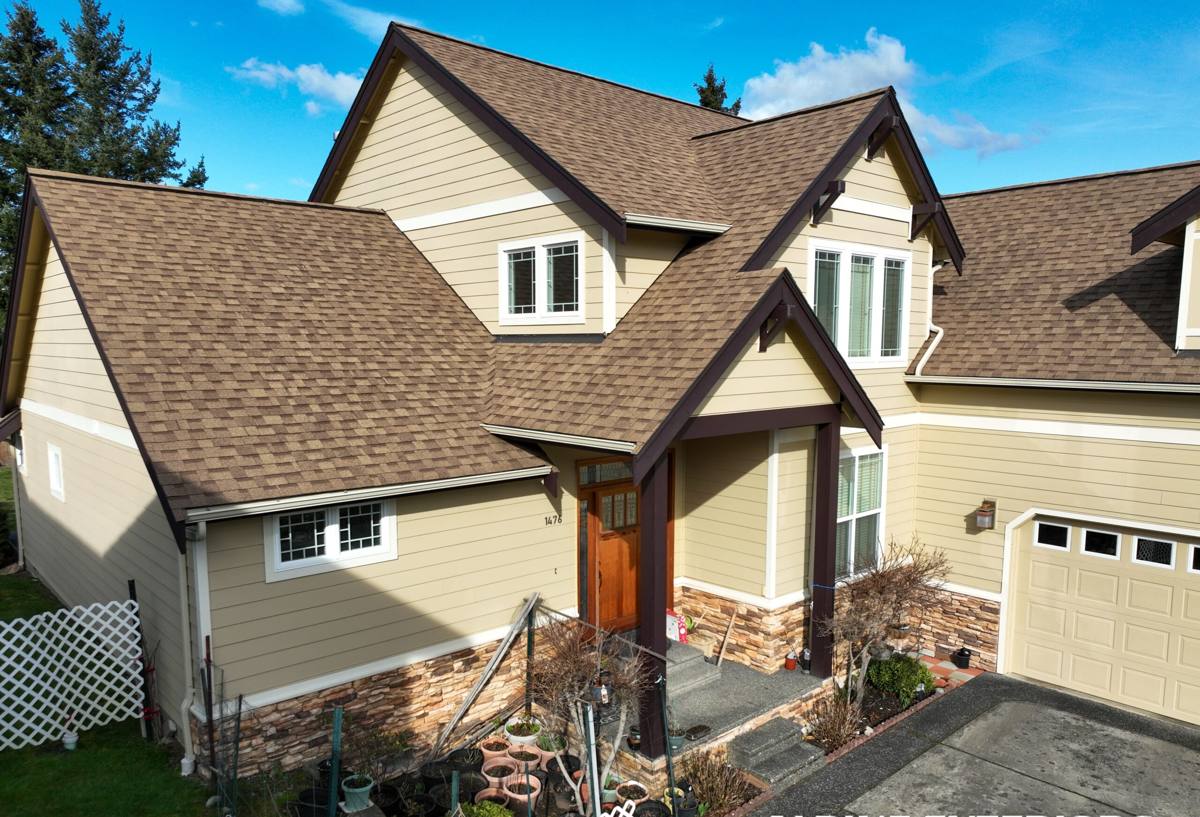
What Local Conditions Actually Do to a Shingle Roof
Salt Air and Metal Components
It's not the shingles themselves that usually fail first near the water — it's the metal. Nail heads, flashing, valley metal, and drip edge all corrode faster when they're regularly exposed to salt-influenced moisture in the air. Cheap or under-spec'd fasteners can start rusting and losing holding power well before the shingles above them are due for replacement. This is one of the most common causes of premature leaks we see on homes closer to the water — not the shingle, but what's holding it down.
Driving Rain and Wind-Driven Moisture
Bellingham doesn't just get rain, it gets rain pushed sideways during winter storms. That matters for roofing because a lot of leaks aren't caused by water sitting still — they're caused by wind-driven rain finding its way up and under shingles, laps, and flashing that were installed to shed water straight down and nothing else. Proper underlayment coverage, correctly lapped flashing, and sealed nail patterns matter more here than in calmer climates.
Moss, Algae, and the Long Wet Season
Whatcom County's extended damp months — especially on shaded, north-facing, or tree-covered roof sections — give moss spores plenty of time to settle in and take root in shingle granules. Left unchecked, moss holds moisture against the roof deck, lifts shingle edges, and accelerates granule loss. It's rarely the cause of a sudden leak, but it's one of the most common reasons a shingle roof in this area ages faster than its rated lifespan would suggest.
What a Correctly Installed Shingle Roof Actually Includes
"Asphalt shingle roof" sounds like one product, but the roof's actual performance comes from several layers working together. Skipping or under-building any one of these is where most premature failures start.
- Roof deck inspection and repair — soft, delaminated, or water-damaged sheathing gets replaced before anything new goes down, not covered up.
- Ice and water shield at vulnerable areas — eaves, valleys, and around penetrations, where wind-driven rain and ice damming are most likely to force water backward under shingles.
- Synthetic underlayment across the full deck — a continuous water-resistant layer beneath the shingles, not just felt paper tacked down loosely.
- Correct flashing at every transition — chimneys, walls, skylights, and valleys, using metal sized and lapped to shed water in the direction it actually travels on your roof.
- Balanced attic ventilation — intake at the eaves and exhaust at the ridge, sized to the attic volume, so moisture doesn't get trapped under the deck and shorten the roof's life from underneath.
- Correct nailing pattern and fastener count — placed where the manufacturer specifies, not just "close enough," since this is what determines wind resistance and warranty validity.
- Proper shingle exposure and starter course — the detail most likely to be rushed on a fast job, and the one most likely to cause edge lifting in coastal wind.
Ventilation Gets Skipped More Than It Should
Ventilation doesn't show up in photos of a finished roof, which is probably why it's the most commonly shorted item on cheap re-roofs. In a climate as wet as Bellingham's, an under-ventilated attic traps moisture that condenses on the underside of the deck, promotes rot and mold, and can void a shingle manufacturer's warranty outright. We check and correct ventilation on every roof we work on in the Puget area, not just the ones where it's obviously broken.
Choosing a Shingle Line for This Climate
Not every asphalt shingle product is built the same way, and the differences matter more in a wet, salt-influenced climate than they would somewhere dry. The table below is a general guide to how shingle tiers typically compare — your specific options will depend on what's currently available from manufacturers when we quote your job.
| Shingle Tier | Typical Lifespan | Wind Rating | Best Fit For |
|---|---|---|---|
| 3-Tab (economy) | 15–20 years | Lower | Budget-driven projects, secondary structures |
| Architectural (standard) | 25–30 years | Moderate to high | Most primary homes in this area |
| Premium / algae-resistant architectural | 30+ years | High | Shaded, north-facing, or moss-prone roof sections |
| Impact-resistant options | 30+ years | High | Homes wanting added durability against debris and hail |
For most Puget homes, we lean toward an architectural shingle with algae-resistant granules, especially on any slope that stays shaded through the wet months. It costs a bit more up front and pays that back in fewer years spent fighting moss growth and granule loss.
Repair, Recover, or Full Replacement?
Not every roof problem means a full tear-off. Part of doing this honestly is telling you when a repair is genuinely enough, and when patching would just be delaying a bigger bill.
When Repair Makes Sense
Isolated damage — a section of lifted shingles from a storm, a failed flashing detail, a small area of granule loss — can often be repaired without touching the rest of the roof, especially if the roof is under 15 years old and the deck underneath is sound.
When Full Replacement Is the Honest Answer
Widespread granule loss, multiple past patch jobs, soft spots in the deck, or a roof pushing past the upper end of its rated life are signs that repair is just short-term cost deferral. We'll always tell you which category your roof is in and why, with photos and a plain explanation — not just a recommendation to replace.
Our Process for a Puget Roofing Project
- On-site inspection — deck, ventilation, flashing, and current shingle condition, assessed in person.
- Written estimate — clear scope, material options, and pricing, with no pressure to decide on the spot.
- Material selection — matched to your roof's exposure, shading, and your budget, not a one-size-fits-all default.
- Tear-off and deck inspection — old roofing removed, deck checked and repaired before anything new goes on.
- Installation to manufacturer spec — underlayment, flashing, ventilation, and shingles installed in the correct sequence and fastening pattern.
- Final walkthrough — cleanup, site check for stray debris and nails, and a review of the finished work with you.
Timing Around Bellingham's Weather Windows
Roofing can be done for much of the year here, but we plan installs around dry weather windows whenever possible, since a shingle roof installs best — and seals down properly — when it isn't being rushed between storm systems. If your roof needs attention going into the wet season, it's worth scheduling ahead rather than waiting for a leak to force the timeline.
Keeping Moss and Algae Off a Puget Roof Long-Term
A correctly installed roof still benefits from a bit of ongoing attention in a climate this wet. Homeowners in the Puget area who stay ahead of moss and debris consistently get more years out of their roof than those who don't.
- Keep overhanging branches trimmed back so shaded sections of roof get more light and air movement.
- Clear gutters and valleys of leaves and debris before the fall rains set in — trapped debris holds moisture against the shingles.
- Address small moss patches early, using methods appropriate for asphalt shingles — pressure washing shingles can strip granules and shorten roof life.
- Have the roof looked at after major wind events, since lifted or displaced shingles aren't always visible from the ground.
- Confirm attic ventilation is still clear and functioning, especially if you've added insulation or done other attic work since the roof was installed.
Why It Matters That We Work Puget Regularly
A crew that roofs mostly in drier or more sheltered inland areas can do competent general work and still under-spec a roof for what Puget actually throws at it — lighter flashing, standard fasteners instead of corrosion-resistant ones, or a shingle line that isn't suited to a shaded, damp exposure. Working this area regularly means we've seen where roofs in this specific environment tend to fail first, and we build against those failure points from the start rather than learning about them from a callback.
It also means we're not guessing at what this county's weather does over a full year. We plan installs around it, spec materials for it, and tell you honestly when a repair will hold versus when it won't.
Get a Straight Answer About Your Roof
If you're dealing with moss buildup, a roof that's approaching the end of its expected life, or storm damage that needs a second opinion, we're happy to take a look. Fill out the form below for a free, no-pressure estimate — we'll tell you what we actually see, what it would take to fix it right, and let you decide from there.