 Bellingham Exterior
 Roof Repair Built for Puget's Marine Climate
Homes in the Puget area of Bellingham sit close enough to the water that the air itself works against a roof year-round. Salt-laden air accelerates corrosion on fasteners and flashing. Driving rain off the Sound finds every gap in a roof system that would stay dry in a drier climate. And a long, damp moss season means organic growth gets a real foothold on north-facing slopes and shaded valleys before most homeowners notice it's there. A roof repair here isn't just patching a leak — it's addressing the specific combination of salt, moisture, and biological growth that Whatcom County roofs deal with for most of the year.
We work on roofs throughout this part of Bellingham regularly, which means we're not guessing at how a particular material or detail holds up locally — we've already seen it fail, or hold up, under these exact conditions.
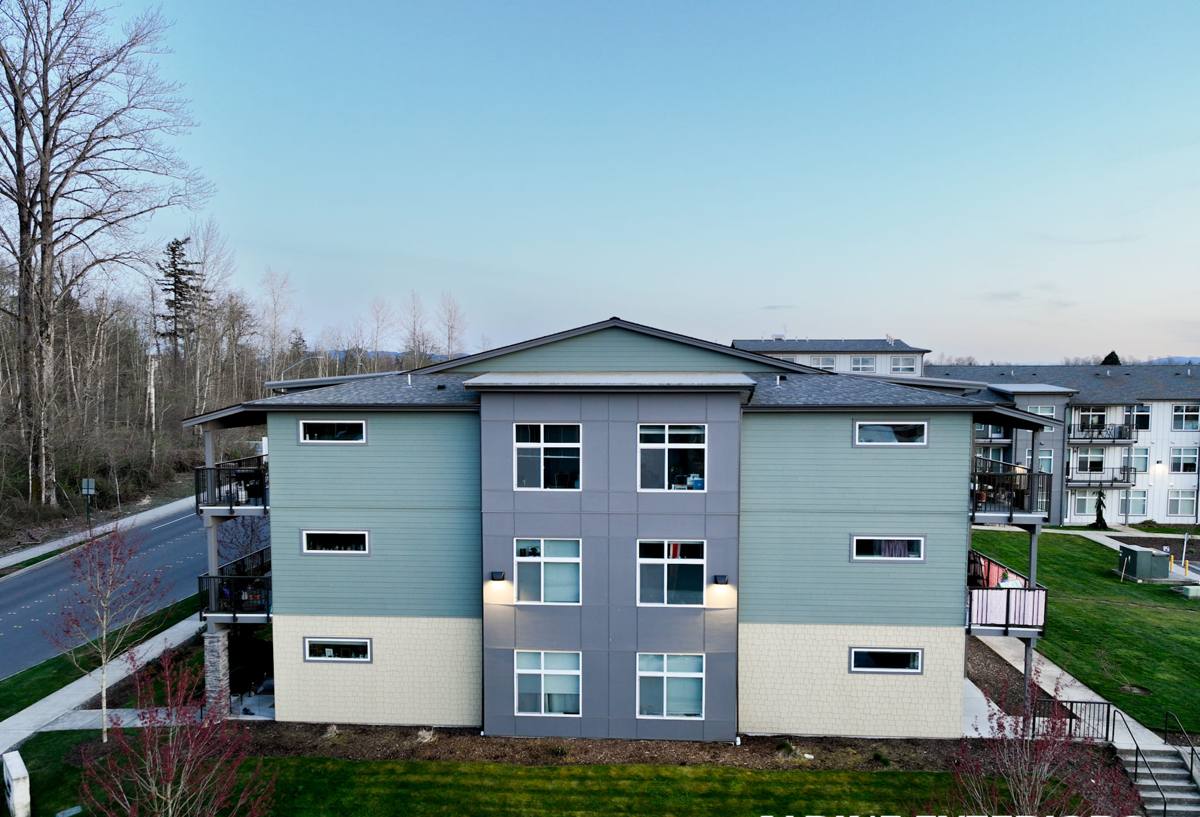
Signs a Puget-Area Roof Needs Repair, Not Just a Look
Because of the climate here, roof problems in this neighborhood tend to show up in a few consistent ways. If you're seeing any of the following, it's worth having someone look before the next heavy rain:
- Dark streaking or thick moss growth on north- or shade-facing roof planes
- Granule buildup in gutters or at downspout outlets (a sign of asphalt shingle wear)
- Rust staining running down from metal flashing, vents, or fasteners
- Water stains on interior ceilings, especially after a windy rainstorm rather than a calm one
- Soft or spongy decking felt underfoot near valleys, chimneys, or skylights
- Lifted, cracked, or missing shingles after a windstorm
- Daylight visible through the attic roof deck, or damp insulation below it
Moss and Organic Growth
Moss doesn't just look bad — it holds moisture against the roofing material long after the rest of the roof has dried out. On asphalt shingles, that constant dampness breaks down the mat underneath the granules faster than normal weathering would. On cedar, it accelerates rot. Left long enough, moss roots can work into shingle laps and lift edges, giving wind-driven rain a place to get underneath. In this part of Bellingham, moss season isn't a once-a-year event — it's closer to eight or nine months of the year when conditions favor it.
Wind and Rain-Driven Leaks
A lot of roof leaks near the water aren't simple vertical drips — they're wind-driven, meaning rain is pushed sideways or even slightly upward under laps, around vents, and along flashing edges. A repair that only addresses the spot where water is showing up inside the house, without tracing where wind-driven rain actually entered the roof system, tends to come back after the next big storm.
Salt Air and Metal Fastener Corrosion
Standard fasteners and lower-grade flashing corrode noticeably faster in areas exposed to salt air off the Sound. Once a fastener head rusts through or a flashing seam starts to pit, it stops sealing the way it did when it was installed, even if the shingles around it look fine. This is one of the more common causes of a "mystery leak" that seems to have no obvious source from the ground.
What a Correct Roof Repair Actually Involves
A roof repair that holds up in this climate starts with figuring out the actual source of the problem, not just the point where it became visible. Water can travel several feet along decking or framing before it shows up as a stain, so a repair based only on where the ceiling is wet often misses the real entry point.
Diagnosing the Real Problem
We look at the roof from both the outside and, where accessible, the attic side. That means checking flashing at every penetration — chimneys, vents, skylights — along with valleys, roof-to-wall transitions, and any spot where two roof planes meet. In a marine climate, these transition points are where most repairable leaks originate, far more often than the open field of the roof itself.
Matching Materials and Techniques to the Existing Roof
A repair needs to match the existing roofing material in both product and installation method, not just appearance. Mixing incompatible metals in flashing repairs, for example, can set up galvanic corrosion that creates a new leak point within a few seasons — a particular risk in a salt-air environment where corrosion is already accelerated. We also match shingle type, exposure, and fastening pattern so the repaired section weathers at the same rate as the surrounding roof instead of aging or discoloring differently.
Common Roofing Materials in the Puget Area and How They Hold Up
Most homes in this part of Bellingham use one of a handful of roofing systems. Each has different strengths and different failure points in a wet, salt-exposed, moss-prone climate.
| Material | Typical Lifespan Locally | Main Climate Risk | Repair Considerations |
|---|---|---|---|
| Asphalt composition shingle | 18–25 years | Granule loss, moss lift, nail corrosion | Most common repair type; matching shingle age/color can be tricky on older roofs |
| Cedar shake/shingle | 20–30 years with upkeep | Moisture retention, rot, moss | Requires more frequent moss and debris control; individual shake replacement is labor-intensive |
| Standing seam metal | 40+ years | Fastener corrosion, sealant failure at penetrations | Long-lived, but repairs demand exact panel and sealant matching |
| Torch-down/flat membrane | 15–20 years | Ponding water, seam separation | Common on additions and low-slope sections; seam repair must be heat-welded correctly to hold |
Our Roof Repair Process
Our process is the same whether the job is a single flashing repair or a multi-area patch job, because skipping steps is what leads to callbacks in this climate:
- Inspection: We assess the affected area and the roof as a whole, including attic access where possible, to confirm the actual leak path.
- Written scope: You get a clear explanation of what's failing, what we recommend, and why — including whether a repair is the right call versus a larger fix.
- Material matching: We select materials and fasteners rated for coastal/marine exposure, matched to your existing roofing system.
- Repair work: Old, failed material is removed rather than repaired over; underlayment and decking are checked for hidden rot before new material goes down.
- Moss and debris clearing: Adjacent areas are cleared of moss and debris so the repair isn't immediately undermined by the same growth that likely contributed to the problem.
- Final check: We confirm flashing laps, fastening, and sealant work meet manufacturer specs before calling the job done.
Repair vs. Replacement: How We Help You Decide
Not every roof problem in this area needs a full replacement, and not every leak can be permanently solved with a patch. The honest answer usually comes down to the roof's age, how widespread the damage is, and what's happening underneath the surface material.
| Factor | Favors Repair | Favors Replacement |
|---|---|---|
| Roof age | Under roughly two-thirds of expected lifespan | Near or past expected lifespan for the material |
| Extent of damage | Localized (one flashing point, one section) | Widespread across multiple roof planes |
| Decking condition | Solid, dry decking under the damaged area | Soft, rotted, or repeatedly wet decking |
| Leak history | First occurrence or isolated cause | Recurring leaks in different spots each season |
| Moss/organic damage | Surface growth, shingles intact underneath | Growth has compromised the shingle mat or shakes themselves |
We'll tell you plainly if we think a repair is a short-term fix on a roof that's genuinely due for replacement — that's a disservice to you if we don't, and it's the kind of thing that erodes trust in this trade generally.
Preventive Maintenance Between Repairs
Given how much of the damage in this area comes from moss and standing moisture rather than one dramatic event, the maintenance between repairs matters as much as the repair itself:
- Keep gutters and downspouts clear so water isn't backing up under the roof edge
- Have moss physically removed rather than just treated, since dead moss still holds moisture against the roof
- Trim back overhanging branches that keep roof sections shaded and slow to dry
- Check flashing and fastener condition every year or two, especially after major windstorms
- Address small leaks immediately rather than waiting for the next dry season
Why a Crew That Already Works Puget Matters
A roofer who mainly works drier inland areas of Whatcom County may not think twice about a fastener spec, a flashing metal, or a moss treatment that's perfectly fine there but undersized for a home exposed to salt air and near-constant marine moisture. Working this specific area regularly means we've already seen which repair details hold up here and which ones fail early — and we build that into every repair, not just the ones where a homeowner asks about it specifically.
It also means practical familiarity: knowing how weather patterns off the Sound tend to move through, what time of year moss growth accelerates, and how local permitting and code requirements apply to roof work in Whatcom County.
Get a Straightforward Roof Repair Estimate
If you're dealing with a leak, visible moss, or roof damage from a recent storm, we're happy to take a look and give you a straightforward assessment — repair or otherwise — with no pressure attached. Fill out the form below to request a free estimate for your Puget-area home.