 Bellingham Exterior
 Metal Roofing for Puget: Built for What This Corner of Whatcom County Actually Deals With
Puget sits close enough to the water that homes here take a different kind of weather beating than roofs just a few miles inland. Salt-laden air moves through year-round, driving rain comes in sideways off the water during winter storms, and the long, damp Pacific Northwest stretch from fall through spring keeps roofs wet for weeks at a time. Add the shade from mature evergreens common in this part of Bellingham, and you get a climate that's hard on fasteners, hard on seams, and very friendly to moss. Metal roofing, installed correctly for this specific environment, holds up to all three of those pressures better than most other roofing materials — but "installed correctly" is doing a lot of work in that sentence, and it's the part that separates a roof that lasts thirty-plus years from one that starts showing rust streaks and lifted panels in five.
This page is about what a metal roof needs to actually perform in Puget, not a general overview of metal roofing everywhere. The salt air alone changes what fasteners and flashing metals we'll use. The rain pattern changes how we detail laps and penetrations. The moss pressure changes how we think about ventilation and roof pitch. All of that matters more here than it would on a dry-climate roof.
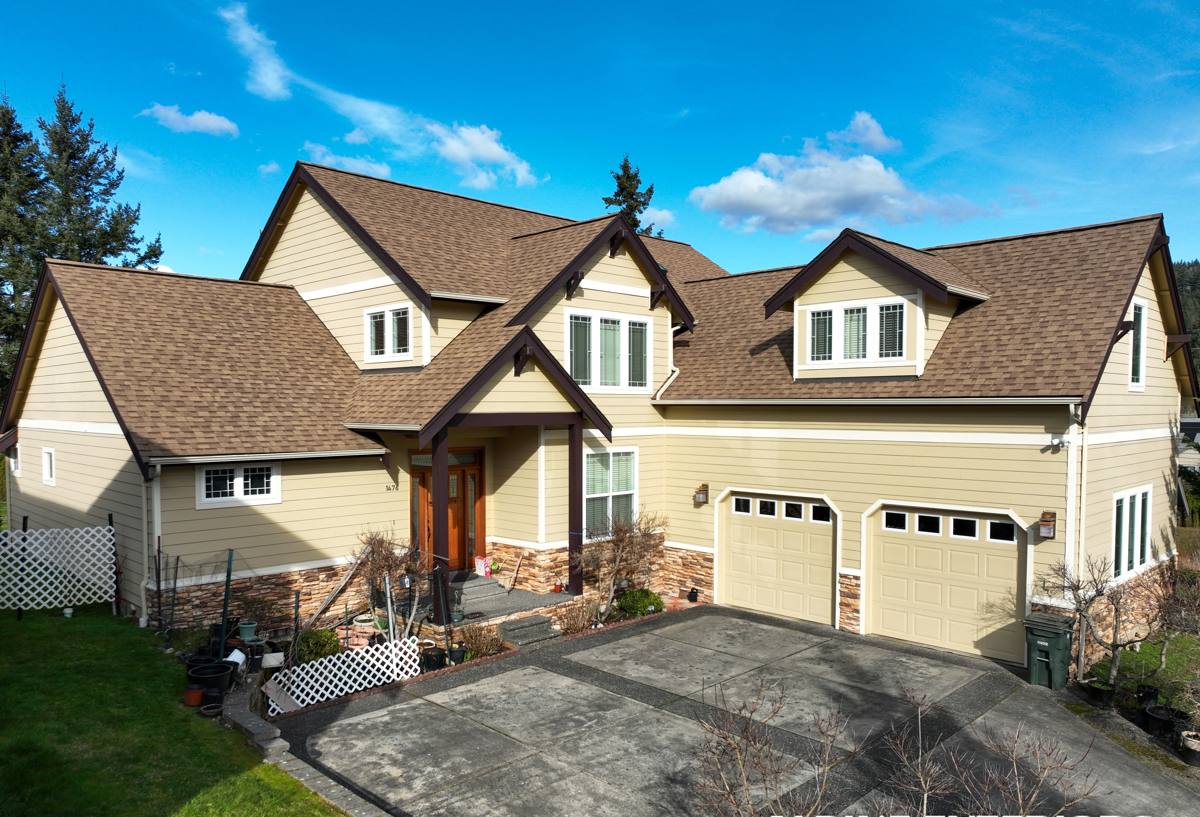
Why Salt Air Changes the Materials Conversation
Bellingham Bay and the surrounding waterways put a steady, low-level salt content into the air across Puget, and that salt is corrosive to bare or poorly coated metal over time. This doesn't mean metal roofing is a bad choice near the water — it's actually one of the more corrosion-resistant roofing materials available when the right alloy and coating are used. It means the *specific* materials matter a lot more here than they would on a roof twenty miles inland.
What We Look At
- Panel substrate and coating — coastal-rated finishes and coatings hold up to salt exposure far longer than basic mill finishes
- Fastener metal — mismatched metals between panel and fastener can set up galvanic corrosion, which shows up as pitting and staining around every screw within a few years
- Flashing and trim — same coastal-grade standard as the field panels, not a mismatched off-the-shelf trim
- Cut-edge exposure — every field cut on a coastal roof is a small opening in the protective coating, so how cuts are made and treated affects long-term corrosion resistance
None of this is exotic or expensive to get right — it's a matter of specifying materials rated for a marine or near-marine environment instead of standard inland-grade products, and being disciplined about how fasteners and cut edges are handled during installation.
Driving Rain: Where Most Roof Failures Actually Start
Wind-driven rain off the water doesn't fall straight down — it hits roof surfaces at an angle and pushes water uphill under laps, around penetrations, and into any gap that a straight-down rain would never find. This is the single biggest reason metal roofs fail early in this region, and it's almost never the panels themselves. It's the details around them.
The Details That Matter Most in Puget's Weather
Valleys, chimney flashing, skylight curbs, and vent penetrations are where driving rain finds its way in. On a correctly installed metal roof, every one of those transitions gets proper underlayment, correctly lapped and sealed flashing, and — on standing seam systems — clips and seams engineered to shed water even under wind pressure, not just gravity. We also pay close attention to eave and rake details, since wind-driven rain in this area regularly tests roof edges that a calmer climate could get away with detailing more loosely.
Moss, Algae, and the Long Wet Season
Puget's tree cover and extended damp season create ideal conditions for moss and algae growth on roofing. This is one of the clearest advantages metal roofing has over asphalt shingles or wood in this specific climate: metal doesn't give moss the rough, porous surface it needs to establish itself, and it dries out faster after rain because water sheds off it quickly rather than soaking in. That doesn't mean a metal roof here is maintenance-free — moss and organic debris can still build up in valleys, at the base of chimneys, and anywhere leaves and needles collect and hold moisture against the panel — but it dramatically reduces the moss problem compared to shingle roofs in the same yard.
Ventilation plays a role here too. A roof deck that stays cool and slightly damp underneath, because of poor attic airflow, encourages condensation on the underside of the roofing and can shorten the life of the underlayment and deck even when the metal itself is holding up fine. Correct ridge and soffit ventilation is part of doing this job right in a climate like Puget's, not an optional upgrade.
Standing Seam vs. Exposed-Fastener Metal Roofing
Homeowners in Puget usually end up choosing between two main types of metal roofing systems. Both can be good choices — the right one depends on budget, roof design, and how long you want to go between maintenance checks.
| Factor | Standing Seam | Exposed-Fastener Panel |
|---|---|---|
| Fasteners | Hidden, attached through concealed clips | Visible screws through the panel face |
| Coastal durability | Fewer penetration points for salt air to attack | Every exposed screw is a future maintenance point |
| Maintenance | Minimal — no fastener washers to inspect or replace | Fastener washers typically need checking/replacing over time |
| Upfront cost | Higher material and labor cost | Lower upfront cost |
| Best fit | Long-term coastal exposure, steeper or more visible roofs | Budget-driven projects, outbuildings, simpler rooflines |
For homes closer to the water or with a lot of tree shade holding moisture against the roof, we generally recommend standing seam if the budget allows it — the reduced number of exposed fasteners matters more in this climate than it would somewhere drier. Exposed-fastener panels are still a legitimate, durable choice; they just come with a maintenance rhythm worth planning for.
What a Correct Metal Roof Installation Actually Involves
A lot of roofing problems in this region trace back to shortcuts taken during installation that don't show up as a problem until a few winters of driving rain and moss growth have had time to work on them. Here's what we consider non-negotiable on a metal roof in Puget:
- Deck inspection and repair before anything goes down — metal roofing telegraphs deck problems instead of hiding them
- Ice-and-water or synthetic underlayment rated for the panel type, run at eaves, valleys, and penetrations
- Coastal-appropriate panel, fastener, and flashing metals — matched to avoid galvanic corrosion
- Proper panel spacing and fastening pattern for expansion and contraction across temperature swings
- Correctly lapped and sealed flashing at every valley, wall, chimney, and vent
- Ridge and soffit ventilation sized to the attic space, not just installed as an afterthought
- Clean, protected cut edges rather than exposed raw metal at panel ends
Skipping any one of these doesn't usually cause an immediate problem — it causes a problem in year four or five, after enough wet-dry cycles and enough moss buildup have found the weak point. That delayed failure pattern is exactly why cutting corners on a metal roof installation is a bad trade: the roof looks fine at handoff either way.
Our Process for a Puget Metal Roofing Project
We keep the process straightforward and explain each step as we go, since a roof replacement is a significant investment and you should know what's happening on your house and why.
1. On-Site Assessment
We look at the existing roof, deck condition, attic ventilation, tree cover, and how exposed the roof is to wind-driven rain from the water side. This tells us which panel system and details actually make sense for your specific house, not a generic recommendation.
2. Material Selection
We walk through panel profile, color, and coastal-grade coating options based on your budget and how close to the water your home sits. This is also where we talk through standing seam versus exposed-fastener honestly, including the maintenance trade-offs.
3. Tear-Off and Deck Prep
Old roofing comes off, the deck gets inspected, and any soft or damaged sheathing is repaired before underlayment goes down. This step gets skipped or rushed more often than any other in the industry — we don't skip it.
4. Installation
Underlayment, flashing, and panels go in following the coastal-detailing standards above, with particular attention to valleys, penetrations, and edges — the places driving rain actually tests.
5. Ventilation Check and Final Walkthrough
We confirm intake and exhaust ventilation is balanced for the attic, clean up the site, and walk the roof and gutters with you so you know what normal looks like and what to watch for.
Cost Factors for Metal Roofing in Puget
Metal roofing costs more upfront than asphalt shingles, and pricing varies with roof size, pitch, and complexity. Rather than quote a number that won't mean much without seeing your roof, here's what actually moves the price:
| Factor | Why It Matters |
|---|---|
| Panel system | Standing seam runs higher than exposed-fastener panel, mainly in labor |
| Roof pitch and complexity | Steep pitches, multiple valleys, and dormers add labor time and material waste |
| Coastal-grade coating | Marine-rated finishes cost more than standard coatings but pay off in corrosion resistance near the water |
| Deck condition | Rot or soft sheathing found during tear-off adds repair cost before installation can proceed |
| Ventilation upgrades | Adding or correcting ridge/soffit ventilation is a smaller add-on cost with a real payoff in roof lifespan |
Metal roofing's longer service life and lower maintenance burden usually make it a better long-term value than repeated shingle replacements in a climate like this one, but we'll always give you the real numbers for your specific roof rather than a rule of thumb.
Maintaining a Metal Roof in a Coastal, Mossy Climate
Metal roofing needs far less upkeep than shingles in Puget, but "far less" isn't "none." A short annual routine keeps a well-installed metal roof performing for decades:
- Clear debris from valleys and low-slope areas where moisture and organic matter collect
- Check gutters and downspouts, since driving rain overwhelms clogged gutters fast
- Look for streaking near fasteners or cut edges, an early sign of corrosion worth addressing before it spreads
- Confirm attic ventilation isn't blocked by insulation or debris
- After major windstorms, a quick visual check for lifted flashing or debris impact
Why Local Installation Experience Matters Here
Metal roofing installers who mostly work drier, inland climates don't always default to coastal-grade fasteners, marine-rated coatings, or the ventilation and flashing details this environment demands — because they haven't had to. A crew that regularly works Puget and the surrounding Bellingham and Whatcom County area has already seen what driving rain, salt air, and a long moss season do to roofs that were detailed for somewhere else. That experience shows up in the small decisions — fastener choice, cut-edge treatment, valley detailing — that don't matter much on a spec sheet but matter enormously five winters in.
If you're weighing a metal roof for your Puget home, we're happy to take a look, talk through what your specific roof needs, and give you a straightforward, no-pressure estimate. Use the form below to get started.