 Bellingham Exterior
 Fiber Cement Siding for Puget Homes
Puget sits close enough to the water and the tree line that its homes take a specific kind of beating year-round: salt-tinged air off the Sound, long stretches of driving rain, and a moss season that can run from fall through spring. Siding here doesn't just need to look good on installation day — it needs to hold up to moisture cycling, wind-driven rain hitting walls at an angle, and organic growth that never fully dries out between storms. That's the environment we're building for on every Puget project, and it's why we install James Hardie fiber cement siding exclusively rather than mixing in vinyl, wood, or engineered wood products that behave differently under these conditions.
This page covers what Puget homes specifically need from their siding, what a correct fiber cement installation looks like, and how our process works from first estimate to final walkthrough.
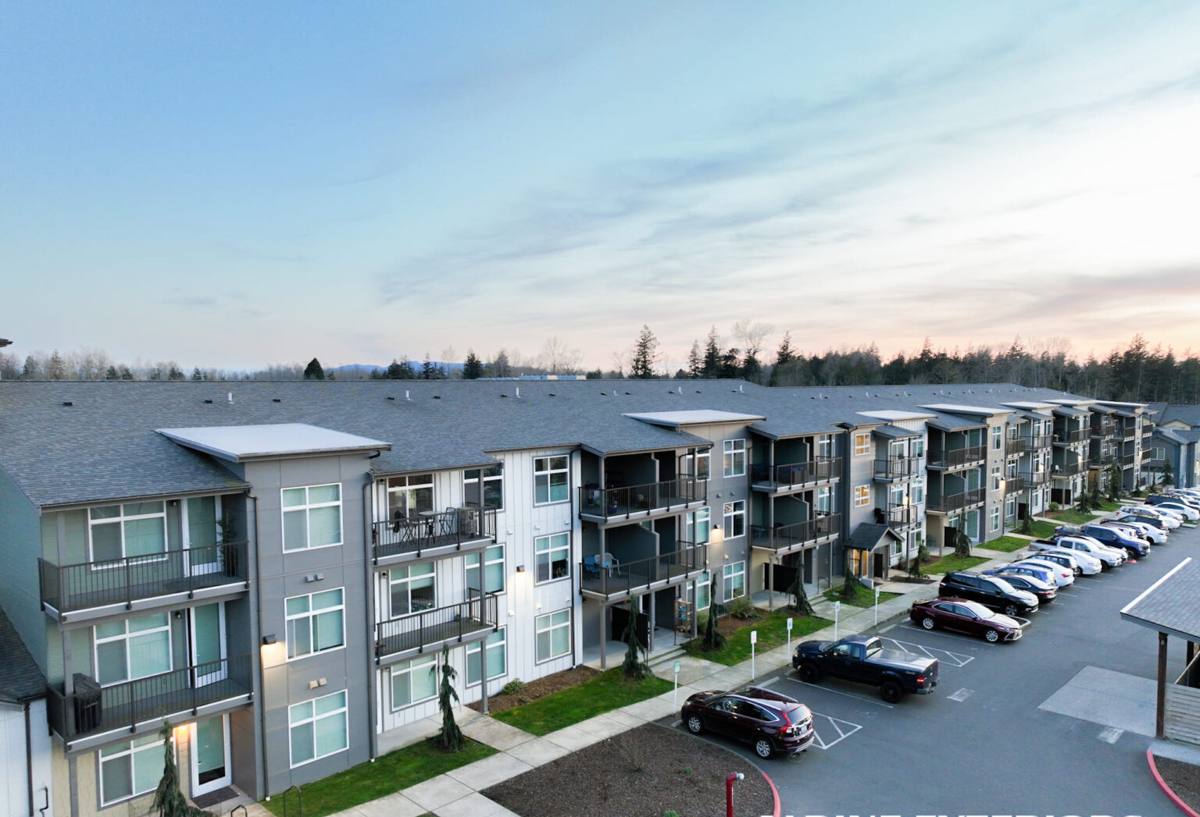
What Puget's Climate Does to Siding
Salt Air and Coastal Moisture
Homes in and around Bellingham that sit closer to the water deal with airborne salt and near-constant humidity. Salt-laden moisture accelerates corrosion on fasteners and trim metal, and it keeps porous siding materials damp longer than homes further inland. Fiber cement doesn't corrode, and James Hardie's factory-applied ColorPlus finish is engineered to resist the fading and film breakdown that salt air and UV exposure cause on field-painted surfaces over time.
Driving Rain
Whatcom County storms frequently come in sideways off the water, which means siding isn't just shedding rain that falls straight down — it's taking direct hits on vertical wall surfaces. Every lap, every seam, and every point where siding meets a window, door, or trim board is a place water can find its way behind the cladding if the install isn't done to spec. This is a weather-resistive barrier and flashing problem as much as it is a siding problem, and it's where most poor installations fail first.
Moss and Organic Growth
A long moss season means anything that stays damp — north-facing walls, shaded siding runs under trees, areas with poor airflow — is going to grow something eventually. Fiber cement itself doesn't feed mold or rot the way wood-based siding can, but a poor installation that traps moisture behind the panels creates the exact damp, dark conditions moss and mildew need to take hold, both on the surface and in the wall cavity behind it.
Why We Install Only James Hardie Fiber Cement
We made a decision as a company to install one siding system: James Hardie fiber cement. Not because every alternative is bad, but because after years of installs, tear-offs, and warranty calls across the Puget Sound region, this is the product that consistently holds up to what this climate does to a house.
- Non-combustible core — fiber cement doesn't burn, swell, or delaminate the way wood-based composites can when they take on sustained moisture.
- Climate-engineered HZ product lines — Hardie manufactures HZ5 formulations specifically for wetter, cooler climates like ours, built to resist moisture-related damage rather than a one-size-fits-all national formula.
- Factory-cured ColorPlus finish — baked on at the factory under controlled conditions, so it resists cracking, peeling, and fade far better than a field-applied paint job exposed to salt air and rain within days of installation.
- Long, transferable warranty — backed by a manufacturer warranty structure that holds up when the product is installed to Hardie's published specifications.
Vinyl siding flexes and can warp under temperature swings, and its seams are a constant point of water entry if not handled correctly. Wood and primed spruce need ongoing maintenance to keep ahead of moisture and rot in a climate that rarely gives wood a chance to fully dry. Other fiber cement competitors exist, but we standardized on Hardie because of the combination of climate-specific product engineering, finish quality, and warranty backing — and because sourcing one system means our crews install it the same correct way on every job, every time.
What a Correct Installation Involves
Fiber cement siding is only as good as the install behind it. A rushed or corner-cutting job on the exact same product can fail in this climate within a few years, while a correct install can go decades without a moisture problem. The details that matter most in a wet, coastal climate:
| Component | Why It Matters in Puget's Climate |
|---|---|
| Weather-resistive barrier | The house wrap behind the siding is the actual water barrier — siding sheds most of it, but the wrap and flashing handle what gets through. |
| Proper flashing at penetrations | Windows, doors, hose bibs, and vents are the most common failure points for wind-driven rain intrusion. |
| Correct fastener placement and type | Hardie specifies fastener type, spacing, and embedment depth — get this wrong and panels can crack or pull loose in wind events. |
| Minimum clearances | Siding needs proper clearance from grade, roofing, and decks so water doesn't wick up into the bottom edge of the panel. |
| Caulking and sealant at joints | Done right, this keeps water out of seams without trapping moisture that needs to escape. |
| Ventilation behind cladding | Airflow behind the siding lets incidental moisture dry out instead of sitting against the wall assembly, which matters directly for moss and mildew resistance. |
Every one of these is a manufacturer-specified detail, not a judgment call. A crew that skips or shortcuts them can still hand you a house that looks finished — the problems just show up two or three winters later, usually as staining, soft trim, or moss creeping up from the bottom courses.
Our Process for Puget Projects
1. On-Site Assessment
We walk the property and look at existing siding condition, moisture staining, trim and flashing detail, and any areas with known drainage or shade issues — the spots most likely to have given past installs trouble in this climate.
2. Scope and Estimate
We put together a clear, itemized estimate covering tear-off (if applicable), house wrap and flashing work, the Hardie product line and profile that fits the home, and trim details. No vague allowances — you'll know what's included before work starts.
3. Tear-Off and Prep
Old siding comes off, sheathing gets inspected for hidden rot or damage, and any repairs happen before a single new panel goes up. Covering damaged sheathing is one of the most common shortcuts in this trade, and it's one we don't take.
4. Weather Barrier and Flashing Install
This is the step that actually keeps water out of your walls. We install house wrap and flashing to manufacturer spec at every window, door, and penetration before siding installation begins.
5. Hardie Siding Installation
Panels, fasteners, and joints are installed to James Hardie's published specifications for our climate zone — correct spacing, correct clearances, correct fastener schedule.
6. Final Walkthrough
We walk the finished job with you, check trim and caulk lines, and answer any questions about care and long-term maintenance before we call it done.
Why a Crew That Already Works Puget Matters
A contractor who already works in and around Bellingham has seen how this specific stretch of climate plays out on real houses over multiple seasons — which wall orientations hold moisture longest, where moss tends to establish first, and how driving rain off the water behaves differently than a straight-down storm further inland. That's not something you get from a general installation manual; it comes from doing the work here repeatedly and seeing what holds up and what doesn't. A crew unfamiliar with coastal Whatcom County conditions may install siding correctly by a generic standard and still miss the details that matter most in this specific environment.
Maintenance Homeowners Should Expect
- Rinse siding periodically to clear salt residue and organic buildup, especially on north-facing or shaded walls.
- Keep gutters clear so overflow doesn't run down and pool against siding at the top of runs.
- Trim back vegetation that shades siding and keeps it from drying out between rains.
- Inspect caulk lines at trim and penetrations every year or two and recaulk if it's cracked or pulling away.
- Address any staining or soft spots promptly — caught early, it's usually a minor fix rather than a wall repair.
Fiber cement dramatically reduces the maintenance burden compared to wood, but "low maintenance" isn't "no maintenance" — a little seasonal attention goes a long way in this climate.
Ready to Talk About Your Puget Home
If you're dealing with aging siding, moisture staining, or moss creeping up your walls, we're happy to take a look and give you an honest read on what's going on and what it would take to fix it right. Reach out for a free, no-pressure estimate — we'll walk the property with you and explain exactly what we'd do and why.