 Bellingham Exterior
 Why Siding in Puget Has to Work Harder
Homes in the Puget area of Bellingham sit close enough to the water and the weather patterns of Whatcom County that siding here takes a different kind of beating than siding fifty miles inland. Salt-laden air moves through with the marine wind, driving rain comes in sideways during fall and winter storms, and a long, damp moss season keeps north-facing walls and shaded corners wet for weeks at a time. Add the freeze-thaw swings that show up most winters and you have a climate that will find every weak point in a siding system within a few years, not decades.
This isn't a reason to panic about your current siding, but it is a reason to think carefully about what goes back up when it's time to replace it. A product or installation method that performs fine in a dry inland subdivision can fail quietly here — bubbling paint, soft trim, moss creeping under laps, moisture tracking into sheathing behind a wall that looks fine from the sidewalk. Puget homeowners need siding, and an install, that's specifically suited to salt air, sustained wet weather, and shade.
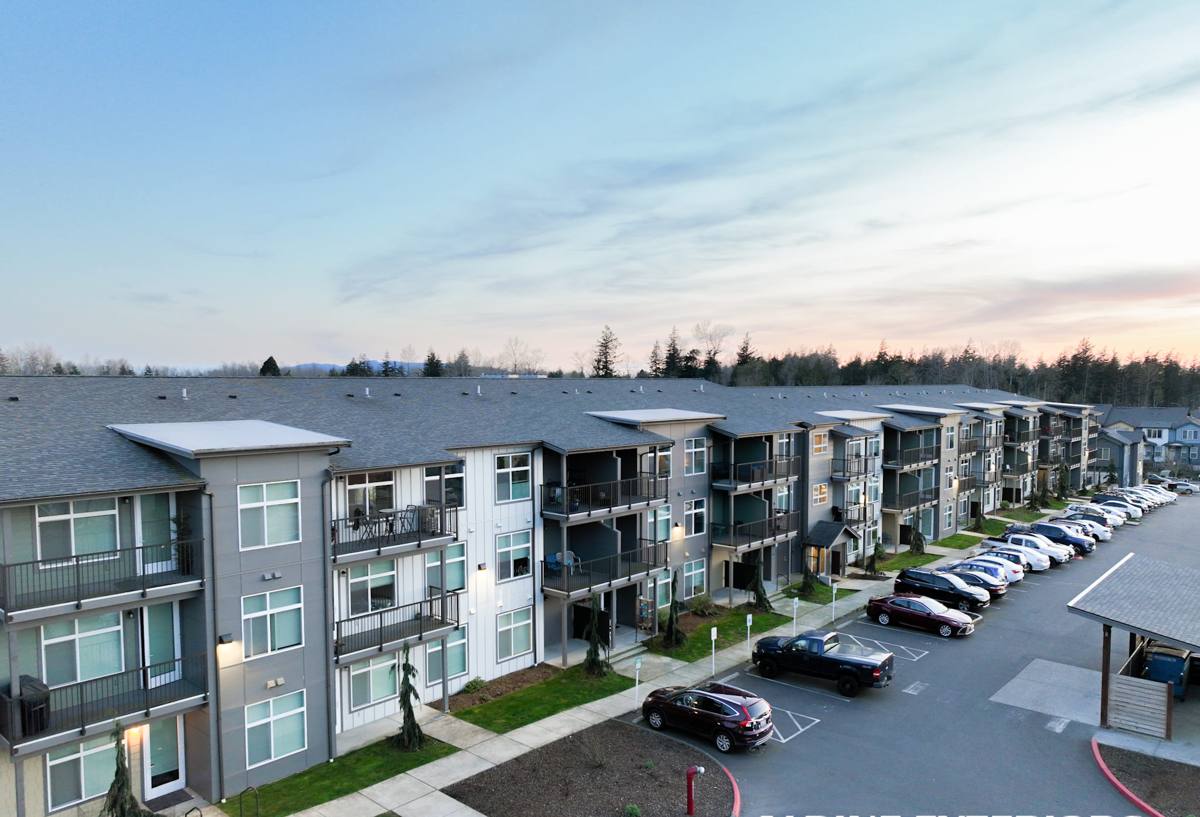
What Salt Air, Rain, and Moss Actually Do to Siding
Salt Air
Airborne salt accelerates corrosion on fasteners, flashing, and any exposed metal trim. It also breaks down lower-grade paint and coatings faster than inland UV exposure alone would, which is why homes closer to the water often show chalking, fading, or peeling years before homes just a few miles east.
Driving Rain
Wind-driven rain doesn't just fall on a wall, it gets pushed into it — around windows, under trim, into any gap at a butt joint or a poorly lapped course. Once water gets behind the siding, the water-resistive barrier and flashing details underneath are what actually protect the wall. The siding itself is the first line of defense, not the only one.
Moss and Sustained Moisture
Shaded walls, north exposures, and areas under tree cover in Puget stay damp longer after storms than sun-exposed walls. That extended moisture window is exactly what moss, algae, and mildew need to take hold. On siding that swells, absorbs water, or doesn't drain properly, moss doesn't just sit on the surface — it holds moisture against the material and keeps it wet even longer, compounding the problem.
What a Correct Siding Installation Involves
Most siding failures we see aren't a failure of the siding material — they're a failure of the details underneath it. A correct installation in a climate like this includes:
- A continuous water-resistive barrier installed shingle-style so every layer sheds water down and out, never trapping it against the sheathing.
- Properly integrated flashing at every window, door, deck ledger, and roof-to-wall transition — the places wind-driven rain actually gets in.
- Correct fastening — the right fastener type, spacing, and penetration depth for the specific siding product, not a generic nail schedule.
- Proper clearances from grade, roofing, and decks so siding isn't sitting in standing water or splash-back.
- Factory-finished or properly primed cut edges, since an exposed cut edge is where moisture gets in first.
- Rain-screen or drainage gap detailing where the wall assembly calls for it, so any incidental moisture has somewhere to go.
Skip any one of these and the siding can look fine for a year or two while the wall behind it quietly takes on damage. This is also why we don't treat siding installation as a one-size-fits-all task — a home in Puget facing prevailing wind and shade gets more attention at flashing and drainage details than a home in a dry, sheltered lot would.
Why We Only Install James Hardie Fiber Cement
We install James Hardie fiber cement siding exclusively, and in a climate like Bellingham's, that's a deliberate choice rather than a brand preference. Fiber cement doesn't absorb and swell with moisture the way wood-based products can, and it won't rot. It's non-combustible, which matters given Washington's increasing wildfire seasons. Hardie's ColorPlus factory finish is baked on under controlled conditions rather than field-applied, which gives it better adhesion and fade resistance against sun and salt air than a job-site paint job.
Hardie also makes climate-engineered product lines — including an HZ5 formulation built for regions with freeze-thaw cycles and heavy moisture exposure, which describes Whatcom County's weather well. Combined with a strong transferable warranty, that engineering is why we standardized on this one product system rather than offering several. We'd rather install one product correctly, in every case, than split our attention across materials with different moisture behaviors and installation requirements.
Our Process for a Puget Siding Installation
1. On-Site Assessment
We walk the exterior with you, checking existing siding, trim, flashing, and any signs of moisture intrusion — paying particular attention to shaded and north- or west-facing walls, which take the brunt of Puget's rain and moss exposure.
2. Scope and Product Plan
We lay out which Hardie products and profiles fit the home, plus a plan for trim, flashing upgrades, and any sheathing repair the assessment turned up.
3. Removal and Sheathing Check
Old siding comes off and we inspect the sheathing underneath before anything new goes up. Hidden rot or soft spots get addressed now, not covered over.
4. Weather Barrier and Flashing
This is the step that determines whether the house stays dry for the next 30-50 years. We install the water-resistive barrier and flashing to shed water at every penetration and transition.
5. Siding Installation to Manufacturer Spec
Fastening, clearances, and joint treatment follow James Hardie's published installation requirements, which is also what keeps the manufacturer's warranty intact.
6. Final Walkthrough
We review the finished work with you, including care and maintenance specifics for a home in this climate.
Signs a Puget Home's Siding Needs Attention
Because moisture problems in this climate tend to develop behind the siding before they show up on the surface, it pays to know the early warning signs:
- Soft or spongy spots when you press on siding or trim, especially near the bottom courses
- Persistent moss or dark streaking that comes back shortly after cleaning
- Paint that's bubbling, peeling, or chalking well before you'd expect a repaint
- Visible gaps, warping, or buckling at seams and butt joints
- Rising energy bills that suggest air or moisture is getting through the wall assembly
- Musty smells or visible staining on interior walls that back up to exterior siding
None of these guarantee a full replacement is needed, but any of them are worth a professional look before the next wet season sets in.
What Affects the Cost of a Puget Siding Installation
| Factor | Why It Matters in Puget |
|---|---|
| Home size and wall complexity | More corners, gables, and dormers mean more flashing and cut detail work, which takes longer to do right |
| Existing sheathing condition | Homes with past moisture intrusion may need sheathing repair before new siding goes on |
| Siding profile and trim selection | Lap width, trim style, and accent choices affect material cost and install time |
| Flashing and drainage upgrades | Homes exposed to driving rain or heavy shade often benefit from upgraded flashing details, adding labor but reducing future risk |
| Access and site conditions | Sloped lots, tree cover, or tight setbacks common in Puget can affect staging and crew time |
We provide a written, itemized estimate after the on-site assessment so you know exactly what you're paying for and why — not a flat per-square-foot number that ignores the specifics of your home.
Why It Matters That We Already Work in Puget
A crew that already works this part of Bellingham knows which walls tend to hold moisture longest, which exposures see the worst wind-driven rain, and how quickly moss reestablishes itself on a shaded elevation. That local pattern recognition shows up in small decisions — where to add extra flashing attention, which trim details are worth upgrading, how to sequence a project around the region's wetter months. It's the difference between a generic install and one built specifically for a Puget address.
After Installation: Keeping Siding Performing in This Climate
Correctly installed Hardie siding is low-maintenance, but "low-maintenance" isn't "no-maintenance" in a climate with this much moisture and salt exposure. A periodic rinse to clear salt residue and organic growth, prompt attention to any caulking or trim that starts to separate, and keeping gutters clear so water sheds away from the wall all go a long way toward getting the full service life out of the installation.
If you're weighing a siding replacement for a Puget-area home, we're happy to take a look and walk you through what we'd actually recommend for your walls, your exposure, and your budget. Reach out for a free, no-pressure estimate — there's a form right below to get started.