 Bellingham Exterior
 Edgemoor's Roofs Work Harder Than Most
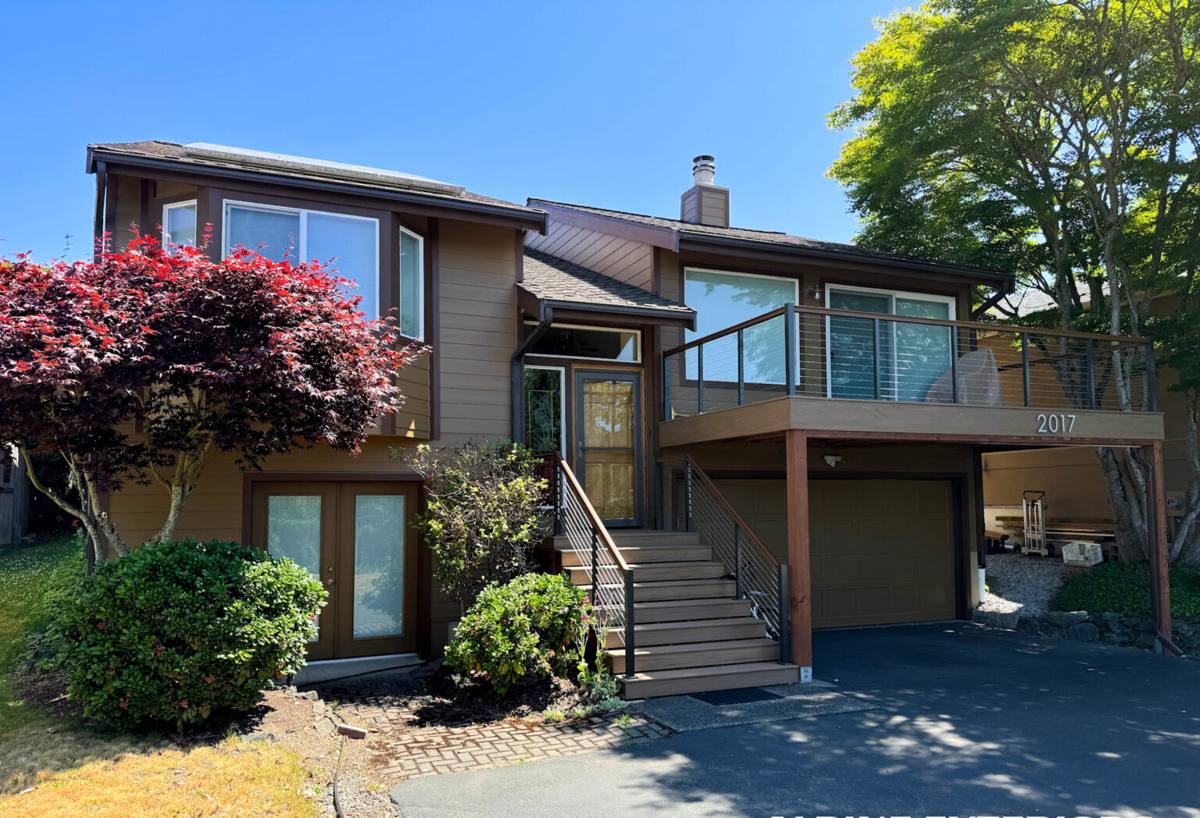
Edgemoor sits on a wooded bluff above the water, and that setting is exactly why roofs here wear differently than roofs a few miles inland. Salt-laden air drifts up off Bellingham Bay and settles on metal flashing, fasteners, and vent boots, speeding up corrosion in ways homeowners rarely notice until a leak shows up inside. Add driving, wind-pushed rain off the water and heavy tree cover from the neighborhood's mature evergreens, and you get a roof that has to shed water sideways, resist moss in constant shade, and keep flashing sealed against fasteners that corrode faster than they would on a sunnier, drier lot. None of this means Edgemoor roofs fail faster than average — it means they need repairs that actually account for the exposure, not a generic patch job.
What "Marine Exposure" Really Does to a Roof
Salt air doesn't just sit on the surface — it works into the metal at fastener heads, flashing seams, and any spot where two materials meet. Galvanized nails and unprotected steel flashing corrode faster near the water than they would a few miles inland. Once a fastener head rusts and shrinks, the shingle or panel it was holding down starts to lift, and that's usually where a leak begins — not in the middle of a roof field, but at an edge, a seam, or a penetration.
Signs an Edgemoor Roof Needs Repair Now
Whatcom County's wet season gives small roof problems plenty of time to become expensive ones. Catching these early is almost always cheaper than waiting for a ceiling stain to show up.
- Dark streaking or thick moss growth, especially on north-facing or heavily shaded slopes
- Granules collecting in gutters or at downspout outlets (a sign shingles are wearing thin)
- Lifted, curling, or missing shingles after a windstorm
- Rust staining below metal flashing, vent boots, or valleys
- Soft or spongy spots when walking the roof (usually rotted decking underneath)
- Water stains on interior ceilings, especially near chimneys, skylights, or where two roof planes meet
- Daylight visible through the attic roof deck
- Debris buildup in valleys from nearby trees, holding moisture against the roofing material
One or two of these on their own don't always mean a full roof replacement. Most of the time, they mean a targeted repair — if it's caught before the water damage spreads into the decking, insulation, or framing underneath.
Repair vs. Replacement: How We Make That Call
Homeowners on the bluff often ask us to "just look at the leak," but a proper roof repair starts with understanding the roof as a whole, not just the spot that's dripping. We check the age and condition of the roofing material, the state of the decking underneath, and whether the problem is isolated or a symptom of the whole roof aging out.
| Situation | Usually a Repair | Usually a Replacement |
|---|---|---|
| Roof age | Under 15-18 years, material still has service life left | Nearing or past manufacturer lifespan |
| Problem scope | Isolated to one flashing detail, vent, or section | Widespread granule loss, curling, or multiple leak points |
| Decking condition | Solid, no rot found on inspection | Soft, delaminated, or water-damaged in multiple areas |
| Moss/algae damage | Surface growth, shingles still intact underneath | Growth has lifted shingles or degraded the mat |
| Underlying cause | A fixable detail (flashing, fastener, sealant) | Systemic wear from age and long-term moisture exposure |
We'd rather do an honest repair that adds real years to a sound roof than sell a replacement it doesn't need — and we'll tell you plainly if a repair is only buying time so you can budget for what comes next.
What a Correct Roof Repair Actually Involves
A repair that holds up through another Whatcom County winter is more than a bead of sealant over a wet spot. On Edgemoor roofs specifically, we pay close attention to the details that salt air and driving rain attack first.
Diagnosis Before Anything Gets Touched
We trace leaks from the inside out where possible — water rarely shows up directly below where it entered, especially on a sloped roof, so a stain on a ceiling can be feet away from the actual failure point. We check flashing at chimneys, skylights, valleys, and sidewalls, since these transition points fail far more often than open shingle field.
Matching the Repair to the Roofing System
Repairs have to be compatible with what's already on the roof — mismatched shingle types, incompatible sealants, or the wrong flashing metal can cause galvanic corrosion or a repair that fails faster than the original material. We match material, fastening method, and flashing detail to what's already installed whenever possible.
Sealing Against Wind-Driven Rain
Because Edgemoor catches rain pushed sideways off the water, we pay extra attention to laps, exposed fastener heads, and flashing that relies on gravity alone to shed water. A repair that would hold up fine on a calm inland roof can fail here if it isn't sealed for wind-driven moisture.
Common Repair Calls We See in This Neighborhood
Moss and Organic Growth
Edgemoor's tree canopy keeps large sections of many roofs shaded most of the day, which is exactly the condition moss needs to establish. Left alone, moss holds moisture against the roofing material and can work its way under shingle edges, lifting them over time. Repair here usually means removing the growth carefully (not power-washing, which can strip granules), replacing any shingles it's already damaged, and addressing the moisture and shade conditions where practical.
Flashing and Fastener Corrosion
Given the salt air, we see flashing and exposed fasteners corrode ahead of the shingles or panels around them. The fix is usually to replace the corroded flashing with a metal better suited to marine exposure and re-seal the surrounding material — patching over rusted flashing without replacing it just delays the same repair.
Valley and Debris Buildup
Roof valleys collect needles, leaves, and moss faster under tree cover, and a clogged valley backs water up under shingles instead of channeling it off the roof. We clear valleys as part of most repair visits and check whether the valley flashing itself is still doing its job.
Skylight and Penetration Leaks
Any place something penetrates the roof — a skylight, a vent stack, a chimney — is a higher-risk spot for leaks than open shingle field. These get old sealant removed, flashing checked, and re-sealed with materials rated for the exposure, not just caulked over.
Our Repair Process
- On-site inspection of the roof surface, flashing details, attic, and any interior water staining
- Plain-language explanation of what's actually wrong and what caused it
- Written estimate that separates the repair itself from any incidental work (decking replacement, gutter clearing) so you know what you're paying for
- Repair work using materials matched to your existing roofing system
- Final check for any secondary damage — soft decking, insulation, or interior finishes — that the leak may have caused before it was caught
What Repairs Typically Cost
Every repair is priced on what's actually found on the roof, but homeowners generally want a sense of scale before scheduling a visit. These are broad, honest ranges — not quotes.
| Repair Type | Typical Range | What Drives the Cost |
|---|---|---|
| Minor flashing or sealant repair | Lower end | Single penetration, easy roof access |
| Shingle section replacement | Low-to-mid range | Number of shingles, matching existing material |
| Valley or flashing replacement | Mid range | Length of valley, metal type, underlying decking condition |
| Moss removal and treatment | Low-to-mid range | Roof size, extent of growth, shingle condition underneath |
| Decking repair (rot found) | Higher end | Square footage of damaged decking, framing exposure |
Roof access and pitch also affect labor time, and anything requiring decking replacement adds material and time beyond a surface-level fix. We'll always separate these in an estimate so you can see exactly what's driving the number.
Keeping Repairs From Becoming a Pattern
A few habits go a long way toward stretching the time between repair calls on a shaded, salt-exposed roof like the ones common in Edgemoor:
- Keep gutters and valleys clear of needles and leaves, especially heading into fall and winter
- Have moss treated before it establishes rather than after it's visibly thick
- Trim back overhanging branches where practical to reduce shade and debris
- Have flashing and fasteners checked every couple of years, since corrosion here is gradual and easy to miss from the ground
- Address small leaks immediately — a slow drip into decking over a wet season causes more damage than the original leak itself
Why a Crew That Already Works This Neighborhood Matters
Roof repair isn't identical from one Bellingham neighborhood to the next. A crew that's worked bluff-side, tree-covered, water-adjacent properties knows to check flashing metal compatibility with salt exposure, knows which slopes hold moss longest through a Whatcom County winter, and knows how driving rain off the bay behaves differently than a straight-down inland rainstorm. That familiarity means fewer surprises during the inspection and a repair scoped correctly the first time, instead of a callback a season later for a detail that got missed.
If you're dealing with a leak, visible moss, or just want an honest read on your roof's condition, we're happy to take a look. Use the form below to request a free, no-pressure estimate — we'll tell you what we actually find, not just what's easiest to sell.