 Bellingham Exterior
 Board & Batten Siding Built for Edgemoor's Bay-Bluff Climate
Edgemoor sits on wooded, bluff-top lots overlooking Bellingham Bay, which makes it one of the more distinctive pockets of Bellingham to side a home in. The tree cover holds moisture against exterior walls longer than open lots do, and the bay proximity means salt-laden air is a daily fact of life, not an occasional weather event. Board and batten siding — with its bold vertical lines, wide reveals, and strong shadow lines — is a natural fit for the craftsman and modern-farmhouse styles common in the neighborhood. But it's also a siding profile that punishes shortcuts. Every vertical seam and batten strip is a place water can find its way behind the cladding if the job isn't done correctly.
We install James Hardie fiber cement exclusively, and this page walks through what board and batten actually needs to hold up in Edgemoor specifically — not a generic description of the style.
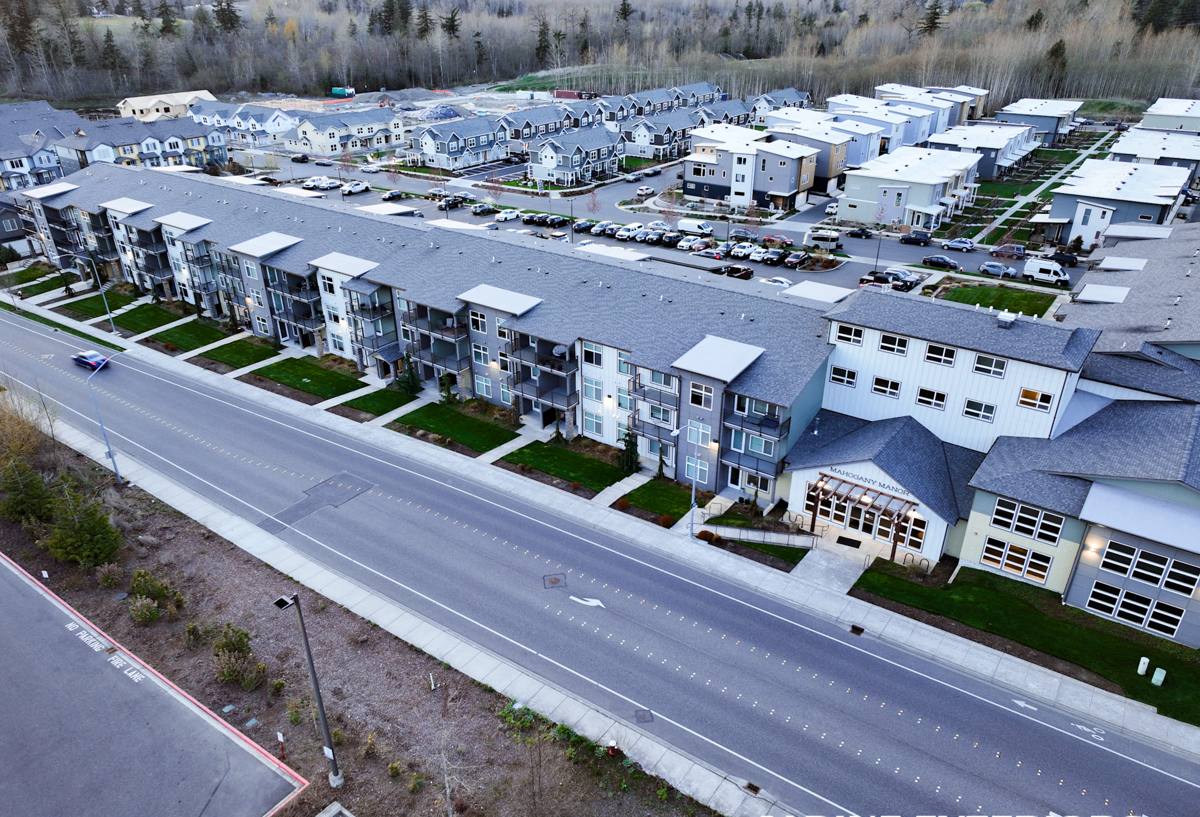
What Bellingham Bay's Climate Does to Vertical Siding
Salt Air and Fasteners
Homes closer to the water take a slow, steady dose of salt-laden air. Over years, that air accelerates corrosion on unprotected metal — fasteners, flashing, and trim clips included. Board and batten has more exposed vertical fastening than most siding styles, so the fastener spec and the flashing details matter more here than they would on a lap-sided home set back from the bay.
Driving Rain and Vertical Seams
Storms off the water tend to drive rain sideways rather than straight down, and vertical board and batten seams run in the same direction as that wind-driven water. A lap-sided wall sheds water downward across overlapping courses; a board and batten wall relies on the batten covering the seam and a proper drainage gap behind the panel to do the same job. Get the batten spacing or the water-resistive barrier detail wrong, and driving rain has a straight shot into the wall assembly.
Moss Season and Shaded Lots
Edgemoor's tree canopy keeps a lot of siding in shade for large parts of the day, especially through the long wet season Whatcom County sees from fall through spring. Shade plus moisture is exactly what moss and algae need to take hold, and once organic growth establishes itself on a wall, it holds even more moisture against the surface underneath it. Siding material and finish matter here — porous or unsealed surfaces feed moss growth faster than a factory-sealed fiber cement surface does.
Why Board & Batten Is Less Forgiving Than Lap Siding
Board and batten looks simple — wide boards, narrow strips covering the seams — but it demands more precision than horizontal lap siding in a few specific ways:
- There's no overlap doing the shedding work; the assembly depends on a drainage gap and correct batten placement instead of gravity alone.
- Vertical runs typically need blocking or furring behind the panel to create that drainage gap and give fasteners something solid to bite into.
- Butt joints (where a board ends mid-wall) need proper flashing and sealant detailing, since there's no shingle-style overlap to protect them.
- Batten spacing has to stay consistent for the reveal to look right — a cosmetic issue as much as a performance one, and it shows immediately on a home with clean architectural lines.
None of this is exotic work, but it's work that goes wrong quietly. A lap siding installation error often shows up as an obvious gap or crooked course. A board and batten error — a missing drainage gap, a poorly flashed butt joint — can sit behind the wall doing damage for years before anyone sees a sign of it.
The James Hardie Board & Batten System We Install
HardiePanel Vertical Siding and Battens
We install James Hardie's HardiePanel vertical siding with Hardie batten strips, and, on some homes, the Artisan V-groove panel line for a more refined, tighter-reveal look. Both are fiber cement — a blend of cement, sand, and cellulose fiber that doesn't rot, doesn't feed insects, and won't ignite the way wood-based sidings can. That non-combustible quality matters generally, and it matters specifically in a state where wildfire smoke and ember exposure have become a real seasonal concern even west of the Cascades.
ColorPlus Factory Finish
James Hardie's ColorPlus finish is baked on at the factory under controlled conditions, not brushed or sprayed on site. That matters most on a moss-prone, shaded lot: a factory-cured finish resists the fading, chalking, and surface breakdown that give moss and mildew something to grip. It also means the color is consistent panel to panel, which is more noticeable on a bold vertical profile than it would be on a busier lap pattern.
Engineered for Wetter, Cooler Climates
James Hardie makes climate-specific product formulations, with a version engineered for regions that see more moisture and freeze-thaw cycling than the national average — a category the Pacific Northwest falls squarely into. We spec that formulation for Edgemoor and the rest of our Bellingham service area rather than a generic national product, because the extra margin against moisture cycling is exactly what a bay-bluff, tree-shaded lot needs.
What a Correct Installation Involves
A board and batten job that's built to last through Whatcom County winters comes down to a short list of details, every one of which is easy to skip and hard to inspect after the wall is closed up:
- A water-resistive barrier installed and lapped correctly, with all penetrations (hose bibs, vents, light fixtures) properly flashed before the first panel goes up
- Furring strips or a rainscreen gap behind the panel so water that does get past the surface has somewhere to drain and dry
- Corrosion-resistant fasteners rated for the exposure, driven at the manufacturer's specified pattern and depth — not just "enough to hold it up"
- Butt joints flashed individually, not just caulked over and hoped for
- Correct clearance at grade, roof lines, and decks so siding never sits in standing water or constant splash-back
- Battens fastened through to framing or blocking, spaced evenly for both drainage and appearance
- All cut edges of the fiber cement sealed per manufacturer spec to maintain the factory finish's protection
Any one of these skipped is invisible on move-in day. Most of them only show themselves five, ten, or fifteen years later, as a soft spot, a stain, or a section of siding that's failed while the rest of the wall is fine.
Our Process, Start to Finish
We run the same disciplined process on every Edgemoor project, adjusted for the site's tree cover, slope, and bay exposure.
| Step | What Happens |
|---|---|
| Site walk & assessment | We evaluate existing siding, sheathing condition, moisture history, and how the lot's shade and slope affect drainage and drying time. |
| Tear-off & sheathing check | Old siding comes off and the sheathing underneath is inspected for hidden rot or moisture damage before anything new goes on. |
| Water-resistive barrier & flashing | Barrier, flashing, and drainage gap installed at every penetration, window, door, and butt joint location. |
| Panel & batten installation | HardiePanel installed to manufacturer fastening spec, followed by battens set at consistent, pre-planned spacing. |
| Trim, sealant & final detailing | Corner trim, sealant at manufacturer-specified joints only, and a full walk-through against the install checklist. |
| Final walkthrough | We review the finished job with you before calling it complete. |
Board & Batten Material Options Compared
Homeowners researching board and batten in this climate typically compare a few material paths. Here's the honest breakdown of how they hold up on a bay-adjacent, shaded lot like Edgemoor.
| Material | Moisture & Salt-Air Behavior | Maintenance | Longevity Notes |
|---|---|---|---|
| James Hardie fiber cement | Non-combustible, engineered moisture resistance, factory-sealed finish | Occasional rinse; no repainting cycle needed with ColorPlus finish | Strong transferable warranty when installed to spec |
| Primed wood or cedar | Absorbs moisture at end grain and seams; salt air accelerates weathering | Repainting/staining on a recurring cycle | Performance depends heavily on upkeep discipline |
| Engineered wood (e.g. LP SmartSide) | Resin-treated but still wood-based; edge sealing is critical | Field-applied finish needs monitoring at joints and cuts | Can perform well but is less forgiving of installation gaps |
| Vinyl board & batten | Doesn't rot, but can warp or become brittle with UV and temperature swings | Low, but limited repair options if a section is damaged | Shorter practical lifespan than fiber cement in most cases |
We standardized on James Hardie because, installed correctly, it holds its finish and structural integrity in exactly the conditions that make Edgemoor's siding jobs harder than average: shade, moisture, and salt air.
Caring for Board & Batten Siding on a Shaded Edgemoor Lot
Correct installation gets you most of the way there, but a little seasonal attention keeps a board and batten job looking sharp for the long haul:
- Rinse siding annually, especially north-facing and heavily shaded walls where moss and algae take hold first
- Keep gutters clear so overflow doesn't run down and pool at batten seams
- Trim back vegetation that keeps a wall section in constant shade or holds moisture against it
- Check caulking at butt joints and trim every couple of years — it's the one component that ages faster than the fiber cement itself
- Have any impact damage (branch strikes are common under tree cover) repaired promptly rather than left through a wet season
Why an Edgemoor-Experienced Crew Matters
Board and batten forgives almost nothing when it comes to installation sequence and detailing, and a bay-bluff, tree-covered lot adds site-specific judgment calls that a crew unfamiliar with the area won't think to make — how much drainage gap to build in on a wall that rarely gets direct sun, where moss pressure is highest, how prior salt-air exposure has already treated the sheathing underneath old siding. We work this part of Bellingham regularly, which means we're not guessing at how Whatcom County's wet season and bay exposure interact with a board and batten assembly — we're applying what we already know works here.
If you're weighing board and batten for a home in Edgemoor, we're happy to walk the property, look at what's there now, and give you a straight assessment of what it would take to do it right. Reach out for a free, no-pressure estimate using the form below.