 Bellingham Exterior
 Why Edgemoor's Setting Wears Out Siding Faster
Edgemoor sits close to Bellingham Bay, under a heavy canopy of mature conifers and mixed hardwoods, which makes it one of the more beautiful pockets of Bellingham — and one of the toughest on exterior materials. Homes here deal with a combination most siding products were never engineered for: airborne salt off the water, wind-driven rain that gets pushed sideways into wall assemblies, and deep shade that keeps siding damp for days after a storm passes. In Whatcom County, that dampness doesn't dry off in an afternoon like it might in a drier climate. It sits, and where it sits, moss, algae, and mildew move in.
None of this means Edgemoor is a bad place to own a home — it just means siding here needs to be chosen and installed with the actual conditions in mind, not the conditions a product performs well in on a spec sheet written for a national market. A siding replacement done right in this neighborhood accounts for shade, moisture retention, and salt exposure from day one, not as an afterthought once problems show up.
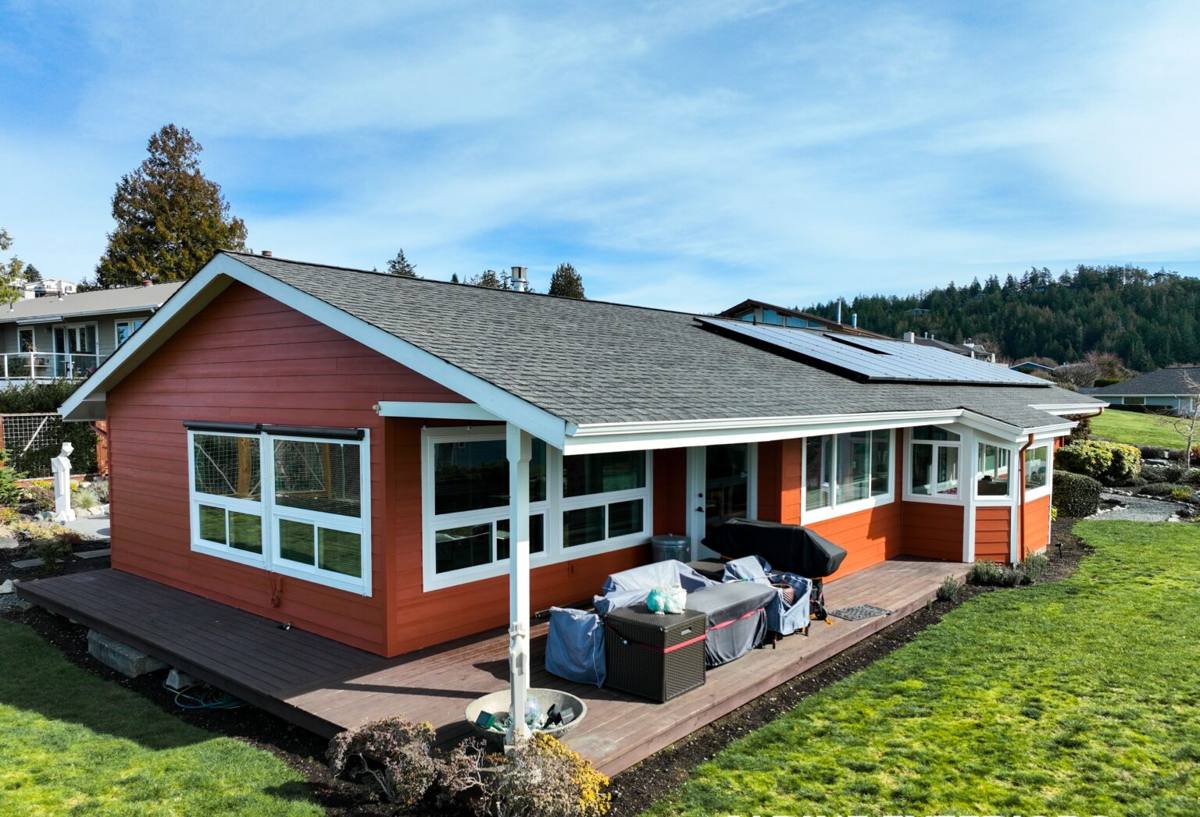
How to Tell Your Siding Is Past Its Service Life
Most homeowners don't replace siding because they woke up one day and decided to — they replace it because a specific problem forced the issue, or because a string of smaller issues finally added up. In a climate like this one, the warning signs tend to show up gradually, often starting on the shaded, wind-exposed sides of the house first.
- Soft or spongy spots when you press on the siding, especially near the bottom courses or around window and door trim
- Moss or dark algae staining that comes back within weeks of being cleaned, even after pressure washing
- Paint that's blistering, peeling, or won't hold a fresh coat for more than a year or two
- Visible gaps, warping, or cupping in individual boards or panels
- A musty smell in rooms along an exterior wall, which can point to moisture getting behind the siding
- Rising energy bills that aren't explained by anything else — a sign the wall assembly may no longer be sealing properly
- Siding that's original to a home built more than 20-25 years ago, particularly wood or older composite products
Any one of these on its own might just need a repair. Several at once, especially combined with visible rot at trim or corners, usually means the underlying wall assembly has been compromised and a full replacement is the more honest recommendation.
What "Correct" Siding Replacement Actually Means
Siding replacement is not just swapping old boards for new ones. The siding itself is the least important layer in terms of keeping water out of your walls — what's behind it does the real work. A correct job in a wet, shaded, salt-exposed neighborhood like Edgemoor involves several layers working together, and skipping any one of them is where most premature failures start.
What a Proper Tear-Off Reveals
Removing the old siding is the only real opportunity to see the condition of the sheathing, framing, and existing weather barrier underneath. This is where hidden problems — soft sheathing, old leaks, missing flashing — get found and fixed before they're sealed back up behind new siding for another two decades.
Flashing and Drainage Details Most Crews Skip
Every window, door, deck ledger, and roof-to-wall intersection needs flashing that directs water outward and downward, not into the wall cavity. Behind that, a weather-resistive barrier (WRB) needs to be lapped correctly, shingle-style, so water always sheds down and out. In a climate with this much sustained rainfall, we also install a drainage gap — a rainscreen — behind the siding itself, so any moisture that does get past the outer layer has somewhere to drain and dry instead of sitting against the sheathing.
Fastening matters just as much. Manufacturer-specified nailing patterns, fastener spacing, and clearances at the bottom of the wall aren't suggestions — they're what keeps a wall system rated to shed wind-driven rain instead of just looking finished on installation day.
Comparing Siding Options in a Moss-and-Salt Climate
Homeowners in Edgemoor often ask us to weigh in on options they've already gotten quotes on. Here's an honest comparison of how the main materials actually perform once they're dealing with sustained Pacific Northwest moisture and shade, not just how they look on a sample board.
| Material | Moisture Behavior | Maintenance | Typical Lifespan Here |
|---|---|---|---|
| James Hardie fiber cement | Non-combustible, engineered to resist moisture swelling; factory finish resists moss staining | Occasional rinse; no repainting for 15+ years with ColorPlus finish | 30-50 years with correct install |
| Vinyl siding | Doesn't rot, but can trap moisture behind it and warps or cracks in temperature swings | Low, but damaged panels are hard to color-match years later | 15-25 years, often less in full shade |
| LP SmartSide | Engineered wood strand product; performs well when detailed perfectly, vulnerable at cut edges and seams | Requires diligent caulk and paint maintenance | 15-25 years, heavily install-dependent |
| Cedar / primed spruce | Natural wood; absorbs and releases moisture constantly, feeds moss and mildew growth | High — regular sealing, staining, or painting | 15-20 years before major refinishing needed |
We install James Hardie exclusively, and this table is a big part of why. It's not that the alternatives are junk — LP SmartSide and cedar both have real strengths — it's that under sustained shade, salt air, and rain, they demand more maintenance and more installation precision than most homeowners realize they're signing up for. Fiber cement gives us a wider margin for error in exactly the conditions where that margin matters most.
Cost Factors Specific to Edgemoor Properties
Every siding quote should reflect the actual house, not a flat per-square-foot number pulled from a generic estimate. A few factors come up more often in this neighborhood than elsewhere in Bellingham.
| Factor | Why It Affects Cost |
|---|---|
| Tree cover and site access | Mature trees close to the house can limit staging, ladder placement, and material delivery, adding labor time |
| Extent of hidden water damage | Homes with a long history of shade and moisture sometimes need sheathing or framing repairs discovered during tear-off |
| Home size and wall complexity | Dormers, bump-outs, and multiple gables all add cutting, flashing, and trim work |
| Trim and accent choices | Board-and-batten accents, trim boards, and color changes between stories add material and labor |
| Stories and roofline height | Steep bluff-adjacent lots and taller homes require more scaffolding and safety setup |
We won't quote a number without seeing the house — anyone who does is guessing. But these are the variables that consistently separate a straightforward estimate from a more involved one.
Our Process, From Estimate to Final Walkthrough
- On-site assessment — we walk the exterior, check for soft spots, look at existing flashing and trim condition, and talk through what you're seeing from the inside (drafts, stains, musty rooms)
- Written estimate — a clear scope covering tear-off, any anticipated repairs, product line and color, and a realistic timeline
- Tear-off and inspection — old siding comes off, sheathing and framing get inspected, and we flag anything that needs repair before proceeding
- Weather barrier and flashing installation — WRB, flashing at every penetration, and rainscreen furring installed to manufacturer spec
- Hardie installation — siding installed with correct fastener pattern, clearances, and joint treatment
- Final inspection and walkthrough — we go over the finished work with you before calling the job done
Why James Hardie Fits This Microclimate
James Hardie's HZ5 product line is engineered specifically for climate zones like ours — regions with sustained rainfall and moderate temperature swings rather than deep freeze-thaw cycles. That climate engineering shows up in practical ways: the fiber cement doesn't absorb and release moisture the way wood-based products do, which is a big part of why it resists the warping and swelling that shade and dampness cause in other materials.
The factory-applied ColorPlus finish matters just as much in a neighborhood like this. It's baked on under controlled conditions and holds color and resists moss and mildew staining far longer than field-applied paint, which is the finish that actually fails first on most sided homes in wet, shaded settings. Add in that fiber cement is non-combustible and backed by a strong transferable warranty, and it's a product built for exactly the conditions Edgemoor throws at a house — not just a product we happen to prefer.
Why Hiring a Crew That Already Works in Edgemoor Matters
Siding crews that mostly work drier, more open parts of Whatcom County can do fine work and still get caught off guard by a shaded, tree-lined, water-adjacent lot. Access for scaffolding and material staging around mature trees, drainage detailing sized for sustained rainfall rather than occasional storms, and recognizing which moss and staining patterns point to a real moisture problem versus a cosmetic one — these are things you learn by working this specific kind of property repeatedly, not by reading a spec sheet once.
A crew that already knows the neighborhood also tends to move faster through the permitting and planning steps, because they've done it before on a lot with the same constraints yours has. That translates into fewer surprises mid-project, which matters more here than in a typical open, sunny lot.
Ready to Talk About Your Siding?
If your Edgemoor home is showing moss that won't stay off, paint that won't hold, or siding that's simply reached the end of its service life, we're happy to take a look and walk you through what we're seeing — no pressure, no obligation. Fill out the form below to schedule a free estimate.