 Bellingham Exterior
 New-Construction Windows in Edgemoor: Getting It Right From the Start
New-construction window installation is a different job from window replacement, even though both end with a window in a wall. On a new build, or a full addition or major remodel where the wall is opened to the studs, the window goes in as part of the building envelope itself — tied into the sheathing, the weather-resistive barrier, and the flashing system before siding ever goes on. Get this sequence right and the window becomes part of a wall that sheds water for decades. Get it wrong and you end up with rot behind the trim in five to ten years, often invisible until the siding comes off.
For homes going up or being substantially rebuilt in Edgemoor, this first-install work matters more than in a lot of neighborhoods, because of what the site throws at the building envelope year-round.
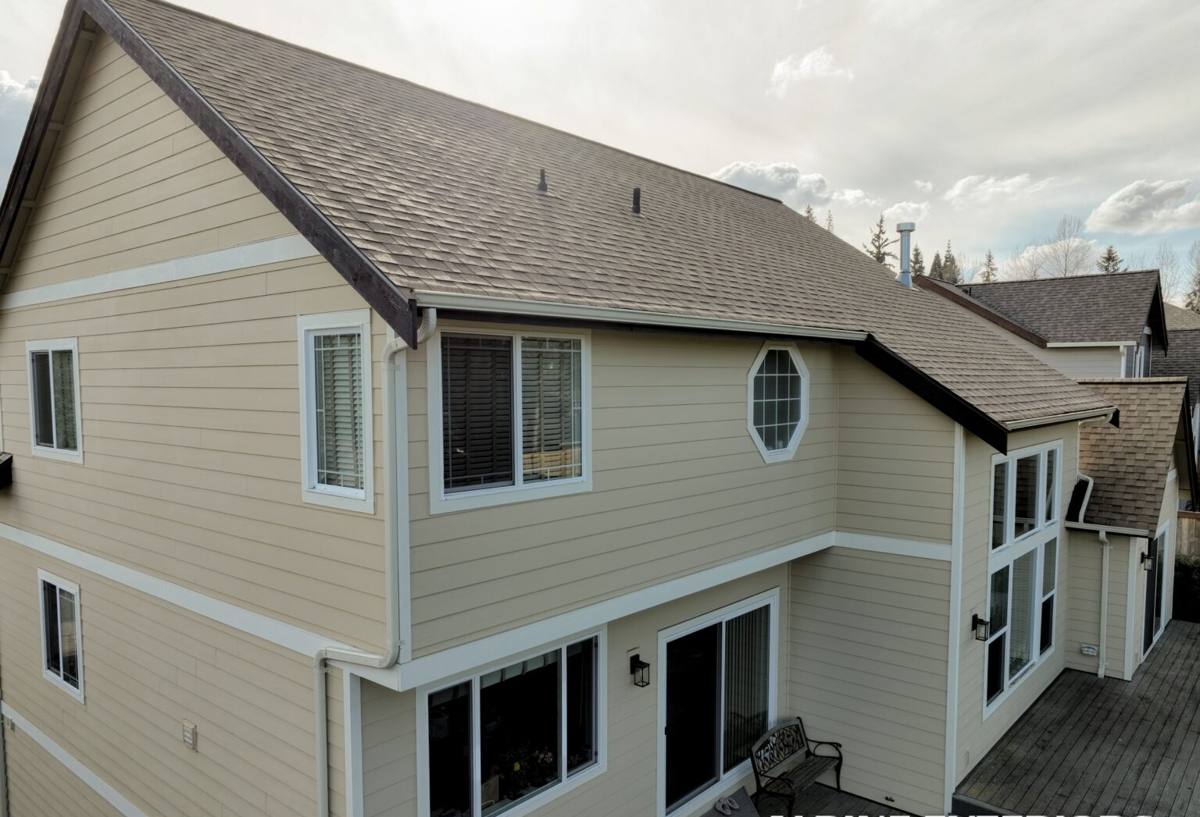
Why Edgemoor's Setting Changes the Job
Edgemoor sits close to Bellingham Bay, and that proximity brings a mix of weather stresses that a window opening has to be built to handle from day one. Salt-laden air off the water accelerates corrosion on unprotected fasteners, hardware, and some metal flashing types faster than it would a few miles inland. Driving rain off the water — wind-driven rather than straight-down — pushes water sideways into gaps and laps that would stay dry in a calmer setting, which means every flashing lap has to actually work, not just look right. And the long, wet moss season common to Whatcom County keeps siding, trim, and window sills damp for extended stretches, so anything that traps water against wood or fiber-cement stays wet longer and rots faster.
None of this means Edgemoor needs exotic materials. It means the ordinary steps — flashing order, sealant placement, drainage gaps — have to be done correctly every single time, because the margin for a shortcut is smaller here than it is in a drier, more sheltered part of the county.
What a Correct New-Construction Install Actually Involves
A flanged window (the standard type used in new construction) is designed to be integrated into the wall's drainage plane, not just caulked into an opening. The goal at every step is the same: water that gets past the siding has to drain back out, never inward or downward into the framing.
The Flashing Sequence
Flashing goes in shingle-style, meaning each layer overlaps the one below it so water is always directed outward and down, the same way roof shingles work. For a window opening that means, in order: sill pan first, then the window itself set into the pan, then side flashing over the nailing flange, then head flashing last, lapped over the weather-resistive barrier above the opening. If any layer goes in out of order — head flashing tucked under the WRB instead of over it, for example — water gets funneled into the wall instead of away from it.
Sill Pans and Sub-Sill Flashing
The sill pan is the part most often skipped or done poorly on production-grade builds, and it's the piece that matters most. It creates a shallow, sloped tray under the window that catches any water that makes it past the frame and directs it back outside through weep points, rather than letting it sit on the framing lumber. In a climate with as much sustained wet weather as Bellingham sees, a missing or flat (non-sloped) sill pan is one of the most common causes of hidden rot we find when we're called in on older installs.
Choosing Window Frame Materials for a Coastal Bellingham Site
Frame material affects how a window holds up to salt air and constant moisture exposure over time. There's no single "best" choice for every home — it depends on budget, the home's design, and how much upkeep an owner wants to take on.
| Frame Material | Salt Air / Moisture Behavior | Maintenance | Relative Cost |
|---|---|---|---|
| Vinyl | Won't corrode or rot; performs well near the water | Low — occasional cleaning | Lower |
| Fiberglass | Very stable, resists moisture and temperature swings well | Low | Mid to higher |
| Wood-clad (exterior clad in vinyl, aluminum, or fiberglass) | Good if cladding and flashing details are correct; interior wood stays protected | Moderate — exterior is low-maintenance, interior may need periodic finishing | Higher |
| Aluminum | Can pit or corrode faster in salt air unless properly coated/anodized | Moderate to higher near the water | Mid |
We'll walk through these trade-offs honestly during your estimate rather than pushing one product line — the right call depends on your home's exposure, your siding material, and your budget.
Glazing and Energy Performance
Washington's energy code sets minimum performance requirements for new-construction windows, and in a marine climate like Bellingham's, glazing choice also affects comfort and condensation control, not just heating bills. Dual-pane, low-E glass with an argon or krypton gas fill is standard on most new builds we work on now, and it does real work here: it cuts heat loss through the glass, reduces the cold-glass effect that causes condensation on interior surfaces during Whatcom County's cool, damp winters, and helps control solar heat gain on south- and west-facing openings in summer. We'll confirm the U-factor and Solar Heat Gain Coefficient (SHGC) your specific elevations need to meet code before ordering.
How Our Process Works
Whether we're working directly for a homeowner or coordinating with your general contractor, the sequence is the same:
- Plan review and measure. We confirm rough openings against the window schedule before anything is ordered, so there are no surprise gaps or trims on install day.
- Sequencing with the build. Windows go in after the weather-resistive barrier is on and before siding starts — we coordinate timing with your builder so the envelope isn't left exposed longer than necessary.
- Install, in order. Sill pan, window, side flashing, head flashing, then sealant at the specified points only — not everywhere, since over-sealing can trap water instead of letting it drain.
- Interior air seal and insulation. The gap between the frame and rough opening gets sealed and insulated per manufacturer spec, which also matters for the home's energy performance.
- Walkthrough. We check every opening before siding closes it up, since flashing problems are far cheaper to fix before the wall is finished than after.
Mistakes We See on New-Construction Installs
Most of the window problems we get called to fix in Whatcom County trace back to a handful of recurring errors, not a bad window itself:
- Head flashing installed under the weather-resistive barrier instead of over it, funneling water into the wall
- No sill pan, or a flat sill pan with no slope to drain water back out
- Nailing flanges fastened through sealant only, with no mechanical drainage gap left for water to escape
- Continuous bead of sealant around the entire flange, trapping any water that gets in rather than letting it out
- Window units left uncovered and exposed to weeks of rain before siding closes the opening
A Practical Checklist Before Windows Go In
If you're a homeowner working with a builder, or a GC bringing us in as a sub, these are worth confirming before install day:
- Rough openings measured against the actual window schedule, not just the plans
- Weather-resistive barrier installed and taped before window delivery
- Sill pan flashing material and slope specified in writing, not left to the crew's judgment
- Flashing sequence (sill, jambs, head) documented for the inspector and for your own records
- A plan for how long the opening will sit exposed if siding isn't following immediately behind
- Written confirmation of the glazing package's U-factor and SHGC for code compliance
Maintenance After Move-In
A correctly installed new-construction window in Edgemoor should need very little attention, but the site's moss season and salt exposure mean a short annual check is worth doing. Rinse accumulated salt residue and grime off frames and glass a couple of times a year, especially on elevations facing the bay. Keep gutters and any nearby moss growth from holding water against trim or siding near window openings — sustained damp contact is what causes slow rot, not brief rain exposure. And take a look at exterior sealant joints yearly; sealant is a maintenance item everywhere, but it breaks down faster under constant UV and salt air than in a sheltered inland yard.
Why Hire a Crew That Already Works Edgemoor
A window install that's technically correct on paper can still fail if the crew doesn't understand how wind-driven rain off the bay behaves against a specific elevation, or hasn't dealt with Whatcom County's inspection expectations before. Working regularly in and around Bellingham means we're not learning the local climate on your project — we already know which elevations take the worst of the driving rain, how long moss season actually runs here, and what our building department wants to see documented at flashing inspection. That familiarity shows up as fewer surprises during the build and a window install that's still doing its job correctly a decade from now.
If you're planning new construction, an addition, or a full remodel in Edgemoor and want windows installed correctly the first time, we're happy to walk the plans with you and put together a straightforward, no-pressure estimate — just fill out the form below.