 Bellingham Exterior
 Edgemoor's Climate Puts Composite Decking to the Test
Edgemoor sits close enough to Bellingham Bay that homes here deal with a specific combination of conditions: salt-laden air drifting off the water, long stretches of driving rain through fall and winter, and heavy shade from the mature fir and cedar canopy that gives the neighborhood its character. That shade is part of what makes Edgemoor a desirable place to live, but it also means decks here dry out slower than decks in open, sunny yards elsewhere in Whatcom County. Slower drying means more time for moisture to sit in seams, fastener holes, and ledger connections — exactly where composite decking either performs well or starts showing problems, depending on how it was installed.
Composite decking is a good match for this climate because it doesn't absorb water, split, or rot the way wood does. But composite is not maintenance-free, and it is not installation-proof. A composite deck built to a generic national spec, without accounting for Edgemoor's shade and salt exposure, will still trap moisture, grow moss, and corrode hardware faster than one built with this specific site in mind.
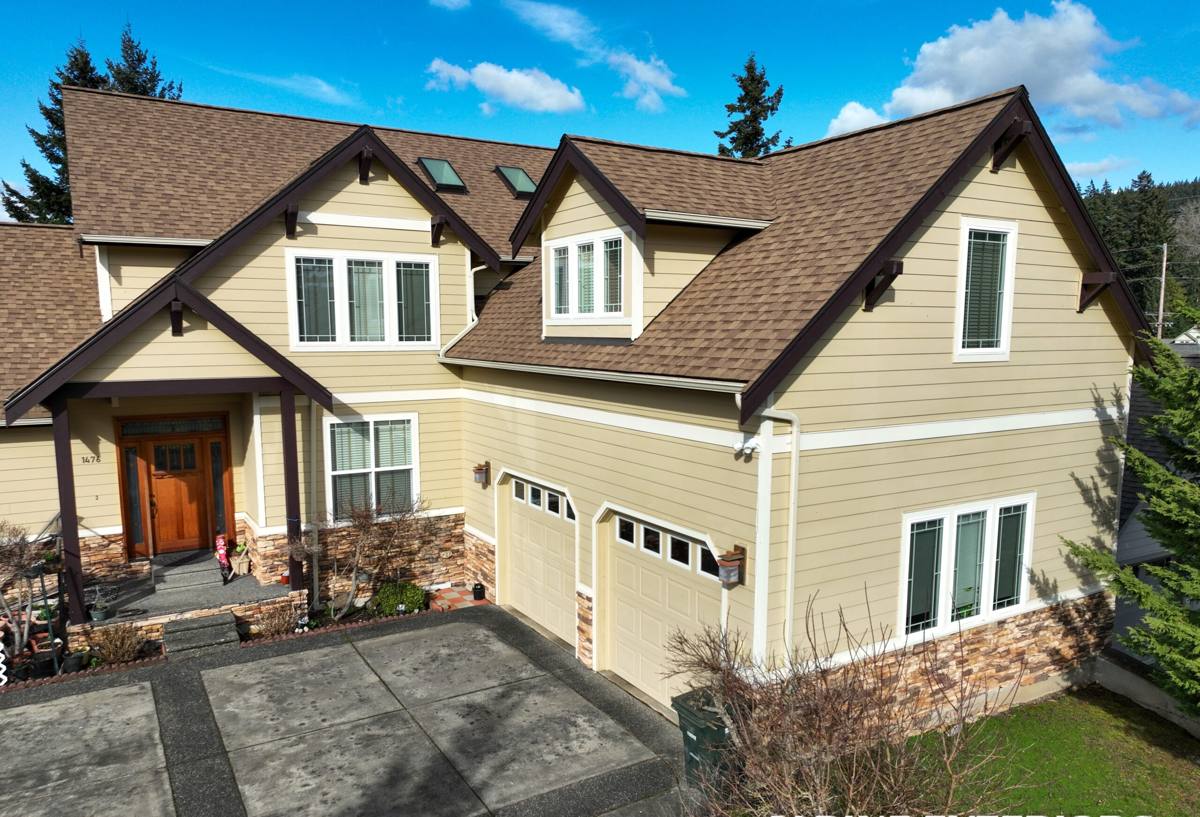
What a Correct Composite Decking Install Requires
The boards get most of the attention, but the framing underneath them is what determines whether a deck lasts 10 years or 25. In a marine, high-shade environment like Edgemoor, three parts of the substructure matter more than the brand of composite you choose.
Ledger Attachment and Flashing
The ledger board — where the deck connects to the house — is the single most common source of long-term water damage on any deck, composite or wood. It needs proper flashing that sheds water away from the house rim joist, not just caulk or tape. In a neighborhood that sees prolonged rain events, a poorly flashed ledger is a slow leak that can take years to show up as rot inside a wall or crawlspace.
Fasteners and Hardware in a Marine Environment
Salt air accelerates corrosion on anything less than fully rated stainless or coated fasteners. Standard galvanized hardware can start showing rust streaks on light-colored composite decking within a few seasons this close to the bay. We spec fasteners and structural connectors rated for coastal exposure, not just the minimum code requirement, because replacing corroded hardware later means pulling up boards that were never designed to come back off easily.
Ventilation and Drainage Beneath the Deck
Composite boards don't rot, but the joists, beams, and posts underneath them usually are still wood, and that framing needs airflow to dry out between rain events. Low decks built tight to grade, or decks enclosed with solid skirting and no venting, hold humidity underneath — which is worse in a shaded lot than in full sun. Correct framing height, joist spacing, and skirting venting matter more in Edgemoor's tree cover than they would on an open, breezy site.
Choosing the Right Composite Board for Salt Air and Shade
Not all composite decking is built the same way, and the differences matter more in a coastal, shaded environment than they would somewhere drier. The table below is a general guide to how the main categories perform, not an endorsement of one manufacturer over another — our standard is to match the product to the site conditions.
| Board Type | Moisture Behavior | Maintenance Need | Best Fit For |
|---|---|---|---|
| Capped composite | Protective shell resists moisture and staining; core is still wood-plastic blend | Occasional wash; watch cut edges for moisture entry | Most Edgemoor lots — good balance of cost and durability |
| Uncapped composite | Absorbs some surface moisture; more prone to mold in shaded, damp spots | Regular cleaning to prevent moss and mildew buildup | Drier, sunnier sites — not ideal for heavy tree cover |
| Cellular PVC | Essentially non-absorbent; performs well in constant shade and dampness | Lowest maintenance; still needs periodic cleaning | Heavily shaded, damp lots close to the water |
For a shaded Edgemoor lot with real salt exposure, we generally steer homeowners toward capped composite or PVC over uncapped boards, simply because cut edges and fastener penetrations on uncapped material give moisture a way in over time. This is a durability and maintenance trade-off, not a claim that uncapped composite is defective — it just asks more of the site conditions than a shaded, coastal lot can offer.
The Moss Problem: Why This Deck Needs a Different Maintenance Plan
Whatcom County's long, wet moss season is one of the most underestimated factors in deck longevity. Moss and algae don't just look bad — they hold moisture against the board surface, make the deck slick and genuinely dangerous underfoot, and can work into the grain pattern of composite boards, especially at board edges and around fasteners. A deck built in full sun in eastern Washington almost never deals with this. A shaded Edgemoor deck under conifer canopy deals with it every year.
Board spacing, surface texture, and drainage slope all affect how much moss takes hold. A deck built with tight board gaps and no slope for runoff will hold standing water and organic debris — pine needles, cedar duff, leaf litter — exactly where moss gets started. Getting the framing slope and gap spacing right at install time is far cheaper than fighting moss growth every spring afterward.
Our Process for an Edgemoor Composite Decking Project
- Site walk and assessment — we look at sun exposure, tree canopy, drainage direction, and how close the deck sits to salt air, since all of that changes the spec.
- Structural evaluation — existing ledger, posts, footings, and framing are checked against current code and against what the new deck load and composite board weight will require.
- Material selection — we walk through board type, color, and fastener system trade-offs based on your specific lot's shade and exposure, not a one-size-fits-all recommendation.
- Framing and flashing — ledger flashing, joist layout, ventilation, and coastal-rated hardware go in before a single composite board is placed.
- Board installation — proper gapping, fastening, and edge treatment to manage drainage and reduce moss-prone dead zones.
- Final walkthrough — we go over what maintenance the specific board and site combination actually needs, so you're not guessing later.
What Affects the Cost of a Composite Deck in Edgemoor
Composite decking costs more upfront than pressure-treated wood, but the total project cost depends heavily on site-specific factors, not just square footage.
| Cost Factor | Why It Matters Here |
|---|---|
| Board tier (uncapped vs. capped vs. PVC) | Material cost rises with moisture resistance — worth it on shaded, damp lots |
| Height and access | Bluff-adjacent or elevated lots often need more substructure and safer access planning |
| Existing structure condition | Older ledgers, posts, or footings may need replacement before new decking goes on |
| Railing and fastener spec | Coastal-rated hardware and railing systems cost more but resist corrosion far longer |
| Drainage and grading work | Sites with poor natural runoff may need added grading or drainage before framing |
We give straight, itemized estimates so you can see where the money is going, rather than a single lump number that hides which decisions are driving cost.
Maintaining Your Composite Deck Year-Round
Composite decking cuts down on maintenance compared to wood, but "low-maintenance" doesn't mean "no-maintenance," especially in this climate. A simple seasonal routine keeps a correctly installed deck performing the way it should for decades.
- Sweep off pine needles, leaves, and organic debris regularly — this is the single biggest thing you can do to slow moss growth
- Wash the deck surface at least twice a year with a soft-bristle brush and a composite-safe cleaner, more often in heavily shaded areas
- Check fastener heads and railing hardware annually for early signs of corrosion, especially closer to the bay
- Keep gutters and downspouts near the deck clear so roof runoff isn't dumping extra water onto the deck surface
- Trim back overhanging branches where practical to increase sun exposure and airflow
- Avoid pressure washing at high PSI directly on composite boards — it can damage the surface texture or cap layer
Why Hiring a Crew That Already Works in Edgemoor Matters
A lot of deck problems in this part of Bellingham don't show up until a few winters in — a flashing detail that was fine in a drier climate, hardware that wasn't rated for salt air, or a low deck with no ventilation that's been trapping moisture against the framing the whole time. A crew that builds regularly in Edgemoor and similar Whatcom County waterfront-adjacent neighborhoods has already seen which shortcuts cause problems here and which details are worth the extra cost. That's the difference between a deck that looks right on installation day and one that's still performing correctly in year fifteen.
If you're planning a new composite deck or replacing an aging one in Edgemoor, we're happy to take a look and talk through what your specific lot needs — no pressure, no obligation. Use the form below to request a free estimate.