 Bellingham Exterior
 Why Edgemoor Siding Takes a Different Kind of Beating
Edgemoor sits close to Bellingham Bay, under heavy tree cover, which means homes here deal with a combination of stresses that inland Whatcom County neighborhoods don't see nearly as often. Salt-laden air off the water accelerates corrosion on fasteners, flashing, and any exposed metal trim. The same waterfront exposure brings driving rain on windy days, which drives moisture sideways into joints and seams that would stay dry in a calmer setting. And the tree canopy that makes Edgemoor so shaded and quiet also keeps siding damp longer after every storm, feeding a moss and algae season that can run most of the year in the Pacific Northwest.
None of that means Edgemoor homes need exotic materials or unusual construction. It means the ordinary rules of good siding repair — proper flashing, correct fastening, sound moisture management — matter more here than they do in drier, more exposed parts of Bellingham. A repair that looks fine on the surface but ignores those local realities tends to fail again within a season or two.
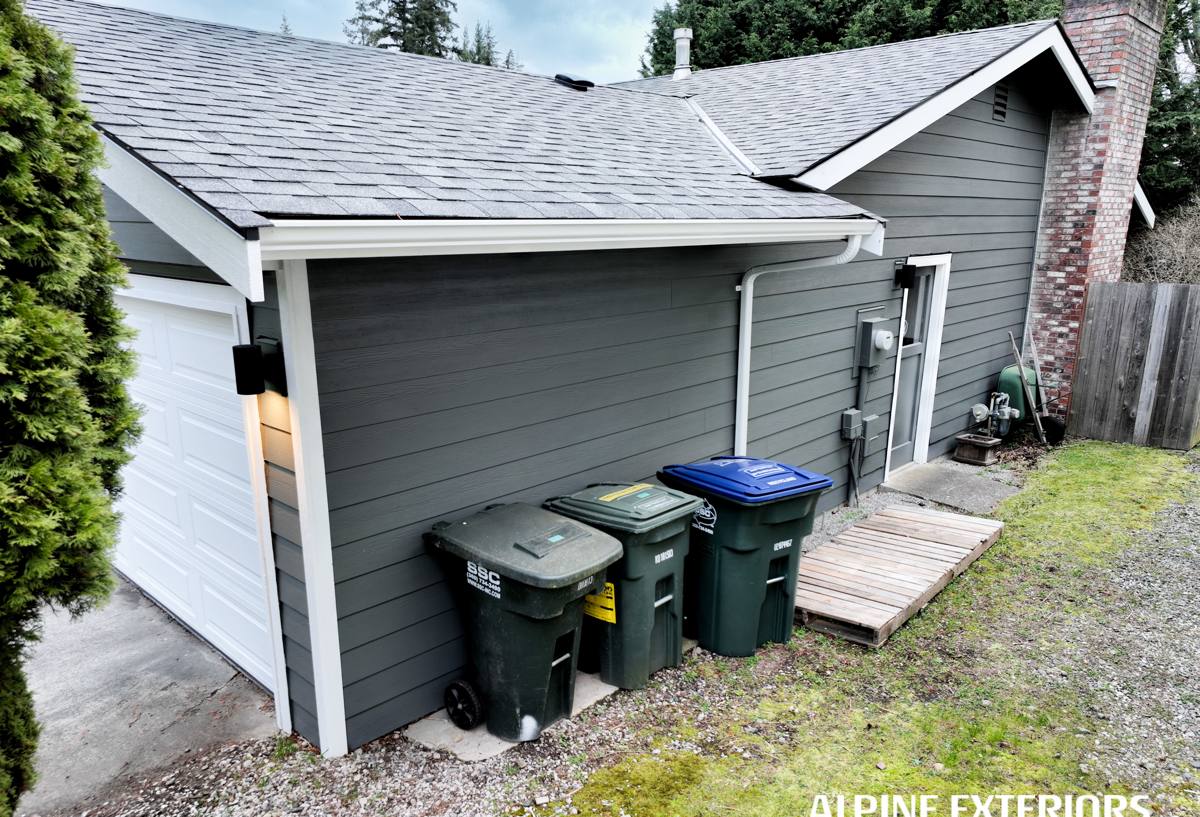
Signs Your Siding Needs Repair, Not Just a Cleaning
Homeowners often call about a stain or a soft spot, assuming a power wash will handle it. Sometimes that's true. Often it isn't. Here's how to tell the difference before you spend money on the wrong fix:
- Soft or spongy panels when pressed — this usually means moisture has already gotten behind the surface, not just on top of it.
- Dark streaking that returns quickly after cleaning, especially on north-facing or shaded walls — a sign the panel is staying wet longer than it should.
- Visible gaps at seams or corners where caulking has shrunk, cracked, or pulled away.
- Rust trails below fasteners or trim — common in salt-air neighborhoods like Edgemoor, and a signal that hardware is failing faster than the siding itself.
- Bubbling or peeling paint on painted wood or older composite siding, which almost always points to trapped moisture underneath.
- Moss or algae that keeps a section of wall visibly damper than the rest of the house, long after everything else has dried.
Any one of these can be a simple, contained repair. Several together — or any sign of soft sheathing underneath — usually means the damage has spread further than the visible symptom suggests.
What a Correct Siding Repair Actually Involves
A repair that's done right is not just "cut out the bad piece and nail in a new one." It's a small version of the same discipline that goes into a full installation:
1. Find the actual source, not just the symptom
Stained or rotted siding is a downstream effect. The cause is almost always upstream — a failed flashing detail, a caulk joint that opened up, a downspout dumping water against the wall, or a grade issue directing runoff toward the foundation. Repairing the siding without correcting the source just buys time before the same spot fails again.
2. Check what's behind the siding
Once a section is opened up, we look at the water-resistive barrier and the sheathing underneath. If moisture has reached the wood framing, that has to be dealt with before any new siding goes back on — patching over wet sheathing traps the problem rather than solving it.
3. Match the material and the fastening method
A repair that uses the wrong fastener spacing, the wrong nail type, or a caulk that isn't rated for the joint it's sealing will look fine on installation day and fail within a year or two. This is especially true near the water, where fastener corrosion is a real factor and stainless or hot-dipped galvanized hardware earns its keep.
4. Reseal and flash correctly
Every seam, corner, and penetration (hose bibs, vents, light fixtures) needs to be resealed with the right product in the right sequence — water-resistive barrier first, then flashing, then siding, then sealant, in that order. Doing it out of sequence is one of the most common reasons a "repaired" spot fails again.
Repair or Replace? How to Think It Through
Not every damaged section needs a full re-side, and not every repair is worth doing. The right call usually comes down to how much of the wall is affected and what's happening underneath it.
| Factor | Favors Repair | Favors Replacement |
|---|---|---|
| Extent of damage | Isolated to one or two sections | Spread across multiple walls or elevations |
| Sheathing condition | Dry and sound behind the damaged area | Soft, wet, or rotted sheathing found |
| Age of existing siding | Under 10-15 years, still structurally sound | Near or past its expected service life |
| Color/material match | Original material and color still available | Discontinued color or incompatible material |
| Root cause | Localized issue (one bad flashing detail) | Systemic issue (whole-house moisture pattern) |
A good contractor will tell you honestly when a repair is the right call — it's usually the less expensive option and there's no reason to push a full re-side when it isn't needed. The goal is a fix that holds up, not the biggest possible job.
Why James Hardie Matters Even for a Repair
We install James Hardie fiber cement exclusively, and that shows up in how we approach repairs too. If your home already has Hardie siding, repairs need to use genuine Hardie boards and, where color match matters, factory ColorPlus finish rather than field-applied paint that will weather differently over time. Patching Hardie with a different fiber cement product or a mismatched cut can leave a visible seam and, more importantly, a joint that doesn't perform the way the rest of the wall does.
If your home has older wood, vinyl, or another composite siding and the damage is limited, we can often make a sound, honest repair with compatible materials. But when damage is extensive enough that we're talking about replacing a full wall or more, we'll tell you plainly: that's the point where we'd recommend moving to James Hardie rather than replacing like-for-like. It's non-combustible, it's engineered in HZ5 formulation for the Pacific Northwest's wet climate, and it comes with a strong transferable warranty — all things that matter more in a salt-air, high-moisture neighborhood like Edgemoor than they would somewhere drier and more sheltered. We won't push a full replacement when a repair will genuinely hold, but we also won't quietly patch failing wood or vinyl and call it a long-term fix.
Our Process for Edgemoor Siding Repair Calls
- Initial look and honest assessment — we inspect the damaged area and enough surrounding siding to tell you whether this is a contained repair or a sign of something bigger.
- Find the water path — before touching the siding, we trace where the moisture is actually coming from.
- Open it up — remove the affected section and check the sheathing and barrier underneath.
- Address the cause — fix the flashing, grading, drainage, or fastening issue that let water in.
- Replace with matched material — genuine Hardie boards and ColorPlus finish where applicable, correct fasteners for a coastal environment.
- Reseal properly — correct sequencing of barrier, flashing, and sealant at every seam and penetration.
- Walk the repair with you — so you know what we found, what we fixed, and what to keep an eye on.
Why a Crew That Already Works Edgemoor Matters
Siding repair isn't just a materials question — it's a familiarity question. A crew that has already worked on homes in Edgemoor and along the Bellingham Bay shoreline has seen how salt air treats fasteners and trim over five or ten years, not just on installation day. That experience shapes decisions a repair crew makes in the field: which hardware to spec, how much clearance to leave at grade, where moss buildup tends to recur, and which wall orientations take the worst of the driving rain in a given storm pattern.
It also means faster, more accurate quotes. A contractor who understands the neighborhood's typical construction and exposure doesn't need to guess — they can look at a damaged section and know within reason what's likely happening behind it, because they've opened up similar walls nearby before.
After the Repair: A Short Maintenance Checklist
A correct repair should last, but a little seasonal attention keeps it — and the rest of your siding — in good shape in a climate like this one:
- Rinse moss and algae off shaded and north-facing walls once or twice a year before it builds up thick enough to hold moisture against the surface.
- Keep gutters and downspouts clear so water isn't dumping directly against a wall.
- Check that shrubs and tree branches aren't holding damp foliage against the siding.
- Walk the exterior after any major windstorm and look for loose trim, opened caulk joints, or new staining.
- Re-caulk seams and penetrations every few years, even if nothing looks obviously wrong — caulk fails quietly before it fails visibly.
- Have any new stain or soft spot looked at promptly rather than waiting for it to spread.
Get an Honest Look at Your Siding
If you're seeing staining, soft spots, or failing caulk on an Edgemoor home, it's worth getting a straight answer on whether you're looking at a simple repair or something that needs a closer look at what's happening behind the wall. We're happy to come take a look and give you a free, no-pressure estimate — no upsell, just an honest read on what your siding needs.