 Bellingham Exterior
 Edgemoor Decks Face a Tougher Climate Than Most of Bellingham
Edgemoor sits close enough to Bellingham Bay that salt-laden air is a daily fact of life for anything built outdoors. Add in the driving rain that blows in off the water during fall and winter storms, and a moss season that can stretch from October well into spring under the neighborhood's mature tree cover, and you have a combination that ages an ordinary deck faster than homeowners expect. A deck built to a generic national spec, without accounting for salt exposure and near-constant dampness, will show its age in Edgemoor years before it would somewhere drier and further inland.
We've worked on enough decks in this part of Whatcom County to know where the failures actually start. It's rarely the decking boards themselves that fail first — it's the framing underneath, the ledger connection to the house, and the fasteners holding it all together. A deck replacement done right addresses all three, not just the visible surface.
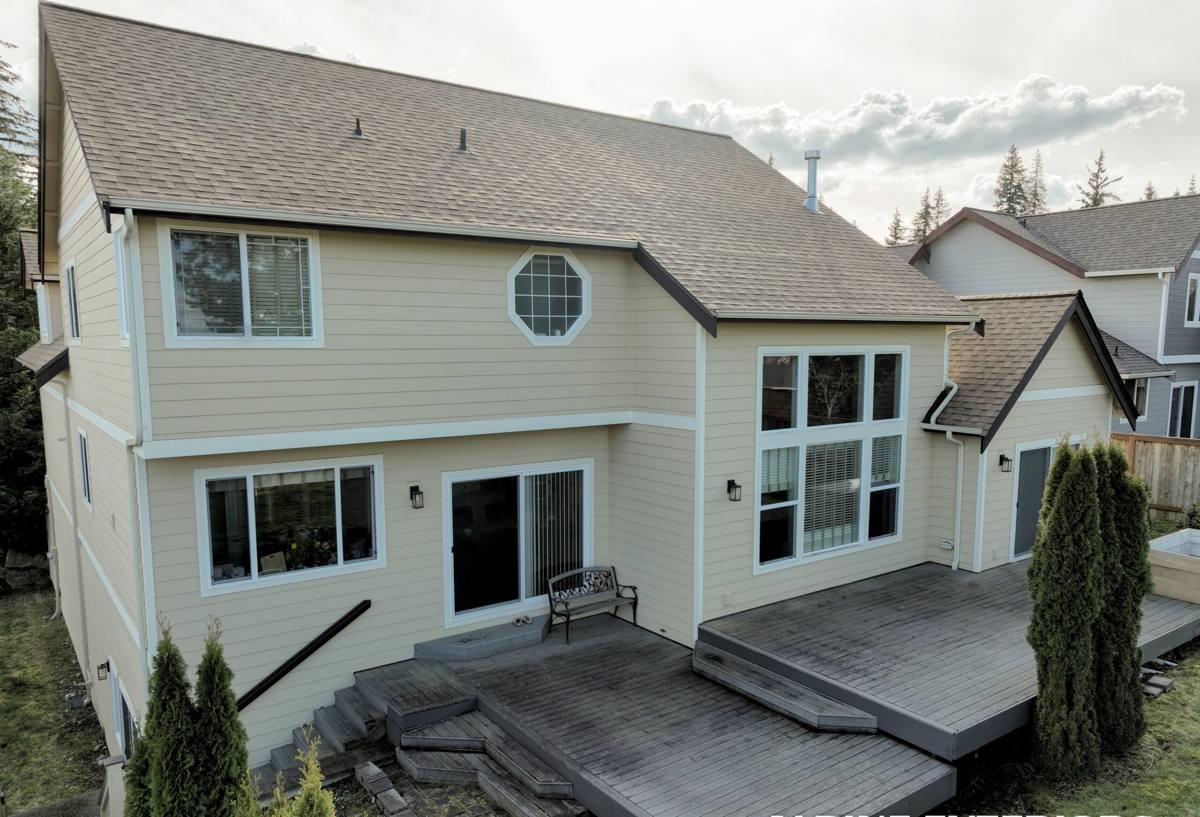
How Salt Air, Rain, and Moss Actually Damage a Deck
Salt Air and Corrosion
Airborne salt accelerates corrosion in metal fasteners, joist hangers, and structural connectors. Once a nail or screw starts rusting, it loses holding strength long before it looks visibly bad from the top of the deck. This is a structural issue, not a cosmetic one — a rusted hanger can let a joist shift or drop.
Driving Rain and Water Intrusion
Rain that comes in sideways off the bay doesn't just fall on a deck — it drives up under railings, into end grain, and behind ledger boards where the deck attaches to the house. That's the single most common point of hidden rot we find on older decks in this area: a ledger board and rim joist that have been quietly absorbing water for years because the flashing was missing, undersized, or installed incorrectly.
Moss, Shade, and Prolonged Dampness
Mature trees are part of what makes Edgemoor attractive, but they also mean many decks stay shaded and damp for extended stretches, especially through the long moss season. Moss and algae hold moisture against the wood surface, which speeds up decay and makes boards slick and unsafe underfoot. A deck in full shade near the water can need moss treatment and cleaning far more often than one in an open, sunny yard.
Signs an Edgemoor Deck Needs Replacement, Not Another Repair
Homeowners often ask whether they can get by with patching boards instead of a full replacement. Sometimes yes — but there are signs that point clearly toward replacement:
- Soft or spongy spots in the decking, especially near the house or along the rim joist
- Visible rust staining around fastener heads or joist hangers
- A ledger board that's discolored, soft, or separating slightly from the house
- Persistent moss regrowth within weeks of cleaning, even in shaded areas
- Railings that flex or feel loose when pushed, which often points to post rot below the surface
- A deck older than 15-20 years that has never had the substructure inspected
If the framing and ledger connection are sound, refinishing or replacing individual boards can extend a deck's life. If the substructure is compromised, patching the surface just delays a bigger problem and can mask a safety issue.
What a Correct Deck Replacement Involves
A full deck replacement is more than swapping old boards for new ones. In a climate like Bellingham's, the parts nobody sees matter more than the parts everyone sees.
Ledger and Flashing
The connection between the deck and the house is the most important detail on the whole structure. Correct flashing — installed so water sheds away from the house rather than behind the ledger board — is non-negotiable in an area that gets this much driving rain.
Framing and Fasteners
We spec fasteners, joist hangers, and structural connectors rated for coastal and high-moisture exposure, not the standard-grade hardware that's fine in drier parts of the state. This adds a modest cost up front and pays for itself by not needing to be replaced in eight years.
Footings and Structure
Older Edgemoor properties, some with sloped or wooded lots, sometimes have footings that were undersized or placed shallow to begin with. A replacement is the right time to correct that, not patch around it.
Ventilation Underneath
Decks built low to the ground or over damp soil need enough airflow underneath to let framing dry out between rain events. Poor ventilation is one of the quieter reasons framing rots faster in shaded, moist yards than the visible decking does.
Choosing Decking Material for This Climate
There's no single "best" decking material — the right choice depends on how much upkeep the homeowner wants to do and how the deck is exposed to sun, shade, and moisture.
| Material | Moss/Moisture Behavior | Maintenance | Typical Lifespan Here |
|---|---|---|---|
| Pressure-treated wood | Needs regular cleaning and sealing to resist moss and rot | Annual cleaning, re-sealing every 2-3 years | 10-15 years with upkeep |
| Cedar | Naturally rot-resistant but still needs sealing in shaded, damp spots | Sealing every 1-2 years in shade | 15-20 years with upkeep |
| Composite decking | Resists rot but can still grow surface moss/algae in constant shade | Periodic washing, no sealing needed | 20-30 years |
| PVC/capped polymer | Best moisture resistance of the common options | Occasional washing | 25-30+ years |
For decks in full shade near the water, we often steer homeowners toward composite or capped polymer decking, simply because it removes the sealing and moss-fighting routine that wood requires in this exposure. That's a maintenance-burden conversation, not a judgment on wood decks — a well-maintained cedar deck can look great for many years if the owner is willing to keep up with sealing on a shaded lot.
Permits and Code in Bellingham and Whatcom County
Most deck replacements that involve new framing, footings, or a deck over a certain height require a permit through the City of Bellingham (or Whatcom County, depending on the exact property location). This isn't paperwork for its own sake — it triggers inspection of the footings and ledger connection, which are exactly the parts that matter most for long-term durability in this climate. We handle the permit process as part of the job so homeowners aren't navigating it themselves.
Our Deck Replacement Process
- On-site assessment — we check the ledger, framing, footings, and fasteners before quoting anything, so the estimate reflects what's actually there, not guesswork.
- Material and layout discussion — we walk through decking options based on sun exposure, shade, and how much upkeep the homeowner wants to take on.
- Permit and preparation — we pull the required permit and schedule the tear-out.
- Tear-out and structural correction — old decking, framing, and any compromised footings come out; ledger flashing and structural connections are rebuilt correctly.
- Decking, railing, and finish work — new material is installed with fasteners and hardware rated for the exposure.
- Final walkthrough and inspection — we go over the finished deck with the homeowner and coordinate any required city or county inspection.
Why Hiring a Crew That Already Works in Edgemoor Matters
A contractor who mostly builds decks in drier, more sheltered parts of Whatcom County can still do competent framing — but they may not default to coastal-rated hardware, correct ledger flashing for driving rain, or ventilation choices suited to shaded, damp lots, unless they're specifically thinking about it. A crew that regularly works Edgemoor and similar bayside neighborhoods builds those choices in as standard practice, because we've seen what happens when they're skipped.
Before hiring anyone for a deck replacement in this area, it's worth asking a few direct questions:
- What fastener and hardware grade do you use for decks near the water?
- How do you flash and seal the ledger board connection to the house?
- Will you pull the required permit, or is that left to me?
- What ventilation do you build in for decks in shaded or low-clearance spots?
- Can you walk me through why you'd recommend one decking material over another for my yard's sun exposure?
A contractor who answers those questions specifically, rather than generically, is one who's actually thought through this climate.
Get a Straight Answer for Your Deck
Every Edgemoor property is a little different — sun exposure, tree cover, proximity to the water, and the age and condition of the existing structure all change what a replacement actually needs. We'll come take a look, tell you honestly whether you need a full replacement or just targeted repair, and put together a clear, no-pressure estimate. There's no obligation — just a straight assessment from a crew that knows this neighborhood's conditions.