 Bellingham Exterior
 Board & Batten Siding in Sudden Valley: A Style That Demands Precision
Board and batten is one of the most requested siding styles we see in Sudden Valley, and it's easy to understand why. The vertical lines suit the mountain-cabin and lake-community character of the neighborhood, and it pairs well with the wooded, sloped lots that make up much of the area around Lake Whatcom. But board and batten is also one of the least forgiving siding styles when it's installed by a crew that treats it like a cosmetic upgrade instead of a water-management system. Every seam, batten, and fastener location either sheds water correctly or gives it a place to sit. In a climate like ours, that difference shows up on the wall within a few years, not a few decades.
We install board and batten siding for homes throughout the Bellingham area, including Sudden Valley, using James Hardie fiber cement exclusively. This page walks through what the local climate actually does to vertical siding, what a correct installation involves, and why the installation crew matters as much as the material.
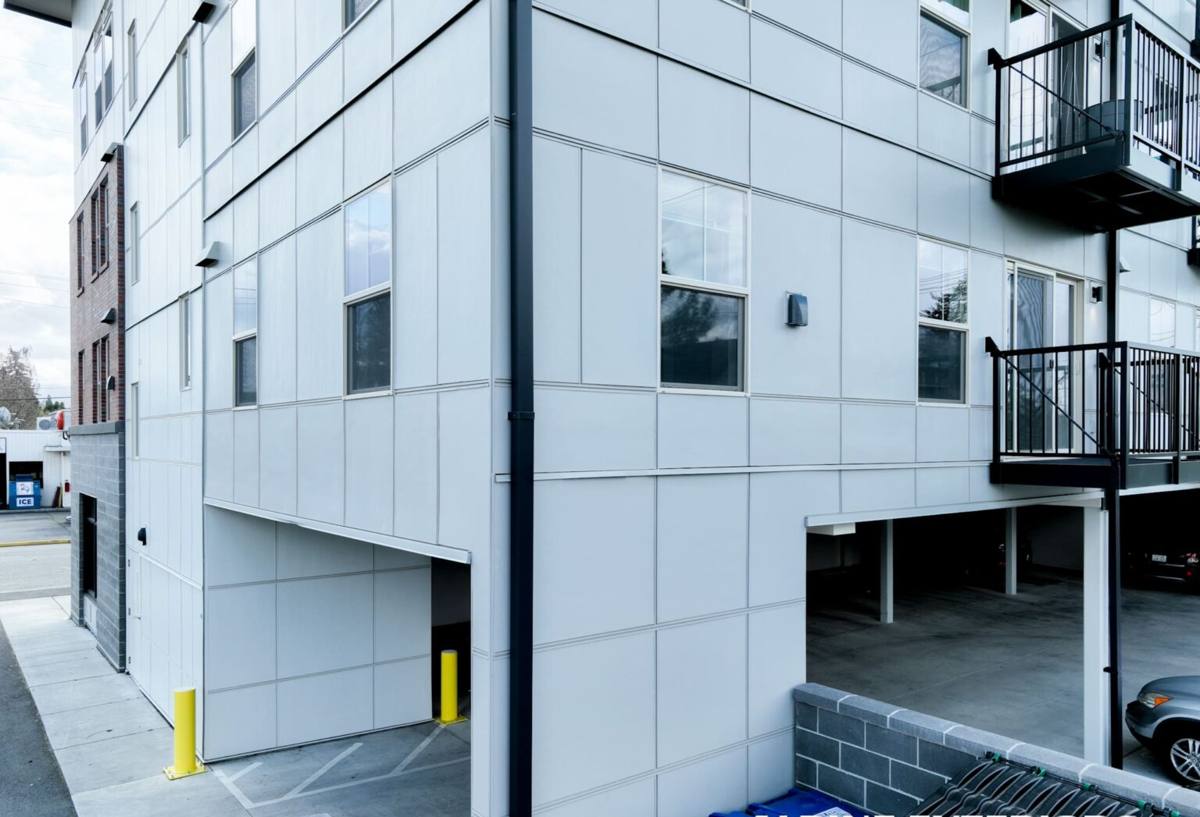
What Whatcom County's Climate Does to Vertical Siding
Sudden Valley sits inland from Bellingham Bay, but it's still squarely inside the same marine-influenced weather pattern that defines this whole corner of Washington. Moisture-laden air moves off the Salish Sea and up through Whatcom County most of the year, and even communities set back from the water pick up that same damp, salt-tinged air along with the region's long wet season. Add in Sudden Valley's heavy tree canopy and the shade that comes with lake-adjacent, forested lots, and you get a set of conditions that are genuinely tough on exterior siding:
- Extended moss and algae season. Shaded north walls and tree-covered lots stay damp for days after a storm passes, giving moss and mildew far more time to establish than a wall in full sun ever gets.
- Driving rain. Wind-driven storms push water sideways into vertical seams and batten joints, not just straight down the face of the wall — this is exactly where board and batten either performs well or fails, depending on how it was built.
- Slow drying cycles. Between the tree cover and the marine humidity, wood-based and lower-grade siding products in Sudden Valley often don't get a real chance to fully dry out between rain events for weeks at a stretch.
- Freeze-thaw swings. Whatcom County gets enough cold snaps each winter that any moisture trapped behind or inside a wall assembly can freeze, expand, and accelerate damage that started as a small flashing or caulking gap.
None of this is unique to Sudden Valley — it's the reality for most of the Bellingham area — but the tree cover and lake-adjacent siting common in this neighborhood tend to push those effects further than they'd go on an open, sunny lot.
Why Board & Batten Is More Installation-Sensitive Than Lap Siding
Horizontal lap siding is designed to shed water downward by nature of its overlap. Board and batten relies entirely on the installer getting the details right, because the battens themselves create vertical seams running the full height of the wall — seams that have to be backed, fastened, and sealed correctly or they become water paths straight into the wall assembly.
The details that make or break the job
- Rain screen / drainage gap. A ventilated gap behind the panels lets any moisture that does get past the surface drain and dry out instead of sitting against the sheathing.
- Batten spacing and fastening. Battens need consistent spacing over sound backing, with fasteners landing in framing or proper blocking — not just into the panel edge.
- Flashing at every horizontal transition. Window heads, roof-to-wall intersections, and deck ledgers all need step or head flashing integrated with the water-resistive barrier before the first panel goes up.
- Correct panel gapping and caulking. Fiber cement needs a manufacturer-specified gap and paintable, flexible sealant at panel ends — not siding butted tight or caulked as an afterthought.
- Ground clearance. Bottom edges need proper clearance off grade, decks, and roofs so splashback and snow load don't sit directly against the material.
Skip any one of these and the siding may look fine for a season or two before the shortcuts start showing — usually as staining, soft spots, or paint failure right along the battens, which is the hardest place to fix after the fact.
The System We Install: James Hardie Board & Batten
We don't install board and batten in vinyl, LP SmartSide, or primed wood. On every home, including in Sudden Valley, we use James Hardie fiber cement — either HardiePanel vertical siding with true battens, or a board-and-batten configuration built from Hardie's engineered products. A few reasons this is the standard we hold to:
- Non-combustible material. Fiber cement doesn't feed a fire the way wood-based or wood-fiber products can, which matters to a lot of homeowners in wooded, tree-lined settings like Sudden Valley.
- ColorPlus factory finish. A baked-on, UV-cured finish holds color and resists the fading and touch-up patchwork that field-painted siding needs, especially on shaded walls where mildew and grime show up first.
- HZ5 climate engineering. Hardie's HZ5 product line is engineered for the Pacific Northwest's wet, moisture-heavy conditions — it's built to handle the moisture cycling this climate puts siding through, not just look good on install day.
- Dimensional stability. Fiber cement doesn't swell, cup, or split the way wood and some engineered wood products can when they take on repeated moisture, which matters a great deal on a style where every seam is exposed vertically.
We won't sell a homeowner a cheaper vertical siding product and call it equivalent. The trade-offs in moisture behavior, maintenance burden, and long-term appearance are real, and they matter more on a shaded, damp lot than they would somewhere drier.
Our Process for a Board & Batten Project
1. Assessment and water management plan
We walk the home, note shade patterns, roof-wall intersections, and any existing moisture or moss issues, and build a flashing and drainage plan specific to that wall before we talk about panel layout.
2. Tear-off and sheathing check
Old siding comes off and we inspect the sheathing underneath. On homes that have sat under heavy tree cover for years, this step regularly turns up soft spots or past moisture damage that needs to be addressed before new siding goes on — covering it up would just trap the problem.
3. Water-resistive barrier and rain screen
A new weather barrier goes on with proper flashing integration at every penetration, followed by a drainage gap system so the wall assembly can actually dry.
4. Panel and batten installation
Hardie panels and battens go up to manufacturer spec — correct fastener placement, gapping, and batten spacing — so the finished wall performs the way the product is engineered to perform, not just the way it looks on day one.
5. Final detailing and walkthrough
Caulking, trim, and touch-up finish work get checked, and we walk the finished job with the homeowner before calling it done.
Board & Batten Options Compared
| Material | Moisture Behavior | Maintenance | Fire Resistance | Typical Lifespan |
|---|---|---|---|---|
| James Hardie Fiber Cement | Engineered for wet climates; dimensionally stable | Low — factory finish, occasional wash | Non-combustible | Multi-decade with proper install |
| Cedar / Primed Wood | Absorbs moisture; prone to cupping and splitting in shade | High — repainting and sealing on a recurring cycle | Combustible | Shorter without diligent upkeep |
| LP SmartSide | Engineered wood; sensitive to edge and end-grain moisture intrusion | Moderate — finish maintenance over time | Combustible | Depends heavily on installation and upkeep |
| Vinyl Board & Batten | Doesn't rot, but flexes and can trap moisture behind panels | Low, but limited repair options | Softens/melts under heat exposure | Variable; fades and becomes brittle over time |
What Affects the Cost of a Sudden Valley Board & Batten Job
| Factor | Why It Matters |
|---|---|
| Existing sheathing condition | Moisture-damaged sheathing found during tear-off adds repair scope before new siding can go on |
| Wall height and roof access | Multi-story walls and steep or tree-crowded lots affect staging and labor time |
| Number of window and roof transitions | Each one needs individual flashing detail work |
| Existing siding removal | Full tear-off versus a simpler recover situation changes labor scope |
| Trim and batten complexity | Tighter batten spacing and more architectural detail add material and install time |
We give homeowners a real, itemized number after walking the specific house — not a ballpark based on square footage alone.
Maintenance Checklist for Board & Batten Homeowners
- Rinse shaded and north-facing walls once or twice a year to slow moss and algae buildup before it takes hold
- Keep gutters clear so overflow doesn't run down the wall face at panel seams
- Trim back branches and brush that hold moisture against the siding or block airflow to the wall
- Check caulking at panel ends and trim annually and re-caulk if it's cracked or pulling away
- Watch ground-level clearance — mulch, soil, or plantings that build up against the bottom edge should be pulled back
- After major windstorms, do a quick visual check for loosened battens or trim, especially on the weather-facing side of the home
Why Hiring a Crew That Knows Sudden Valley Matters
Sudden Valley isn't a typical open subdivision — it's a wooded, lake-adjacent community with private roads, tree-heavy lots, and homes that see more shade and moisture cycling than a comparable house out in open Bellingham. A crew that mainly works flat, sunny lots elsewhere in the county doesn't always plan for that. We've built flashing and drainage plans around mature tree cover, worked staging around narrower private roads, and seen firsthand what happens to siding on the shadiest lots in this neighborhood when it was installed without accounting for how slowly those walls actually dry. That local pattern recognition is part of what a homeowner is paying for when they hire a crew that already works this area, not just the labor itself.
If you're considering board and batten siding for a home in Sudden Valley, we're glad to walk the property, look at your specific sun and moisture exposure, and put together a straightforward, no-pressure estimate using the form below.