 Bellingham Exterior
 Why Edgemoor Windows Take More Punishment Than Most
Edgemoor sits close to the water, on elevated, tree-shaded lots that catch weather most inland Bellingham neighborhoods never see. That mix of proximity to Bellingham Bay, exposure to wind off the water, and heavy tree cover creates a specific set of stresses on windows: salt-laden air that accelerates corrosion on hardware and metal components, driving rain that gets pushed sideways into gaps a calmer climate would never test, and a long, damp moss season that keeps siding, trim, and window sills wet for months at a stretch.
None of this means Edgemoor homes need exotic products. It means the installation has to be done with this specific climate in mind — the flashing sequence, the sealant choices, and the window's own weather rating all matter more here than they would in a drier part of Whatcom County.
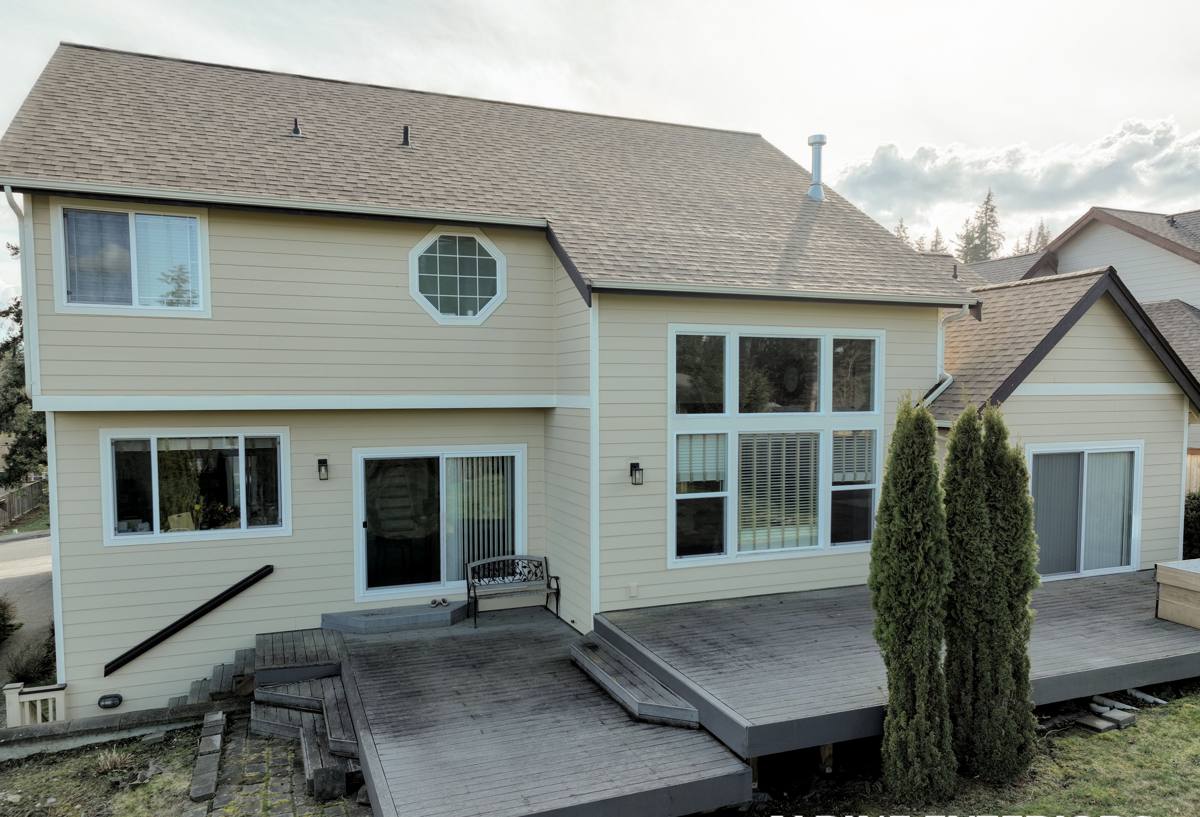
What Actually Fails on Edgemoor Windows
Water Intrusion
The most common problem we find isn't a bad window — it's a window that was installed without proper water management. Driving rain off the bay finds any gap in the flashing or sealant and works its way behind the trim, into the wall cavity, and eventually into framing. By the time it shows up as a stain on interior drywall, the damage has usually been going on for a while.
Salt-Accelerated Hardware Wear
Locks, cranks, hinges, and balance mechanisms corrode faster this close to the water. Cheaper hardware finishes pit and stiffen within a few years; better hardware and proper finishes hold up considerably longer.
Moss and Trapped Moisture
Moss doesn't grow on the glass, but it does grow on sills, trim, and nearby siding, and it holds moisture against the window frame far longer than open sun would allow. Over a Whatcom County winter, that constant dampness is what rots wood sills and swells composite trim that wasn't properly sealed at the factory cuts.
Condensation Between Panes
When an insulated glass unit's seal fails — often hastened by years of temperature swings and moisture cycling — fog appears between the panes permanently. This is a manufacturing/seal issue, not something cleaning fixes, and it usually means the sash or the glass unit needs replacing.
What a Correct Installation Actually Involves
Window installation is mostly invisible work. The window itself is the easy part; the water management around it is what determines whether the job holds up through a decade of Bellingham winters.
Removal and Opening Prep
We remove the old window carefully and inspect the rough opening before anything new goes in. This is the point where hidden rot, old flashing failures, or framing issues get caught — and it's also the point where they need to get fixed, not covered over.
Flashing and Water Management
Self-adhered flashing tape at the sill, jambs, and head, lapped in the correct shingle-style order, is what actually keeps wind-driven rain out of the wall. A sloped sill pan directs any water that does get past the window back out, instead of letting it pool against the frame. This step is where a large share of long-term leaks originate when it's skipped or rushed.
Setting, Shimming, and Fastening
A window has to be set plumb, level, and square, then shimmed at the correct points so it isn't racked or bowed by the fasteners. A slightly out-of-square window will bind, won't seal fully, and will wear its own hardware out faster.
Insulation and Air Sealing
Low-expansion foam or backer rod and sealant fills the gap between the window frame and the rough opening — enough to stop air movement and control condensation risk, without overfilling and bowing the frame inward.
Exterior and Interior Finish
Exterior trim gets sealed with a bead of quality sealant at all the right joints, sized for movement, not painted over gaps and called finished. Interior casing and stops get set clean and, where the homeowner wants it, painted or stained to match.
Choosing the Right Window for This Climate
There's no single "best" window material — there's a right fit for the exposure, maintenance appetite, and budget. For a bluff-facing or heavily treed Edgemoor lot, we generally steer homeowners toward materials that handle constant moisture and salt air without high upkeep.
| Frame Material | How It Handles Salt Air & Rain | Maintenance | Typical Fit |
|---|---|---|---|
| Vinyl | Won't corrode or rot; seams are the main watch point | Low — occasional cleaning | Most homes, best value |
| Fiberglass | Very stable in moisture and temperature swings; strong seal life | Low | Higher-exposure walls, larger openings |
| Aluminum-clad wood | Good exterior protection but hardware and cladding seams need attention near salt air | Moderate | Homes prioritizing a wood interior look |
| Bare wood | Requires diligent upkeep to resist the moss-season moisture cycle | High | Historic or restoration-matched homes only |
We don't push bare wood exteriors on water-facing Edgemoor lots as a general practice — not because wood is a bad material, but because the maintenance burden in this specific microclimate is steep, and a missed re-seal year is exactly when rot gets started. If a homeowner wants a wood look, aluminum- or fiberglass-clad options give that appearance with far less exposure risk.
Our Process, Start to Finish
1. On-Site Assessment
We look at the existing windows, the wall assembly where visible, and any signs of past water intrusion before recommending anything. Sun exposure, wind direction, and how sheltered or exposed the wall is all factor into the recommendation.
2. Measurement and Ordering
Windows are measured precisely for the actual opening, not the nominal size — older Bellingham homes especially can have openings that have shifted slightly over the decades.
3. Install Day
Old units come out, openings get inspected and repaired if needed, and new windows go in following the flashing and sealing sequence above. We keep the work area protected and don't leave openings uncovered overnight.
4. Final Check and Walkthrough
Every window gets operated, checked for square, and inspected for a clean seal before we call the job done. We walk the homeowner through what to expect from the new windows and what upkeep, if any, they'll need.
What Drives the Cost
Every project is different, but the same handful of factors move the price up or down on most Edgemoor jobs.
| Factor | Why It Matters |
|---|---|
| Number and size of openings | More or larger windows means more material and labor |
| Frame material chosen | Vinyl, fiberglass, and clad-wood carry different price points |
| Condition of the existing opening | Hidden rot or old flashing failures add repair time before the new window goes in |
| Access and elevation | Second-story or hard-to-reach openings on sloped Edgemoor lots take longer |
| Trim and finish work | Matching existing exterior trim profiles or interior casing adds labor |
We give straightforward, itemized quotes so you can see exactly what's driving the number — no vague lump sums.
Signs It's Time to Replace, Not Repair
- Fog or moisture visible between the panes of double- or triple-glazed windows
- Soft or spongy wood at the sill or jamb when pressed
- Windows that won't stay open, won't latch, or have stiff, corroded hardware
- Visible daylight or a noticeable draft around the sash when closed
- Paint or finish that keeps failing at the same spot season after season
- A noticeable rise in heating bills without another clear cause
Why Working With a Crew That Knows Edgemoor Matters
Window installation done to a generic standard can still fail here. A crew that regularly works this side of Bellingham knows which walls take the worst of the wind and rain off the bay, which older homes commonly hide flashing shortcuts from previous work, and how much margin to build in for the moss season rather than treating it as an afterthought. That familiarity shows up in fewer callbacks, not in a different price.
It also matters for sequencing the work. Bellingham's wet season is long, and scheduling installation with realistic weather windows — rather than rushing an opening closed on a day it shouldn't have been open at all — is part of protecting the home, not just the paperwork.
Living With Your Windows After Installation
New windows installed correctly should need very little from you. A rinse to clear pollen, moss spores, and salt residue off the frames a couple of times a year keeps both the finish and the hardware working as intended. Keeping gutters and nearby foliage clear reduces how long moisture sits against upper-floor windows and trim. Beyond that, an occasional look at the exterior sealant lines — checking that caulking hasn't cracked or pulled away — catches small issues long before they become water damage.
If you're weighing whether your current windows are due for replacement or just a repair, we're happy to take a look and give you a straight answer either way. Reach out for a free, no-pressure estimate using the form below.