 Bellingham Exterior
 Edgemoor's Roofs Face a Different Set of Problems
Edgemoor sits close to Bellingham Bay, tucked under a heavy canopy of mature evergreens along the bluff. That combination is beautiful to live with and hard on a roof. Salt-laden air off the water accelerates corrosion on exposed metal fasteners and flashing. Tree cover keeps large sections of many roofs in shade most of the day, which means shingles stay damp far longer after our frequent rain than they would on an open, sun-exposed lot. Add Whatcom County's long, wet fall-through-spring stretch, and you get a roof that's rarely given a real chance to dry out.
That's the core issue with roofing in this neighborhood: it's not usually one dramatic failure. It's slow, moisture-driven wear — moss working into shingle mat, granule loss in shaded valleys, soft decking under areas that never quite dry — that homeowners often don't see until it shows up as a stain on a ceiling. A roof replacement done right in Edgemoor has to plan for that reality from the start, not just swap old shingles for new ones in the same pattern.
Signs an Edgemoor Roof Needs Replacement, Not Just a Repair
Repair makes sense for isolated damage — a cracked pipe boot, a handful of wind-lifted shingles, a small flashing leak. Replacement becomes the honest recommendation when the problems are spread across the roof or point to decking and structural wear underneath. Things we look for during an inspection:
- Moss and algae staining across multiple shade-facing slopes, not just one isolated patch
- Granule loss heavy enough that you can see bare, shiny patches of shingle mat
- Shingles that are curling, cupping, or have gone brittle and crack when lifted
- Soft or spongy decking felt underfoot, usually near valleys, eaves, or old skylight cuts
- Daylight visible through the roof deck from inside the attic
- A roof that's already had two or more patch repairs in the same area within a few years
- Rusting or failing flashing at chimneys, walls, and valleys — more common here given the salt air
If you're seeing two or more of these, a replacement conversation is worth having before the next repair bill arrives.
What a Correct Roof Replacement Involves
Full Tear-Off, Not Overlay
We remove the existing roofing down to the deck rather than layering new shingles over old ones. Overlaying hides deck rot and old damage instead of fixing it, and it prevents a real inspection of the sheathing — which matters more in a shaded, moisture-prone spot like Edgemoor than almost anywhere else in Bellingham.
Deck Inspection and Repair
Once the old roofing is off, we check every section of decking for soft spots, delamination, or rot — particularly around valleys, chimneys, and any past skylight or vent penetrations. Damaged sheathing gets replaced before anything new goes down. Skipping this step is the single most common shortcut that leads to early failure.
Underlayment Built for Wet, Shaded Roofs
Given how long moisture can sit under tree cover here, we favor synthetic or ice-and-water underlayment in valleys, eaves, and low-slope transitions rather than the bare minimum. It's a small cost difference at replacement time and a meaningful difference in how the roof handles a slow-draining winter.
Flashing and Metal Details
Chimney flashing, wall step-flashing, and valley metal all get replaced, not reused — reused flashing is one of the most common hidden leak points on older Bellingham homes. In a salt-air location, we also pay attention to fastener and metal choice so corrosion doesn't undo the work early.
Ventilation
Proper intake and exhaust airflow keeps the underside of the deck drying out between rain events instead of trapping moisture against it. On heavily shaded, tree-covered lots this is one of the most overlooked parts of a roof replacement — and one of the most important for how long the new roof actually lasts.
Material Options for an Edgemoor Home
There's no single "right" material for every house — it depends on your roof's pitch, how much shade it sits under, and what you want to maintain long-term. Here's how the common options stack up for this specific setting:
| Material | How it handles shade & moss | Salt-air durability | Typical lifespan |
|---|---|---|---|
| Architectural asphalt shingle | Good with proper ventilation; algae-resistant granule options help in shaded areas | Good, especially with corrosion-resistant flashing and fasteners | 25–30 years |
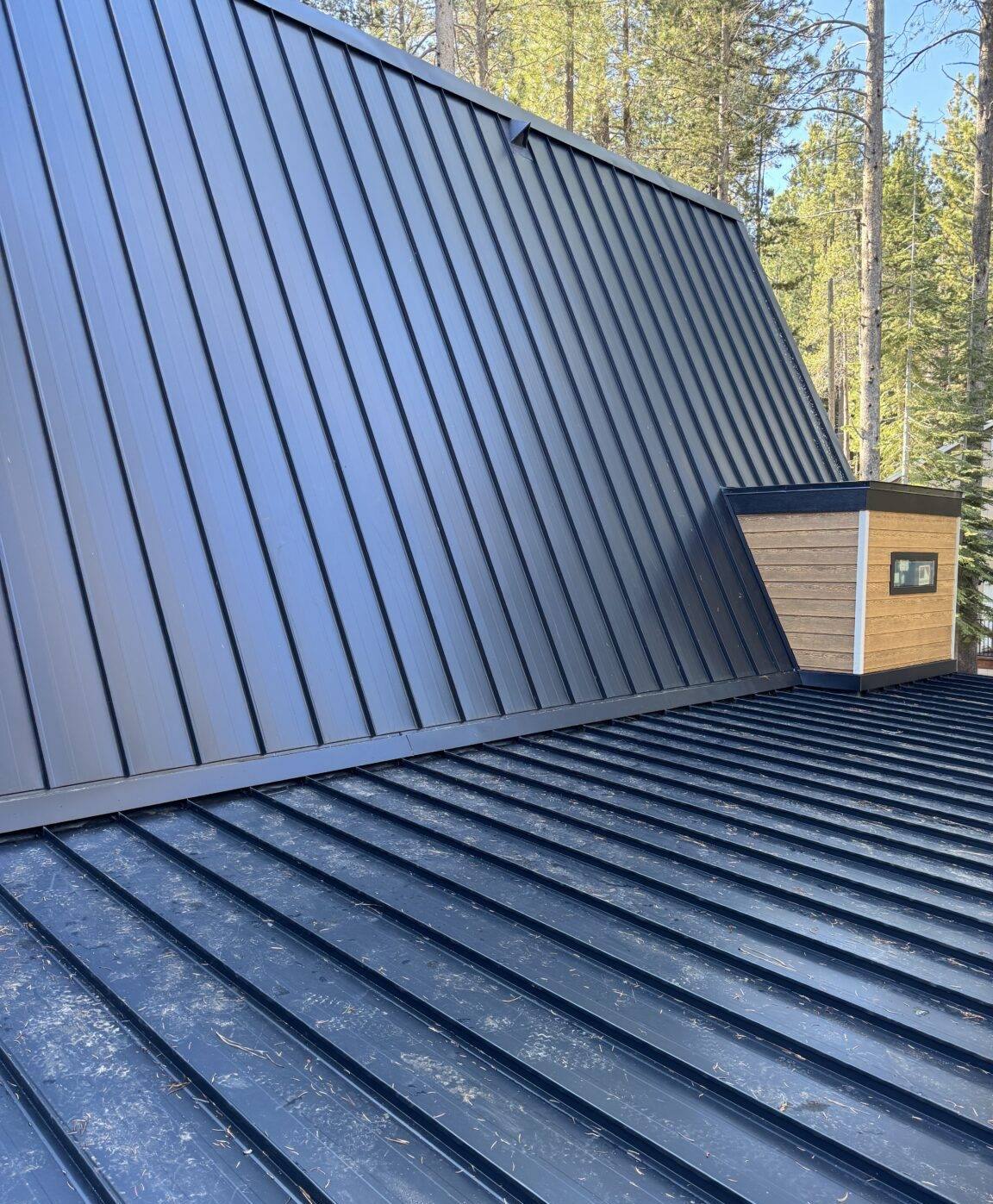
| Standing seam metal | Sheds moss and debris well due to smooth, steep-lapped surface | Very good with coated/marine-grade fasteners; needs correct detailing near the coast | 40–50+ years |
| Cedar shake | High maintenance in shaded, damp spots — moss and rot risk climbs without diligent upkeep | Moderate; needs regular treatment | 20–30 years with upkeep |
| Synthetic/composite shingle | Resists moisture absorption better than wood; performs well in shade | Good | 30–50 years depending on product |
For most Edgemoor homes we lean toward architectural asphalt or standing seam metal, simply because both hold up well against the moss-and-moisture combination without demanding constant upkeep. We'll walk through the honest trade-offs — cost, maintenance, and how it fits the look of your home — before you decide anything.
What Drives the Cost of a Roof Replacement Here
| Factor | Why it matters in Edgemoor |
|---|---|
| Tree access and canopy | Tight, wooded lots often require careful staging, tarping, and sometimes limbing to protect landscaping and get material on and off the roof safely |
| Roof complexity | Valleys, dormers, and multiple roof planes — common on the neighborhood's older and custom homes — add labor and flashing detail |
| Deck condition | Homes with a history of shaded, slow-drying areas sometimes need more sheathing replacement than expected; this is only confirmed after tear-off |
| Material choice | Metal and premium synthetic products cost more up front but reduce moss-related maintenance over the roof's life |
| Ventilation upgrades | Adding or correcting intake/exhaust venting during replacement is far cheaper than doing it as a separate project later |
We give a firm, written estimate after a physical inspection — not a phone-quote guess — because on a lot with real tree cover and roof complexity, guessing without seeing it usually means correcting the number later.
Our Process, Start to Finish
- Inspection and estimate — we walk the roof and attic, check decking and ventilation, and give you a written scope and price.
- Material selection — we go over options suited to your roof's shade exposure and pitch, with honest pros and cons for each.
- Scheduling and site protection — landscaping, siding, and windows get protected before tear-off begins; on tree-covered lots we plan staging so equipment and debris don't damage what's around the house.
- Tear-off and deck repair — old roofing comes off, decking is inspected, and any damaged sheathing is replaced.
- Underlayment, flashing, and ventilation install — the parts of the job that determine how the roof performs in wet, shaded conditions.
- New roofing installed to manufacturer spec — correct nailing pattern, exposure, and fastening for the wind and rain this area sees.
- Cleanup and magnetic sweep — full site cleanup, including a nail sweep of the yard and driveway.
- Final walkthrough — we go over the finished roof with you before calling the job done.
Moss and Long-Term Roof Care in a Shaded, Coastal Neighborhood
A new roof in Edgemoor still lives under the same trees and the same weather pattern that wore out the old one. A few things make a real difference in how long it lasts:
- Keep overhanging branches trimmed back where reasonably possible to cut down on shade and debris buildup
- Have gutters cleaned regularly — clogged gutters back water up under the roof edge, which is a common failure point on shaded homes
- Get moss physically removed rather than just power-washed, which can strip granules and shorten shingle life
- Schedule a roof check every couple of years, especially after a hard winter, so small issues get caught before they become deck damage
Why Hiring a Crew That Already Works Edgemoor Matters
A roof replacement on a wooded, bluff-adjacent lot isn't the same job as a roof replacement on an open suburban block. Access for equipment and material delivery is tighter. Tarping and site protection have to account for tree debris and drainage patterns unique to the property. And knowing how this specific stretch of Bellingham handles moisture — shaded valleys that never fully dry, salt exposure near the water — changes decisions about underlayment, flashing, and ventilation before a single shingle goes down.
A crew that's done this work in the neighborhood before isn't guessing at any of that. They've seen how these roofs actually fail, and they build the replacement to address it — not just to look finished on the day the job wraps up.
Questions Worth Asking Before You Hire
- Will you do a full tear-off, and will you inspect the deck before quoting a final price?
- What underlayment and ventilation approach do you recommend for a shaded roof, and why?
- Is flashing being replaced, or reused?
- What's your plan for protecting trees, landscaping, and access on a tight lot?
- What warranty covers labor, separate from the manufacturer's material warranty?
If a contractor can't answer these clearly and specifically, that's worth noticing before you sign anything.
If your roof is showing moss buildup, granule loss, or you're just not sure whether repair or replacement makes sense, we're happy to come take a look. The estimate is free, there's no pressure, and you'll get a straight answer about what your roof actually needs — use the form below to get started.