 Bellingham Exterior
 Building a Deck That Actually Holds Up in Sehome
Sehome sits close enough to Bellingham Bay that salt-laden air reaches wood, metal, and finish surfaces year-round, and it gets the same long, wet Whatcom County winters as the rest of the city. A deck built here is doing a different job than a deck built in a dry inland climate. It has to shed water fast, resist corrosion in every fastener and connector, and survive months of shade and dampness without turning into a moss farm. Most deck problems we get called out for in this neighborhood aren't from bad luck — they're from a deck that was built to a generic spec instead of a Bellingham spec.
This page is about deck building specifically for Sehome homes: what the climate actually does to a deck over time, what a correctly built one requires, and how we approach the work as a crew that's already familiar with this part of the city.
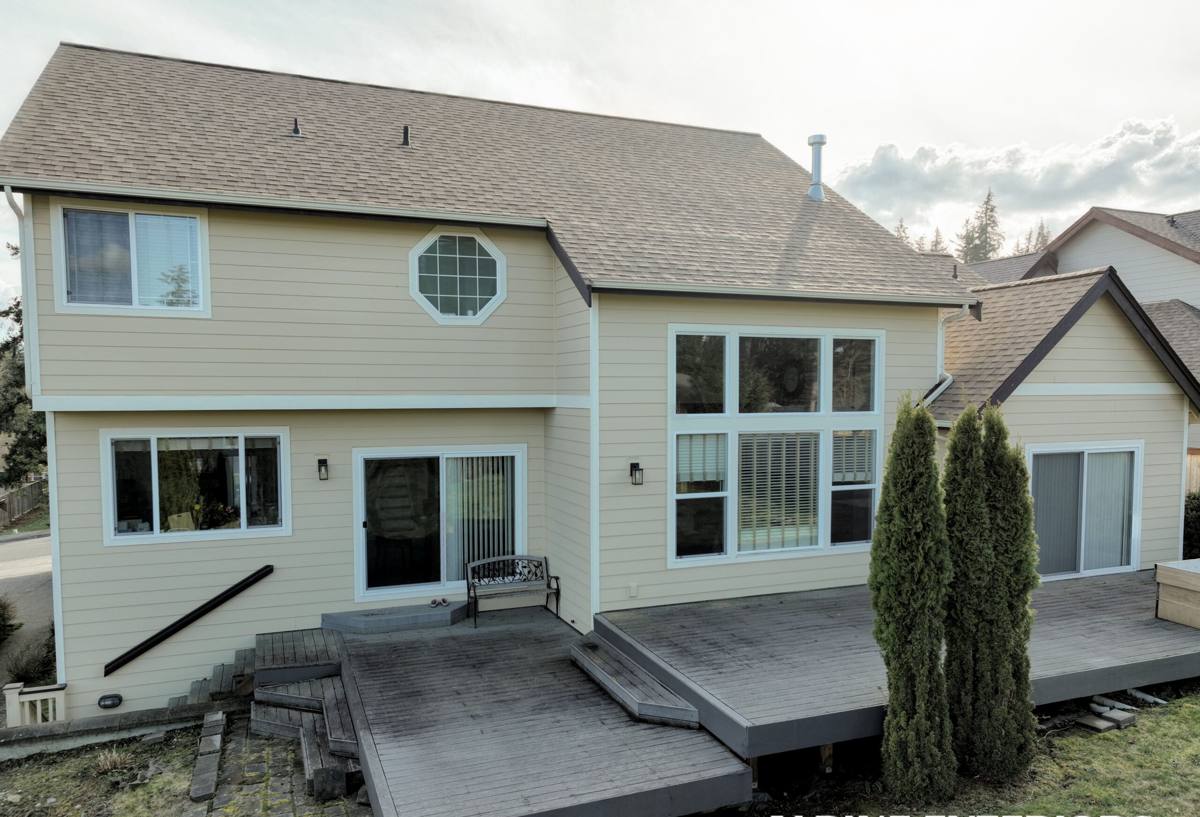
What Salt Air, Rain, and Moss Do to a Deck Over Time
Salt Air and Metal Fatigue
Airborne salt accelerates corrosion in fasteners, joist hangers, post bases, and any exposed metal hardware. On a deck built with standard galvanized hardware instead of hot-dip galvanized or stainless components, you'll often see rust staining and weakening connections years before the wood itself shows real wear. The wood can look fine while the hardware holding it together is quietly failing — that's the part homeowners usually can't see until something moves underfoot.
Driving Rain and Water Management
Whatcom County rain doesn't just fall straight down — wind-driven rain gets under railings, behind ledger boards, and into any gap that wasn't properly flashed or sloped. Where a deck actually fails first is almost always at the ledger connection to the house, at post bases sitting in standing water, and at deck board gaps that have closed up with debris and stopped draining.
Moss, Algae, and the Long Wet Season
Shaded decks, north-facing decks, and decks near mature trees or fences with limited airflow go through an extended moss and algae season here — often stretching from fall through spring. Moss holds moisture against the wood surface, and that constant dampness is what leads to rot, not just a slippery surface. Decking material, board spacing, and airflow underneath the deck all affect how bad this gets.
What a Correctly Built Deck Needs in This Climate
- Stainless steel or hot-dip galvanized fasteners and connectors rated for coastal/wet exposure — not standard-duty galvanized
- Proper ledger flashing with a water-resistant barrier between the ledger board and the house, not just caulk
- Post bases set above grade with drainage beneath them, never sitting in a low spot that holds water
- Correct board spacing for the decking material chosen, to allow drainage and airflow rather than trapping moisture
- Joist tape or a comparable protective membrane on top of framing lumber, so standing water doesn't sit directly on cut end grain
- Adequate under-deck ventilation, especially on lower decks close to grade or decks with skirting
None of this is exotic. It's standard good practice for coastal Pacific Northwest conditions — it's just often skipped or downgraded on lower-bid jobs because it costs more in materials and labor time than the minimum a permit will pass.
Choosing a Decking Material for Sehome Conditions
There's no single "best" decking material — the right choice depends on how much maintenance you want to do, how much shade the deck gets, and your budget. Here's how the common options actually compare under Bellingham's rain-and-moss conditions:
| Material | Moisture/Moss Resistance | Maintenance Needed | Relative Upfront Cost |
|---|---|---|---|
| Pressure-treated fir/hem-fir | Moderate — needs sealing to perform well | Regular cleaning and re-sealing every 1-2 years | Lower |
| Cedar | Good natural rot resistance, still needs care in constant shade | Periodic cleaning and finish maintenance | Moderate |
| Composite decking | Very good — doesn't absorb water like wood, but surface can still grow algae in deep shade | Periodic washing, no sealing/staining | Higher |
| PVC/capped composite | Excellent moisture resistance | Low — mainly surface cleaning | Highest |
Composite and PVC products cost more up front but reduce the sealing and staining cycle that wood decks need in a climate this wet. That said, we don't push one material as universally "right" — a well-built and properly maintained cedar or treated-wood deck can perform well here too. The decision usually comes down to how much upkeep you actually want to commit to.
Railings and Fasteners Matter as Much as the Decking
Homeowners often focus on the decking surface and treat railings and hardware as an afterthought. In this climate, that's backwards. Railing posts and their connections take direct weather exposure and structural load at the same time, so under-spec'd hardware or a poorly flashed post base tends to be where problems show up first, regardless of what decking material sits on top.
Our Deck Building Process
1. On-Site Assessment
We look at sun exposure, drainage on the property, proximity to the bay, existing structure if it's a rebuild, and how the deck will actually be used, before recommending a design or material.
2. Design and Material Selection
We walk through the material comparison above with you honestly — including what each option will actually cost you in maintenance time, not just purchase price.
3. Permitting
Deck permitting requirements depend on height, size, and attachment to the structure. We handle the permit process as part of the job so you're not left guessing what's required.
4. Build — Framing First, Correctly
Footings, framing, ledger flashing, and hardware selection happen before a single deck board goes down, because these are the parts that determine how long the deck lasts. This is also the stage where corners get cut on lower-quality jobs, since it's the part that isn't visible once the decking is installed.
5. Decking, Railing, and Finish Details
Board spacing, fastening method, railing installation, and any stairs get finished with attention to drainage and airflow, not just appearance.
6. Walkthrough
We go over how to maintain the specific materials used, including a realistic moss and moisture-prevention routine for your deck's exposure.
Repair, Rebuild, or Replace?
Not every aging deck needs to be torn out. Sometimes the framing is sound and only the decking surface or railing needs attention; sometimes the visible wood looks fine but the substructure is compromised. Signs that point toward a rebuild rather than a repair:
- Soft or spongy spots in decking boards, especially near the house or in shaded areas
- Rust streaking around fastener heads or visible corrosion on hardware
- Post bases or footings that sit in standing water after rain
- Persistent moss regrowth within weeks of cleaning, indicating a moisture problem underneath rather than just a surface issue
- Railings that feel loose or flex under normal pressure
An honest assessment on site is the only reliable way to tell — we'll tell you plainly if a repair is reasonable or if the underlying structure has run its course.
A Practical Maintenance Routine for Sehome's Moss Season
Whatever material you choose, a few habits go a long way in this climate:
- Clear leaves and debris from between deck boards before they trap moisture through the wet season
- Rinse or gently wash surfaces prone to moss at least once during fall and again in late winter
- Check under-deck ventilation isn't blocked by stored items, skirting debris, or overgrown vegetation
- Inspect visible hardware once a year for rust staining, particularly on decks facing the bay
- Re-seal or re-stain wood decking on the schedule appropriate to that material, not just when it visibly needs it
Why Hiring a Crew That Already Works in Sehome Matters
A deck built to a generic national spec sheet often underperforms here within a few years — not because the crew did sloppy work, but because they didn't build in the margin this climate demands. A crew that regularly works Sehome and the surrounding Bellingham neighborhoods already knows to spec coastal-grade hardware by default, knows which sides of a lot tend to hold moisture, and has seen firsthand how different materials actually age under Whatcom County's rain and moss cycles. That local pattern recognition is what prevents callbacks two or three years down the road.
We're not interested in building the cheapest deck that passes inspection. We're interested in building one that's still solid a decade from now, in the conditions this specific neighborhood actually sees.
If you're planning a new deck or considering whether an existing one needs repair or replacement, we're happy to take a look and give you a straightforward, no-pressure estimate — just fill out the form below.