 Bellingham Exterior
 Why Sehome's Climate Is Hard on Siding
Sehome sits close enough to Bellingham Bay to catch salt-laden air, and like the rest of Whatcom County it gets a long, wet fall-through-spring stretch where siding rarely gets a full day to dry out. That combination — salt air, driving rain off Puget Sound weather systems, and a moss season that can run six months or more under tree cover — is exactly the kind of exposure that separates siding that lasts thirty years from siding that starts failing at year eight.
The neighborhood's mature tree canopy is a real asset for shade and curb appeal, but it also means more shaded, slow-drying wall sections where moss, algae, and mildew get a foothold. Add in wind-driven rain that hits siding at an angle instead of straight down, and you've got moisture finding its way into seams, laps, and fastener points that a drier climate would never stress-test.
Siding in Sehome isn't just cosmetic. It's the first line of defense against a climate that stays damp for most of the year, and the material and installation details matter more here than they would in a dry inland market.
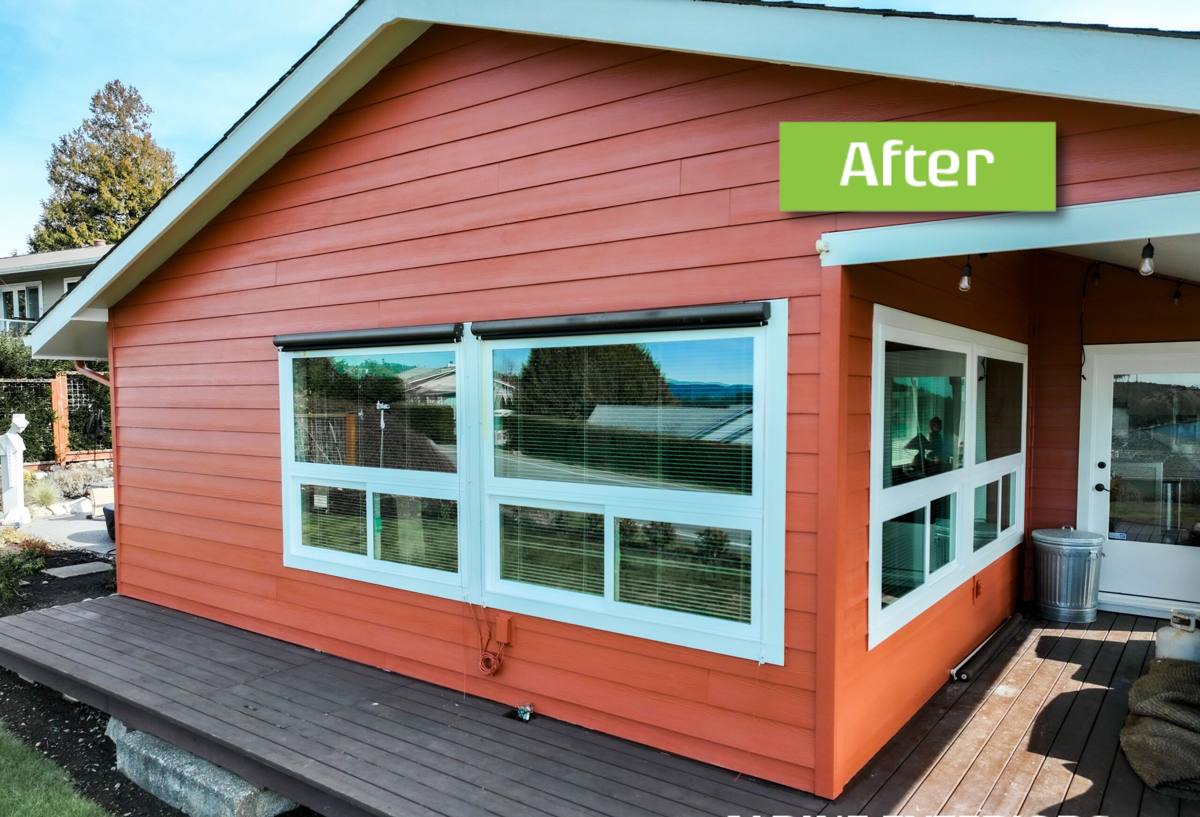
What Correct Fiber Cement Installation Requires in This Climate
Fiber cement siding is only as good as the installation behind it. In a marine climate like Bellingham's, a few details matter far more than they do elsewhere:
Weather-Resistive Barrier and Drainage Gap
Behind the siding, a properly lapped weather-resistive barrier and a drainage plane are what let incidental moisture escape instead of sitting against the wall sheathing. Skipping or shortcutting this layer is one of the most common causes of hidden rot behind siding that looks fine from the curb.
Flashing at Every Penetration
Windows, doors, hose bibs, light fixtures, deck ledgers — every penetration through the siding is a potential entry point for driving rain. Correct flashing detail at each one is non-negotiable in a climate that gets wind-driven rain as often as Bellingham does.
Proper Clearances
Fiber cement siding needs clearance from grade, roof lines, decks, and patios — generally a minimum gap so splashback and standing water don't wick moisture into the bottom edge of the boards. In neighborhoods with mature landscaping like Sehome, this also means keeping siding clear of shrubs and irrigation spray.
Fastener Pattern and Caulking
Manufacturer-specified fastener spacing and the right caulk at joints and butt seams keep water from tracking behind the boards. Field-cut edges need to be primed and sealed, not left raw.
None of this is exotic. It's standard fiber cement best practice — but it's exactly the set of details that get rushed on a low-bid job, and exactly the set of details that show up as problems three or four wet seasons later.
Why We Install Only James Hardie Fiber Cement
We standardized on James Hardie products and don't install LP SmartSide, vinyl, Cemplank, Allura, or bare cedar and primed spruce. That's not a knock on every homeowner's existing siding — it's a decision about what we're willing to put our name behind in a climate like this one.
Vinyl expands and contracts with temperature swings and can distort under sustained sun exposure; it's also a poor match for a look that many Sehome homes carry well, whether that's a craftsman-era profile or a more modern build. Wood-based products like cedar or primed spruce look great new but demand ongoing maintenance to fight moisture and rot — maintenance that's harder to keep up with in a climate that's damp more months than not. LP SmartSide is an engineered wood product with real strengths, but it relies on its factory treatment and field-applied caulking staying intact to resist moisture, and any breach in that system exposes wood substrate to exactly the kind of dampness Sehome sees for half the year.
James Hardie fiber cement is non-combustible, doesn't support the kind of moisture-driven rot that wood products can suffer, and holds paint and factory finish (ColorPlus) far longer than wood substrates in a marine climate. Hardie also engineers regional HZ5 product lines specifically for wetter, colder climates like the Pacific Northwest — which matters more in Bellingham than it would in a drier part of the country.
Fiber Cement Product Comparison
| Material | Moisture Behavior in Wet Climates | Maintenance Burden | Typical Lifespan |
|---|---|---|---|
| James Hardie Fiber Cement (HZ5) | Non-combustible, engineered for wet/cold climates, resists moisture-driven swelling | Low — occasional wash, repaint per finish warranty | 30+ years with correct install |
| Vinyl Siding | Doesn't rot, but can warp/distort with heat and doesn't manage drainage behind panels | Low, but limited repair options if damaged | 20-30 years, variable |
| Cedar / Primed Spruce | Absorbs moisture, prone to rot and moss growth without diligent upkeep | High — regular sealing/staining, moss and mildew treatment | 15-25 years with strict maintenance |
| LP SmartSide (Engineered Wood) | Wood-based substrate; relies on factory treatment and sealed joints staying intact | Moderate — caulk and finish upkeep matters | 20-30 years with proper maintenance |
These are general characteristics, not guarantees — actual performance always comes down to installation quality and how consistently a home gets maintained. But in a climate like Whatcom County's, the material's baseline moisture tolerance is a real advantage before maintenance even enters the picture.
Our Process for Sehome Siding Jobs
A siding replacement on an occupied home in an established neighborhood needs a process that respects the property and the neighbors, not just the wall assembly. Our approach:
- On-site assessment. We look at existing siding condition, sheathing, trim, and any moisture damage before quoting anything — you should know what's underneath before committing to a plan.
- Removal and sheathing inspection. Old siding comes off, and we inspect the sheathing and framing for rot or damage that needs addressing before new siding goes up. This is where hidden moisture problems from the old system usually surface.
- Weather barrier and drainage plane install. Correctly lapped house wrap and a drainage gap, sized and installed to manufacturer spec.
- Flashing at all penetrations. Windows, doors, and any wall-mounted fixtures get properly detailed flashing before siding closes around them.
- Hardie siding installation. Installed to manufacturer fastening, clearance, and joint-treatment specifications — not shortcuts.
- Trim, caulking, and final inspection. Field-cut edges sealed, joints caulked, and a final walk-through with the homeowner.
Living With Fiber Cement Siding in a Moss-Prone Climate
Even the right product needs basic upkeep in a climate this wet. Fiber cement dramatically reduces the maintenance burden compared to wood, but it isn't zero-maintenance. A simple seasonal routine keeps a Hardie system performing the way it's designed to:
- Rinse siding annually (garden hose pressure is enough) to clear pollen, dust, and early moss growth before it establishes
- Trim back shrubs, hedges, and tree branches so siding gets airflow and isn't sitting in constant shade and damp leaf litter
- Check caulking at joints, trim, and penetrations every year or two and re-caulk where it's cracked or pulled away
- Keep gutters clear so overflow isn't running down the wall face during heavy rain
- Watch for moss or algae in shaded, north-facing sections first — it spreads fastest there and is easiest to address early
- Repaint on the factory finish warranty schedule rather than waiting for visible fading
Why Hiring Local Experience Matters in Sehome
A crew that already works in Bellingham neighborhoods like Sehome knows the practical realities: the drainage plane details that matter in a marine climate, how much clearance to leave around mature landscaping, and how to sequence a job around the region's wet season instead of fighting it. That local pattern recognition is different from what a crew that mostly works dry-climate jobs brings to a Whatcom County home.
It also matters for accountability. A contractor with an ongoing presence in the area has a reputation to protect on every job, not just the one in front of them — which is a meaningful difference when you're trusting someone with the single largest weatherproofing decision on your home.
What a Sehome Siding Project Typically Involves
| Factor | What It Affects |
|---|---|
| Home size and wall complexity | More corners, gables, and trim details increase labor time |
| Existing sheathing condition | Rot repair or sheathing replacement adds cost if found during removal |
| Siding profile and finish | Lap width, texture, and ColorPlus finish selection affect material cost |
| Access and site conditions | Mature landscaping, fencing, or tight lot lines can affect staging and labor |
| Trim and accessory work | Window trim, corner boards, and fascia work are often bundled with siding jobs |
Every home is different, and the only way to get an accurate number is a site visit — but these are the variables that actually move a quote, not vague allowances.
If you're weighing a siding replacement for a Sehome home and want a straight answer about what your walls actually need, we're glad to take a look. Reach out for a free, no-pressure estimate — no obligation, just an honest assessment.