 Bellingham Exterior
 Deck Repair Built for Sehome's Climate
Sehome sits on one of Bellingham's older, well-established hillsides, with mature tree canopy, a mix of homes from different decades, and a lot of shade that never fully dries out between rain events. That combination is tough on wood and composite decks alike. Salt-tinged air off Bellingham Bay, driving rain that comes in sideways during fall and winter storms, and a moss season that can stretch from October through May all work against a deck's structure, not just its looks. A deck that looks fine from the yard can still have soft ledger boards, rusted fasteners, or joists that have been quietly losing strength for years.
We repair decks in Sehome regularly, and the pattern is consistent: problems start small, hidden under surface boards or behind trim, and by the time they're visible they're often more than a cosmetic fix. This page walks through what actually causes deck damage in this part of Whatcom County, what a proper repair involves, and how to tell whether your deck needs patching or something more thorough.
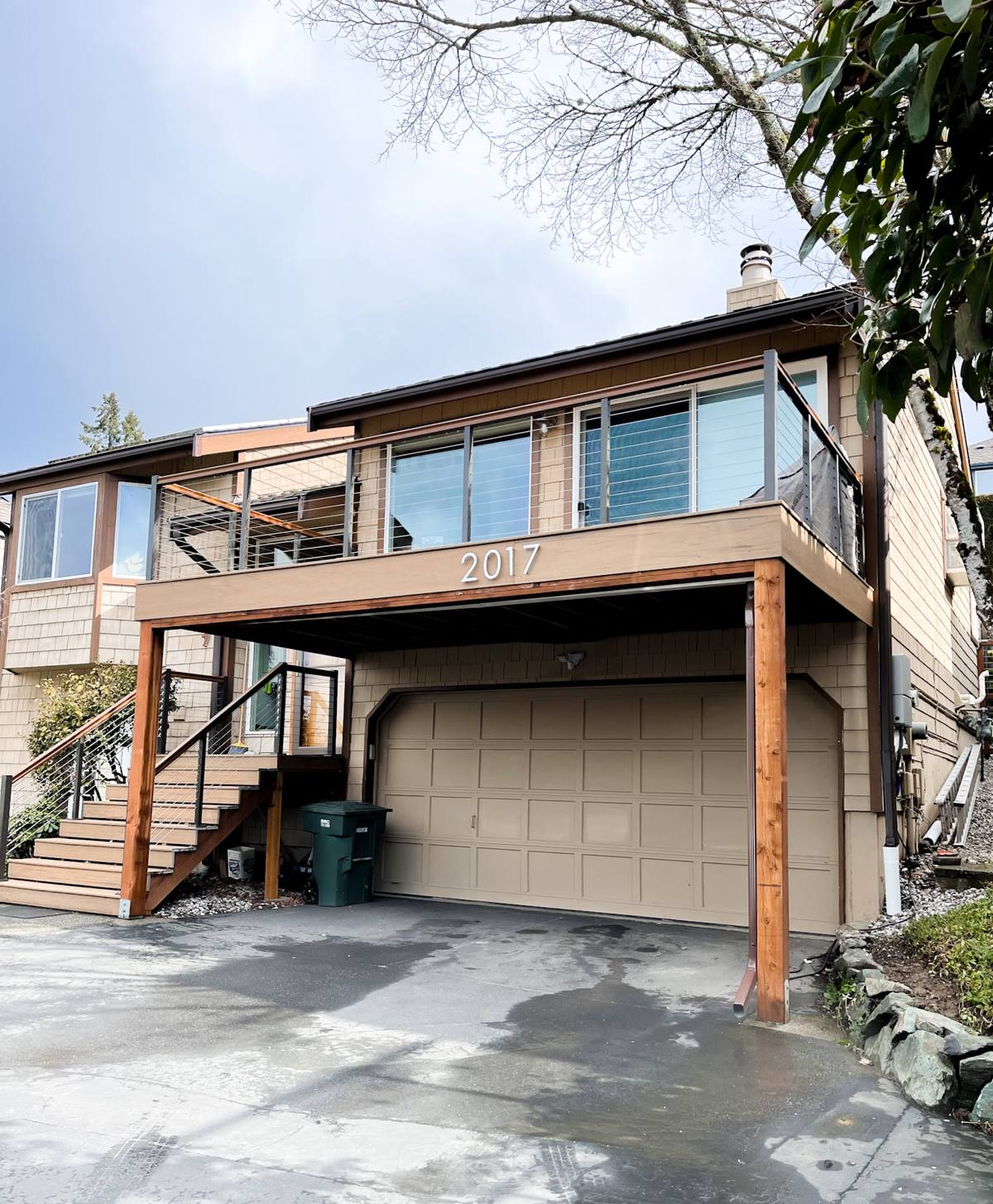
Why Local Decks Wear Out Faster Than People Expect
Moisture That Never Fully Leaves
Bellingham's marine climate means long stretches of damp, overcast weather rather than short heavy downpours followed by sun. Decks in shaded or north-facing yards, common in Sehome's tree-lined lots, can stay damp for days at a time. Wood fibers swell and contract with every wet-dry cycle, and that repeated movement is what eventually loosens fasteners, cracks boards, and opens gaps where water gets into end grain.
Moss, Algae, and Trapped Debris
A long moss season isn't just a slip hazard — moss and algae hold moisture directly against decking boards and structural framing, slowing evaporation and accelerating rot underneath. Debris that collects between boards or in corners does the same thing. Left alone through a wet Bellingham winter, that trapped moisture is one of the most common reasons we find soft spots in deck boards that otherwise look intact.
Salt Air and Metal Fasteners
Homes closer to the water pick up salt-laden air that speeds corrosion on nails, screws, and joist hardware. Once a fastener starts rusting, it loses holding strength well before it visibly fails, which is why a deck can feel slightly "bouncy" or loose long before anything looks broken.
Signs a Sehome Deck Needs Repair
- Boards that feel spongy, springy, or flex more than neighboring boards when you walk on them
- Visible gaps, cracks, or splintering concentrated in shaded areas or near planters
- Rust staining running down from screws, nails, or metal joist hangers
- A railing or post that wiggles more than it used to
- Green or black staining that keeps coming back within weeks of cleaning
- Stairs that feel uneven or have started to separate from the stringers
- Any sagging along the ledger board where the deck attaches to the house
Any one of these on its own might be minor. Several together, especially involving the ledger board or support posts, usually means the issue has moved from the surface into the structure.
What a Correct Deck Repair Actually Involves
A repair that only replaces what's visible from above often misses the real problem. We treat every repair call as a chance to check the parts of the deck that don't get looked at during normal maintenance.
Structural Inspection First
Before replacing a single board, we check the ledger board connection to the house (a common failure point and a serious safety issue if it's compromised), the condition of joists and beams underneath, post bases where wood meets concrete or ground contact, and the fasteners and hardware holding it all together. Surface repairs on a deck with a weak structural connection just delay a bigger problem.
Matching Repairs to Cause, Not Just Symptom
If a board rotted because water was pooling due to poor drainage or missing flashing, replacing the board without fixing the drainage means the new board rots too, usually within a season or two in this climate. Correct repair means addressing why the damage happened, not just what's damaged.
Fastener and Hardware Standards
We use corrosion-resistant fasteners and hardware rated for exterior, damp-climate use rather than standard interior-grade screws or nails, which is especially important given the salt exposure and near-constant moisture common around Bellingham.
Sealing and Finish Work
Once structural and board-level repairs are done, exposed end grain, cut edges, and connection points get properly sealed. This is one of the most skipped steps in low-quality repairs, and it's often the first place rot returns.
Common Deck Problems We See in Sehome
| Problem | Typical Cause | What We Check |
|---|---|---|
| Soft or spongy decking boards | Trapped moisture, moss, poor airflow underneath | Board core condition, joist spacing, ventilation |
| Rusted or failing fasteners | Salt air, age, wrong fastener grade originally used | All exposed hardware, hidden joist hangers |
| Loose or wobbly railings | Post rot at the base, loosened lag bolts | Post-to-frame connection, base moisture |
| Ledger board separation | Missing or failed flashing, water intrusion at the house wall | Flashing, fastener pattern, sheathing behind ledger |
| Recurring moss and staining | Shade, poor drainage, infrequent cleaning | Drainage slope, board gapping, surface treatment |
| Stair or stringer movement | Ground contact rot, undersized original framing | Stringer condition, footing stability |
Repair vs. Replace: How We Help You Decide
Not every deck problem calls for a full rebuild, and not every problem is safely fixed with a patch. We walk homeowners through the trade-offs honestly rather than defaulting to the bigger job.
| Factor | Leans Toward Repair | Leans Toward Replacement |
|---|---|---|
| Structure (joists, ledger, posts) | Sound, no soft spots or rust-through | Rot or corrosion found in multiple structural members |
| Age of deck | Under 10-15 years, built to reasonable standards | Older deck nearing or past typical service life |
| Extent of damage | Isolated boards or one section | Damage spread across the deck or recurring in the same spots |
| Code and safety | Meets current railing and attachment standards | Older construction that doesn't meet current safety code |
| Budget goals | Extend usable life at lower cost | Want a long-term reset instead of ongoing patchwork |
Broadly, isolated board or fastener repairs on a structurally sound deck tend to be a modest, contained cost. Repairs involving ledger boards, multiple joists, or full stair rebuilds cost more because of the labor and material involved. Full replacement is the largest investment but resets the clock and lets everything be built to current standards. We give straightforward pricing after inspecting your specific deck rather than quoting a number sight unseen.
Materials That Hold Up in Bellingham's Climate
When we're replacing boards, framing, or hardware, material choice matters as much as workmanship. We're upfront about the trade-offs of each option rather than pushing whatever's easiest to install.
- Pressure-treated lumber — cost-effective and strong, but needs consistent sealing and maintenance to perform well through wet winters; a good fit for structural framing that will be covered by decking.
- Cedar — naturally more rot- and insect-resistant and a common regional choice, but still requires periodic finishing to look and perform its best in a damp climate.
- Composite decking — low-maintenance surface option, but installation sensitivity matters: proper gapping, fastening, and ventilation underneath are essential, or moisture and debris can still cause problems below the surface even if the boards themselves resist rot.
For structural repairs — joists, beams, ledger connections — we generally recommend matching or exceeding the durability of what's already in place, using fasteners and hardware rated for exterior, high-moisture exposure regardless of which decking material sits on top.
Our Deck Repair Process
1. On-Site Inspection
We look above and below the deck — surface boards, railings, stairs, and the structural framing, ledger connection, and post bases underneath. This is where hidden problems usually surface.
2. Honest Scope and Estimate
You get a clear breakdown of what needs repair, what's optional, and what we'd recommend watching over time. No pressure to upsize the job beyond what the deck actually needs.
3. Repair Work
Structural issues get addressed first, followed by board replacement, hardware upgrades, and any drainage or flashing corrections needed to prevent the same damage from recurring.
4. Finish and Seal
Exposed wood gets properly sealed, and we walk you through basic upkeep so the repair holds up through the next few Whatcom County winters.
Maintenance That Extends the Life of a Repair
- Sweep leaves and debris off the deck surface regularly, especially in fall
- Keep gutters and downspouts near the deck clear so water isn't dumping onto or under it
- Treat moss and algae promptly rather than letting it sit through a wet season
- Check railings and stair connections for movement once or twice a year
- Reseal or refinish wood decking on the schedule appropriate to the product used
- Keep planters and furniture with continuous ground contact off bare wood where possible
Why It Matters to Hire a Crew That Already Works in Sehome
Deck repair done by a crew unfamiliar with local conditions often misses the climate-specific causes behind the damage — a repair that would hold up fine in a drier region can fail again within a couple of Bellingham winters if drainage, ventilation, and fastener choices aren't adjusted for this environment. We work on homes throughout Sehome and the surrounding Bellingham area, so we're familiar with how this hillside neighborhood's shade patterns, tree cover, and exposure to weather off the bay tend to affect decks over time. That local pattern recognition helps us diagnose the actual cause of a problem faster and repair it in a way that's built to last here, not just in general.
Get a Straightforward Deck Repair Estimate
If your deck has soft spots, loose railings, recurring moss problems, or you're just not sure whether it needs a repair or a bigger fix, we're happy to take a look. Request a free, no-pressure estimate using the form below and we'll give you an honest read on what your deck actually needs.