 Bellingham Exterior
 Why Sehome Roofs Take a Different Kind of Beating
Sehome sits close enough to Bellingham Bay to catch salt-laden air off the water, and close enough to the wooded slopes around Sehome Hill to live under a heavy, mature tree canopy. That combination matters when a storm rolls through. The salt air accelerates corrosion on exposed fasteners and metal flashing faster than it would a few miles inland. The tree cover means high wind doesn't just lift shingles — it drops limbs, sometimes large ones, onto roof planes that were fine the day before. And Whatcom County's long, wet moss season means any small breach a storm opens up doesn't just sit there; it gets fed water and organic debris for months before the next dry stretch.
None of that means Sehome roofs are poorly built. It means they're working against a specific, layered set of conditions, and a repair that would hold up fine in a drier or more exposed part of town can fail here if it doesn't account for what's actually happening on that particular roof.
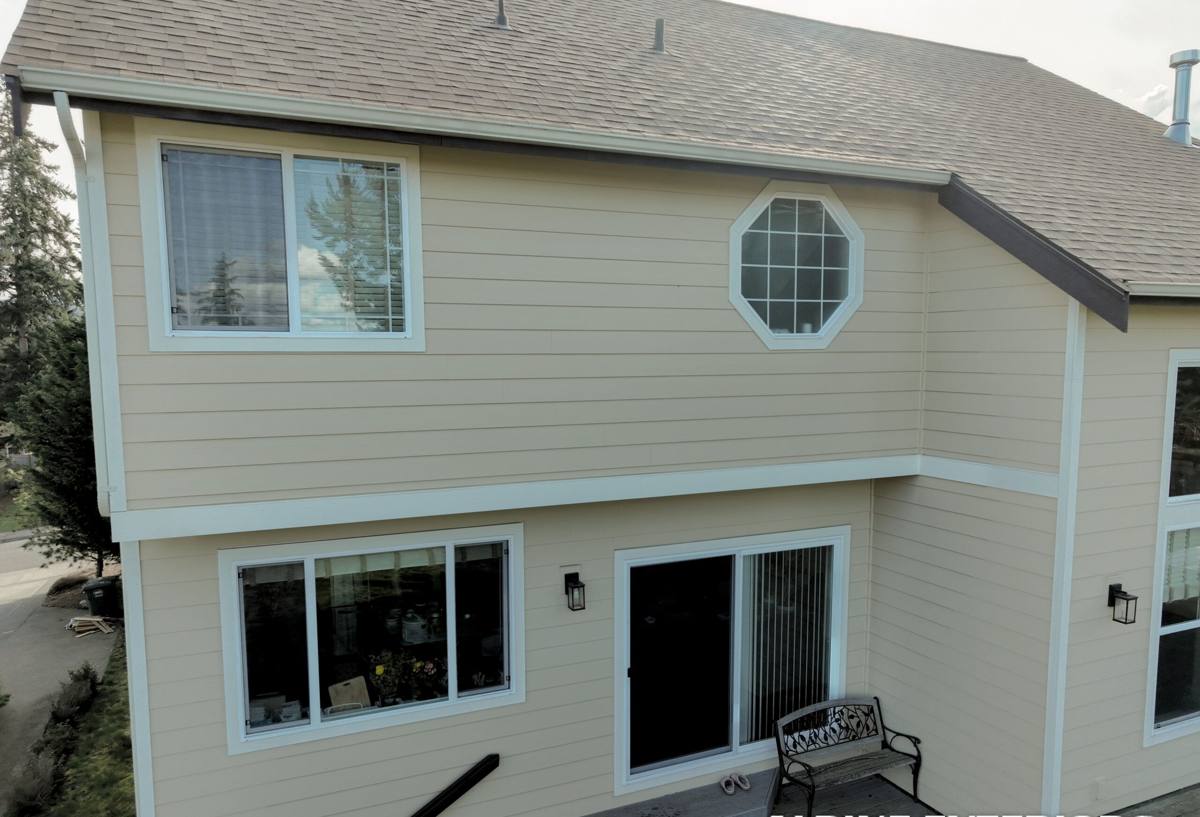
What Storm Damage Actually Looks Like Here
Homeowners often picture storm damage as a dramatic hole or a shingle blown clean off. Sometimes it is. More often, it's subtler:
- Shingles lifted, creased, or torn at the tab but not fully detached
- A limb strike that cracks or displaces shingles without puncturing decking
- Flashing pulled loose around a chimney, skylight, or vent pipe during high wind
- Granule loss from wind-driven debris, which thins a shingle's UV and weather protection without an obvious visual sign
- A wind-opened seam that lets water in without any missing material at all
The Damage You Can See vs. What's Underneath
The visible damage is rarely the whole story. Underlayment can be soaked, decking can be softening, and flashing can be bent just enough to funnel water sideways instead of down — all invisible from the ground or even from a quick look at the shingle surface. That's why a proper storm damage inspection isn't a glance at the obvious spot; it's a walk of the whole roof plane, including the areas that didn't take a direct hit but could be compromised anyway.
Why a Small Storm Breach Turns Into a Big Repair
This is the part specific to our climate. In a drier region, a small crack or lifted tab might sit exposed and dry between rain events, giving a homeowner time before it becomes a real problem. Here, that same breach sits under near-constant moisture for much of the year, and moss spores find it fast. Moss doesn't just look bad — it holds water directly against the shingle surface, keeps that spot from ever fully drying, and works its root structure under tabs and around fastener heads. A repair that's delayed through one wet season in Sehome can go from "replace a section of shingles" to "replace decking too" simply because the damage had months of standing moisture and moss growth to work with instead of days.
Our Storm Damage Repair Process
We keep this straightforward and in a consistent order, because skipping steps is how storm repairs end up needing to be redone.
- Stabilize first. If there's active water intrusion or exposed decking, that gets tarped or otherwise protected before anything else happens.
- Inspect the whole roof, not just the damaged spot. Wind and falling limbs rarely affect just one square foot — we check adjacent courses, flashing, valleys, and penetrations.
- Document everything. Photos, moisture readings where relevant, and a written scope — useful for your own records and essential if you're filing an insurance claim.
- Decide on repair scope. Targeted shingle and flashing repair, a full section replacement, or in rare cases full roof replacement — based on what the inspection actually shows, not a default upsell.
- Match materials and execute. Repairs are done with materials that match your existing roof as closely as possible in profile, color, and manufacturer line so the repaired section weathers consistently with the rest.
- Final walkthrough. We confirm the repair is sealed, flashing is properly lapped, and there are no secondary issues we flagged during inspection but haven't yet addressed.
Repair or Replace? What Actually Drives That Decision
Homeowners understandably want a straight answer up front, but the honest answer depends on a handful of factors we weigh together, not any single one.
| Factor | Favors Targeted Repair | Favors Full Replacement |
|---|---|---|
| Roof age | Under roughly half its expected service life | Nearing or past expected service life |
| Damage spread | Concentrated in one or two areas | Scattered across multiple roof planes |
| Decking condition | Dry, solid decking under the damage | Soft or delaminated decking found on inspection |
| Material availability | Matching shingle line still available | Discontinued product, visible mismatch likely |
| Underlying moss/moisture history | Isolated, recently occurred | Long-standing, widespread moss with repeat leak history |
In most storm calls we take in Sehome, the honest answer is a targeted repair. Full replacement only makes sense when the numbers above genuinely point that way — not because it's the bigger job.
Materials and Techniques Suited to This Climate
What goes into a Sehome storm repair isn't identical to what we'd use somewhere drier and further from the water. A few standards we hold to:
- Corrosion-resistant fasteners and flashing, given the salt content in air blowing off Bellingham Bay
- Ice-and-water shield at valleys, eaves, and around penetrations — areas where driving, wind-blown rain finds gaps a standard underlayment alone won't stop
- Attention to roof ventilation during any repair, since poor airflow keeps sheathing damp longer and gives moss an easier foothold
- Sealants and flashing details chosen for long-term flexibility rather than the cheapest short-term seal, since temperature swings and constant moisture will find a rigid or brittle seal's weak point eventually
We don't push a particular shingle brand as superior across the board — most major manufacturer lines perform well when installed correctly. What matters more is matching your existing roofing system correctly and not mixing incompatible products, which can void warranty coverage or create uneven wear.
Working With Your Insurance Claim
Most storm damage repairs in this area involve an insurance claim, and the process goes smoother when the documentation is solid from the start. We provide clear photos of the damage, a written scope of what's needed and why, and we're straightforward with adjusters about what is storm-related damage versus pre-existing wear — that honesty protects you if there's ever a dispute over the claim later. We're not adjusters and don't control what your policy covers, but we can make sure the roofing side of your claim is documented accurately.
Why a Crew That Already Works in Sehome Matters
Roofing skill is roofing skill anywhere, but local familiarity shortens the guesswork. Knowing that a particular block sits under heavy tree cover and takes limb strikes more often than wind-only damage changes what we check first on inspection. Knowing how salt air ages flashing on homes near the water changes what we flag as "watch this" versus "fix this now." And being close by matters in a real storm — when several homes in the same area need tarping or emergency inspection at once, a crew that's already local can respond faster than one dispatching from across the county. We also stay current on City of Bellingham permitting requirements, which applies if storm damage repair crosses into work that needs a permit rather than a straightforward like-for-like repair.
Lowering Your Risk Before the Next Storm
You can't storm-proof a roof, but you can reduce how much damage a bad windstorm or wet winter does to yours. A few things worth doing on a normal maintenance schedule:
- Trim back tree limbs that overhang or are close enough to strike the roof in high wind
- Have moss removed and treated before it spreads across a full slope, not after
- Check flashing around chimneys, skylights, and vents annually for lifting or gaps
- Clean gutters before the fall rains start, so water isn't backing up under the roof edge
- Get any minor leak looked at right away rather than waiting for it to become obvious
- After any significant windstorm, do a visual check from the ground for missing or displaced shingles
A roof that gets this kind of routine attention handles the next storm noticeably better than one that doesn't — and it makes any future storm repair smaller and cheaper when it is needed.
If a recent storm left you with missing shingles, a leak, or just questions about what shape your roof is really in, we're glad to take a look. Use the form below to request a free, no-pressure estimate and we'll walk the roof, give you a straight answer, and explain exactly what we find.