 Bellingham Exterior
 Windows Built for Sehome's Climate, Not a Catalog
Sehome sits close enough to Bellingham Bay that salt-laden air, wind-driven rain, and long stretches of gray, damp weather are just part of owning a home here. Older wood and early-generation vinyl windows in this neighborhood often show it: fogged double panes, swollen sashes, drafts around the frame, and trim that's gone soft from years of moisture sitting where it shouldn't. Energy-efficient window replacement in Sehome isn't just about a lower heating bill — it's about closing the gaps that let Whatcom County's weather work its way into the wall assembly in the first place.
We treat every window job here as a building-envelope job, not just a swap-the-glass job. That distinction matters more in a coastal, moss-prone climate than almost anywhere else in the state.
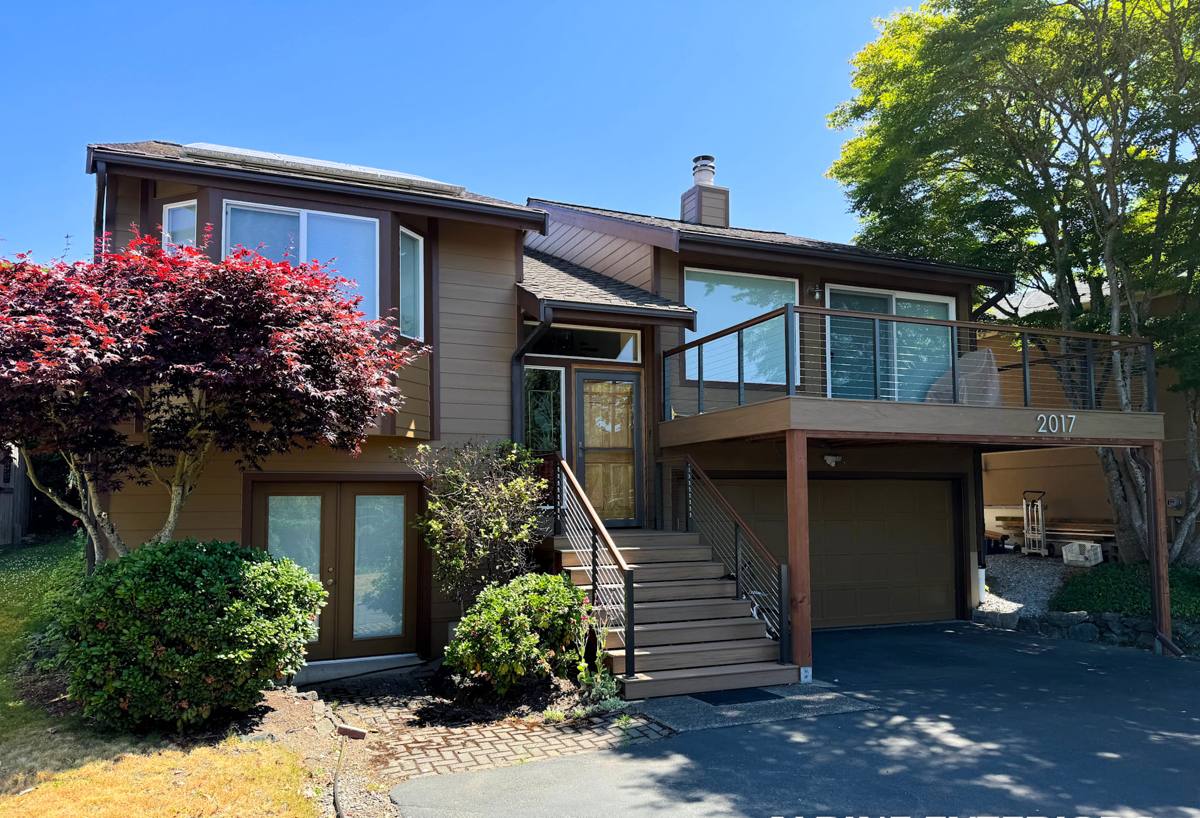
What Sehome's Climate Actually Does to Windows
Salt Air and Driving Rain
Homes within a few miles of the bay deal with airborne salt that accelerates corrosion on hardware, screens, and lower-quality cladding. Combine that with sideways rain during winter storms and you get a real test of a window's weep system — the small drainage channels that are supposed to let water out of the frame. When those channels clog with salt residue, pollen, or moss debris, water backs up instead of draining, and that's when rot starts inside the wall, not on the surface where you'd notice it.
The Long Moss Season
Bellingham's moss season runs long — often eight months or more of conditions damp enough to keep it growing. Moss doesn't just stain a roof; it holds moisture against anything it touches, including window sills, exterior trim, and the caulk lines around a frame. A sill that stays wet under a moss mat for weeks at a time will fail years before a sill that gets a chance to dry out between rains.
Temperature Swings and Condensation
Sehome doesn't see extreme heat or cold, but the steady damp cool means single-pane and older double-pane windows run condensation on the interior glass for much of the year. That moisture doesn't stay on the glass — it migrates into sills and the drywall around the window, which is a slow, quiet path to mold and soft wood that homeowners often don't catch until a remodel or inspection uncovers it.
What a Correct Installation Involves
The window unit itself is maybe half the job. The other half is how it's flashed, sealed, and integrated with the existing siding and wall assembly — and that's where a lot of window replacements in this climate go wrong.
- Full removal of the old unit and inspection of the rough opening for hidden rot before anything new goes in
- Proper sill pan flashing so any water that does get past the window drains out and away from framing, not down into it
- Correctly lapped house wrap and flashing tape at the head, jambs, and sill — sequenced so water always sheds outward and downward
- Backer rod and exterior-grade sealant at the trim line, sized and applied for long-term flexibility, not just a bead of caulk
- Shimming and fastening that keeps the sash square so it operates and seals properly for the life of the window
- Interior air sealing between the frame and rough opening, not just exterior caulking
Skip any one of these steps and you can end up with a window that looks fine and even performs fine on an energy bill for a year or two, while water quietly finds its way into the wall behind it. This is the corner that gets cut most often on rushed or underbid jobs, and it's the one that costs the most to fix later.
Choosing the Right Window for a Coastal, High-Moisture Home
Frame Material Trade-Offs
We don't push one frame material as universally "best" — each has real trade-offs in this climate, and the right call depends on the house, the exposure, and the budget.
| Frame Type | Coastal/Moisture Behavior | Maintenance | Typical Fit |
|---|---|---|---|
| Vinyl | Won't rot or corrode; good sealed-unit performance | Low — occasional cleaning | Most homes seeking value and efficiency |
| Fiberglass | Very stable in temperature swings; strong resistance to warping | Low | Higher-exposure walls, larger openings |
| Wood (clad exterior) | Interior warmth of real wood, but exterior cladding is doing the weather work | Higher — exterior cladding and joints need periodic inspection | Historic or architecturally matched homes |
| Aluminum | Prone to condensation and corrosion near salt air unless thermally broken | Moderate to high | Rarely our first recommendation this close to the bay |
For a lot of Sehome homes, a quality vinyl or fiberglass window with a thermally broken frame and a proper install is the most reliable long-term combination — not because other materials are bad, but because they demand more upkeep in exactly the conditions this neighborhood delivers year-round.
Glass Packages That Make Sense Here
Double-pane, low-E glass with argon fill is the practical baseline for Whatcom County's climate — it's a meaningful step up from older double-pane units without the added cost of triple-pane, which mostly pays off in colder inland climates rather than our marine one. Low-E coatings also help cut down on the interior condensation that's such a persistent issue here, since they keep the interior glass surface warmer.
Signs a Sehome Home Needs Window Replacement Now
- Visible fogging or a haze between the panes — the seal has failed and the insulating gas is gone
- Sashes that stick, won't stay open, or don't latch flush anymore
- Soft, discolored, or spongy wood at the sill or lower corners of the trim
- Persistent condensation on the inside of the glass, especially in bedrooms and on north-facing walls
- A noticeable draft you can feel with a hand near the frame on a windy day
- Moss or dark staining building up on the sill or immediately below the window
Any one of these on its own might just mean a repair. Several at once, especially on the same window, usually means the unit and possibly the surrounding trim are past the point where repair makes sense.
Our Process for a Sehome Window Job
1. On-Site Assessment
We look at each window in context — its exposure to prevailing wind and rain, its current flashing and trim condition, and whether there's any hidden moisture damage before we ever talk product.
2. Straightforward Product Recommendation
We'll walk through frame and glass options honestly, including cost differences and what each trade-off actually means for a house in this specific location — not a one-size answer for every home on the street.
3. Careful Removal and Opening Inspection
Old units come out clean, and we check the rough opening for rot or moisture damage before the new window goes in. If we find damage, we'll show you and talk through the repair before moving forward — not surprise you with it after the fact.
4. Flashing, Sealing, and Trim
This is where the long-term performance is won or lost, and it's the step we don't rush regardless of schedule pressure.
5. Final Check and Walkthrough
We test operation, seal integrity, and walk the finished work with you before calling the job done.
Why Local Experience in Sehome Matters
A crew that's worked windows across Bellingham and Whatcom County knows the difference between how a house on a wide-open, wind-exposed lot needs to be sealed versus one tucked in behind mature trees with heavier moss and shade exposure. That local pattern recognition — knowing where water tends to collect on this style of house, which trim details fail first in this climate, how much clearance to leave for drainage given our rainfall — comes from doing the work here repeatedly, not from a general install checklist. It's the difference between a window that performs well on paper and one that actually holds up through a decade of Bellingham winters.
What Energy-Efficient Windows Actually Change
Replacing failing windows with a properly sealed, low-E double-pane unit reduces drafts, cuts down on the interior condensation that damages sills and paint, and takes pressure off your heating system during the long stretch of cool, damp months typical here. It won't transform a heating bill overnight, but it removes one of the more significant sources of heat loss and moisture intrusion in an older home, and it stops a slow-developing problem — water intrusion around failing frames — before it turns into a trim or framing repair.
If your windows are drafty, fogged, or showing wear from a few too many Whatcom County winters, we're glad to take a look. We offer free, no-pressure estimates for Sehome homeowners — walk us through what you're seeing and we'll give you a straight assessment of what's actually needed, not an upsell.