 Bellingham Exterior
 Sehome sits on the hillside close to downtown Bellingham and Western Washington University, and that location shapes what window work actually looks like there. The neighborhood is a mix of early-1900s homes that have been through decades of Whatcom County winters and newer infill construction built to more recent energy codes, often sitting on the same block. Both housing types face the same weather, but they fail in different places and for different reasons, which is part of why we treat every Sehome estimate as a look at the specific house rather than a generic quote.
Window Installation in Sehome: A Neighborhood With Its Own Wear Pattern
A window installation job in Sehome is rarely just "put in a new window." Older homes on the hill often still have original wood-framed windows or a first round of aluminum replacements from decades back, both of which tend to be well past the point where repair makes sense. Newer builds nearby may have younger vinyl units that are still under warranty but were installed with shortcuts that only show up years later, once water has already been tracking behind the wall assembly. In both cases, the fix isn't just picking a product off a shelf. It's understanding what's actually happening at that specific opening, on that specific wall, before any new window goes in.
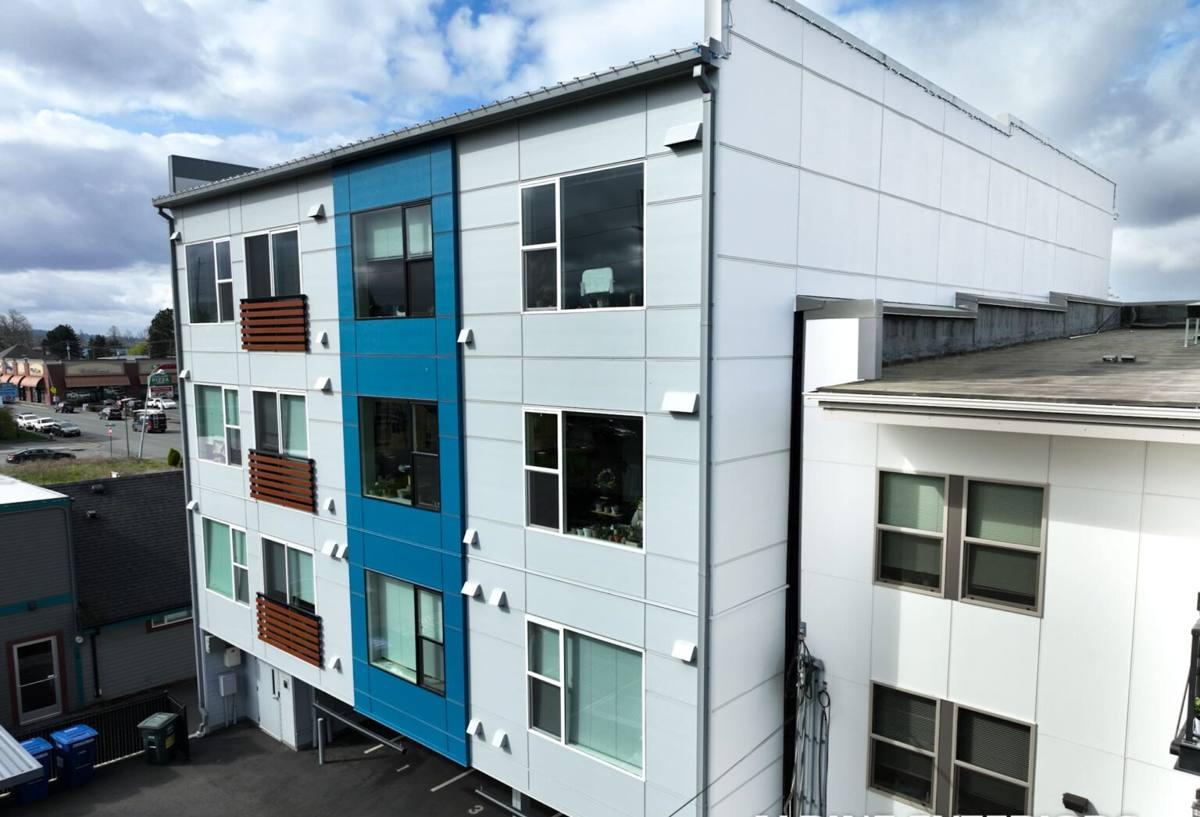
What Bellingham's Climate Does to Windows Over Time
Sehome doesn't get its own separate weather system, but the general conditions across Bellingham and Whatcom County hit every window in the neighborhood the same way, year after year.
Salt Air
Bellingham's proximity to the bay means a steady background level of salt-tinged, moisture-laden air moving through the area, not just on stormy days. That kind of exposure is slow and quiet, but it's hard on window hardware, fasteners, and lower-grade frame components, corroding hinges and locks and breaking down finishes faster than an inland climate would.
Driving Rain
Rain here doesn't just fall, it gets pushed sideways by wind coming off the water, and that changes what a window installation actually has to defend against. A window and flashing detail that would hold up fine in a calmer climate can still let water in here specifically because the wind is driving rain into the joint between the window frame and the wall from an angle, not just from above.
A Long Moss Season
Mild temperatures, consistent dampness, and tree cover common on Sehome's hillside lots add up to a moss and mildew season that can run most of the year on shaded or north-facing walls. Around windows specifically, that moisture tends to collect on sills, in corners, and behind trim, which is exactly where a poorly sealed installation is most likely to fail first.
Signs a Sehome Home Needs Window Installation, Not Just a Repair
Not every window problem means full replacement. But there's a point where patching a window is just delaying a bigger job, and it's worth recognizing that point before it costs more than it needs to.
- Windows that are difficult to open, close, or lock, especially after temperature swings
- Visible condensation between panes on double- or triple-pane units, which usually means a failed seal
- Soft, spongy, or discolored wood trim or sill around the window frame
- Persistent drafts or cold spots near windows even when they're fully closed
- Rising heating bills that track with older, single-pane, or poorly sealed windows
- Visible daylight or gaps between the window frame and the surrounding wall
- Paint that keeps failing at the same spot on a window's exterior trim no matter how often it's touched up
What a Correct Window Installation Actually Involves
The window unit itself is only part of the job. Most of the long-term performance of a window installation comes down to details that aren't visible once the trim goes back on.
Removal and Opening Inspection
Pulling the old window out is also the first real chance to see what's been happening at that opening. On Sehome's older homes especially, this is where we typically find out whether framing, sheathing, or sill material has taken on moisture damage that needs to be corrected before a new window goes in. Installing a new window over a compromised opening just hides the problem for a while.
Flashing and Moisture Management
This is the step that matters most in a climate that drives rain sideways into walls. Flashing has to be sequenced correctly around the top, sides, and sill of the opening so that any water that does get past the window sheds outward and down, not into the wall cavity. It's also the step that's easiest to rush, and rushing it is one of the most common reasons a decent window still leaks a few years in.
Insulation and Air Sealing
The gap between the window frame and the rough opening needs to be insulated and air-sealed correctly, not just stuffed with whatever's on hand. Done right, it cuts drafts and helps the window perform closer to its rated efficiency. Done poorly, it leaves a cold, sometimes damp gap right behind the trim.
Trim and Finish
The last step is putting the exterior trim back in a way that sheds water and matches the rest of the house. On older Sehome homes, that often means working with existing trim profiles and siding rather than a mismatched patch job that stands out from the street.
Full-Frame vs. Insert Replacement
One of the first decisions in any window installation is whether to replace the entire window frame or install a new window inside the existing frame. Both are legitimate approaches, and the right one depends on the condition of what's already there.
| Factor | Insert (Pocket) Replacement | Full-Frame Replacement |
|---|---|---|
| What it involves | New window installed inside the existing frame, which stays in place | Existing frame removed down to the rough opening; new frame and window installed together |
| Best fit | Existing frame is still structurally sound and free of rot or moisture damage | Frame, sill, or surrounding framing shows damage, or the opening needs to change size |
| Access to hidden damage | Limited — the old frame and any problems behind it stay covered | Full access to inspect and correct framing, sheathing, or flashing issues |
| Disruption to siding and trim | Minimal exterior trim work | More exterior trim and sometimes siding work required |
| Typical cost | Generally lower | Generally higher, reflecting the added labor and materials |
Given how much moisture Sehome's older frames have often been exposed to over the decades, we don't recommend an insert replacement sight unseen. If there's any reason to suspect the existing frame or sill has taken on water damage, it's worth removing it and looking rather than sealing a new window in over a problem that's still there.
Choosing a Frame Material for This Climate
Frame material affects how a window handles Bellingham's combination of salt air, sustained moisture, and temperature swings over the long run.
| Frame Material | Strengths | Trade-Offs in This Climate |
|---|---|---|
| Vinyl | Affordable, low-maintenance, good energy performance when installed correctly | Can expand and contract with temperature swings; installation quality matters more than with other materials |
| Fiberglass | Dimensionally stable, holds paint well, resists warping | Higher material cost than vinyl |
| Wood-clad | Traditional appearance that suits many of Sehome's older homes | Exterior cladding needs to be intact and well-sealed, or moisture can reach the wood core underneath |
| Aluminum | Strong and slim-profile | Conducts heat and cold readily and is prone to condensation without a thermal break |
We'll talk through which option fits a given house and its exposure rather than pushing one material as a default. A shaded, north-facing wall with heavy moss growth calls for different priorities than a south-facing wall that gets more sun and less standing dampness.
Our Process, Start to Finish
- On-site assessment — we look at the actual condition of each window opening, not just the glass, including trim, sill, and any signs of past moisture intrusion
- Honest recommendation — insert or full-frame, repair or replace, explained with the reasoning behind it
- Material and product selection — matched to the specific wall's sun and moisture exposure, not a one-size answer for the whole house
- Removal and opening prep — old window comes out, and any hidden framing or sheathing issues get addressed before the new unit goes in
- Installation and flashing — window is set, shimmed, insulated, and flashed in the correct sequence
- Trim and finish — exterior trim is restored or matched to the surrounding siding
- Final walkthrough — operation, seals, and finish checked with you before we consider the job done
What This Typically Costs
We don't quote window installation off a flat per-window number, because too many variables change the actual labor and material involved.
| Factor | Why It Matters |
|---|---|
| Insert vs. full-frame | Full-frame replacement involves more labor and often more material |
| Opening condition | Rot or old moisture damage found during removal adds repair work before the new window goes in |
| Frame material and glass package | Vinyl, fiberglass, and wood-clad differ in material cost; double- versus triple-pane glass changes both price and performance |
| Window size and count | A whole-house project typically has better per-window economics than a single replacement |
| Trim and siding disruption | Matching existing trim profiles on older Sehome homes can add finish labor |
| Access | Hillside lots, second-story openings, or tight side-yard access can add setup time |
Broadly, homeowners should expect a range rather than a fixed figure until a specific opening has actually been assessed — the difference between a single insert replacement and a full-frame replacement on a damaged opening can be significant.
Questions Worth Asking Before You Hire
- Are you licensed and insured to do window installation work in Washington State?
- Will you recommend insert or full-frame replacement, and why, for this specific opening?
- What happens if you find rot or moisture damage once the old window is out?
- What's covered under warranty — the window unit itself and the installation labor are often separate
- How do you handle flashing at the top, sides, and sill of the opening?
- Will the trim and finish match the rest of the house?
Why a Crew That Already Works Sehome Matters
A crew that regularly works this part of Bellingham has already seen how salt air, driving rain, and a long moss season play out on real houses over time, not just how a window performs on a spec sheet. That shows up in practical judgment calls on install day: where extra flashing attention is worth the time, which walls and orientations tend to hold moisture longest, and which older Sehome homes are likely to have hidden framing issues behind a window that looks fine from the outside. It also means fewer surprises with permitting and general expectations for exterior work in this part of the city, since we're not learning the neighborhood for the first time on your job.
If windows in your Sehome home are drafty, hard to operate, showing condensation, or just old enough that you're wondering whether repair still makes sense, we're glad to take an honest look. Reach out using the form below to schedule a free, no-pressure estimate.