 Bellingham Exterior
 Why Sehome Decks Wear Out Faster Than Homeowners Expect
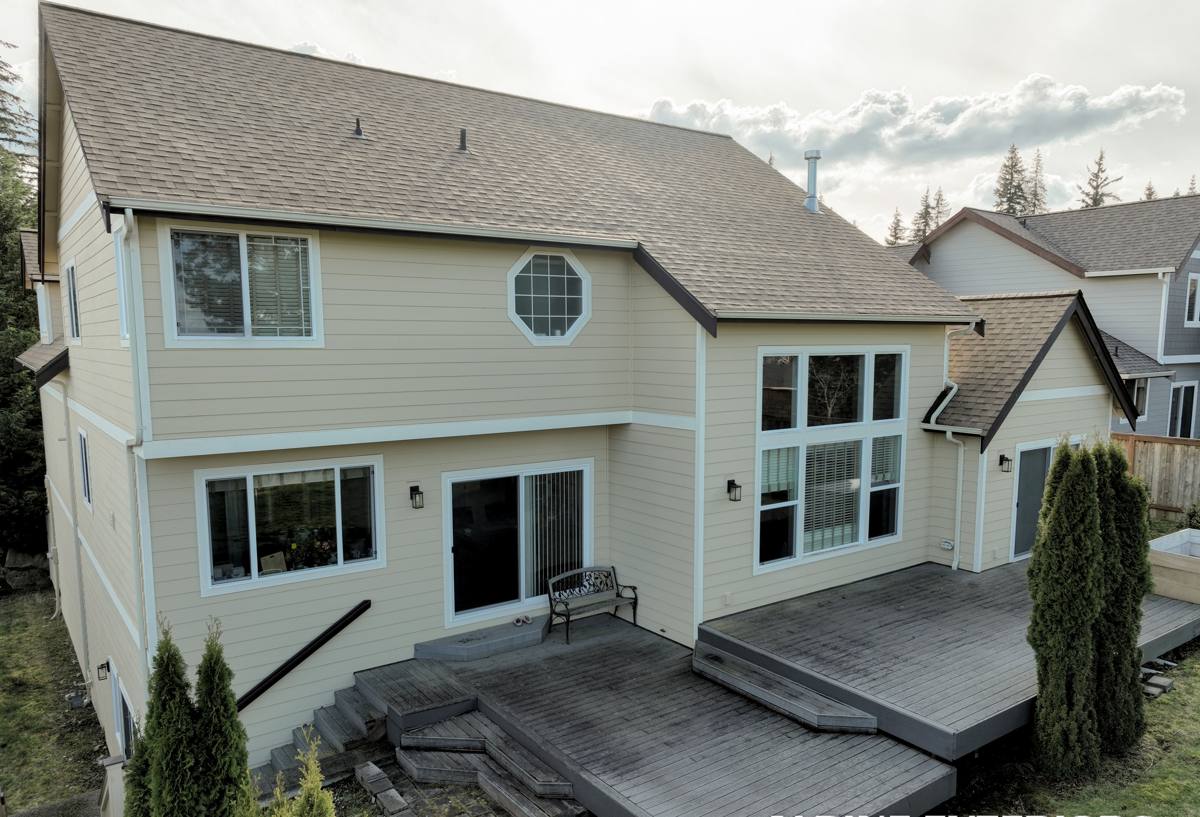
Sehome is one of Bellingham's older, more established neighborhoods, and that shows in the decks we get called out to look at. Many homes here sit under mature evergreen canopy, which is part of what makes the neighborhood pleasant to live in — and part of what shortens the life of an outdoor deck. Shade slows drying time after every rain, tree debris collects in board gaps, and moss gets a head start on any surface that stays damp for more than a day or two. Add in Bellingham's proximity to the water and the salt-laden air that drifts in off Bellingham Bay, and you've got a combination that's hard on fasteners, ledger boards, and footings even when the decking itself looks fine on top.
We're not describing a problem unique to one street or one style of house. It's a pattern we see across Whatcom County, but it tends to hit harder in neighborhoods like Sehome where tree cover, hillside lots, and older housing stock come together. A deck that would last two decades in a drier, sunnier climate often needs real structural attention well before that here — not because it was built badly, but because the environment asks more of it every single year.
What Long-Term Moisture and Moss Actually Do to a Deck
Homeowners often assume moss is a surface nuisance — something you can pressure-wash off and forget about. Underneath, it's usually a sign of a bigger issue. Moss and algae hold moisture against the wood far longer than open air ever would, which accelerates rot in the deck boards themselves and, more importantly, in the framing and ledger connections you can't see from above.
The Chain Reaction We Look For
- Moss and organic buildup trap water against board surfaces and joist tops
- Trapped moisture works into fastener holes, screw heads, and end grain
- Metal connectors and fasteners corrode faster in the salt-influenced coastal air common near Bellingham Bay
- Corroded or loosened fasteners let boards shift, which opens gaps for even more water intrusion
- Rot spreads from the surface down into joists, beams, and ledger attachment points — the parts that actually hold the structure to your house and off the ground
By the time this cycle is visible as soft boards or a spongy feel underfoot, the structural members below are often further along than the surface suggests. That's the main reason we push back on "just replace the boards" as a universal answer — sometimes it's genuinely enough, and sometimes it's treating the symptom while the real damage is one level down.
Signs a Sehome Deck Needs Replacement, Not Just Repair
Repair makes sense when the damage is isolated — a few bad boards, one weak spot, a railing that's come loose. Full replacement becomes the honest recommendation when the problems are systemic: spread across multiple framing members, tied to the ledger connection, or old enough that code and hardware have moved on since the deck was built. Here's what tends to tip a deck from "repairable" into "replace it" territory:
- Soft, spongy, or bouncy sections when you walk across the deck, especially near the house
- Visible rot or dark staining at the ledger board where the deck meets the house
- Fasteners that are rusted, backing out, or have left oversized holes in the wood
- Railings or posts that wiggle more than a firm push should allow
- A deck built before current ledger-flashing and joist-hanger requirements were standard practice
- Persistent moss or algae that returns within weeks of cleaning, even after treatment
- Footings that have shifted, heaved, or show visible cracking
If you're only seeing one or two of these, a repair may genuinely be the right call — we'll tell you that plainly. When several show up together, replacement is usually the more honest recommendation, because patching around a compromised frame just delays the same conversation a year or two down the road.
What a Correct Deck Replacement Actually Involves
A deck replacement done right is a structural project, not a cosmetic one. The decking boards are the part homeowners see and touch, but the framing underneath is what determines whether the deck is safe and how long it lasts. On every replacement, our focus starts below the surface:
Ledger and House Connection
The ledger board — where the deck attaches to the house — is the single most common point of failure we find on older decks in this climate. Correct flashing here is non-negotiable: it has to shed water away from the house sheathing, not funnel it behind the siding. We replace flashing as part of every ledger reattachment, regardless of whether the original flashing looks intact.
Framing, Joists, and Hardware
Joists, beams, and posts get inspected and replaced as needed, using corrosion-resistant, code-rated hardware sized for the actual loads the deck will carry. Given the coastal air in this area, we don't cut corners on fastener and connector quality — the cheapest hardware is usually the first thing to fail here, and it fails where you can't see it.
Footings and Structural Support
Footings are checked for depth, condition, and frost protection, and replaced or supplemented if they don't meet current requirements. On hillside or sloped Sehome lots, footing placement and post height also get extra attention, since uneven grade changes the load path in ways a flat-lot deck doesn't deal with.
Decking, Railings, and Finish Details
Only once the structure is sound do we move to decking material, railings, stairs, and finish work — the part that actually determines how the deck looks and feels day to day.
Choosing the Right Decking Material for This Climate
There's no single "best" decking material — there's a best fit for your budget, your maintenance appetite, and how much sun or shade your specific lot gets. In a moss-prone, damp climate like Whatcom County's, the trade-offs between materials matter more than they would somewhere drier.
| Material | Moisture & Moss Resistance | Maintenance | Typical Lifespan |
|---|---|---|---|
| Pressure-treated wood | Moderate — needs sealing to perform well | Annual cleaning and periodic re-sealing/staining | 10-15 years in this climate with upkeep |
| Cedar | Good natural resistance, but surface still needs care in shade | Regular cleaning and refinishing to hold color and resist moss | 15-20 years with consistent maintenance |
| Capped composite | Strong — cap layer resists moisture absorption and staining | Occasional washing, no sealing or staining | 25-30 years, backed by manufacturer warranty |
| PVC/cellular decking | Very strong — no wood fiber to feed rot or hold moisture | Lowest maintenance of the group | 25-30+ years, backed by manufacturer warranty |
For heavily shaded, tree-covered lots — which describes a fair number of Sehome properties — we lean toward recommending capped composite or PVC decking, simply because they don't give moss and algae the organic material to latch onto the way wood does. That said, plenty of homeowners prefer the look and feel of real wood and are willing to keep up with maintenance to get it. Our job is to lay out the honest trade-offs so you can choose with clear eyes, not to push one material because it's easier for us to install.
Our Deck Replacement Process
We keep the process straightforward and communicate at each stage so there are no surprises mid-project:
- On-site assessment — we inspect the existing deck from the ground up, including crawling underneath when access allows, to evaluate framing, ledger condition, and footings, not just the surface boards.
- Honest scope and estimate — you get a clear breakdown of what's structural, what's cosmetic, and what your material options cost, with no pressure toward the most expensive choice.
- Permitting — we handle the permit application and inspection scheduling required for deck work in Bellingham and unincorporated Whatcom County.
- Demolition and disposal — the old deck comes down and off-site, with care taken to protect landscaping and the area around the house.
- Structural rebuild — ledger, flashing, framing, hardware, and footings are addressed to current code before any decking goes down.
- Decking, railing, and finish work — installed to manufacturer specifications, which matters most for maintaining any product warranty on composite or PVC materials.
- Final walkthrough and inspection sign-off — we confirm the deck passes required inspections and walk the finished project with you.
Permits and Local Code Considerations
Deck replacement in Bellingham and Whatcom County generally requires a permit, particularly for decks attached to the house or built above a certain height, and inspections typically cover footing depth, ledger attachment, and railing height and spacing. Requirements can vary depending on whether a property falls inside city limits or unincorporated Whatcom County, and on specifics like lot slope or proximity to setbacks. We handle this piece directly so homeowners aren't stuck deciphering permit requirements themselves, and so the finished deck is documented as code-compliant if the property is ever sold or appraised.
Why Hiring a Crew That Already Works in Sehome Matters
Deck replacement isn't a one-size-fits-all job, and a crew that's already spent time working on Sehome and nearby Bellingham properties brings a few real advantages: familiarity with how local permitting and inspection actually run in practice, an understanding of how tree cover and hillside lots in this area affect drainage and footing placement, and a track record of building for the specific combination of rain, shade, and salt air that this climate throws at a deck. That's different from applying a generic national playbook to a property with local quirks it doesn't account for.
It also means straight answers. When a deck can be reasonably repaired instead of replaced, we say so. When replacement is the right call, we explain exactly why — usually pointing to the ledger, the framing, or the footings, not just how the boards look on top.
Get an Honest Look at Your Deck
If your Sehome deck is showing soft spots, persistent moss, loose railings, or it's simply old enough that you're wondering whether it's still safe, we're happy to take a look. The estimate is free, there's no pressure attached to it, and you'll get a straightforward assessment of whether repair or full replacement is the right move for your situation. Use the form below to get started.