 Bellingham Exterior
 Building a Deck That Belongs in Barkley
Barkley sits close enough to Bellingham Bay and the surrounding wetlands that its decks live under the same weather load as the rest of Whatcom County: long stretches of driving rain, salt-tinged air rolling in off the water, and a moss season that can run from October clear through April. A deck built here isn't just an outdoor living space — it's a structure that has to shed water fast, resist slow biological growth, and hold its hardware together through a decade of freeze-thaw cycles and damp mornings. We build and repair decks in Barkley regularly enough to know which details matter and which ones are just extra cost with no payoff.
This page is specifically about deck building for Barkley homes — new decks, deck replacements, and structural rebuilds — not a general overview of what a deck is. If you're comparing options or trying to understand why your last deck failed early, this is written for you.
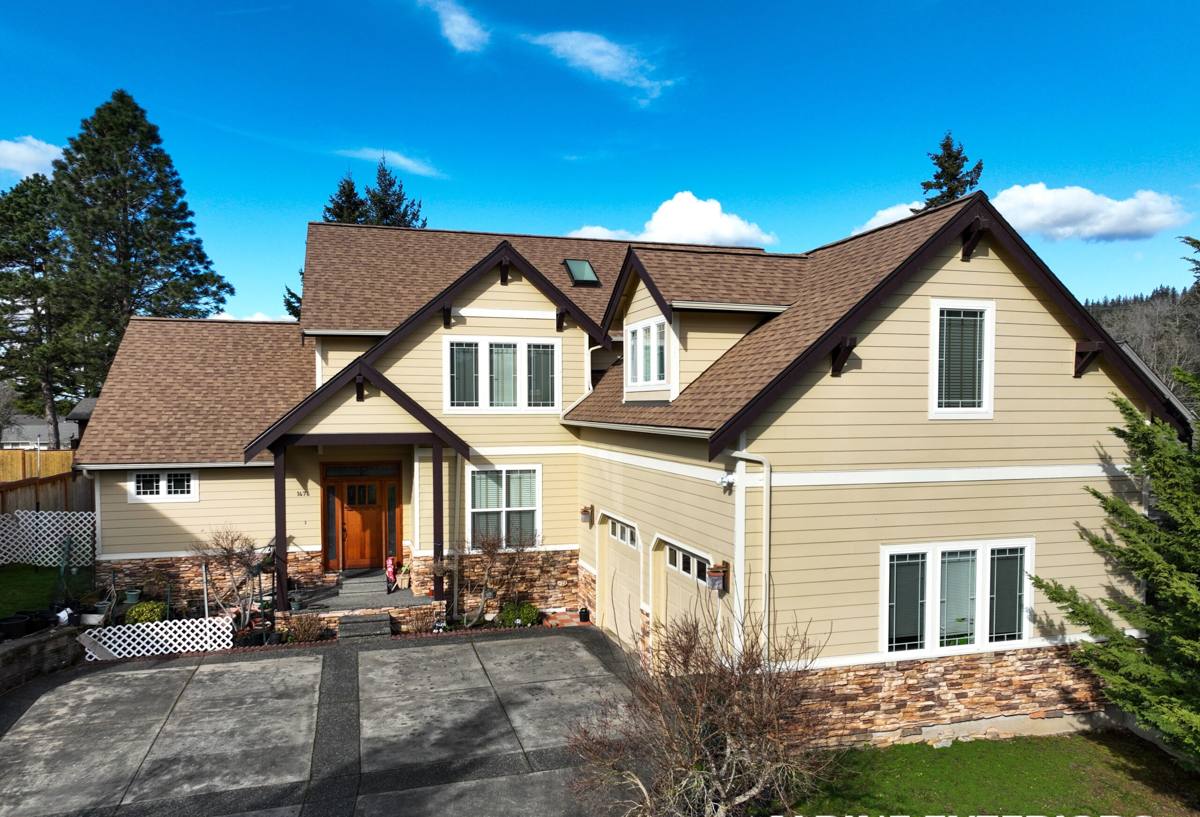
What Bellingham's Climate Actually Does to a Deck
Three things drive almost every deck failure or premature repair we see in this part of Whatcom County:
- Sustained moisture. Unlike a short rainy season, our wet stretch can run weeks without a real drying window. Wood that never fully dries between rain events is wood that rots from the inside, starting at joints and fastener holes.
- Moss and algae growth. Shaded decks, north-facing decks, and anything under tree cover in Barkley will grow moss on horizontal surfaces within a season or two if the boards can't dry and drain. Moss holds moisture against the wood and turns walking surfaces slick and dangerous, especially on stairs.
- Salt-influenced air. Being this close to the bay means fasteners, brackets, and railing hardware see more corrosion pressure than they would inland. Cheap or mismatched metal fails first at the connections you can't see — joist hangers, ledger bolts, post bases — long before the decking itself looks bad.
None of this means a deck in Barkley is a losing battle. It means the build has to account for drainage, airflow, and corrosion resistance from the framing up, not just pick a nice-looking board and call it done.
Sun Exposure Varies More Than People Expect
Even within a single Barkley lot, a deck that's shaded by the house or tree cover on one side and open to weather on the other will age unevenly. We look at orientation and shade pattern before recommending material or spacing, because a deck built with uniform assumptions will show moss on one half years before the other.
Decking Material Choices for This Climate
There's no single "best" decking material — there's a best fit for your budget, your maintenance appetite, and how much shade and moisture your specific deck location gets. Here's how the common options actually perform in a Whatcom County climate, not in a showroom.
| Material | Moisture & Moss Behavior | Maintenance | Realistic Lifespan Here |
|---|---|---|---|
| Pressure-treated fir/hem-fir | Absorbs and releases moisture readily; needs airflow underneath to avoid cupping | Annual cleaning, re-sealing every 2-3 years | 15-20 years with upkeep |
| Cedar | Naturally rot-resistant heartwood, but sapwood and end grain still need protection | Cleaning plus periodic oil or sealer | 15-25 years depending on grade and care |
| Composite decking | Doesn't rot, but surface film can grow algae/moss in shaded, low-airflow spots | Periodic wash-down, no sealing needed | 25-30+ years, backed by manufacturer warranty |
| PVC/cellular decking | Fully moisture-resistant board; drainage under the deck still matters for the framing | Occasional wash-down | 25-30+ years, backed by manufacturer warranty |
The table only covers the decking surface. In this climate, the framing underneath matters just as much as the boards on top — a beautiful composite deck built over undersized, unflashed, unvented framing will still develop structural problems even though the surface looks fine.
Our Standard on Product Selection
We install what we can stand behind through Whatcom County's weather, which is why we lean toward decking with a documented moisture and warranty track record for coastal Pacific Northwest use. When a homeowner wants a lower-cost wood option, we're straightforward about the added maintenance schedule that comes with it — that's a fair trade-off, not a defect, as long as it's understood going in.
What a Correctly Built Deck Requires Here
A deck that holds up in Barkley's weather is built differently underneath than a deck built for a drier climate, even if the visible boards look identical. The details that matter most:
- Footings sized and set below frost depth and matched to Whatcom County soil conditions rather than a one-size assumption.
- Ledger flashing done correctly at the house connection — this is the single most common failure point we find on older decks, where water tracked behind an unflashed or poorly flashed ledger board and rotted the rim joist or sheathing behind it.
- Joist tape or comparable protection on top of every joist, so fasteners don't create a moisture trap at every screw hole.
- Corrosion-rated fasteners and hardware throughout — hangers, screws, post bases, and railing brackets rated for treated lumber and coastal exposure, not generic hardware-store fare.
- Proper board spacing and airflow underneath so both the decking and the framing get a chance to dry between rain events instead of staying damp for weeks.
- Drainage planning for the space under the deck, especially on lower decks close to grade, so water doesn't pool against posts and footings.
Skip any one of these and the deck may look fine for the first few years — the problems tend to show up as hidden rot or loosening hardware well before the surface boards give any warning.
How We Approach a Barkley Deck Project
Our process is the same whether it's a new deck, a full replacement, or a repair, because the fundamentals don't change:
- On-site assessment. We look at sun and shade exposure, grade and drainage around the deck footprint, the condition of any existing structure, and how the deck connects to the house.
- Material and layout discussion. We walk through decking options against your budget and maintenance preference, using the trade-offs above rather than a sales pitch.
- Permitting. Most new decks and significant rebuilds in Bellingham and unincorporated Whatcom County require a building permit, particularly for structures above a certain height or attached to the house. We handle the permit process as part of the job so it isn't left for the homeowner to sort out.
- Demolition and disposal of any existing structure, done carefully around landscaping and grade.
- Framing first, inspected before it's covered. Footings, posts, beams, joists, ledger flashing, and hardware all go in before a single decking board is installed, and this is the stage where corners get cut on lower-quality jobs — it's also the stage that decides whether the deck lasts 15 years or 30.
- Decking, railing, and finish work. Board spacing, fastening method, stair construction, and railing all follow current code requirements for guard height and baluster spacing.
- Final walk-through covering how to care for the specific material installed, given your deck's actual sun and shade exposure.
Moss Season: What to Expect and What to Do
Moss on a Barkley deck isn't a sign of a bad build by itself — it's a sign of shade, moisture, and time, and it shows up on almost every deck in this region eventually if it isn't addressed. The difference between a manageable moss season and a slippery, damaging one usually comes down to a few habits:
- Sweep debris and standing water off the deck surface regularly through fall and winter, since trapped leaves hold moisture directly against the boards.
- Clean the deck surface at least once a year, timed for early fall before the wet season sets in, using a cleaner appropriate to your decking material — pressure washing wood or composite incorrectly can do more harm than the moss itself.
- Check gaps between boards periodically to make sure debris hasn't blocked drainage paths.
- Keep an eye on stairs and any north-facing or heavily shaded sections specifically, since that's where moss establishes first and where a slip matters most.
None of this requires a contractor visit every year, but a deck that was built with proper spacing and drying underneath will need far less of this maintenance than one that wasn't.
Signs an Existing Barkley Deck Needs Attention
If you're not sure whether your current deck needs repair or full replacement, these are the warning signs worth taking seriously:
- Soft or spongy spots underfoot, especially near the house connection
- Visible gaps, staining, or dark streaking where the deck meets the ledger board
- Rust staining around fastener heads or hardware
- Railings that feel loose or flex under normal pressure
- Persistent moss or algae that returns within weeks of cleaning
- Boards that have cupped, split, or pulled away from fasteners
Any one of these on its own might just need a targeted repair. Several together, particularly softness near the ledger, usually points to a structural issue worth a full inspection before it gets worse under another wet season.
Why a Crew That Already Works Barkley Matters
Deck building isn't exotic work, but building for this specific climate rewards local experience in a few concrete ways. We already know which framing details fail first in this weather, we're familiar with the permitting expectations for decks in Bellingham and Whatcom County, and we've seen how different decking materials actually age in Barkley's mix of shade, rain, and salt-influenced air — not in a manufacturer's marketing photos, but on real decks a few years in. That's the difference between a deck that's built to spec and one that's built to actually last here.
If you're planning a new deck, replacing an aging one, or just want an honest read on whether yours needs repair or a rebuild, we're happy to take a look. Reach out for a free, no-pressure estimate using the form below.