 Bellingham Exterior
 Barkley Homes Face a Specific Kind of Weather
Barkley sits in a part of Bellingham where mature landscaping, curving streets, and a mix of newer construction homes create a lot of shade cover and slow-drying microclimates. That's a pleasant place to live, but it's tough on exterior building materials. Combine that shade with Whatcom County's marine climate — persistent drizzle, driving rain off the water, and a moss season that can run half the year — and you get siding conditions that punish anything not built for sustained moisture exposure.
We install fiber cement siding throughout Bellingham, and Barkley properties come with their own pattern of problems: north-facing walls that never fully dry between storms, tree-shaded siding runs that stay damp longer than open lots, and older siding systems that were never detailed correctly for this much rain. A siding job here has to account for all of that, not just look good on install day.
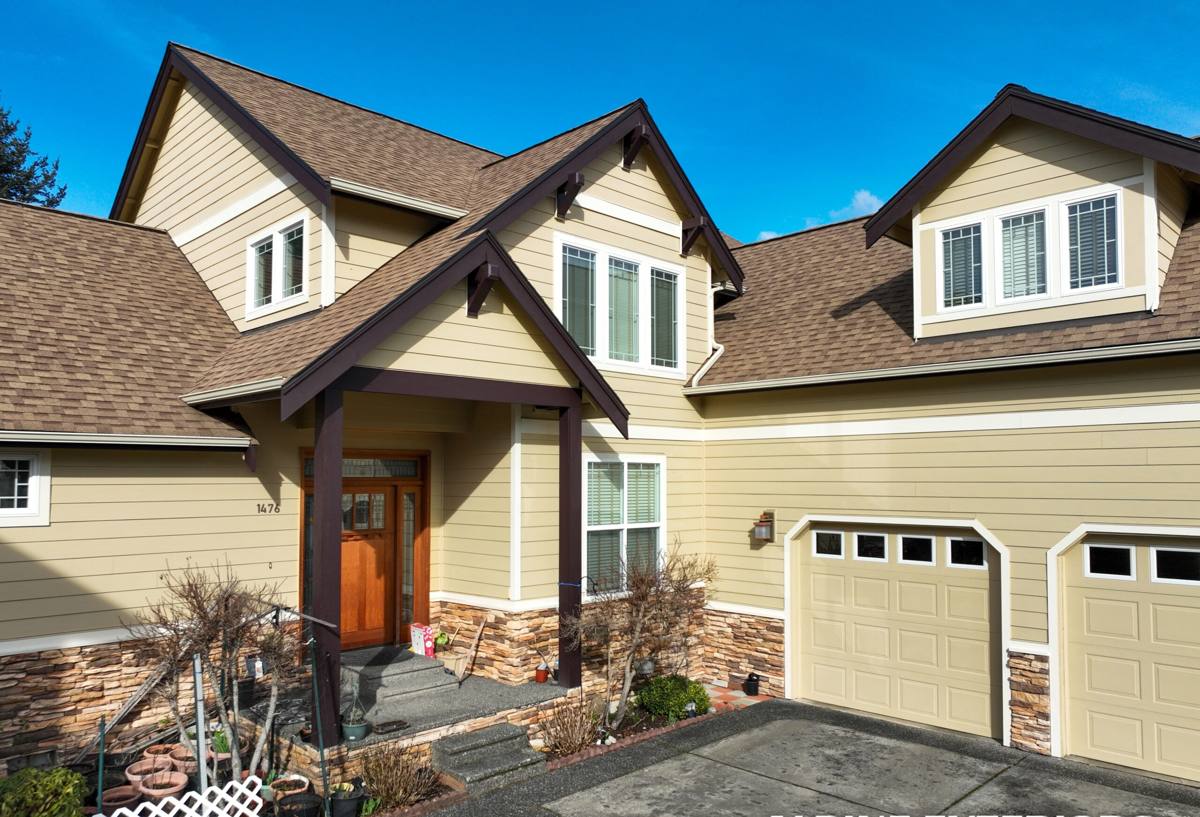
What Bellingham's Marine Climate Does to Siding Over Time
Moss and Algae Growth
Whatcom County's long wet season, paired with shade from established trees, gives moss and algae exactly what they need: moisture and low sun exposure. On untreated wood, primed spruce, or lower-grade composite products, this shows up as dark staining and surface breakdown within a few years. Left unaddressed, moss holds moisture against the substrate and accelerates rot underneath, which is a bigger problem than the cosmetic staining itself.
Driving Rain and Wind-Driven Moisture
Storms coming off Bellingham Bay and the Strait of Georgia don't just drop rain straight down — wind pushes it sideways into wall assemblies, seams, and butt joints. Siding systems that rely on caulk alone to keep water out, rather than proper flashing and drainage planes, tend to fail at exactly these pressure points first.
Freeze-Thaw and Seasonal Swings
Whatcom County winters aren't extreme, but they do bring repeated freeze-thaw cycles. Any siding material that has already absorbed moisture is vulnerable here — trapped water expands when it freezes, which stresses joints, fasteners, and paint or finish layers. Materials that manage moisture poorly in October are the ones that show cracking and swelling by February.
Why We Install Only James Hardie Fiber Cement
We made a deliberate decision to stop installing anything other than James Hardie fiber cement siding. Not because every alternative is bad in every application, but because Bellingham's climate — and Barkley's shaded, moisture-retentive lots in particular — rewards a very specific set of material properties, and Hardie is the product line that consistently delivers them.
Built for This Climate, Not Just "Weather Resistant"
James Hardie engineers its HZ5 product line specifically for climates like ours: freeze-thaw cycling, sustained damp conditions, and moss and mildew pressure. Fiber cement itself is non-combustible and doesn't provide the organic material that wood-based or wood-fiber composite products do, which matters directly for moss and rot resistance in shaded neighborhoods like Barkley.
ColorPlus Factory Finish
Most of what fails on lesser siding jobs in wet climates isn't the substrate — it's the finish. Field-applied paint on wood or composite siding weathers unevenly and needs recoating on a cycle that gets shorter every time moss and algae are part of the equation. Hardie's ColorPlus finish is baked on in a factory-controlled process, resists fading and moisture intrusion at the surface, and holds color far longer than site-applied paint, which reduces both the maintenance burden and the number of seams where water can find a way in.
A Warranty That Reflects Confidence in the Product
Hardie backs its siding with a strong, transferable limited warranty and a separate finish warranty on ColorPlus products. That structure exists because the company has decades of performance data behind the product in exactly this kind of marine, moss-prone climate — not because the marketing department asked for it.
What a Correct Fiber Cement Installation Involves
Fiber cement is only as good as the installation behind it. A rushed or under-detailed job on a Barkley home will fail early regardless of the product on the wall. A correct installation includes:
- Proper clearance between siding and grade, decks, patios, and roof lines to prevent wicking and splash-back moisture
- A continuous water-resistive barrier installed and lapped correctly behind the siding
- Correct flashing at every window, door, penetration, and horizontal joint — not caulk used as a substitute for flashing
- Fastener spacing, type, and depth that match Hardie's published installation specifications
- Properly sized and sealed joints, with factory-primed cut edges recoated before installation
- Ventilation and drainage gaps behind the siding plane so moisture that does get in can dry out
- Caulking only where Hardie's install guidelines call for it, using a product rated for the application
Every one of these steps matters more in Barkley than in a drier, more open part of the county, because shaded walls simply don't get the sun exposure needed to forgive small mistakes.
Our Process for Barkley Projects
- On-site assessment — we look at sun exposure, tree cover, drainage patterns, and existing siding condition specific to your lot, not a generic checklist.
- Tear-off or overlay decision — we evaluate whether the existing wall assembly and sheathing are sound enough to build on, or whether a full tear-off is the honest recommendation.
- Moisture barrier and flashing detail — this is the step most often shortcut elsewhere, and it's the one that determines whether the siding lasts fifteen years or fifty.
- Hardie installation to manufacturer spec — correct fastening, clearances, and joint treatment, panel by panel.
- Final inspection and walkthrough — we review the completed work with you before we consider the job done.
Fiber Cement vs. Other Siding Materials
| Factor | James Hardie Fiber Cement | Vinyl | Wood / Primed Spruce | LP SmartSide |
|---|---|---|---|---|
| Moisture & rot resistance | High — cement-based, no organic substrate to rot | Doesn't rot, but seams and warping allow water intrusion | Vulnerable without constant maintenance | Engineered wood core still vulnerable at cut edges and exposure points |
| Moss/algae resistance | Factory finish resists staining and buildup | Moderate — moss grows on surface film | Low — organic surface invites growth | Moderate — depends on coating integrity |
| Fire rating | Non-combustible | Combustible | Combustible | Combustible |
| Finish longevity | Factory-baked ColorPlus, long fade resistance | Color molded in, but brittle over time | Field-applied paint, shorter recoat cycle | Field or factory-applied, wood-fiber core sensitive to moisture at edges |
| Typical warranty | Strong, transferable limited warranty | Varies widely by manufacturer | Typically none beyond installer workmanship | Manufacturer-specific, moisture-related exclusions common |
We don't install vinyl, wood, LP SmartSide, or other fiber cement brands like Allura or Cemplank on the homes we work on. Each has legitimate uses in the right context, but none combine the moisture performance, fire rating, finish durability, and warranty structure we want standing on a Bellingham wall for the next several decades.
Cost Factors for a Barkley Siding Project
| Factor | Why It Matters Here |
|---|---|
| Tear-off vs. overlay | Existing sheathing condition on older Barkley homes often determines whether a full tear-off is required |
| Home size and wall complexity | Dormers, bump-outs, and multiple gables increase flashing and cut-panel labor |
| Trim and fascia scope | Matching Hardie trim to siding adds material cost but keeps the whole envelope consistent |
| Existing moisture damage | Shaded, moss-prone walls sometimes reveal rotted sheathing once old siding comes off |
| Color and finish selection | ColorPlus factory colors vs. field-painted Hardie affects both cost and long-term maintenance |
We don't quote broad numbers on a page like this because every Barkley home's wall condition, size, and complexity is different — but we walk through each of these factors with you in person before any estimate is final.
Why Hiring a Crew That Already Works in Barkley Matters
A crew that regularly works Bellingham's east-side neighborhoods already understands how tree canopy and lot orientation in areas like Barkley change the moisture picture on a given wall. That translates into knowing where extra flashing attention is worth it, which walls need a closer look at existing rot before quoting a straightforward overlay, and how local drainage and grading tend to behave through a wet Whatcom County winter. It also means a crew that isn't learning Hardie's installation requirements on your house — correct fastening and clearances are non-negotiable, and getting them right the first time is what determines whether this siding performs for decades or needs early repair.
Maintaining Your Hardie Siding in Bellingham's Climate
Fiber cement dramatically lowers the maintenance burden compared to wood or field-painted siding, but "low maintenance" isn't "no maintenance," especially in a shaded, moss-prone setting like Barkley.
- Rinse siding annually with a garden hose to clear pollen, debris, and early moss growth before it takes hold
- Keep gutters clear so overflow doesn't run down the siding face repeatedly through the wet season
- Trim back tree branches and shrubs that keep siding sections in constant shade and slow drying
- Inspect caulking at trim and window joints every year or two and recaulk as needed
- Address any impact damage or chipped finish promptly so moisture can't get behind the panel
If you're planning a siding project in Barkley and want a straight assessment of what your home actually needs, we're happy to take a look and walk you through it. Request a free, no-pressure estimate using the form below.