 Bellingham Exterior
 Why Barkley Homes Need Siding Installed a Certain Way
Barkley sits close enough to Bellingham Bay and the broader Puget Sound weather pattern that homes here take on a specific combination of punishment: salt-tinged air drifting in off the water, driving rain that comes in sideways during fall and winter storms, and a moss season that can stretch for the better part of eight months. None of these things individually would wreck a siding job. Together, over years, they expose every shortcut a contractor might have taken during installation — gaps at trim, undersized flashing, caulk used where flashing should have been, panels nailed too tight or too loose.
When we install siding in Barkley, we're not treating it as a generic exterior upgrade. We're treating it as a system that has to shed water reliably, resist the slow corrosive effect of salt-laden moisture on fasteners and trim, and stay dry enough on the surface that moss and algae don't get a permanent foothold. That's a different design conversation than siding a home in a dry inland climate, and it changes decisions about flashing details, fastener choice, and even how panels are gapped and caulked.
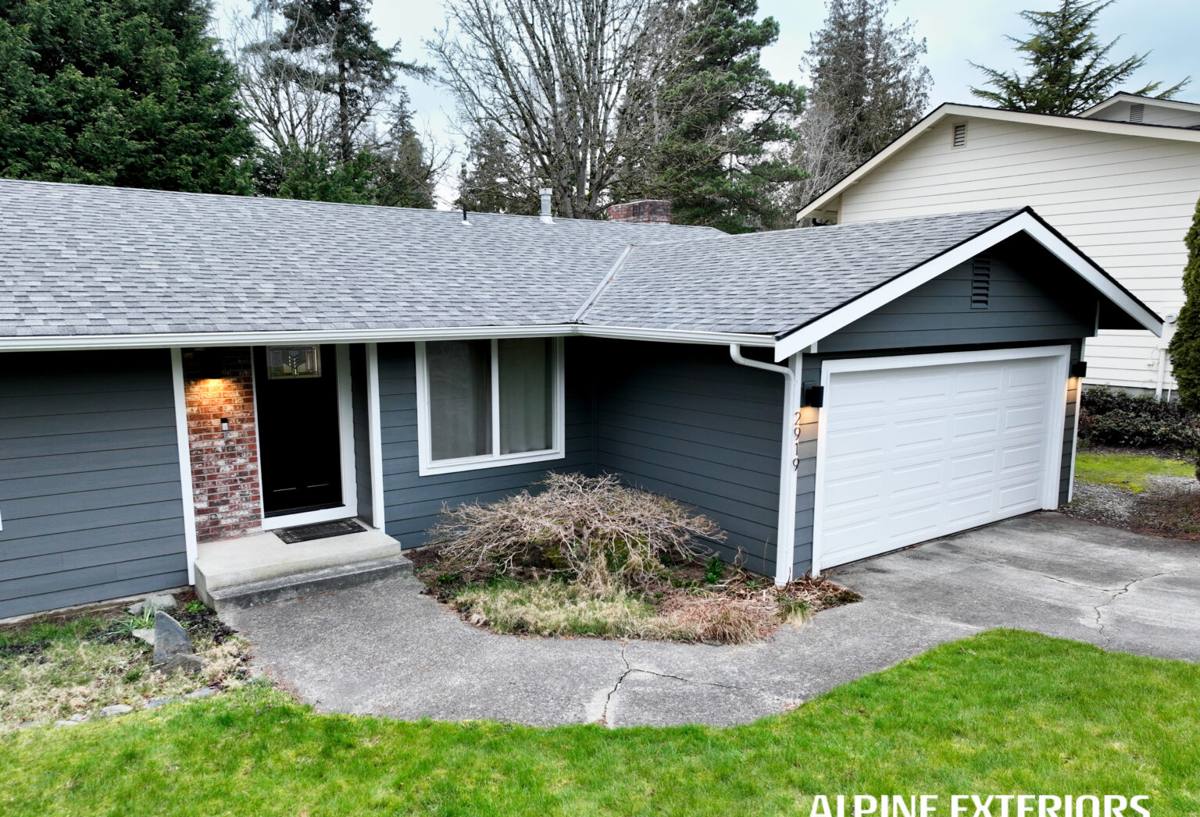
What "Correct" Siding Installation Actually Involves
A siding installation is judged, fairly, by how it looks the day it goes up. But the job that actually protects a Barkley home is decided by details that are invisible once the siding is on. Getting these right is the difference between a wall system that lasts decades and one that starts showing problems in five to seven years.
Water Management Comes First
Every window, door, and penetration in the wall needs proper flashing that directs water out and away from the sheathing behind the siding — not caulk relied on as the primary water barrier. A weather-resistive barrier (house wrap) has to be installed and lapped correctly, with all penetrations sealed back to it in the right order. Siding is the last line of defense, not the only one.
Fastening and Gapping
Fiber cement siding needs to be fastened according to the manufacturer's nailing pattern, with the correct fastener type and length for the substrate. Panels need consistent gapping at butt joints and terminations to allow for expansion and to keep water from wicking in and sitting against end grain. Rushed crews skip this, and it shows up later as swelling, staining, or paint failure at the joints.
Clearances Matter More Here
Siding needs proper clearance from the ground, roof lines, decks, and patios — generally a minimum of a few inches, more in areas that see heavy rain runoff. In a climate where the ground stays damp for long stretches, skimping on clearance is one of the most common causes of rot and moss creep at the base of a wall.
Why We Install James Hardie and Nothing Else
We standardized on James Hardie fiber cement siding for every home we side, including in Barkley, and we don't install vinyl, LP SmartSide, cedar, primed spruce, or other fiber cement brands. That's a deliberate professional standard, not a sales pitch, and it's worth explaining honestly.
Fiber cement is non-combustible, which matters increasingly to insurers and homeowners in Washington. Hardie's ColorPlus factory-applied finish is baked on under controlled conditions, which gives more consistent, longer-lasting color than field-applied paint — an advantage in a climate where paint has to fight moisture and mildew year-round. Hardie also engineers regional product lines (HZ5 for our climate zone) specifically for wetter, harsher conditions, which is a level of climate-specific engineering most competing products don't offer. The warranty is transferable and backed by a large, established manufacturer, which matters if a Barkley homeowner sells within the warranty period.
None of this means other products are without merit — vinyl is inexpensive and low-maintenance in mild climates, cedar has real aesthetic appeal, and other fiber cement brands have loyal installers. But when we weigh long-term moisture performance, fire resistance, and finish durability against Whatcom County's climate, Hardie is what we're willing to put our name behind.
Our Installation Process for Barkley Homes
- On-site assessment — We inspect existing siding, sheathing condition, trim, and problem areas (north-facing walls, shaded sections prone to moss, low-clearance zones) before quoting anything.
- Tear-off and sheathing check — Old siding comes off and the sheathing underneath is inspected for hidden rot or water damage before anything new goes up. This step gets skipped by crews trying to move fast, and it's the single biggest source of surprises later.
- Weather-resistive barrier and flashing — New house wrap is installed and lapped correctly; flashing is installed at every window, door, and penetration.
- Hardie panel or lap installation — Installed to manufacturer specification for fastener pattern, gapping, and clearance, using the HZ5 product line suited to our region.
- Trim, caulking, and touch-up — Trim is installed and sealed at the correct joints only — not as a substitute for flashing — and any factory finish touch-up is done with Hardie-matched product.
- Final walkthrough — We walk the home with the owner, point out what was done and why, and flag any maintenance items specific to the site (shaded walls, gutter runoff points, etc.).
Siding Options Compared for a Barkley Climate
| Material | Moisture/Salt-Air Resilience | Moss/Algae Resistance | Finish Longevity | Fire Resistance |
|---|---|---|---|---|
| James Hardie Fiber Cement (HZ5) | High | High with normal upkeep | Long — factory ColorPlus finish | Non-combustible |
| Vinyl | Moderate — can warp/fade | Moderate | Fades over time, not repaintable easily | Combustible |
| Cedar | Low without diligent maintenance | Low — prone to moss without treatment | Short — needs recurring finish work | Combustible |
| Primed Spruce/Engineered Wood | Moderate — sensitive to installation flaws | Moderate | Moderate, field-paint dependent | Combustible |
This table reflects general material behavior, not a claim that every alternative product fails — it's a summary of the trade-offs that led us to standardize on Hardie for this climate.
What Poor Installation Looks Like Down the Road
We get called to look at siding problems on homes that were sided by other crews, and in Barkley the failure pattern is fairly consistent. It usually isn't the siding material itself — it's a shortcut taken during installation that the local climate eventually exposes:
- Caulk used at butt joints instead of proper gapping, leading to cracking and water intrusion
- Missing or undersized flashing above windows and doors, causing staining or rot at corners
- Siding installed too close to grade or a deck surface, trapping moisture and encouraging moss growth
- House wrap installed with reverse laps, letting water track behind the siding instead of out
- Fasteners driven too tight, cracking the panel edge and creating an entry point for moisture
Every one of these is preventable at install time and expensive to fix after the fact, because fixing them usually means pulling siding back off.
Cost Factors for a Barkley Siding Project
| Factor | Why It Matters Here |
|---|---|
| Sheathing condition | Hidden rot from prior water intrusion adds repair cost before new siding goes on |
| Home size and wall complexity | More corners, dormers, and penetrations mean more flashing detail work |
| Siding profile (lap, panel, shingle) | Different Hardie profiles carry different material and labor costs |
| Trim and accessory scope | Full trim replacement vs. reusing sound existing trim changes the budget |
| Site access | Tight lots, slopes, or landscaping near the foundation affect staging and labor time |
We give homeowners a real number after seeing the home, not a phone estimate — sight-unseen quotes on siding are one of the fastest ways to end up with change orders mid-project.
A Homeowner's Checklist Before Hiring
- Ask what siding brand and product line they install, and why — a contractor who installs "whatever the homeowner picks" isn't standing behind a standard
- Ask how they handle flashing at windows and doors specifically, not just "we caulk everything"
- Ask whether they inspect sheathing before re-siding, and what happens if they find rot
- Ask about clearance requirements from grade, decks, and roofing on your specific home
- Ask for the manufacturer's warranty terms in writing, not just verbal assurance
- Ask whether they've worked in your specific neighborhood and understand its exposure (shaded lots, wind direction, drainage patterns)
Why Local Experience in Barkley Specifically Matters
Bellingham's neighborhoods aren't uniform in exposure. A home on a shaded, tree-lined lot in Barkley holds moisture differently than one on an open, wind-exposed site, and the moss pressure, drying time, and even the ideal siding color (darker colors show less algae staining in some conditions, lighter colors show less heat-related fading) can differ block to block. A crew that already works in this specific area has a working sense of which walls need extra attention, how local drainage tends to behave, and what Whatcom County's inspection and permitting process actually looks like — none of which a crew driving in from outside the region will have on day one.
That local familiarity doesn't replace correct installation technique, but it does mean fewer surprises, faster problem-solving on site, and a contractor who's still around and accountable years after the job is done — which matters most once the rainy season starts testing the work.
Get a No-Pressure Estimate for Your Barkley Home
If your Barkley home's siding is aging, showing moss staining, or you're planning ahead of the next wet season, we're happy to take a look and give you an honest assessment — no pressure, no obligation. Use the form below to request a free estimate.