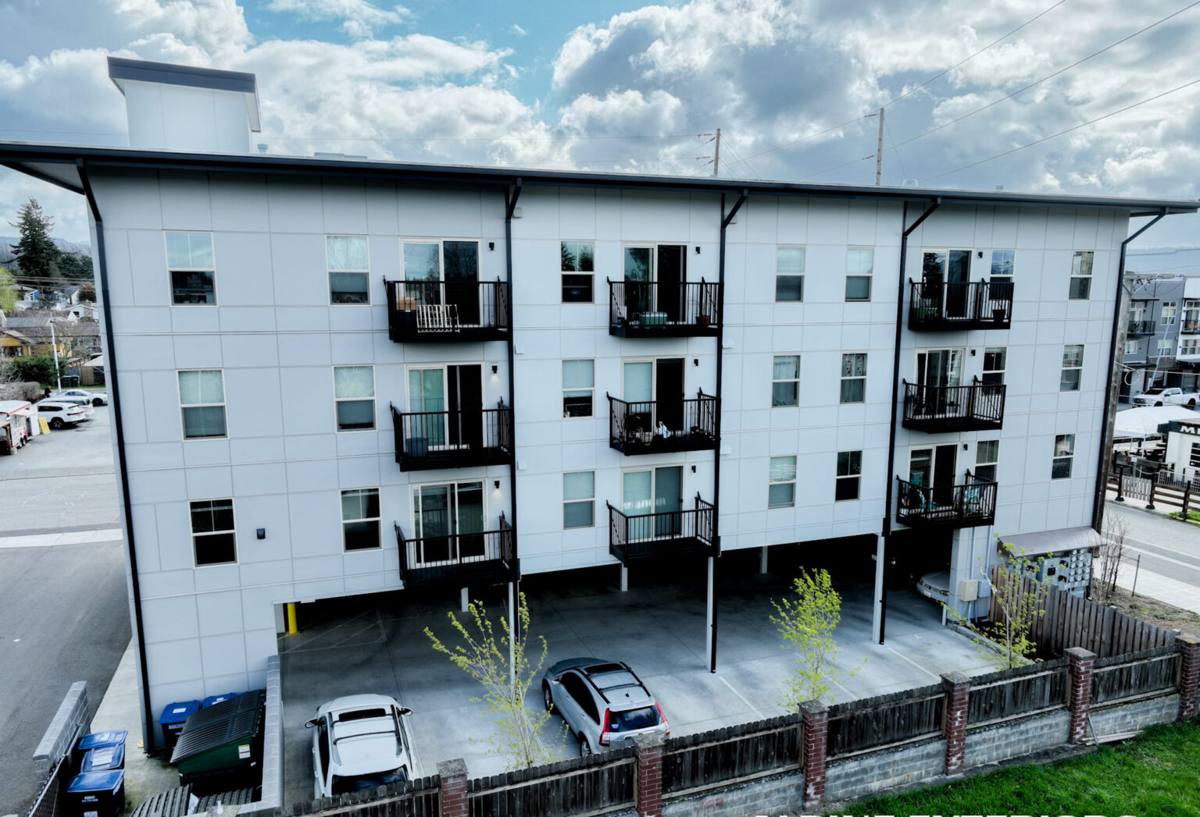
 Bellingham Exterior
 Custom Windows Built for Barkley's Bellingham Climate
Barkley sits close enough to Bellingham Bay that salt-laden air is a daily fact of life, and far enough into the Pacific Northwest weather pattern that homes here take on months of steady rain and long stretches of low winter sun. That combination is hard on windows. Homes in this part of Bellingham range from newer construction to older houses that have been updated over the years, and in both cases the windows are usually the first thing to show wear from the climate — long before the roof or siding does. A custom window job done right for this neighborhood isn't just about picking a style out of a catalog. It's about matching the frame material, glass package, and installation detail to what Whatcom County weather actually does to a house.
What Bellingham's Weather Does to Ordinary Windows
Salt Air and Corrosion
Proximity to the bay means airborne salt settles on exterior surfaces, including window hardware, frame fasteners, and metal components. Over years, that accelerates corrosion on lower-grade hardware and can pit or discolor untreated aluminum. It's a slow process, so it's easy to ignore until a lock mechanism seizes or a frame corner starts staining.
Driving Rain and Water Intrusion
Storms coming off the water don't just fall straight down — wind-driven rain gets pushed sideways into window assemblies, testing every seal, flashing detail, and sill pan in the installation. Most window failures we see in this area aren't a bad window unit; they're a flashing or sealant detail that was never installed correctly, letting water track behind the frame and into the wall cavity.
Moss Season and Trapped Moisture
Bellingham's long wet season keeps moss and algae growth active for much of the year, especially on north-facing walls and shaded elevations common in established neighborhoods. Moss holds moisture against exterior surfaces longer than open, sunny walls would. Around window openings, that prolonged dampness is what causes wood trim to soften, caulk joints to fail early, and paint to peel well before it should.
What "Custom" Actually Means
Custom-Sized vs. Standard Stock
"Custom" doesn't mean upgraded or expensive by default — it means the window is built to the exact opening in your house rather than forcing your house to fit a standard stock size. Many homes in this part of Bellingham have openings that don't match current standard dimensions, either from the original build or from a prior remodel. Custom sizing avoids the shims, filler strips, and gap-filling that standard units require in an odd-sized opening — all of which become future leak points in this climate.
Full-Frame vs. Insert Replacement
There are two honest approaches to replacing a window, and the right one depends on the condition of what's already there.
- Insert replacement: the new window goes into the existing frame, which stays in the wall. Faster and less invasive, appropriate when the existing frame is still sound and square.
- Full-frame replacement: the old frame comes out down to the rough opening, including trim, flashing, and sometimes sheathing. More work, but it's the only correct option when there's already water damage, rot, or a frame that's out of square — which we see often on older Bellingham homes that have taken on years of driving rain.
Any contractor who quotes a full job without first checking which category your windows fall into is guessing, not measuring.
Signs Your Current Windows Are Working Against You
Most homeowners don't realize how much a window has degraded until they're pointed to what to check. Walk your home's exterior and interior sills and look for:
- Soft or spongy wood at the sill or lower corners of the frame
- Persistent condensation between panes, which means the seal has failed
- Visible daylight or a draft at the frame edge when the window is closed
- Difficulty locking, opening, or closing — often a sign of a frame going out of square
- Paint or caulk that keeps failing in the same spot no matter how often it's redone
- Moss or dark staining building up on the trim or casing, especially on shaded walls
Any one of these on its own might just need a repair. Several at once, especially on a wall that takes direct weather, usually means it's time to talk replacement before the damage spreads into the wall framing.
Frame and Glass Options Worth Considering
There's no single "best" window material — there's a best fit for your home, your budget, and how exposed that particular wall is to weather. Here's how the common options hold up in this climate:
| Frame Material | Climate Performance Here | Maintenance |
|---|---|---|
| Vinyl | Handles moisture and salt air well; won't corrode or rot | Low — occasional cleaning |
| Fiberglass | Very stable in temperature swings and wet cycles; strong long-term option | Low |
| Wood-clad | Good insulating properties but the exterior cladding must be detailed carefully to keep moisture out of the wood core | Moderate to higher |
| Bare aluminum | More prone to corrosion near the bay and to interior condensation in our damp winters | Moderate |
For glass, a dual-pane unit with a low-E coating and argon fill is the practical baseline for this climate — it manages heat loss through our long heating season and cuts down on interior condensation, which is a common complaint in older single-pane Bellingham homes. Triple-pane is worth discussing on north-facing or particularly exposed walls where comfort and condensation control matter most.
Our Installation Process in Barkley
- On-site assessment — we check the existing frames, sills, and flashing condition before recommending insert or full-frame replacement.
- Precise measurement — every opening is measured individually; nothing is ordered off a generic size chart.
- Custom fabrication — units are built to the exact opening, which keeps gaps and field modifications to a minimum.
- Removal and prep — old units come out cleanly, and any hidden rot or water damage found underneath is addressed before the new window goes in, not covered over.
- Flashing and sealing — this is the step that determines whether a window survives driving rain; we install and lap flashing so water is directed out, not trapped in.
- Final fit and finish — trim, caulking, and hardware are set and tested for smooth operation before we call the job done.
What Affects Cost
Window pricing varies enough that a flat per-window number is rarely honest. The real cost drivers are:
| Factor | Why It Matters |
|---|---|
| Insert vs. full-frame | Full-frame involves more labor, materials, and often exterior repair work |
| Frame material | Vinyl, fiberglass, and wood-clad carry different material costs |
| Glass package | Dual-pane low-E vs. triple-pane changes both cost and performance |
| Opening condition | Rot, out-of-square framing, or hidden water damage add repair time |
| Number and size of openings | Larger or specialty-shaped windows cost more to custom-build |
We'd rather walk your home and give you real numbers than quote a range that doesn't reflect what your house actually needs.
Why Hire a Crew That Already Works in Barkley
A crew that regularly works this part of Bellingham has already seen how the local weather plays out on real houses — which walls take the worst of the driving rain, which older homes tend to have hidden rot behind original trim, and how moss buildup shows up differently on shaded versus open elevations. That familiarity shows up in small decisions during the job: how much lap the flashing gets, whether a sill needs extra pitch, or whether a wall's moss history means the trim underneath needs a closer look before new windows go in. It also means straightforward scheduling and follow-up if a question comes up after the install, without the extra travel time or unfamiliarity of a crew based somewhere far outside Whatcom County.
Keeping New Windows Performing Season After Season
Even a correctly installed custom window benefits from basic upkeep in this climate. A short annual routine goes a long way:
- Clean weep holes and tracks so water drains instead of pooling
- Check caulk lines each fall before the wet season sets in
- Rinse salt residue off frames and hardware a few times a year, especially on bay-facing walls
- Remove moss and algae buildup from nearby trim and siding before it holds moisture against the window
- Test locks and operating hardware so corrosion or stiffness gets caught early
None of this takes long, but skipping it is how a well-installed window ends up with the same problems as the one it replaced.
If your Barkley-area home has windows showing any of the signs above, or you're just ready to stop fighting drafts and condensation every winter, we're happy to come take a look. Estimates are free, there's no pressure, and you'll get straight answers about what your home actually needs — use the form below to get started.