 Bellingham Exterior
 Why Metal Roofing Fits Sudden Valley's Climate
Sudden Valley sits in the hills above Lake Whatcom, wrapped in second-growth fir and cedar that shade most roofs for a good part of the year. That shade is part of what makes the neighborhood beautiful, and it's also exactly what shortens the life of the wrong roofing material. Less direct sun means slower drying after every rain, longer moss seasons, and more organic debris settling into valleys and gutters than a roof out in the open ever sees. Add in the driving rain that rolls through Whatcom County for much of the fall and winter, and you've got conditions that punish anything with seams, granules, or exposed nail heads that can loosen or wear over time.
A correctly installed metal roof handles that combination better than most alternatives. It sheds water fast, doesn't hold moisture against a mat of shingle granules the way asphalt does, and gives moss far less to grip onto. That doesn't mean metal is maintenance-free — nothing on a shaded, tree-lined roof is — but it changes the maintenance conversation from "watch for granule loss and curling" to "keep the surface clear and the fasteners tight."
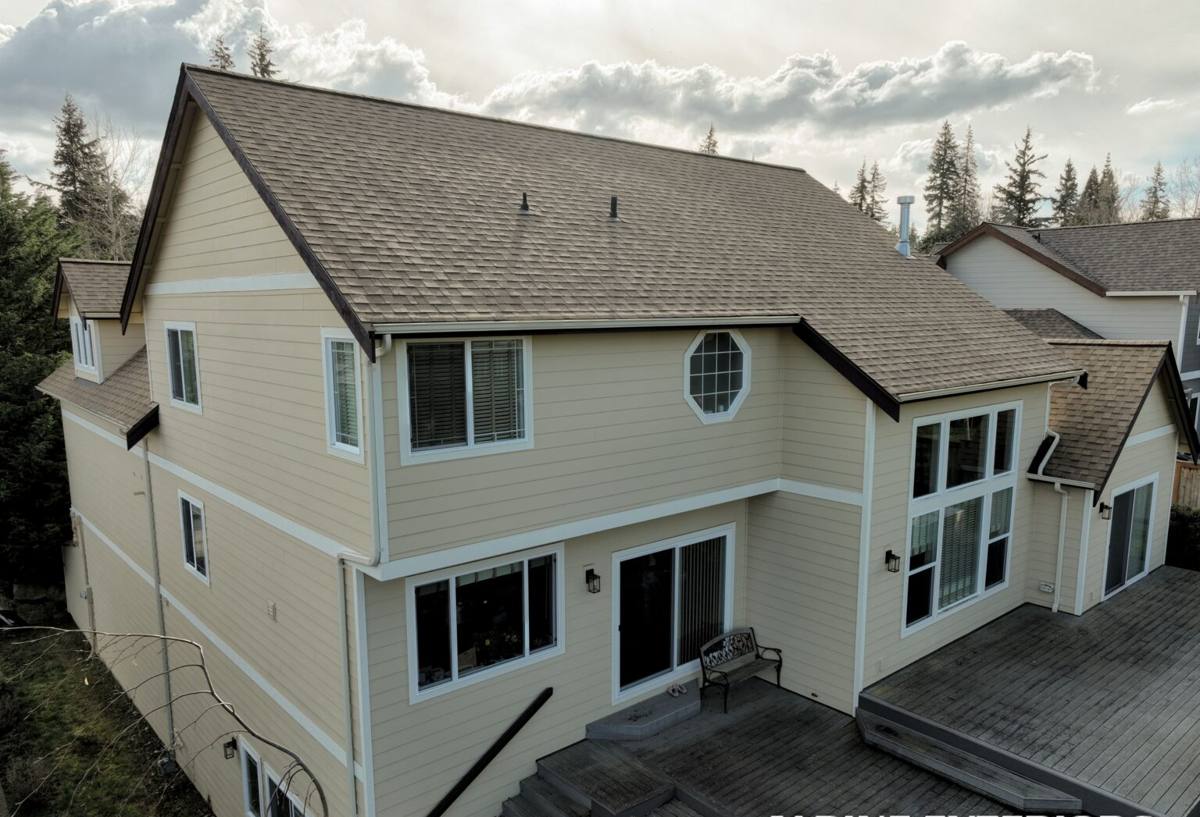
What a Correct Metal Roofing Job Actually Involves
Metal roofing looks simple from the ground, which is part of why it gets rushed or under-specified by crews who don't do it often. A roof that actually performs in this climate comes down to a handful of details that don't show up in a driveway estimate but matter every time it rains.
Underlayment and moisture protection
Metal panels are the visible layer, not the only layer. Underneath, we use a high-temperature synthetic underlayment rated for the exposure metal roofs get, plus self-adhered ice-and-water membrane at eaves, valleys, and any place water concentrates — the spots where a shaded, wet roof will hold moisture longest. Skipping or downgrading this layer is one of the most common corners cut on metal roofs, and it's the kind of shortcut that only shows up as a leak years later.
Fastening and panel movement
Metal expands and contracts with temperature more than most people expect. Panels need to be fastened in a way that allows for that movement — concealed clip systems for standing seam, properly torqued and gasketed screws for exposed-fastener panels — or you end up with oil-canning, popped fasteners, or stress cracks at panel ends within a few years.
Flashing at every penetration
Chimneys, skylights, vent stacks, and roof-to-wall transitions are where the vast majority of metal roof leaks actually start — almost never in the field of the panel itself. Correct flashing detail here matters more on a shaded, slow-drying roof than almost anywhere else, because any moisture that does get past a bad flashing joint has less chance to dry out before it causes damage.
Ventilation
A roof deck that can't breathe traps moisture underneath the metal, which leads to condensation, rot, and premature failure of the underlayment and decking — regardless of how good the metal itself is. Ridge and soffit venting sized correctly for the attic space is part of doing this right, not an upsell.
Choosing the Right Panel System
There's more than one way to do metal roofing, and the right choice depends on your roof's pitch, your budget, and how much you value a clean, seamless look versus a lower up-front cost. Here's how the main options compare for a home in this kind of climate:
| Panel Type | Fastening | Moss & Debris Shedding | Typical Lifespan | Relative Cost |
|---|---|---|---|---|
| Standing Seam | Concealed clips, no exposed fasteners | Excellent — smooth panel, no ledges for debris to catch | 40-60+ years | Higher |
| Exposed-Fastener (Corrugated/Ribbed) | Screws through the panel face, with gaskets | Good, but fastener heads and rib valleys can collect grit | 30-45 years | Moderate |
| Stone-Coated Steel | Concealed or exposed depending on profile | Fair — textured coating gives moss a bit more to hold onto than smooth metal | 40-50 years | Higher |
For heavily shaded, tree-covered lots like a lot of what you find around Sudden Valley, we generally steer homeowners toward standing seam or a low-profile ribbed panel with a smooth, factory-applied finish. The fewer places moisture and debris can sit, the less moss pressure the roof has to deal with over its life. Stone-coated products can still make sense where the look matters more and the roof gets reasonable sun exposure, but we're upfront that the textured surface is more moss-friendly than bare metal — that's a trade-off worth knowing before you choose, not after.
Moss, Shade, and Debris: The Real Enemy on This Kind of Lot
Canopy debris
Needles, cones, and leaf litter from surrounding trees don't just look messy — they hold moisture against the roof surface and give moss spores a place to establish. On a metal roof, keeping valleys, gutters, and any low-slope transitions clear matters more than it does on a roof out in the open sun.
Gutters and valleys
We size and pitch gutters to actually move the volume of water this area sees, and we detail valleys so debris has less opportunity to dam up. A metal roof that sheds water well but drains into an undersized or clogged gutter system just moves the moisture problem instead of solving it.
Moss control without damaging the finish
Zinc or copper strips near the ridge can help suppress moss growth over time as rain carries trace metal ions down the roof surface. Where a homeowner wants extra protection, we'll talk through whether that's worth adding — it's a minor detail, but it's the kind of thing that's easy to include during installation and awkward to retrofit later.
Our Process, From Estimate to Finished Roof
- On-site assessment — we look at your existing roof, decking condition, ventilation, tree exposure, and access before quoting anything.
- Straightforward proposal — panel type, underlayment spec, flashing plan, and a real cost breakdown, not a vague lump sum.
- Tear-off and deck inspection — we don't cover up rotten or undersized decking; if we find it, we tell you before we close it in.
- Underlayment and flashing installed to spec — the part of the job that determines whether the roof leaks in year one or lasts decades.
- Panel installation — fastened and detailed for expansion, wind exposure, and this climate's rain volume.
- Final walkthrough — we go over the finished roof with you, including what routine upkeep looks like for your specific lot.
Maintenance and What to Expect Over the Years
A well-installed metal roof on a shaded lot still needs periodic attention — it just needs less of it, and different kinds, than a shingle roof. Expect to clear debris from valleys and gutters a couple of times a year, especially after fall leaf-drop and before the heaviest winter rains set in. Have someone check fastener tightness and flashing seals every few years, particularly after any significant windstorm. And if moss does start to establish, address it early with a gentle, roof-safe approach — aggressive pressure washing or harsh chemical treatments can damage factory finishes and void warranties, which is the opposite of what you want on a roof you're paying a premium for precisely because it's supposed to last.
Why Local Sudden Valley Experience Matters
Roofing crews that mostly work flat, open subdivisions don't always think about the things that come up on the steep, wooded lots common around the lake — driveway and staging access for material delivery, working safely around mature trees close to the house, or coordinating the job around a community's architectural or covenant requirements if your property falls under one. None of that is complicated, but it's the kind of planning that goes smoother when a crew has actually done the work here before rather than figuring it out on your driveway. It also affects timeline and cost estimates — a lot with tight tree clearance or a long, steep approach takes different staging than a standard suburban roof, and that should be reflected honestly in your quote, not discovered as a change order midway through the job.
Questions Worth Asking Before You Hire
Metal roofing is a big enough investment that it's worth vetting a contractor properly rather than going with whoever quotes lowest. A few things worth checking before you sign anything:
- Do they carry current WA state contractor licensing and insurance, and will they show you proof without being asked twice?
- Do they specify the underlayment and flashing details in writing, or just "metal roof installation" as a line item?
- Have they worked on similarly shaded, tree-covered lots, and can they speak specifically to moss and debris management?
- Does their warranty cover workmanship separately from the manufacturer's material warranty, and for how long?
- Will they walk you through panel and finish options rather than pushing one product regardless of your roof's exposure?
If you're weighing metal roofing for a home in Sudden Valley or anywhere else around Bellingham, we're happy to take a look and give you a straightforward, no-pressure estimate — including an honest read on what your specific lot and tree cover mean for the job. Use the form below to get started.