 Bellingham Exterior
 Sudden Valley's Setting Is Beautiful — and Hard on Siding
Sudden Valley sits in a forested, lakeside pocket of Whatcom County, and that setting is exactly what makes siding maintenance different here than it is on an open lot closer to town. Heavy tree canopy keeps siding shaded and damp long after a storm has passed. Lake-adjacent humidity slows drying time even further. And the broader Bellingham weather pattern — driving rain off the water, a long stretch of overcast months, and salt-tinged air that reaches inland from Bellingham Bay and the Puget Sound corridor — adds up to a climate that is genuinely tougher on exterior materials than most homeowners expect.
None of that means siding repair has to be a constant chore. It means repairs need to be diagnosed correctly the first time, addressed with the right materials, and installed by people who understand why a wall assembly in a shaded, wooded lot behaves differently than one in full sun. That's the gap we aim to close on this page: what Sudden Valley homes specifically need from a siding repair, and what a job actually has to include to hold up.
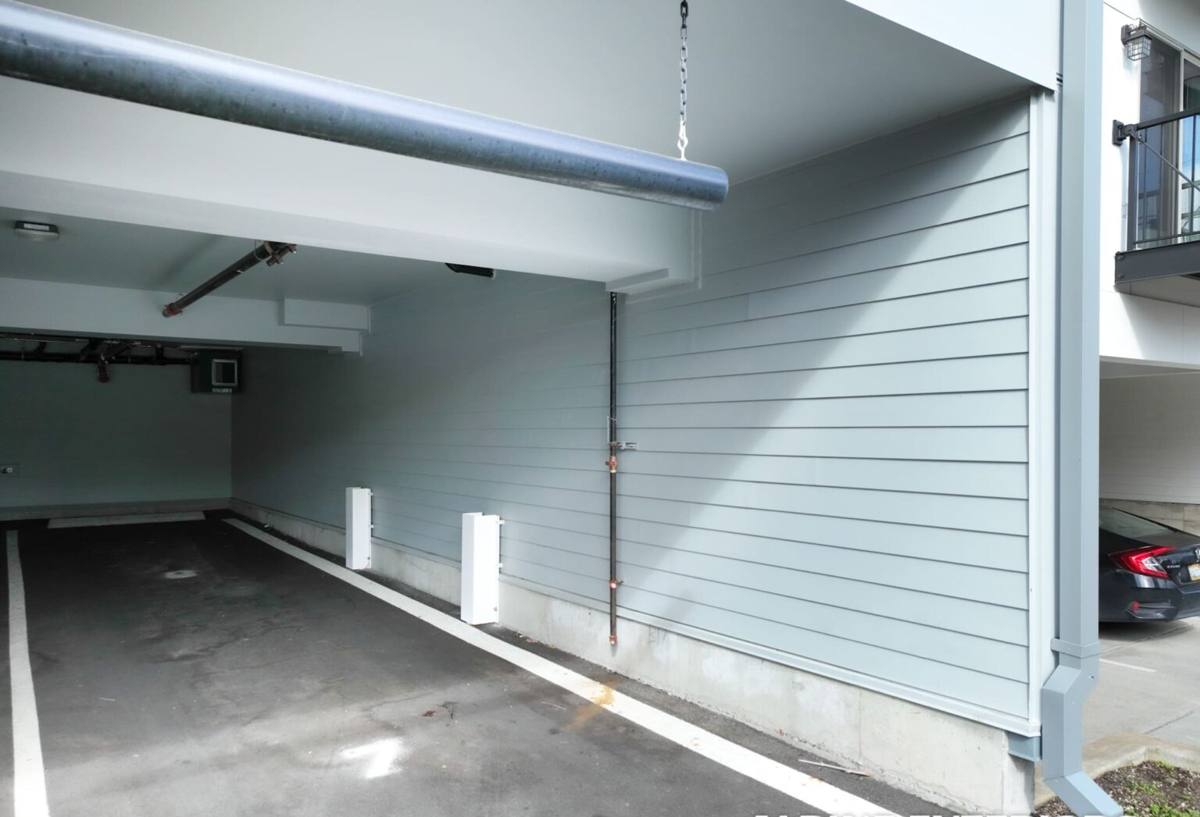
Why Repairs Get Worse Faster Under Tree Cover
Siding damage rarely announces itself all at once. On a shaded, tree-lined lot like the ones common throughout Sudden Valley, small problems compound because the siding simply doesn't get the sun exposure that would otherwise dry it out between rain events. A hairline crack that would season and seal itself on an open, south-facing wall instead stays damp for days, giving moisture time to work behind the panel instead of just on the surface.
That's also why moss and mold show up here more aggressively and earlier in the season than in less-shaded parts of Whatcom County. Moss isn't just cosmetic — its root structure holds moisture directly against the siding surface, and on absorbent or compromised material, that constant dampness is what turns a small repair into a rot problem behind the wall.
What we're actually watching for
- Soft or spongy spots when siding is pressed near seams, corners, or below windows
- Persistent moss or algae growth in the same spots after cleaning, which points to a moisture source, not just surface growth
- Visible gaps, warping, or separation at panel joints and trim
- Peeling or bubbling paint/finish concentrated on the shaded side of the house
- Water stains or discoloration on interior walls that back up to exterior siding
Patch, Panel Replacement, or Something Deeper?
Not every repair is the same scope of work, and a big part of doing this correctly is being honest about which category a problem actually falls into before any siding comes off the wall.
| Situation | What It Usually Needs | Why It Matters in Sudden Valley |
|---|---|---|
| Isolated impact damage, dry substrate underneath | Targeted panel or plank replacement | Fast fix, but only safe once moisture behind the panel is ruled out |
| Recurring moss/mold in one area, siding still firm | Cleaning, ventilation check, spot repair | Common where tree canopy blocks sun and airflow year-round |
| Soft siding, staining, or a musty smell at an exterior wall | Open the wall, inspect house wrap and framing, repair from the inside out | Trapped moisture under shade can travel further than it appears on the surface |
| Damage repeated in the same spot after prior patch jobs | Investigate flashing, trim, and drainage — not another patch | Driving rain finds the same weak point every time until it's actually fixed |
That last row is the one we see most often on older repair jobs, in Sudden Valley and elsewhere: someone patched the visible symptom without correcting the water path that caused it, so the same section fails again a season or two later.
What a Correct Siding Repair Actually Involves
A repair that's going to last through another Whatcom County winter has to go beyond replacing the damaged piece. Our process on every siding repair includes:
- Diagnosing the cause, not just the symptom — checking flashing, caulking, and trim around the damaged area before assuming a panel swap alone will solve it
- Inspecting the water-resistive barrier behind the removed siding for tears, gaps, or staining that indicate ongoing moisture intrusion
- Confirming proper drainage and clearance at the bottom of the wall, since debris and organic buildup from nearby trees can trap water against siding over time
- Matching material, profile, and reveal so the repair is structurally sound and doesn't stand out as an obvious patch
- Re-sealing and finishing correctly so the repaired section performs the same as the surrounding siding, not as a weaker point going forward
Why We Repair With James Hardie Fiber Cement
We install and repair with James Hardie fiber cement exclusively — we don't work with vinyl, LP SmartSide, cedar, or primed spruce, even for repair jobs. That's a deliberate standard, not a limitation. Hardie's HZ5 product line is engineered specifically for the freeze-thaw cycling and moisture exposure that define the Pacific Northwest, and it's non-combustible, which matters on wooded lots where wildfire risk is a real consideration for insurers and homeowners alike.
For repair work specifically, Hardie's factory-applied ColorPlus finish is a practical advantage: it lets us match existing color far more reliably than a field-painted repair, and it carries its own finish warranty separate from the substrate warranty. Fiber cement also doesn't absorb and hold moisture the way wood-based products can, which is exactly the failure mode we're trying to prevent on a shaded, damp lot.
We understand not every home in Sudden Valley is currently sided in Hardie. When we're asked to repair a different material, we'll say so plainly and explain the trade-offs honestly rather than pretend a patch will perform like a full fiber cement wall. In many cases, a localized repair in the original material is still the right, most cost-effective call — we'll tell you when that's true.
Matching Color and Profile on an Existing Home
Repairing a section of an existing Hardie installation means matching plank width, reveal, and texture as well as color. Hardie's standard lines (lap siding, shingle-style panels, board and batten) each have distinct profiles, and Sudden Valley homes span a wide range of ages and styles, so we confirm the exact product line before ordering material rather than assuming. If an older ColorPlus finish has weathered and won't match a brand-new panel exactly, we'll tell you that upfront and talk through whether a larger repaint section, rather than a single spot, gives the cleaner result.
Living With It Between Repairs
A well-executed repair still needs some ordinary upkeep in a climate like this one, especially under tree cover. None of this is complicated, but skipping it is how a small issue turns into a repeat repair call.
- Keep gutters and downspouts clear of needles and leaf debris so water isn't overflowing directly onto siding
- Trim back branches and brush that keep siding in constant shade and restrict airflow along the wall
- Rinse visible moss or algae buildup before it establishes root growth, rather than after
- Walk the exterior once or twice a year and check caulking at trim, windows, and panel joints for cracking or gaps
- Address small issues — a lifted corner, a hairline crack — before the next wet season, not after
Why a Crew That Already Works in Sudden Valley Matters
Siding repair on a wooded, sloped, lake-adjacent lot has practical realities that don't show up on a flat, open lot in town: limited equipment access, established landscaping to work around, and often a community association with architectural expectations for exterior appearance. A crew that's already spent time in Sudden Valley knows to check for those factors before a job starts, not discover them mid-repair.
Just as important is knowing what "normal" looks like here. A repair crew unfamiliar with heavily wooded, shaded properties in Whatcom County might treat every bit of moss or discoloration as a red flag, or conversely miss the early signs of trapped moisture because they're used to reading siding damage on sun-exposed homes. Local, repeat experience means a more accurate diagnosis and a repair that's scoped correctly the first time — not oversold, and not undersold.
If you're seeing soft spots, recurring moss, or a repair that keeps coming back in the same place, we're glad to take a look. Reach out for a free, no-pressure estimate and we'll give you a straight answer on what your siding actually needs.