 Bellingham Exterior
 Why Sudden Valley Roofs Take a Different Kind of Storm Damage
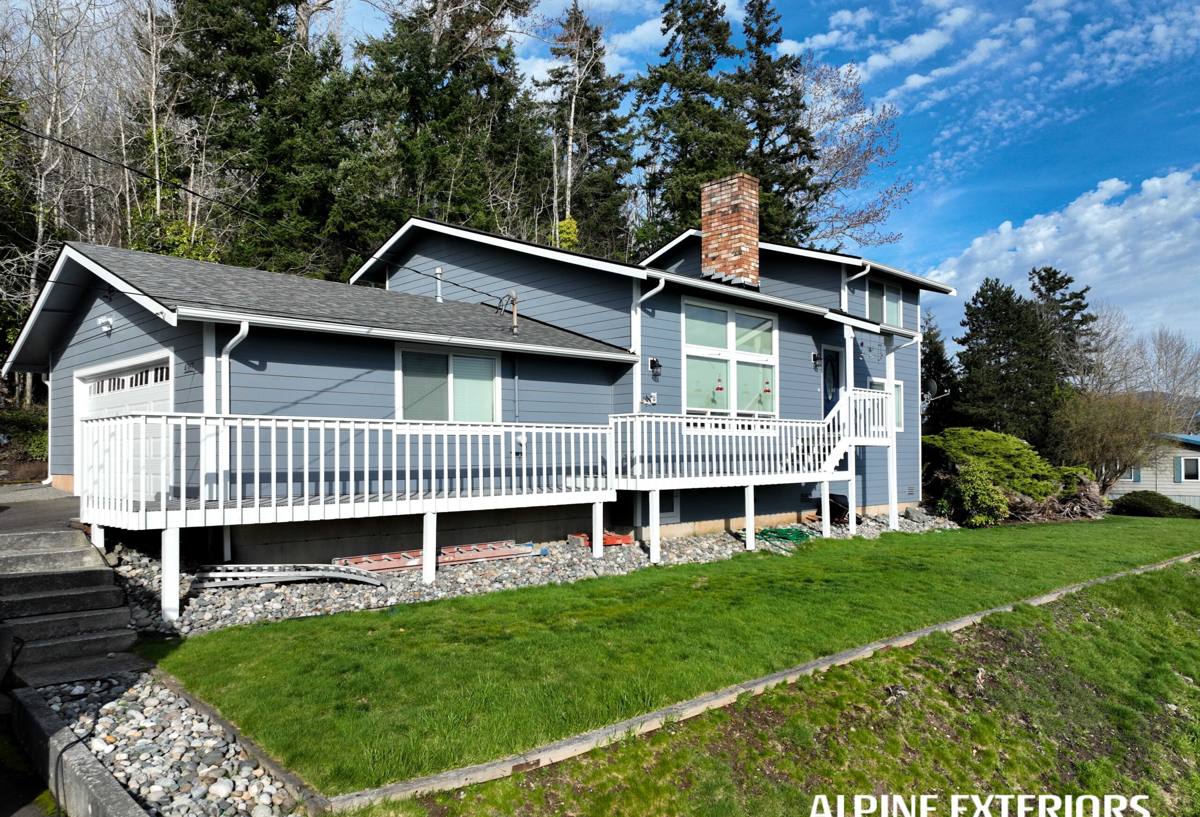
Sudden Valley sits in the trees along Lake Whatcom, southeast of Bellingham, and that setting changes what "storm damage" actually means for a roof here. Most homes in the community sit on wooded, sloped lots under or near mature fir, cedar, and hemlock canopy rather than out in the open. A wind event that would just rattle a few shingles on an exposed roof elsewhere in Whatcom County can drop limbs, split tree tops, or bury a roof in needles and cones in Sudden Valley. Add the wind that funnels off Lake Whatcom during fall and winter storms, plus a moss season that runs longer here than in drier parts of the county, and you get storm damage patterns that a generic repair page just doesn't address.
We work roofs in and around Sudden Valley regularly, so we're not guessing at how tree cover, lake wind, and moisture interact on a roof deck. That local pattern recognition is a big part of doing this repair correctly instead of just patching what's visible from the ground.
What Storm Damage Actually Looks Like Here
Wind and Tree Debris
In a forested, lakeside community, wind damage rarely shows up as "half the roof is gone." It's usually more targeted and easier to miss:
- Lifted or creased shingle tabs along ridge lines and roof edges, where wind gets underneath and breaks the seal without tearing the shingle off
- Impact damage from falling branches — cracked shingles, dented metal flashing, or a puncture through the underlayment that isn't obvious until you're up close
- Torn or lifted flashing around chimneys, skylights, and roof-to-wall transitions, especially on the side of the house that takes the prevailing wind off the lake
- Granule loss on older shingles that were already due for replacement, which storms tend to expose rather than cause outright
Moss, Needles, and Debris-Driven Damage
Sudden Valley's tree cover means near-constant needle and cone drop, not just after storms. That debris collects in valleys, behind chimneys, and in gutters, holding moisture against the roof surface long after the rain stops. Combined with the shade from surrounding trees, that's exactly the environment moss needs to establish. Moss doesn't just look bad — it lifts shingle edges as it grows, holds water against the roof deck, and works its root structure into the shingle mat over a season or two. A storm that dumps heavy rain onto an already moss-covered or debris-clogged roof is far more likely to find a way in than one that dumps rain on a clean roof.
Why Small Storm Damage Doesn't Stay Small
The damage you can see from the ground — a few missing shingles, a dented vent cap — is rarely the whole story. Wind-driven rain off the lake can push water sideways under a lifted shingle tab well past where the naked eye would guess. Once water gets under the shingle mat, it travels along the deck following gravity and the roof's framing, not in a straight line down from the entry point. That's why a homeowner sometimes sees a ceiling stain in a room that isn't directly under the obvious damage.
Left alone through Bellingham's wet season, a small breach turns into soaked sheathing, insulation damage, and eventually interior repairs that cost far more than the roof work would have. Catching storm damage early and sealing it properly is the cheapest point in the whole timeline to fix it.
How We Handle a Storm Damage Repair Call
Emergency Response and Tarping
If a roof is actively leaking or has an open hole from a fallen limb, the first priority is stopping water from getting into the house — not a full repair on the spot. That usually means a proper tarp-down: secured under the shingle courses above the damage, not just draped and stapled, so it survives the next round of wind rather than blowing off in it.
Full Damage Assessment
Once the roof is stabilized, we do a full inspection — not just of the visibly damaged area, but the surrounding field, flashing, valleys, and any spots where debris has been sitting. Given how much needle and moss buildup we see on Sudden Valley roofs, we check those areas even when they aren't part of the storm complaint, because they affect how the repair should be done.
The Repair Itself
Repairs are matched to the existing roofing material as closely as possible — same shingle profile and comparable color when we can source it, correct flashing details at penetrations, and underlayment that ties properly into the surrounding roof rather than just being caulked over the gap. A patch that isn't integrated into the existing roof system is often where the next leak starts.
Repair or Replace? What We Actually Weigh
Not every storm-damaged roof needs to be replaced, and not every roof is worth repairing. Here's how we think through it:
| Factor | Points Toward Repair | Points Toward Replacement |
|---|---|---|
| Age of existing roof | Under 12–15 years, shingles still flexible | Near or past expected shingle lifespan |
| Extent of damage | Localized to one slope or area | Damage scattered across multiple slopes |
| Moss/moisture history | Minor, surface-level growth only | Moss has been established for a season or more, mat is soft underfoot |
| Deck condition | Sheathing is sound where exposed | Soft, delaminating, or water-stained decking found |
| Material availability | Matching shingle still available | Discontinued profile or heavily faded field, patch would be visible |
| Insurance scope | Adjuster scopes it as a repair | Adjuster's scope already supports full slope or roof replacement |
We'll walk you through where your roof lands on each of these before recommending either path — there's no reason to sell a full replacement when a proper repair will hold, and no reason to patch a roof that's going to need redoing again next storm season.
Materials That Actually Hold Up to Salt Air, Rain, and Moss
Because Sudden Valley combines shaded, moisture-holding tree cover with the lake's damp air, we lean toward roofing materials and details that are built for that specific combination rather than just whatever's cheapest to source:
- Algae- and moss-resistant shingles where copper or zinc granules are embedded in the shingle to slow regrowth in shaded valleys and north-facing slopes
- Ice-and-water membrane in valleys and around penetrations, even though Sudden Valley doesn't get the ice damming some colder regions do — the same membrane does double duty against wind-driven rain and debris-related backup
- Properly lapped step and counter-flashing at chimneys and walls, since flashing failure is one of the most common repeat-leak points on tree-shaded roofs
- Zinc or copper strips near the ridge on roofs with heavy moss history, to reduce regrowth between cleanings without relying on chemical treatments long-term
We're upfront that no shingle is fully moss-proof under a dense canopy — the tree cover and lake humidity will always be working against the roof to some degree. The goal with material choice is stretching the maintenance interval and reducing how much moss and debris actually take hold, not promising it'll never happen.
Documentation and Insurance
Most storm damage repairs in Sudden Valley go through homeowners insurance, and how the damage is documented affects how smoothly that claim goes. We photograph the damage before any tarping or repair work covers it up, note the likely cause (wind, tree limb, etc.), and provide a written scope of what needs to be done and why. That documentation is meant to support your adjuster's assessment, not replace it — we're not adjusters and won't claim to speak for your policy, but a clear, dated record of the damage makes the claims conversation easier on you.
Why Hire a Crew That Already Works in Sudden Valley
Sudden Valley is a private community with its own road network and HOA guidelines, and a crew that's worked there before already knows how to navigate that — access, staging, and being a decent neighbor on narrow, tree-lined private roads. Beyond logistics, familiarity with the neighborhood's typical roof pitches, tree exposure, and how quickly moss and debris build up under that canopy means less time spent re-learning the site and more time spent on the actual repair.
Storm damage doesn't wait for convenient scheduling, either. A local Bellingham-area crew that already has a presence in Whatcom County can generally get to a Sudden Valley roof faster after a storm than a company dispatching from farther out — and faster tarping means less water gets into the house before the real repair happens.
After the Storm: A Homeowner Checklist
- Do a ground-level visual check for obvious debris, dented vents, or displaced shingles — skip climbing onto the roof yourself, especially on wet or moss-covered surfaces
- Check ceilings and attic spaces (if accessible) for new staining, damp insulation, or a musty smell
- Clear obvious debris from gutters and downspouts only if it's safely reachable from the ground
- Photograph any visible damage or fallen limbs near the house before cleanup, for your own records
- Avoid DIY tarping on a steep or wet roof — a poorly secured tarp can cause more damage than it prevents
- Call for an inspection promptly rather than waiting to see if it "gets worse" — hidden entry points rarely announce themselves until there's interior damage
If a recent storm has left your Sudden Valley roof with missing shingles, tree limb damage, or a leak you can't quite place, we're happy to take a look. Reach out for a free, no-pressure estimate through the form below and we'll get a straight answer on what happened and what it'll take to fix it right.