 Bellingham Exterior
 Why Siding Takes More Punishment in Sudden Valley
Sudden Valley sits back in the trees along Lake Whatcom, and that setting is a mixed blessing for the homes there. The tree canopy that makes the neighborhood beautiful also means less direct sun on north- and east-facing walls, longer drying times after rain, and a steady buildup of organic debris in gutters, on rooflines, and against siding. Add in the marine-influenced weather that moves inland off Bellingham Bay and the broader Puget Sound region — long stretches of driving rain, damp fall and winter air, and humidity that lingers under heavy tree cover — and you get a climate that's genuinely tough on exterior materials.
The practical result is a long moss and algae season. Shaded, moisture-holding surfaces in Whatcom County start growing green and black staining earlier in the year and hold onto it longer than siding on an open, sun-exposed lot. Combine that with wind-driven rain finding its way into every gap, seam, and fastener hole, and you have exactly the conditions that expose weak siding installations — sometimes within a few years, not decades.
None of this means a home in Sudden Valley is doomed to constant repairs. It means the material and the installation both have to be matched to the actual conditions on the lot, not to a generic spec sheet.
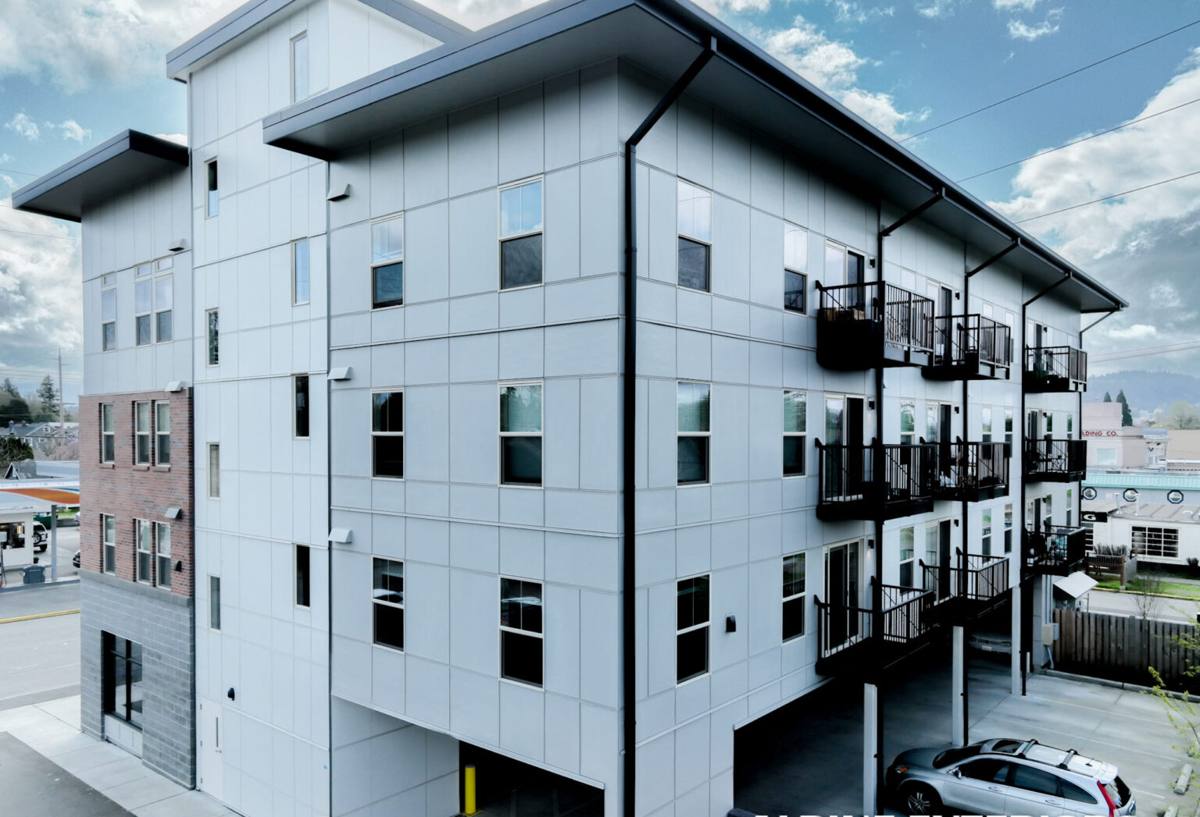
What Sudden Valley Homes Actually Need From Their Siding
Based on what we see repeatedly in this part of Whatcom County, siding here needs to do three things well:
- Resist moisture absorption. A material that swells, softens, or wicks water at seams and cut edges will fail faster under near-constant dampness than in a drier climate.
- Hold a factory finish. Field-applied paint breaks down faster in shaded, humid conditions. A finish baked on in a factory setting resists fading and cracking far longer.
- Shrug off moss and mildew rather than feeding it. Some siding materials — especially wood-based products — are literally food for the organisms that thrive in this climate. Others simply give moss nothing to hold onto or break down.
This is the lens we use when we talk to Sudden Valley homeowners about what to put back on their walls.
Why We Install Only James Hardie Fiber Cement Here
We don't install vinyl, LP SmartSide, primed spruce, cedar, or other fiber cement brands. That's a deliberate standard, not a sales pitch, and it matters more in a shaded, damp neighborhood like Sudden Valley than it would somewhere drier.
What rules out the alternatives
Vinyl siding is affordable and low-maintenance in the right climate, but it's a poor moisture manager — water can get behind panels and has nowhere productive to go, and constant damp conditions accelerate warping and seam failure. Wood-based products like LP SmartSide use engineered strand board with a resin-saturated surface; it performs well when kept dry and maintained on schedule, but any breach in that surface treatment lets moisture into wood fiber, which is exactly what a long moss season will find. Untreated or primed wood siding (spruce, cedar) is the most climate-sensitive option of all here — it needs vigilant refinishing to keep moisture and organic growth out, and Sudden Valley's tree cover works against that on a compressed timeline. Other fiber cement brands aren't inherently bad products, but we've standardized on one system so our crews install it the same correct way every time, and so warranty coverage is consistent and easy to understand for the homeowner.
What James Hardie gets right for this setting
James Hardie fiber cement is non-combustible, dimensionally stable, and doesn't feed mold or moss the way wood-based products can. Its ColorPlus factory finish is baked on under controlled conditions, which holds up better against UV and moisture cycling than field-applied paint — a real advantage on shaded walls that stay damp longer. Hardie also engineers specific product lines (HZ5, HZ10) for different climate zones, and the Pacific Northwest falls squarely into the range those lines are built for. Backed by a strong transferable warranty, it's the system we're willing to put our name behind on every job in this neighborhood.
What a Correct Siding Installation Actually Involves
The material is only half the equation. Fiber cement siding installed incorrectly will still fail in a wet climate — moisture problems almost always trace back to workmanship, not the product itself. A correct job on a Sudden Valley home includes:
- A weather-resistive barrier installed and lapped correctly behind the siding, with no gaps at seams or penetrations
- Properly flashed windows, doors, and every roof-to-wall intersection, so water is directed out and down instead of into the wall assembly
- Correct fastener type, spacing, and placement per Hardie's installation specifications — this is one of the most common places corner-cutting shows up
- Proper clearance between the bottom of the siding and the ground, roofline, decks, and patios to prevent wicking
- Caulked and sealed joints at trim, corners, and penetrations, using products rated for the exposure
- Adequate expansion gaps at butt joints, since fiber cement moves slightly with temperature and moisture changes
Skip any one of these and you've built a moisture pathway directly into the wall — and in a climate with this much sustained dampness, that pathway gets exercised often.
Our Process for a Sudden Valley Siding Project
Assessment and planning
We start with a walk-around of the home, paying particular attention to shaded elevations, areas with heavy moss or algae staining, and any spots where the existing siding shows soft spots, delamination, or water staining underneath. We check the condition of the sheathing and weather barrier once old siding comes off — that's often where the real story is.
Prep and installation
We repair or replace any compromised sheathing before anything new goes up, install a proper weather-resistive barrier, and flash every penetration and transition point. Hardie panels, plank, or shingle siding then goes on to manufacturer spec — correct fastening, correct gaps, correct clearances.
Finish and walkthrough
Trim, caulking, and touch-up work are finished to a clean standard, and we walk the completed job with the homeowner so they know exactly what was done and why.
Cost Factors for Sudden Valley Siding Projects
Every home is different, but these are the variables that most often move the number on a Sudden Valley siding job:
| Factor | Why It Matters |
|---|---|
| Sheathing condition | Rot or water damage found once old siding comes off requires repair before new siding can go on correctly |
| Home size and wall complexity | More corners, dormers, and roof-to-wall intersections mean more flashing detail and labor |
| Siding profile | Lap plank, shingle-style, and panel systems have different material and labor requirements |
| Access and site terrain | Sloped, wooded lots common in Sudden Valley can affect scaffolding and material staging |
| Trim and detail work | Window and door trim, corner boards, and fascia detailing add scope beyond the field siding |
We give a firm, itemized quote after an in-person assessment — not a phone estimate — because the sheathing condition alone can change the scope significantly.
Why Local Experience in Sudden Valley Matters
A contractor who regularly works Sudden Valley and the surrounding Bellingham area already understands the shade patterns, moss pressure, and moisture behavior specific to this kind of lot. That translates into better decisions on the job: knowing where extra flashing attention is warranted, recognizing early-stage moisture damage in older siding before it's obvious, and setting realistic expectations about how often a home in this setting will need gutter and roof-line maintenance to protect the new siding investment.
It also means a crew that's installed Hardie siding to spec across enough homes in this climate to have a consistent, repeatable process — not one that's improvising details on a product they rarely handle.
Questions worth asking any contractor
- Are you a certified or factory-trained installer for the specific siding brand you're proposing?
- What's your process for checking sheathing condition once old siding comes off?
- How do you handle flashing at windows, doors, and roof-to-wall intersections?
- What warranty applies — to the material, and separately to your labor?
- Can you walk me through your fastening and clearance specs before work starts?
Protecting Your Investment After Installation
Correctly installed Hardie siding is low-maintenance, but "low" isn't "zero" in a climate like this. A little routine attention keeps it performing the way it's designed to:
- Keep gutters and downspouts clear so water doesn't back up against the siding or trim
- Trim back tree branches and vegetation that keep siding shaded and damp longer than necessary
- Rinse siding periodically to keep moss and algae from establishing, especially on north-facing walls
- Re-caulk trim joints if you notice cracking or separation over time
- Have flashing and caulking spot-checked every few years, particularly around windows and roof intersections
If you're weighing a siding replacement on a Sudden Valley home, we're happy to take a look and give you a straightforward, no-pressure estimate based on what we actually find on your walls — not a generic price list.