 Bellingham Exterior
 Why Birch Bay Roofs Wear Out Faster Than You'd Expect
Birch Bay sits right on the water, and that changes how a roof ages. Homes just a few miles inland in Bellingham can get another five to ten years out of the same shingle that's failing on a Birch Bay roof. The reason is straightforward: salt-laden air off the bay accelerates the breakdown of asphalt granules and metal fasteners, near-constant winter rain finds every weak seam and nail pop, and the shade and moisture that blanket this part of Whatcom County give moss and algae a long growing season with almost no dry-out period to slow them down.
None of that means a Birch Bay roof is doomed early. It means the roof has to be built and maintained with those specific conditions in mind, not treated like a generic Pacific Northwest install. That's the difference between a roof that makes it to year 30 and one that's leaking by year 18.
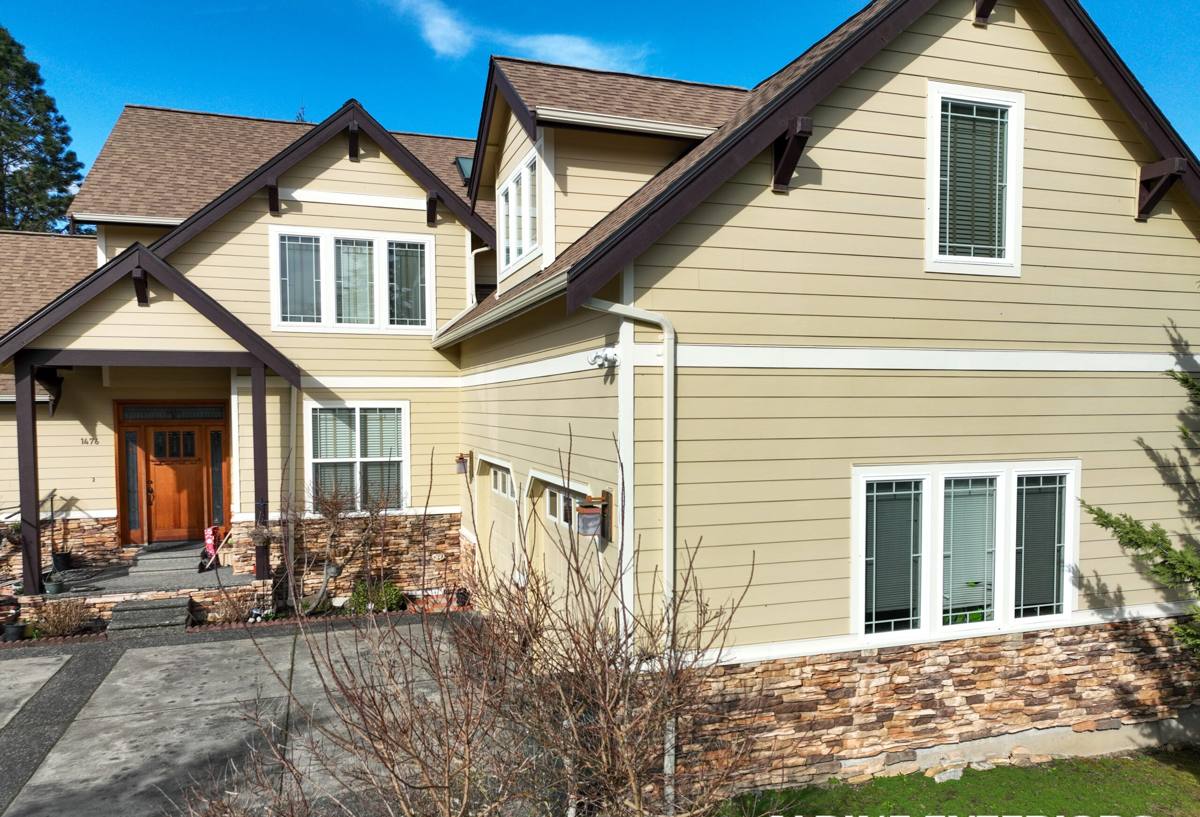
Signs a Birch Bay Roof Needs Replacement, Not Another Repair
Granule Loss and Bald Spots
Salt air and driving rain wear down the protective granule layer on asphalt shingles faster near the coast. If you're finding granules collecting in gutters or downspouts, or you can see shiny, bald patches on south- and west-facing slopes, the shingles have lost the UV and weather protection they need. Patching a few shingles won't fix a roof-wide granule problem.
Persistent Moss and Algae Streaking
Some moss on a shaded north slope is normal maintenance, not a red flag. But moss that keeps returning within a season of cleaning, or that's established itself under the shingle tabs rather than just on the surface, is lifting shingles and holding moisture against the roof deck. At that point you're not fighting moss anymore, you're managing rot underneath it.
Leaks That Move or Reappear
A single leak at a boot or flashing point is usually a repair. Leaks that show up in a new spot after every repair, or that only appear during wind-driven rain, point to a roof system that's failing broadly, not at one point. Wind-driven rain off the bay is especially good at finding these weaknesses because it hits the roof at angles a straight-down rain never would.
Age, Even Without Visible Damage
Most asphalt roofs in a coastal Whatcom County exposure are realistically in their replacement window by 18-22 years, even if they still look okay from the ground. Waiting for visible failure usually means you're also replacing damaged decking, not just shingles.
What a Correct Roof Replacement Actually Involves
Full Tear-Off and Deck Inspection
We don't install new roofing over old layers. A tear-off lets us see the actual condition of the roof deck, which is where moss and slow leaks do their real damage. Soft, delaminated, or water-stained sheathing gets replaced before anything new goes down. Skipping this step is the single most common reason a "new" roof fails early.
Ice-and-Water Membrane at Vulnerable Points
Eaves, valleys, and any low-slope transitions get a self-adhering waterproof membrane underneath the roofing material. In a climate with sustained rain and wind-driven water, this membrane is what keeps water out even if wind gets under the shingle edge.
Balanced Attic Ventilation
A roof that can't breathe traps moisture, and trapped moisture is exactly what moss, mold, and rot need. Correct intake at the eaves and exhaust at the ridge keeps air moving, which slows moss regrowth on the deck side and extends the life of the shingles from underneath.
Flashing Done Right, Not Just Caulked
Chimneys, skylights, and roof-to-wall transitions fail more from bad flashing than from bad shingles. Correct step flashing and counter-flashing shed water by design; caulk is a temporary patch, not a flashing system, and it's usually the first thing to fail in this climate.
Choosing Roofing Materials for a Coastal Whatcom County Climate
There's no single "best" roofing material for Birch Bay — there's a best material for your home's exposure, roof pitch, and budget. Here's how the common options actually perform under salt air, driving rain, and heavy moss pressure:
| Material | Salt Air Durability | Moss Resistance | Typical Lifespan |
|---|---|---|---|
| Architectural asphalt shingle | Good with quality granules and corrosion-resistant fasteners | Moderate; benefits from algae-resistant granules | 25-30 years |
| Standing seam metal | Very good with proper coating; avoid bare galvanized near the water | Excellent; sheds moss due to steep runoff and slick surface | 40-50 years |
| Synthetic/composite shake | Good; doesn't rust or corrode | Moderate to good depending on product | 30-40 years |
| Cedar shake | Fair; needs regular maintenance near salt exposure | Poor without diligent upkeep; retains moisture | 20-30 years with upkeep |
We don't push cedar shake on exposed Birch Bay roofs as a first recommendation. It's a beautiful material, but its natural texture holds moisture and gives moss a foothold faster than smoother profiles, which means a heavier maintenance commitment right in the climate least forgiving of it. If a homeowner wants that look and understands the upkeep, we'll install it correctly — we just won't let it be a surprise.
Our Roof Replacement Process
1. On-Site Inspection and Honest Estimate
We walk the roof, check the attic for ventilation and moisture signs, and give you a written scope and price — no pressure, no "today only" discount tactics.
2. Material Selection Based on Your Roof, Not a Sales Quota
We'll talk through pitch, exposure, and budget so the material matches the house, not just the catalog.
3. Tear-Off and Deck Repair
Full removal of the old roofing, deck inspection, and replacement of any compromised sheathing before anything new is installed.
4. Installation: Underlayment, Flashing, Ventilation, Roofing
Each layer goes down in sequence and gets inspected before the next one covers it, not just at the very end.
5. Site Cleanup and Final Walkthrough
Magnetic sweep for nails, full debris haul-away, and a walkthrough so you know exactly what was done and what to expect from the new roof going forward.
What Drives Roof Replacement Cost in Birch Bay
| Factor | Why It Matters Here |
|---|---|
| Roof pitch and access | Steeper slopes and limited equipment access near waterfront lots add labor time |
| Deck condition | Moss and moisture damage found during tear-off often means sheathing replacement |
| Material choice | Metal and composite options cost more upfront but reduce maintenance in salt air |
| Number of penetrations | Chimneys, skylights, and vents each need proper flashing, adding time and material |
| Ventilation upgrades | Older homes often need added intake or exhaust vents to meet current moisture standards |
We give exact numbers only after seeing the roof in person — anyone quoting a firm price over the phone for a coastal roof hasn't actually inspected the deck or the ventilation, and those are the two things that swing a bid the most.
Why Hiring a Crew That Already Works Birch Bay Matters
Birch Bay's wind exposure isn't the same as roofing a sheltered lot a mile inland in Bellingham. A crew that regularly works this stretch of Whatcom County knows which slopes take the worst of the wind-driven rain, how far up a wall salt spray typically reaches on waterfront-facing homes, and which shingle lines and metal coatings actually hold up under that exposure versus which ones look fine in the showroom and fail early here. That's knowledge you don't get from a contractor who does one job in the area a year.
Local experience also means realistic scheduling around this region's wet season, proper disposal and permitting knowledge for Whatcom County, and a crew that isn't learning your specific climate conditions on your dime.
Roof Replacement Checklist for Birch Bay Homeowners
- Get a full attic inspection, not just a roof-surface look, before any bid
- Ask whether the estimate includes deck repair if rot is found, or if that's a separate change order
- Confirm the underlayment and ice-and-water membrane spec, especially at eaves and valleys
- Ask about fastener material — corrosion-resistant fasteners matter more near salt air
- Confirm ventilation will be assessed and corrected, not just matched to what's already there
- Get the manufacturer warranty terms in writing, and understand what voids them
- Ask how debris and old materials will be removed and disposed of
If your roof is showing granule loss, recurring moss, or leaks that keep moving around, it's worth having it looked at before another wet season sets in. We offer free, no-pressure estimates for Birch Bay homeowners — we'll tell you honestly whether you need a full replacement or if a targeted repair will still get you a few more good years.