 Bellingham Exterior
 Storm Damage Roof Repair Built for Birch Bay's Coastline
Birch Bay sits closer to open water than most of the neighborhoods we work in around Bellingham, and that changes what a roof goes through every year. Wind off the water hits harder and more often, driving rain gets pushed sideways under shingle edges and flashing, and salt-laden air speeds up corrosion on fasteners and metal components that would otherwise last decades. Add in a long, wet moss season under the conifer canopy that shades a lot of Whatcom County properties, and you have a roof that ages faster than the same roof would ten or fifteen miles inland.
Storm damage repair here isn't just about patching what's obviously broken after a windstorm. It's about understanding how repeated wind-rain-salt cycles weaken a roof over time, so the repair actually holds instead of failing again at the next blow.
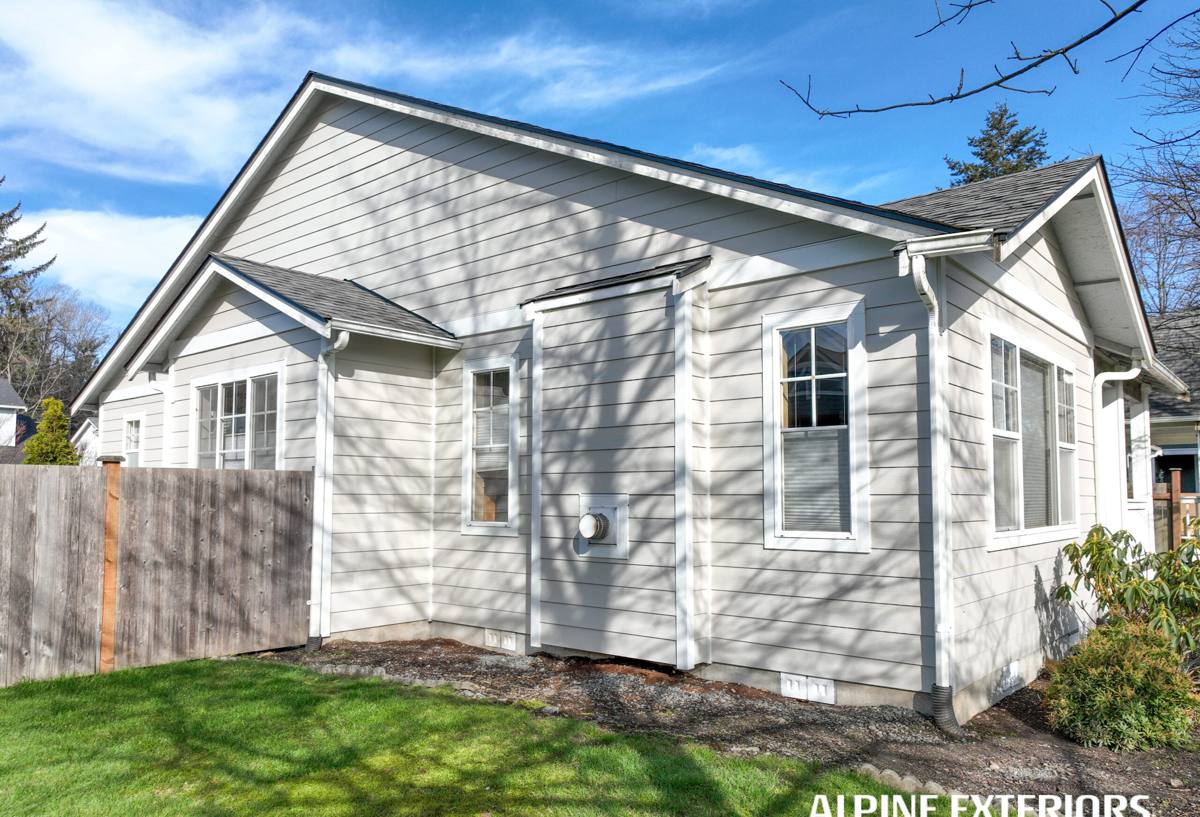
What Storm Damage Actually Looks Like on a Birch Bay Roof
Not all storm damage is a missing shingle you can spot from the driveway. Some of the most costly damage is the kind that doesn't show itself until water is already in the attic.
Common Damage Types We Find
- Shingles lifted, cracked, or torn loose at the edges and ridge, where wind uplift concentrates
- Granule loss from wind-driven rain and hail, which accelerates UV and moisture damage underneath
- Flashing pulled away or bent at chimneys, skylights, and roof-to-wall transitions
- Fastener backout and corrosion, especially on older roofs closer to the water
- Debris impact from branches and limbs, common after windstorms in tree-heavy lots
- Moss-related lifting, where thick moss mats hold moisture against shingles and pry up edges over time
Some of this is visible from the ground. Most of it isn't. A proper storm inspection means getting on the roof, not just looking at it with binoculars.
Why Salt Air and Wind-Driven Rain Change the Repair, Not Just the Damage
A storm repair inland can often be a straightforward shingle and flashing swap. Closer to Birch Bay, we build in a few extra considerations because the environment doesn't let up once the storm passes.
Salt Air and Metal Components
Flashing, drip edge, fasteners, and any exposed metal corrode faster in salt-influenced air. A repair that uses standard-grade fasteners might hold fine for a few years inland, but closer to the water it can start showing rust streaks and loosening well before it should. We favor corrosion-resistant fasteners and flashing on jobs in this area for that reason.
Wind-Driven Rain
Rain that comes in sideways during a coastal storm can work its way under shingle tabs and around flashing that would keep out a straight-down rain in a sheltered yard. That means seal strips, nailing patterns, and flashing laps all matter more here — a repair that looks fine but wasn't sealed and lapped correctly for wind-driven conditions will leak in the next storm, not this one.
Moss and Moisture
Whatcom County's wet, mild winters keep moss growing for much of the year in shaded areas. Moss holds moisture against the roof surface long after a storm has passed, which softens shingles and accelerates the damage a storm already started. Any real storm repair should include clearing moss and debris from the repair area, not just fixing what the wind broke.
Our Storm Damage Repair Process
We keep this process straightforward because homeowners dealing with storm damage are usually stressed enough already.
1. Prompt Inspection
We get eyes on the roof — on it, not just from the ground — to identify every point of damage, including the parts that aren't obvious yet. We check the attic for water intrusion signs too, since leaks often show up there before they show up on a ceiling.
2. Emergency Protection, If Needed
If a roof has active leaking or exposed decking, we can install temporary protection to stop further water intrusion while a permanent repair is scheduled. This matters most right after a storm, when more weather is often still coming through the region.
3. Honest Scope and Written Estimate
We tell you what's actually damaged, what's pre-existing wear, and what your realistic options are — repair, partial re-roof of a section, or full replacement if the damage or the roof's age warrants it. No pressure to go bigger than the situation calls for.
4. Documentation for Insurance
If you're filing a claim, we document damage with photos and a written scope before and after the repair. We're not an insurance company and can't guarantee claim outcomes, but a clear, professional record of the damage helps your claim get evaluated fairly.
5. The Repair Itself
Matching materials where possible, replacing underlayment and flashing where it's compromised (not just papering over the surface damage), and using fastening and sealing methods suited to wind-exposed, salt-influenced conditions.
6. Cleanup and Final Walkthrough
We clear debris, remove nails and material scraps from the yard and gutters, and walk the repair with you before we call the job done.
Repair or Replace? What Actually Drives That Decision
Storm damage doesn't automatically mean a new roof, and it doesn't automatically mean a small patch either. The right call depends on a few honest factors.
| Factor | Leans Toward Repair | Leans Toward Replacement |
|---|---|---|
| Roof age | Well within its expected service life | Already near or past typical lifespan for the material |
| Extent of damage | Localized — one slope, one section, isolated flashing | Widespread across multiple slopes or repeated storm hits |
| Underlying condition | Decking and underlayment sound once exposed | Soft decking, failed underlayment, or prior water damage found |
| Material availability | Matching shingles or panels still available | Discontinued product forcing a visible mismatch |
| Storm history | First significant hit in a long while | Roof has taken repeated storm damage over recent years |
We'll tell you plainly which side of that table your roof falls on. If a repair is the honest answer, that's what we'll recommend — a bigger job isn't a better job if it isn't needed.
Materials and Workmanship Standards We Hold to for This Area
Because of what Birch Bay roofs are up against, we don't treat every repair as identical to one we'd do further inland.
- Corrosion-resistant fasteners and flashing on or near the coastline, rather than standard-grade hardware
- Ice-and-water shield style underlayment reinforced at eaves, valleys, and roof penetrations, where wind-driven rain is most likely to find a way in
- Proper flashing laps and step flashing at walls and chimneys, sealed for wind-driven conditions rather than just straight-down rain
- Matching shingle or panel profile and color as closely as current product lines allow, so a partial repair doesn't stand out
- Moss and debris clearing as part of the repair scope, not a separate upsell
These aren't upgrades we push to run up an invoice. They're the baseline we think a coastal Whatcom County roof needs to actually hold up, and we'll explain the reasoning behind each one if you want the detail.
After a Storm: A Homeowner's Quick Checklist
If you've just been through a windstorm or heavy rain event and aren't sure what to do first, this is a reasonable order of operations.
- Check the attic and ceilings for water stains, drips, or damp insulation
- Look at gutters and downspouts for granules, torn shingle pieces, or debris blockages
- Scan the yard for shingle tabs, flashing pieces, or debris that fell from the roof
- Photograph anything visible from the ground before it gets cleaned up or moved
- Avoid climbing onto the roof yourself, especially on wet or mossy surfaces
- Call for an inspection promptly — delayed repairs give wind-driven rain more chances to get underneath damaged areas
- Keep any contractor's written estimate and photos together if you plan to file an insurance claim
Why Local Experience in Birch Bay Actually Matters
A crew that mostly works drier, more sheltered neighborhoods can still do competent roofing work — but they may not default to the fastener grade, underlayment placement, or flashing details that a wind-exposed, salt-influenced property needs. That's not a knock on their skill, it's just a different set of conditions.
Working regularly in and around Birch Bay and greater Bellingham means we've seen how these roofs actually fail over time — where moss builds up first, which flashing details tend to work loose under repeated wind-driven rain, and how fast corrosion shows up on hardware that isn't rated for it. That's the kind of thing you learn from doing the work here repeatedly, not from a general roofing checklist.
Get an Honest Look at Your Roof
If a recent storm has left you with missing shingles, a leak, or just an uneasy feeling about what's happening up there, we're glad to take a look. Use the form below to request a free, no-pressure estimate — we'll tell you plainly what we find and what your real options are.