 Bellingham Exterior
 Why Columbia Homes Take a Different Kind of Beating
The Columbia neighborhood sits close enough to Bellingham Bay that salt-laden air is a real, daily factor on siding — not just a coastal talking point. Add Whatcom County's driving winter rain, blowing sideways off the water more often than most inland neighborhoods deal with, and a moss season that can run half the year in shaded, north-facing yards, and you get siding that ages differently here than it does twenty minutes inland. Fasteners corrode faster. Caulk joints fail sooner. Anything with exposed end-grain or a paint film that's lost its seal starts taking on water long before a homeowner notices a problem from the sidewalk.
None of that means Columbia siding fails constantly — it means the margin for a sloppy repair is smaller. A patch that would hold up fine in a dry inland subdivision can fail here in a single wet season if it's not detailed correctly.
Reading the Warning Signs Early
What Homeowners Usually Notice First
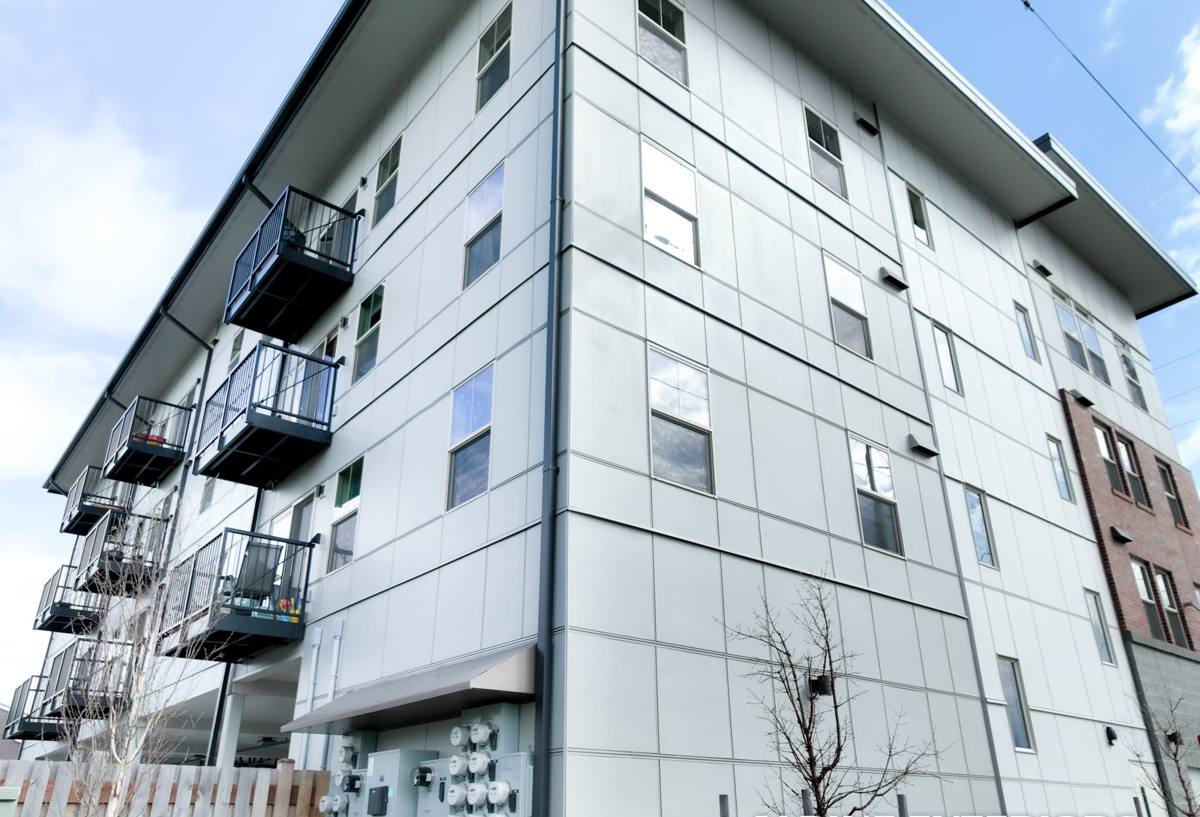
Most siding repair calls in this neighborhood start with something small: a soft spot near a downspout, a section of paint that keeps bubbling no matter how many times it's repainted, a crack that's widened since last year, or dark streaking that shows up every fall and never fully goes away. These are surface symptoms of what's usually a moisture problem working from the inside out.
What's Actually Happening Behind the Wall
Siding is a water-management system, not just a weather-facing skin. Water gets behind cladding through failed caulk, cracked panels, poor flashing at windows and trim, or siding installed too close to grade or a roofline. Once it's behind the siding, house wrap and flashing details determine whether that moisture drains back out or sits against sheathing and framing. In a climate with as much sustained wet weather as Bellingham gets, a small gap that would be a non-issue in a dry climate becomes a slow rot problem here.
What a Correct Siding Repair Actually Involves
A repair that just covers the visible damage without addressing why it happened is a temporary fix. A correct repair follows a sequence:
1. Diagnose Before Touching Anything
We pull back or remove the damaged section to see what's underneath — sheathing condition, house wrap integrity, flashing at any nearby penetration (window, hose bib, light fixture, deck ledger). If the damage is cosmetic only, the fix is simple. If there's soft sheathing or trapped moisture, that has to be resolved first or the new siding will fail the same way.
2. Fix the Water Path, Not Just the Panel
This means correcting flashing laps, re-sealing penetrations with the right sealant (not just caulking over a gap and hoping), and making sure water sheds outward and down rather than getting trapped behind new material.
3. Match Material and Reveal
Replacement panels need to match the existing reveal, profile, and as close to the original color as the product line allows. A mismatched patch is often more visible — and more likely to be sealed incorrectly — than the damage it replaced.
4. Re-seal and Finish to Spec
Correct fastener pattern, correct sealant at butt joints and trim, and paint or factory finish matched properly. Rushed finish work is where a lot of repairs quietly start failing again within a year or two.
The Older Housing Stock Factor
Columbia is one of Bellingham's more established neighborhoods, which means a wider mix of siding vintages and materials than you'd find in a newer subdivision — original wood siding, later hardboard or vinyl retrofits, and in some cases newer fiber cement. That mix matters for repair work: the correct fix depends entirely on what's actually on the wall, not what's most common citywide. Older wood siding often has decades of paint buildup that hides the true condition of the boards underneath. Hardboard siding from certain production eras is prone to edge swelling once water gets in, and by the time it's visibly failing, the damage is usually more extensive than it looks. Knowing what you're dealing with before quoting a repair — rather than assuming — is the difference between a fix that lasts and one that doesn't.
Repair or Replace? A Practical Comparison
Not every damaged section needs a full re-side, and not every repair is worth doing instead of replacing a larger run. Here's how we weigh it:
| Factor | Favors Repair | Favors Replacement |
|---|---|---|
| Extent of damage | Isolated section, one or two panels | Damage spread across multiple walls or elevations |
| Underlying sheathing | Dry, solid when probed | Soft, spongy, or visibly rotted |
| Material condition overall | Rest of siding is sound and well-sealed | Rest of siding is aging out at the same time |
| Color/profile match | Close match available | Original product discontinued, mismatch would be obvious |
| Cause of damage | One-time event (impact, isolated flashing failure) | Systemic moisture issue affecting the whole assembly |
We'll always tell you honestly which category your situation falls into — including when a repair is the right call and a full re-side isn't necessary yet.
Our Process, Start to Finish
- On-site inspection. We look at the damage, probe surrounding areas for hidden moisture, and check flashing at nearby windows, trim, and penetrations.
- Honest diagnosis. You get a clear explanation of what's actually going on — not just what's visible from the ground.
- Written scope and estimate. What's being repaired, what materials are used, and why.
- Correct repair execution. Water path fixed first, then matched material, correct fasteners, correct sealant, and finish work done to spec.
- Walkthrough. We show you what was found and what was done before we consider the job finished.
Why We Repair and Replace With James Hardie
When a repair calls for new panels — not just a patch to existing material — we use James Hardie fiber cement. It's the only siding system we install, and that standard applies to repair work too whenever the scope allows for it. Hardie's HZ5 product line is engineered specifically for wet, freeze-thaw climates like ours, it's non-combustible, and it holds paint and factory ColorPlus finish far longer than wood or hardboard alternatives in a climate that stays damp as much of the year as Whatcom County does. We won't pretend every repair situation lets us swap material lines mid-wall without a visible seam — sometimes matching the existing product is the right call for a small patch. But where replacement is warranted, Hardie is what goes up, because we've seen how it holds up here versus what it's replacing.
Why We Don't Patch With Certain Materials
We won't install vinyl or LP SmartSide patches even as a quick fix, because doing so introduces a second material system with different expansion, moisture, and maintenance behavior into a wall assembly — and in this climate, that mismatch tends to show up as a callback within a few years, not a long-term solution.
Why a Crew That Already Works Columbia Matters
A contractor who works this neighborhood regularly already knows what its housing stock tends to hide — which siding vintages swell first, where moss buildup on north-facing walls tends to trap moisture longest, and how Bellingham's permitting and inspection process works for exterior repair scopes. That familiarity shows up in faster, more accurate diagnosis and fewer surprises mid-job. It also means a shorter response time if a repair needs a follow-up visit or if damage is discovered once we open up a wall section — we're not driving in from across the county to get back to you.
Simple Maintenance Checks Between Repairs
A few habits go a long way toward catching problems while they're still small and inexpensive to fix:
- Walk the exterior each fall before the wet season sets in and look for cracked caulk, gaps, or peeling paint
- Keep gutters clear so overflow doesn't run down and behind siding at corners
- Trim back vegetation and branches that keep siding shaded and damp longer than the rest of the house
- Check for moss or algae buildup on north- and west-facing walls and have it cleaned before it holds moisture against the surface
- Have any soft spot, bubbling paint, or persistent staining looked at promptly rather than waiting for it to spread
Getting an Honest Read on Your Siding
If you're noticing a soft spot, a stubborn stain, or siding that just doesn't look right anymore, it's worth having someone look at it before another wet Bellingham winter makes the problem bigger. We're happy to come out, give you a straight assessment of what's actually happening, and walk you through repair options — no pressure, no upsell. Reach out for a free estimate and we'll take it from there.