 Bellingham Exterior
 Cordata's Climate Reality
Cordata sits in north Bellingham, in a part of Whatcom County that gets the full Pacific Northwest marine weather package: driving rain that comes in sideways off the water for months at a stretch, salt-laden air working its way inland from Bellingham Bay and the Strait, and a moss season that, in practice, runs from early fall through late spring. None of that is unusual for this corner of Washington. What it means for a house is more specific — siding here isn't just cladding, it's the thing standing between a wet, low-sun climate and the wood framing underneath it for most of the year.
The stress shows up in predictable ways: north- and west-facing walls that never fully dry out between storms, moss and algae taking hold anywhere sun exposure is limited, paint finishes chalking and fading faster than they would in a drier climate, and moisture finding its way behind panels through gaps, poor flashing, or caulk that was never meant to do a waterproofing job in the first place. A siding system that isn't engineered for this kind of exposure will show the wear within a few years, not a few decades.
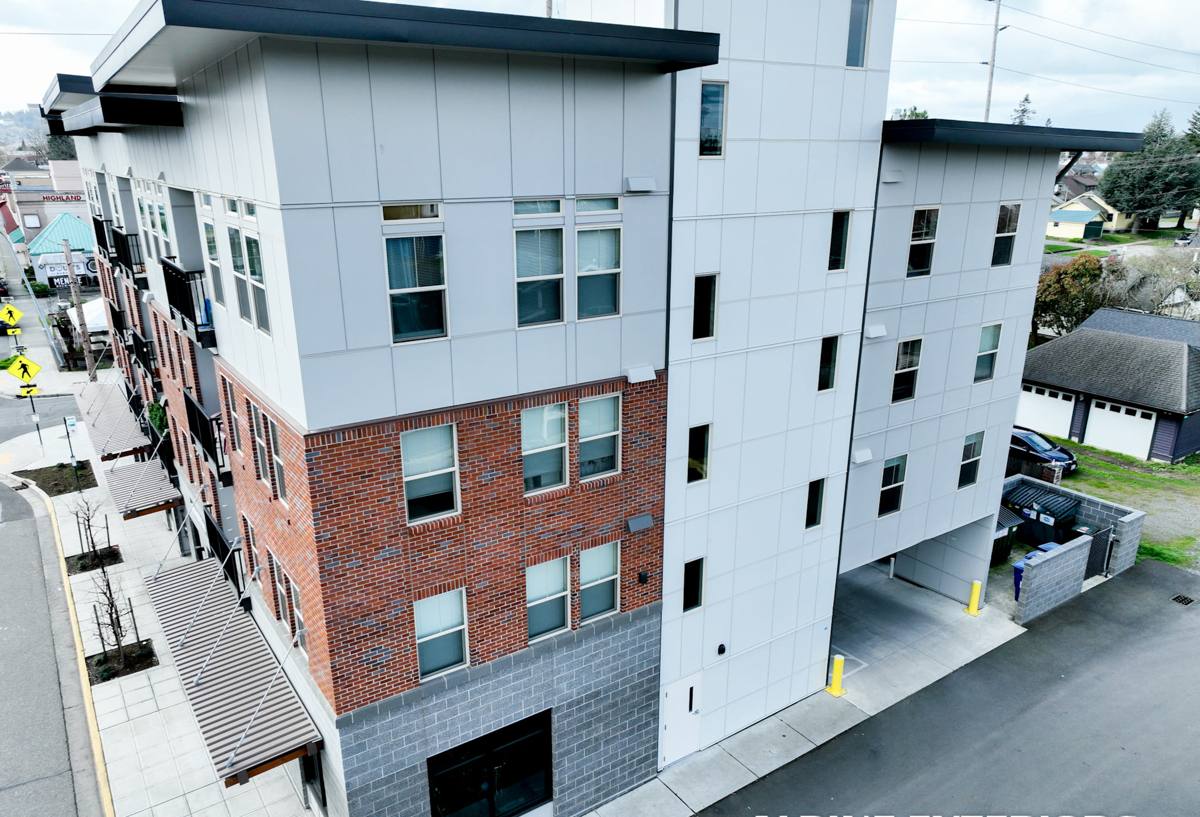
Why We Only Install James Hardie Fiber Cement Here
We install one siding system on Cordata homes: James Hardie fiber cement, in the HZ5 line engineered for cooler, wetter climate zones like this one. That's not a marketing preference — it's a decision based on what actually holds up under sustained rain and salt exposure without turning into a maintenance project for the homeowner.
Vinyl siding is affordable and low-maintenance in the sense that it doesn't need painting, but it's a thin material that expands, contracts, and can warp or bow with temperature swings, and it relies almost entirely on the water-resistive barrier behind it to keep moisture out — the panels themselves aren't doing much waterproofing work. Cedar and other wood sidings look great on day one, but in a climate this wet they need real upkeep: refinishing on a regular cycle, vigilant moss control, and prompt attention to any spot where paint has failed, because untreated wood in constant moisture rots. Engineered wood products like LP SmartSide use a wood-strand core that performs well when installed and sealed exactly to spec, but that core is still wood-based, and any lapse in edge sealing or caulking becomes an entry point for moisture that the core doesn't handle gracefully.
Fiber cement doesn't have that vulnerability. It's cement, sand, and cellulose fiber — it doesn't rot, it doesn't feed moss the way bare wood can, and it holds paint (or in Hardie's case, a factory-applied finish) far longer than field-applied coatings on wood or vinyl. It's also non-combustible, which matters increasingly in this region regardless of coastal exposure. For a house that has to shed rain for eight or nine months of the year, it's the material that asks the least of the homeowner over time.
What a Correct Fiber Cement Job Involves
Clearances and Flashing
Most siding failures we get called to inspect aren't a problem with the siding material — they're a problem with the details around it. Ground clearance at the base of the wall, kickout flashing where a roofline meets a sidewall, proper head flashing over every window and door, and a weep path for any water that does get behind the cladding are what actually keep a wall assembly dry in a high-rainfall climate. Hardie's installation manual specifies these details precisely, and skipping them is the single most common way a fiber cement job fails early — not because the panels wore out, but because water was never given anywhere to go.
Fastening and Panel Layout
Because of the salt exposure this area gets, fastener choice matters more here than it would further inland. We use corrosion-resistant fasteners and follow Hardie's engineered nailing pattern rather than eyeballing spacing, and we blind-nail where the design allows it for a cleaner, more weathertight face. Panel layout also accounts for expansion gaps at butt joints and trim — small details that prevent buckling and cracked caulk lines down the road.
The ColorPlus Factory Finish
Hardie's ColorPlus finish is baked on at the factory under controlled conditions, which gives it better adhesion and UV resistance than paint applied on site after installation — and it comes with its own finish warranty separate from the substrate warranty. In a climate where field-applied paint on wood or trim tends to chalk and fade within a handful of years, a factory finish is one less recurring maintenance item for the homeowner, and it resists the surface staining that invites moss and algae far better than a site-painted surface does.
Our Process From Estimate to Finished Job
Assessment and Moisture Check
Every job starts with a walk of the exterior looking specifically at what this climate does to a house: hidden rot behind old wood or vinyl siding, flashing that's failed around windows or deck ledgers, and which walls are showing the heaviest moss or staining. That tells us not just what needs replacing, but what needs to change in the assembly so the same problem doesn't come back.
Prep, Tear-Off, and Weather-Resistive Barrier
We remove the existing siding rather than installing over it, because covering up a compromised weather barrier or hidden sheathing damage just hides the problem behind a new face. Once the wall is open, we install or verify a proper weather-resistive barrier and address any sheathing repairs before a single piece of Hardie goes up. In a rainfall climate like this one, what's behind the siding matters as much as the siding itself.
Installation and Finish Work
Panels and trim go up to Hardie's published spec — correct clearances, correct fastening, and caulk only at the joints Hardie actually calls for. Over-caulking is a common shortcut that looks tidy at first but traps moisture where it needs to escape, so we follow the manufacturer's sealing guidance rather than sealing every seam by default. We finish with a walkthrough so the homeowner knows exactly what was done and what basic upkeep to expect going forward.
Fiber Cement vs. Other Siding Options for Cordata Homes
| Material | Rain & Moisture Performance | Moss & Salt Air Resistance | Maintenance | Typical Lifespan |
|---|---|---|---|---|
| James Hardie Fiber Cement | Excellent when flashed and installed to spec | Strong; factory finish resists staining | Occasional wash; no repainting on ColorPlus finish for years | Decades with correct install |
| Vinyl | Relies on barrier behind panel; can warp/gap over time | Fades and chalks with UV/salt exposure | Low, but limited repair options once damaged | Moderate, shorter in harsh exposure |
| Cedar/Wood | Absorbs moisture; needs sealing to perform | Prone to moss without regular treatment | High; regular refinishing and moss control | Depends heavily on upkeep |
| LP SmartSide | Good if edges/seams stay sealed; core is wood-based | Moderate; sensitive to lapses in sealing | Moderate; edge and seam inspection needed | Varies with installation and upkeep |
Moss, Mildew, and Long-Term Care in a Marine Climate
No siding material makes moss and mildew a non-issue in this climate — the goal is choosing a material that resists it well and keeps upkeep manageable. Keeping gutters and downspouts clear so water isn't sheeting down the wall, trimming back vegetation that shades north-facing walls and keeps them damp, and giving the siding an occasional gentle rinse all go a long way. Fiber cement's factory finish makes this easier because the surface doesn't hold moisture or stain the way bare or painted wood does, but a homeowner in Cordata should still expect to keep an eye on caulk lines and shaded areas as part of normal home upkeep.
Why a Crew That Already Works in Cordata Matters
A crew that regularly works this neighborhood already knows the permitting and inspection process through the City of Bellingham and Whatcom County, understands the mix of home ages and construction styles common here, and has a feel for which wall orientations take the worst of the weather locally. That translates into fewer surprises mid-job, faster scheduling because we're not driving in from across the region, and a quicker response if a warranty question or punch-list item comes up after the job is done. Local relationships with material suppliers also mean less waiting on backordered trim or panels — which matters more in a climate where you want the wall closed up and weathertight before the next system rolls through.
Questions to Ask Before You Hire
- Are you certified or factory-trained to install James Hardie products specifically?
- Will the written scope specify flashing, clearance, and fastening details — not just "install siding"?
- Are you licensed, bonded, and insured to do exterior work in Washington?
- What does the warranty actually cover — product, labor, and is it transferable if I sell the home?
- How do you handle scheduling delays from weather, and what happens to an open wall if rain moves in mid-job?
- Can you provide references from other siding jobs in the Bellingham area?
- How will you protect landscaping, walkways, and windows during tear-off and installation?
If you're weighing a siding replacement for a Cordata home, we're happy to take a look and walk you through what your house specifically needs — no pressure, no obligation. Use the form below to request a free estimate.