 Bellingham Exterior
 Metal Roofing in Cordata: A Roof Built for the Weather You Actually Get
Cordata sits far enough inland to avoid the worst of the coastal wind, but it still gets the full package of Whatcom County weather: long stretches of driving rain off the Pacific, salt-laden air moving in from Bellingham Bay, and short winter days that never quite let a roof dry out. That combination is hard on asphalt shingles, which soften, curl, and lose granules faster in this kind of damp, low-sun climate than they do in drier parts of the state. Metal roofing handles all three of those stresses well, which is why we install more of it every year for homeowners in this part of Bellingham.
This page is about metal roofing specifically for Cordata — what the local climate demands from the material, what a correct installation actually involves, and how we run the job from first inspection to final walkthrough.
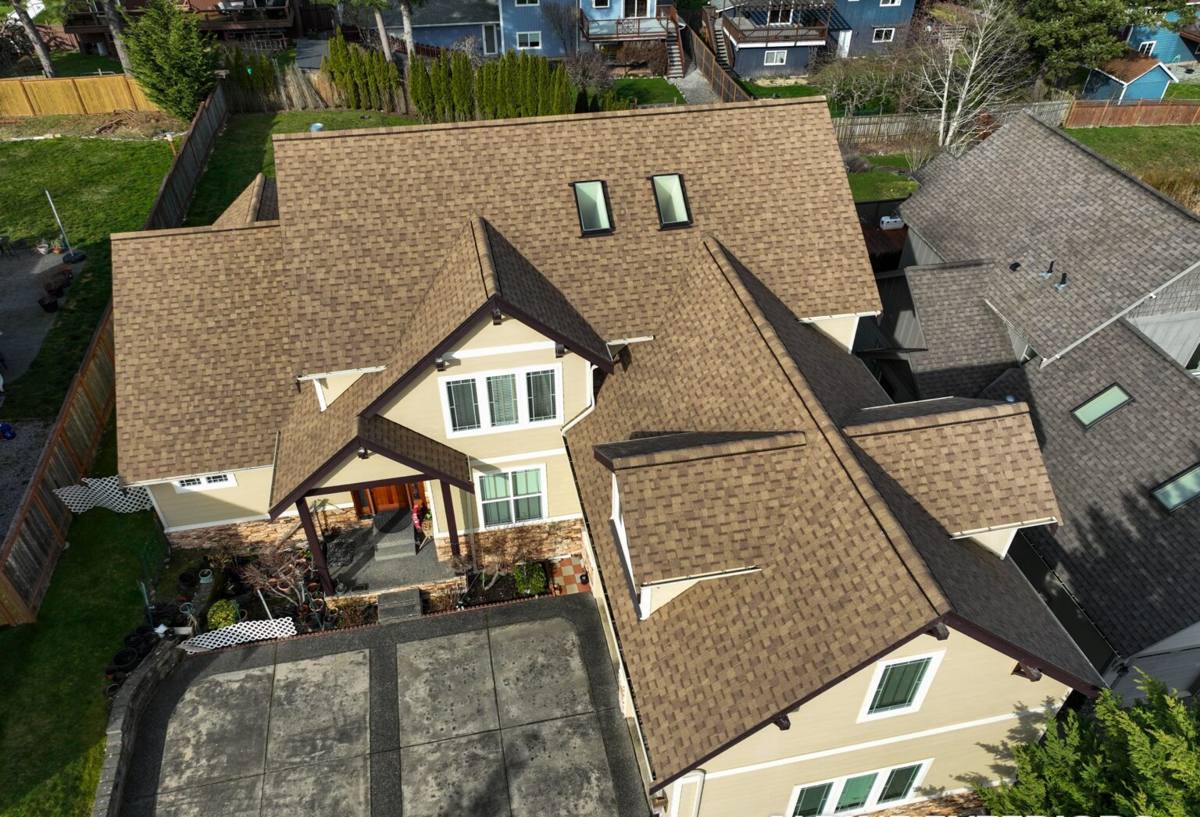
What Cordata's Climate Does to a Roof
Three conditions matter most for a roof in this neighborhood:
- Driving rain. Wind-blown rain doesn't just fall straight down — it pushes sideways under lapped materials and finds gaps at fasteners, valleys, and penetrations. A roof here needs details that shed water even when it's coming in at an angle, not just when it's falling straight.
- Salt air. Bellingham's proximity to the bay means airborne salt travels further inland than most homeowners expect, especially on windy days. Salt accelerates corrosion on unprotected metal, which is why fastener and flashing material matters as much as the panels themselves.
- Moss season. Cordata's tree cover and the region's mild, wet winters give moss and algae a long window to establish themselves — often eight or nine months of the year. On a roof with any texture or shaded surface, moss holds moisture against the material long after the rain stops.
None of these conditions is unique to Cordata, but together they add up to a roofing environment that punishes shortcuts. A metal roof designed and installed with these three factors in mind will outperform one that wasn't — even if the panels themselves are identical.
Why Metal Performs Well Here
Shedding water instead of absorbing it
Metal roofing sheds water immediately rather than absorbing it the way asphalt shingle mat does. In a climate where roofs rarely get a long dry spell, that matters — a roof surface that isn't holding moisture is a roof surface that isn't feeding moss, algae, or wood rot underneath.
Steep-slope drainage and standing seam design
Standing seam panels, in particular, use raised interlocking seams instead of exposed fasteners on the field of the roof. That's a real advantage under driving rain, since there are fewer penetration points for wind-blown water to exploit. On steeper Cordata rooflines, standing seam is often the strongest choice for that reason alone.
Moss resistance, not moss immunity
Metal doesn't grow moss the way a shingle or shake roof does, because there's no organic material for it to root into and the smooth surface doesn't hold water long enough for spores to establish. It's not moss-proof — windblown debris and shaded valleys can still collect enough organic buildup to support growth over time — but it dramatically reduces the moss problem compared to other roofing types, which cuts down on the manual cleaning many Cordata homeowners are used to doing every fall.
What a Correct Metal Roof Installation Involves
A metal roof is only as good as the details underneath it and around its edges. The panels themselves are the easy part — most failures we see on metal roofs trace back to flashing, fastening, or underlayment mistakes, not the metal itself.
Underlayment
We use a high-temperature synthetic or self-adhered underlayment rated for metal roofing, not a generic felt product. In a climate with this much sustained rain, the underlayment is the roof's real backup line of defense, and it needs to handle both moisture and the heat that can build up under dark metal panels in summer.
Fasteners and flashing metal
Given the salt air moving inland from the bay, we spec corrosion-resistant fasteners and matched flashing metal rather than mixing metals that can set up galvanic corrosion. Cheaper fastener packages are a common shortcut on metal roofs, and they're also the first thing to fail — usually within a few years, right when a homeowner assumes the roof is maintenance-free.
Panel attachment method
Exposed-fastener panels and concealed-fastener (standing seam) panels attach differently, and each has a correct fastening pattern and spacing for wind and thermal movement. Metal panels expand and contract with temperature more than shingles do, and clips or fastener slots need to accommodate that movement without loosening or tearing.
Valleys, penetrations, and edge details
This is where driving rain finds weaknesses. Valleys need proper metal-to-metal lapping and sealant placement, not just caulk over a seam. Roof penetrations — vents, chimneys, skylights — need boots or flashing collars sized and sealed for the specific panel profile, and drip edges need to extend far enough to keep wind-driven water off the fascia.
Comparing Metal Panel Options for Cordata Homes
Not every metal roofing profile is the right fit for every house. Here's how the common options compare for a Cordata property:
| Panel Type | Best For | Moss/Debris Behavior | Relative Cost |
|---|---|---|---|
| Standing seam | Steeper roofs, modern or clean-lined homes | Smooth, few debris traps | Higher |
| Metal shingles/shakes | Homes wanting a traditional look with metal durability | Slightly more surface texture, still low moss risk | Mid to higher |
| Corrugated/ribbed exposed-fastener panels | Outbuildings, garages, budget-conscious re-roofs | Ribs can trap needles and debris if not maintained | Lower |
| Stone-coated steel | Homes wanting a shake or tile appearance | More texture, needs periodic debris removal | Higher |
For most primary residences in Cordata, we lean toward standing seam or metal shingle profiles — they give the best combination of water-shedding performance and low debris accumulation for this climate. Exposed-fastener panels still have a place, particularly on outbuildings or budget re-roofs, but they need more attention to fastener maintenance over time.
Our Process, Start to Finish
- On-site inspection. We look at your existing roof deck, current moss and moisture patterns, ventilation, and roofline complexity before recommending a panel type.
- Honest scope and estimate. You get a written estimate that spells out panel type, underlayment, flashing plan, and what's included — no vague allowances.
- Tear-off and deck assessment. We remove the old roofing and check the deck for rot or soft spots, which is common on older Cordata homes that have carried moss for years. Any deck repair is flagged and priced before we cover it up.
- Underlayment and flashing installation. This is the step that determines how the roof performs in driving rain, so we don't rush it.
- Panel installation. Panels go on with manufacturer-specified fastening patterns and clip spacing, accounting for thermal movement.
- Final walkthrough and cleanup. We walk the roof and the property with you, answer questions, and make sure the site is left clean.
What Drives the Cost of a Metal Roof
| Factor | Why It Matters |
|---|---|
| Panel type and gauge | Standing seam and heavier-gauge steel cost more than exposed-fastener panels but last longer and handle wind-driven rain better |
| Roof complexity | Valleys, dormers, and multiple planes take more labor and flashing detail than a simple gable roof |
| Existing roof condition | Deck repair or replacement adds cost but is not optional if the substrate is compromised |
| Tear-off vs. overlay | Most metal roofs should go over a fully torn-off deck rather than existing shingles, especially where moss has held moisture against the roof |
| Ventilation upgrades | Proper attic ventilation reduces condensation risk under metal panels and may be recommended during the estimate |
We don't quote a flat per-square price without seeing the roof, because two Cordata homes with the same square footage can have very different costs depending on pitch, valleys, and deck condition. What we can promise is a written estimate that explains what's driving the number.
Maintaining a Metal Roof in This Climate
Metal roofing is low-maintenance, not no-maintenance. A short annual routine goes a long way in a climate with this much rain and tree debris:
- Clear gutters and valleys of needles and leaves before the fall rains set in
- Check that downspouts are draining freely and away from the foundation
- Look for any debris buildup in valleys or behind chimneys where moss could start
- Have flashing and sealant points inspected every few years, especially around penetrations
- Trim back overhanging branches that drop debris or keep sections of the roof shaded and damp
Why Hiring a Crew That Already Works in Cordata Matters
Roofing crews that mostly work drier climates sometimes under-spec underlayment or skip flashing steps that don't matter as much where they usually build. In Bellingham, those shortcuts show up fast — usually as a leak the first hard windstorm after installation. Working regularly in Whatcom County means we're specifying materials and details for the weather this roof will actually face, not a generic install pulled from a manufacturer's minimum spec sheet.
It also means faster response if something does come up after the install — warranty questions, a storm-damage check, or a flashing detail that needs a second look. A crew that's local and already familiar with Cordata rooflines can get to your property without the scheduling lag of an out-of-area contractor.
Get a Free, No-Pressure Estimate
If you're weighing metal roofing for your Cordata home, we're happy to take a look, walk you through panel options, and give you a straightforward written estimate — no pressure, no sales script. Use the form below to get started.