 Bellingham Exterior
 James Hardie Siding for Silver Beach Homes
Silver Beach sits close enough to open water that its homes take a different kind of weathering than a house a few miles inland. Salt-tinged air moves through the neighborhood on a regular basis, wind-driven rain hits siding at angles a dry-climate installation was never designed for, and shaded, waterside lots hold onto dampness long after a storm has passed. That combination is exactly what shortens the life of the wrong siding material — and exactly what James Hardie fiber cement is engineered to stand up to.
We install James Hardie siding exclusively, and we work Silver Beach and the surrounding Bellingham area regularly enough to know how this specific stretch of Whatcom County behaves differently from a job ten minutes away. This page walks through what that means for a Silver Beach siding project specifically — not a generic overview of fiber cement, but what your home's exposure actually calls for.
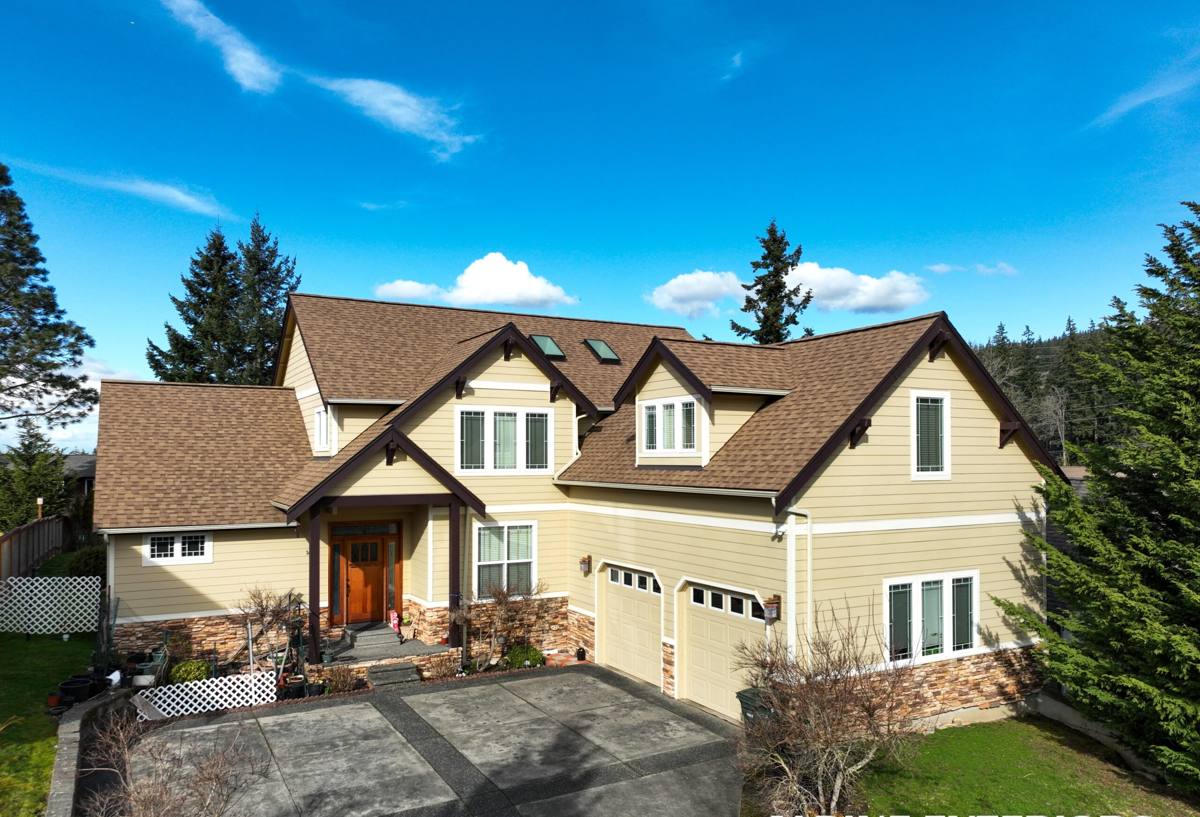
What This Stretch of the Neighborhood Does to Siding
Salt Air and Fastener Corrosion
Proximity to water means the air carries a steady low level of salt, and that salt accelerates corrosion on anything metal — fasteners, flashing, hose bibs, light fixtures — faster than it would a few miles further inland. On siding specifically, corroding fasteners are a slow but real problem: a rust-streaked nail head is cosmetic at first, but a fastener that's losing integrity underneath a lap of siding is a hold that's weakening year over year.
Wind-Driven Rain and Water Intrusion
Rain near the water rarely falls straight down. Wind pushes it sideways and upward into laps, seams, and anywhere a fastener penetrates the cladding — places a calm, dry-climate installation wouldn't need to defend as hard. Flashing details, lap spacing, and clearances that would be adequate somewhere inland matter a great deal more on a Silver Beach lot, because wind-driven water actively searches out any gap left by a shortcut during installation.
A Moss Season That Doesn't Let Up
Shaded walls, tree-covered lots, and north-facing exposures near the water stay damp for extended stretches from fall through spring — prime conditions for moss and mildew to take hold. On a wood-based or wood-look product, that's not just a green-staining cosmetic issue; sustained dampness against a moisture-absorbent material eventually leads to swelling, softening, and rot at cut edges and seams.
Why James Hardie Is the Only Siding We Put on Silver Beach Homes
We don't install vinyl, LP SmartSide, cedar, primed spruce, or other fiber cement brands. That's a professional standard, not a limitation — in a salt-air, high-rain, long-moss environment like this one, the materials that tend to struggle share a common weakness: they absorb moisture directly, depend on a coating to keep water out indefinitely, or expand and contract enough with temperature swings that seams gradually work loose.
Engineered for This Exposure, Not a Generic Climate
James Hardie builds region-specific HZ formulations rather than one board for every climate, and the HZ5 line used in the Pacific Northwest is engineered around sustained moisture exposure rather than a drier, milder profile. It's non-combustible, it doesn't feed moss or rot the way wood-based siding can, and its ColorPlus finish is baked on at the factory under controlled conditions rather than applied on site — which matters directly for a material that's going to spend years in salt air and wind-driven rain. Paired with a strong transferable warranty and installation done to the manufacturer's actual specifications, it's the system we trust to perform through a full Whatcom County year, not just look good on the day it goes up.
What a Correct Installation Looks Like Here
James Hardie only performs the way it's engineered to when it's installed correctly, and a Silver Beach lot's exposure raises the stakes on every one of these details:
- Correct fastener type and spacing, set to the manufacturer's specification rather than a generalized standard
- Proper clearance between the bottom of the siding and grade, decking, or hardscape so lower courses aren't sitting in standing moisture
- A continuous, properly lapped weather-resistive barrier underneath the siding, with every seam and penetration sealed
- Flashing detailed at every window, door, and penetration so wind-driven water is directed out and away instead of trapped behind the cladding
- Lap and joint spacing that accounts for the material's expansion and contraction rather than fitting it tight
- Ventilation gaps and drainage planes sized for a wall that's going to stay damp longer than an inland wall would
Skipping or shortcutting any one of these undercuts the material's real-world performance no matter how good the product itself is. We also look at each wall individually — how much direct rain exposure it gets based on orientation toward the water, how much shade keeps it damp longer than the rest of the house, and how that should shape decisions on trim, ventilation, and touch-up paint matching down the road.
Choosing a Line, Profile, and Color for a Silver Beach Home
James Hardie's product lines cover more ground than most homeowners expect — lap siding in several exposure widths, shingle-style panels for a more traditional look, vertical board-and-batten profiles, and trim to match. The right choice depends on the home's existing architecture and how much of the wall is exposed to direct wind and rain versus sheltered by roofline or landscaping.
Color matters more here than it would somewhere drier. A factory-applied ColorPlus finish is formulated to resist the fading and chalking that constant moisture and UV cycling near open water cause over time — a meaningful advantage over a field-applied paint job that will need to be redone on a much shorter cycle in this exposure. We walk homeowners through the current color and profile options against their specific lot's sun and water exposure rather than defaulting to whatever's easiest to install.
Our Process for a Silver Beach Project
- Walk and assess: we look at the existing siding, trim, flashing, and any moisture signs already present, and check the sheathing underneath where old siding is coming off
- Scope and estimate: a clear, written plan covering material, profile, color, and any substrate repair needed before new siding goes on
- Tear-off and substrate repair: old material comes off, damaged sheathing or framing gets addressed rather than covered over
- Weather barrier and flashing: the water-resistive barrier and flashing details go in first, since this is the layer that actually keeps water out over the long run
- Hardie installation: siding installed to manufacturer fastening, spacing, and clearance specifications
- Trim, caulking, and final inspection: trim work finished, touch-up paint matched, and a final walk-through before we call it done
We treat siding as one piece of a connected exterior system rather than an isolated project. Well-installed siding paired with poorly flashed windows, or a roofline that dumps water onto a wall below without proper drainage, just relocates the moisture problem instead of solving it — so we look at how siding, windows, roofing, and trim meet at every seam.
Cost Factors for a Silver Beach James Hardie Project
| Factor | Why It Affects the Project |
|---|---|
| Home size and wall area | More square footage means more material, labor, and trim work |
| Existing siding removal | Multiple layers or damaged substrate underneath add tear-off and repair time |
| Sheathing condition | Water intrusion near the shoreline sometimes means hidden rot that needs replacing before new siding goes on |
| Profile and trim complexity | Shingle-style or board-and-batten with detailed trim takes more labor than a straightforward lap install |
| Site access | Waterside lots with limited access, slopes, or tight setbacks can affect staging and scaffolding time |
We give a written, walk-through-based estimate for every project rather than a rough phone quote, since the condition of what's underneath the existing siding is often the biggest swing factor on a Silver Beach home.
Signs a Silver Beach Home May Need Siding Attention
Most homeowners reach out because something specific caught their eye, not because they've been tracking every detail of their exterior's condition. Worth checking for before a small issue turns into an expensive one:
- Visible moss or green staining on shaded or waterside walls
- Paint that keeps failing or peeling no matter how often it's redone
- Soft spots or slight give when pressing near a window or door trim
- Siding that's cupping, warping, or separating at seams
- Rust streaks below fasteners or hardware
- Visible daylight, drafts, or water staining around older window or door openings
Any single item on this list doesn't automatically mean a full replacement is needed. But in this exposure, moisture-related damage tends to compound rather than sit still, so it's worth having a professional take an honest look rather than waiting to see if it resolves on its own.
Why a Crew That Already Works Silver Beach Matters
A lot of what determines whether siding actually holds up here comes down to details a generic, out-of-area crew tends to treat as an afterthought: how much wind-driven rain a given wall orientation takes on near the water, where moss establishes first based on shade and drainage, how much clearance siding needs above grade given how consistently damp waterside ground stays, and how flashing needs to be layered to shed water through an entire wet season rather than just pass a dry-day inspection.
A crew that works Bellingham exteriors regularly starts recognizing these patterns from one Silver Beach property to the next — small, on-site calls that homeowners rarely notice directly but absolutely feel in how the exterior performs over the following decade.
If your Silver Beach home needs new siding, a second opinion on an aging exterior, or you're just weighing James Hardie against what's currently on the house, we're glad to take a look. Reach out using the form below to schedule a free, no-pressure estimate.