 Bellingham Exterior
 Asphalt Shingle Roofing Built for Lynden's Weather
Lynden sits inland from the coast, but it doesn't get a pass on tough weather. Homes here still take the brunt of Pacific storm systems moving through Whatcom County — long stretches of driving rain in the fall and winter, wind that comes across open farmland with nothing to slow it down, and enough shade from mature trees and cloud cover to keep roofs damp for days at a time. That combination is exactly what shortens the life of a poorly installed asphalt shingle roof and exactly what a properly installed one is built to handle.
We're not talking about exotic conditions. We're talking about ordinary Northwest weather doing what it does, year after year, to a roof system that was either installed correctly the first time or wasn't. Asphalt shingles are a proven, cost-effective roofing material for this region — but only when the installation respects what the climate actually does to a house.
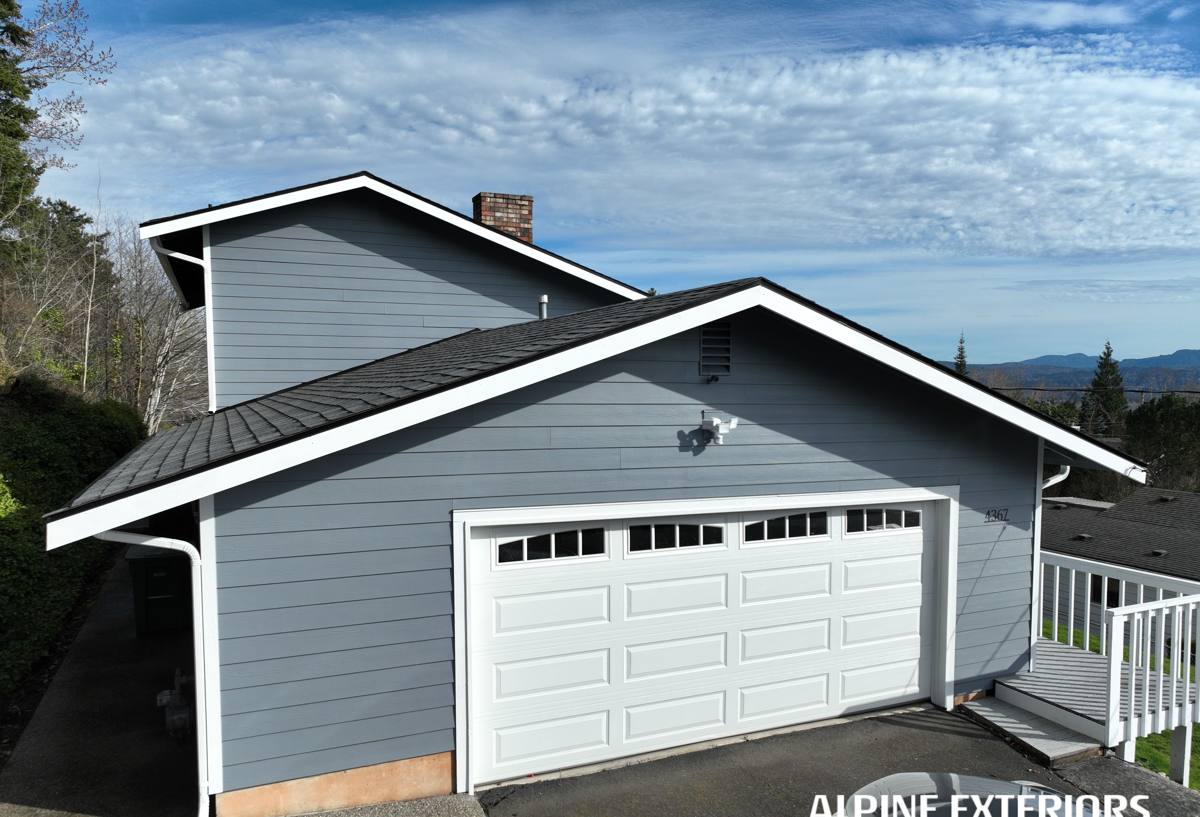
What This Climate Does to an Asphalt Shingle Roof
Moisture that doesn't dry out fast
Whatcom County doesn't get the intense, short downpours some regions see. It gets long, low-intensity rain events that soak into anything with a gap, a lifted tab, or a poorly sealed penetration. A roof that sheds a hard summer thunderstorm just fine can still let water creep under shingles during a slow three-day soak if the underlayment and flashing details weren't done right.
Moss and organic growth
Shade, moisture, and moderate temperatures are a perfect recipe for moss, algae, and lichen on a roof. Left alone, moss doesn't just look bad — it holds moisture against the shingle surface, lifts tabs as it grows, and works its way under the granule layer over several seasons. A roof in a shaded or north-facing spot in this area will grow moss faster than one in full sun, and that needs to be part of the plan from day one, not an afterthought.
Wind across open ground
Homes on more exposed lots around Lynden's farmland catch wind that a roof tucked into a wooded neighborhood wouldn't see. Shingle wind ratings, nail patterns, and starter strip installation all matter more here than the manufacturer's brochure numbers might suggest, because the brochure numbers assume a correct install.
Salt and moisture in the regional air
Whatcom County's overall climate carries more airborne moisture and salt influence than an inland state would, even at Lynden's distance from Bellingham Bay. It's a slower, cumulative effect here compared to homes right on the water, but it still plays a role in how fasteners, flashing, and vents hold up over the life of a roof.
What a Correct Asphalt Shingle Job Actually Involves
A shingle roof is a system, not a single product. Skipping any one part of it is how roofs that "should" last 25-30 years start leaking at year eight or ten.
Tear-off versus overlay
We tear off old roofing rather than layering new shingles over old ones. An overlay hides the condition of the deck underneath, traps moisture between layers, and voids most manufacturer warranties. It's faster and cheaper up front, which is exactly why it causes problems down the road — you can't fix a soft or rotted deck spot you never uncovered.
Deck inspection and repair
Once the old roofing is off, we check the sheathing for soft spots, delamination, or water staining, especially around valleys, chimneys, and old vent penetrations — the places most likely to have taken on moisture over the years. Any damaged sheathing gets replaced before anything new goes down.
Underlayment
Underlayment is the roof's backup plan for the water that gets past the shingles — and in this climate, some water always gets past the shingles eventually. We use a synthetic or ice-and-water underlayment appropriate to the roof's slope and exposure, with extra protection at eaves, valleys, and low-slope transitions where standing water and wind-driven rain are most likely to find a way in.
Flashing
Flashing around chimneys, skylights, walls, and vent pipes is where most roof leaks actually start — not in the field of the shingles themselves. We install new flashing rather than reusing old, bent, or rusted pieces, and we take extra care at any point where a roof plane meets a wall or vertical surface.
Ventilation
A shingle roof needs balanced intake and exhaust ventilation to let the attic breathe. Without it, moisture builds up from the inside of the house, which shortens shingle life from underneath — a problem that shows up as premature curling or granule loss and gets blamed on the shingles when the real cause is trapped attic moisture.
Fastening and nail pattern
Every shingle has a manufacturer-specified nailing pattern and nail placement zone. Getting this wrong is one of the most common causes of blow-offs in wind, and it's invisible from the ground — you only find out it was done wrong when shingles start coming loose.
Choosing the Right Shingle for This Area
Not every shingle line is a good match for a shaded, damp, moss-prone lot versus an open, sunny one. Here's how the common options stack up for homes in and around Lynden.
| Shingle Type | Typical Lifespan | Best Fit For | Trade-Offs |
|---|---|---|---|
| 3-Tab Asphalt | 15-20 years | Budget-conscious projects, simpler rooflines | Lower wind rating, less dimensional look, shorter warranty terms |
| Architectural (Laminate) Asphalt | 25-30 years | Most homes; better wind and impact resistance | Higher material cost than 3-tab |
| Algae-Resistant (AR) Shingles | 25-30 years, slower staining | Shaded lots, north-facing slopes, tree cover | Slightly higher upfront cost; still needs periodic cleaning |
| Impact-Resistant (Class 4) Shingles | 30+ years | Exposed sites, homeowners wanting longer service life | Highest material cost; may qualify for insurance discounts |
For most Lynden properties with any tree cover or shaded roof planes, we lean toward algae-resistant architectural shingles — the copper- or zinc-infused granules slow moss and algae growth without changing how the roof looks. On fully exposed sites, wind rating and fastening quality matter more than the algae treatment.
What Drives the Cost of a Shingle Roof Replacement
| Factor | Why It Matters |
|---|---|
| Roof size and number of planes | More cuts, seams, and waste on complex rooflines than on a simple gable |
| Deck condition | Rotted or soft sheathing found during tear-off adds material and labor |
| Pitch and access | Steep or hard-to-reach roofs take longer and need more safety setup |
| Shingle grade | 3-tab, architectural, and impact-resistant lines carry different material costs |
| Flashing and penetrations | Chimneys, skylights, and multiple vent stacks add detail work |
| Ventilation upgrades | Adding or correcting intake/exhaust venting during the same job |
We won't quote a number without seeing the roof — anyone who does is guessing. A written estimate should break out tear-off, materials, flashing, and any deck repair as separate line items, so you can see exactly what you're paying for.
Our Process, Start to Finish
- On-site inspection. We walk the roof, check the attic for ventilation and moisture signs, and look at flashing, valleys, and penetrations up close.
- Written estimate. A clear breakdown of scope, materials, and price — no vague lump sums.
- Scheduling around weather. We plan tear-off and dry-in around the forecast so your home isn't exposed to open sky longer than necessary.
- Tear-off and deck inspection. Old roofing comes off, the deck gets checked, and any repairs are handled before anything new goes on.
- Underlayment, flashing, and shingle installation. Installed to manufacturer specification, not shortcuts.
- Cleanup and walkthrough. Magnetic sweep for stray nails, debris removal, and a final walkthrough so you know exactly what was done.
Signs Your Lynden Roof May Need Attention
- Moss or dark streaking building up on shaded slopes or north-facing planes
- Granules collecting in gutters or at downspout outlets
- Shingles that look cupped, curled, or lifted at the edges
- Daylight visible through the attic roof deck or soft spots underfoot in the attic
- Water stains on interior ceilings, especially after a heavy or prolonged rain
- Missing or damaged shingles after a windstorm
- Flashing that looks rusted, lifted, or separated from the roof surface
- A roof approaching or past 20-25 years old with no major work done
Any one of these on its own isn't necessarily an emergency, but they're worth a look before a small issue turns into a deck repair or interior damage.
Why Local Experience in Lynden Matters
A roofing crew that only occasionally works this far out in Whatcom County doesn't have the same feel for how a particular slope, shade pattern, or exposure will behave over time. Working regularly in and around Lynden means we've seen how moss builds up differently on a shaded lot near the river bottoms versus an open, wind-exposed property, and we adjust ventilation, underlayment, and shingle selection accordingly rather than installing the same roof everywhere regardless of conditions.
It also means straightforward logistics — permitting, scheduling around this area's weather windows, and being reachable if a question comes up after the job is done, not just during the sale.
After Installation: Keeping a Shingle Roof Healthy
A correctly installed asphalt shingle roof doesn't need much, but a little attention goes a long way in this climate:
- Keep gutters clear so water doesn't back up under the roof edge
- Trim back overhanging branches to reduce shade and debris buildup
- Have moss treated gently before it takes hold, rather than pressure-washed off
- Schedule a periodic visual check after major windstorms
None of this requires a maintenance contract or constant upkeep — just enough attention that small problems get caught while they're still small.
If your Lynden home is due for a new roof, showing signs of moss or wear, or you just want a straight answer about what shape it's in, we're happy to take a look. Reach out for a free, no-pressure estimate using the form below.