 Bellingham Exterior
 Why Lynden Roofs Take a Different Kind of Beating
Lynden sits inland from Bellingham Bay, but it doesn't escape the moisture-heavy weather pattern that defines this whole corner of Washington. Whatcom County pulls in long stretches of low cloud and steady rain off the Sound and the Fraser Valley, and Lynden's open farmland setting means roofs here get less afternoon sun and more standing dampness than homes tucked into town. That combination of driving rain, cooler shaded valleys, and a moss season that can run eight months or more is exactly what shortens the life of a roofing system that wasn't built for it.
A roof that's correctly installed for this climate isn't dramatically different in materials from what you'd see elsewhere in the Pacific Northwest, but the details underneath the shingles matter more here than in drier parts of the state. Underlayment choice, ventilation, and flashing work are where a roof either holds up for its full expected lifespan or starts failing quietly ten years in.
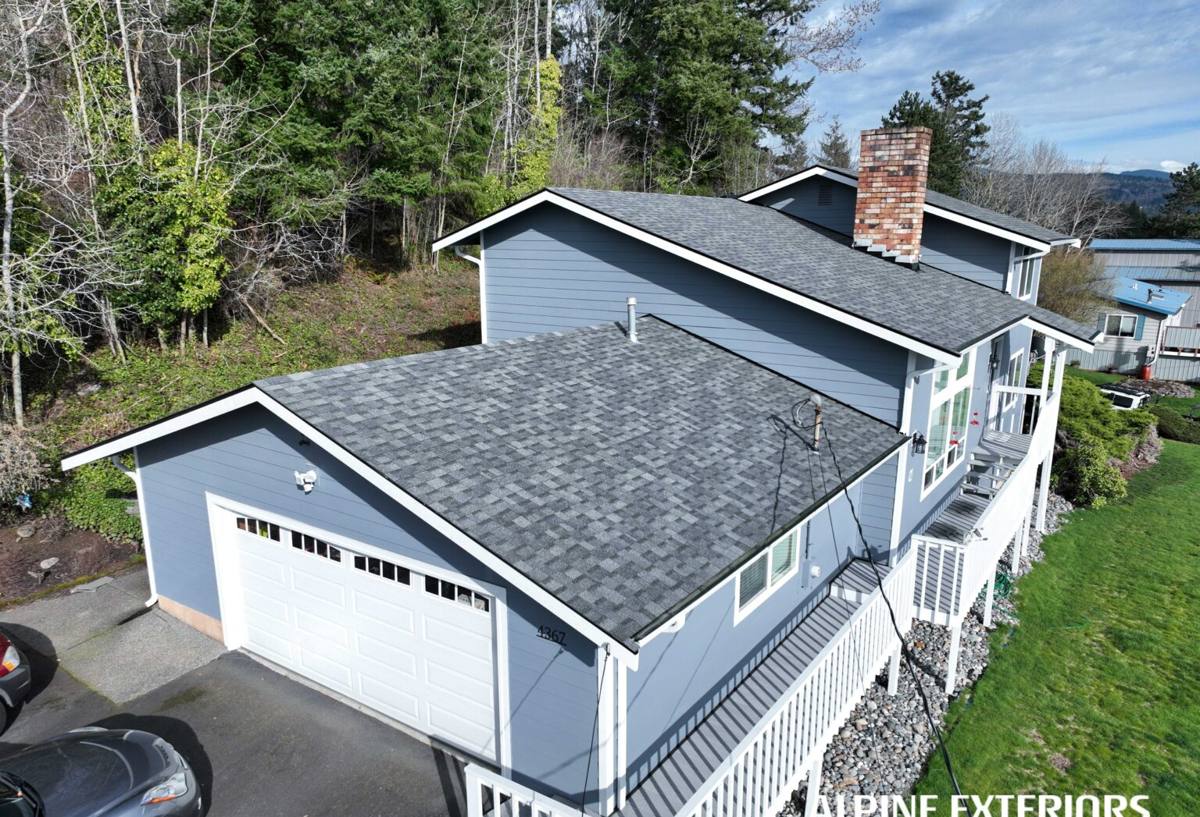
What "Correct" Actually Means for a New Roof Install
A new roof installation is more than laying new shingles over what's there. Done right, it's a full system replacement, and every layer has a job to do against Whatcom County's rain and moss pressure.
Full Tear-Off, Not a Layover
We remove the old roofing down to the deck on every install. Roofing over an existing layer traps moisture that's already worked its way into the old materials, and it hides deck damage that needs to be caught and fixed before new roofing goes down. It also voids most manufacturer warranties outright.
Deck Inspection and Repair
Once the old roof is off, we check the sheathing for soft spots, delamination, and rot — common wherever moss has been holding moisture against the roof for years. Any compromised decking gets replaced before anything new goes on top. Skipping this step is the single most common shortcut that leads to early roof failure.
Ice-and-Water Shield in the Vulnerable Areas
Even though Whatcom County doesn't see heavy ice damming like the mountains or eastern Washington, self-adhering waterproof membrane still belongs at eaves, valleys, and around every penetration. These are the spots where wind-driven rain gets pushed backward under standard underlayment, and it's the detail that separates a roof that stays dry from one that develops slow leaks nobody notices until there's staining on a ceiling.
Proper Flashing at Every Transition
Chimneys, skylights, sidewalls, and roof-to-wall transitions are where the vast majority of leaks actually start — not in the open field of shingles. New step flashing, counter-flashing, and pipe boots go in with every install, not just wherever the old flashing looks reusable.
Choosing the Right Roofing System for a Lynden Home
There's no single "best" roofing material — the right choice depends on your home's style, your budget, and how much long-term maintenance you're willing to take on. Here's how the common options stack up against this area's rain and moss conditions.
| Material | Moss & Moisture Resistance | Typical Lifespan Here | Trade-Offs |
|---|---|---|---|
| Standard asphalt composition shingle | Moderate — needs regular moss treatment | 15–20 years | Lowest upfront cost, most common repair parts available |
| Architectural (dimensional) shingle | Good — thicker mat sheds and dries faster | 25–30 years | Higher upfront cost, better wind and impact rating |
| Standing seam metal | Excellent — moss struggles to gain a foothold | 40–50+ years | Highest upfront cost, requires an installer experienced with metal detailing |
| Cedar shake | Poor without diligent upkeep — organic material feeds moss | 20–25 years with maintenance | Traditional look, but the highest ongoing maintenance burden in a climate like this |
We don't install cedar shake as a default recommendation for homes in this climate. It's not that the material is bad — it's that the maintenance schedule needed to keep it moss-free and watertight here is more demanding than most homeowners realize going in, and we'd rather be upfront about that trade-off than sell a product that turns into a recurring headache.
Color and Granule Choice Matter More Than People Expect
Darker shingle colors hide moss staining longer but can hold more heat unevenly across a shaded valley roof, which affects how fast moss recolonizes after treatment. Lighter and mid-tone colors show early moss growth sooner — which is actually useful, since it gives you an early warning to treat it before it spreads.
Ventilation: The Part of the Roof You Never See
A new roof lives or dies on airflow. Balanced intake at the eaves and exhaust at the ridge keeps the attic space close to outdoor temperature and humidity, which does two things that matter directly in a climate like Whatcom County's:
- It keeps the underside of the roof deck dry, preventing the slow rot that comes from trapped condensation rather than an actual leak
- It reduces the temperature differential that lets moss and algae get established faster on shaded or north-facing slopes
We check and correct attic ventilation as part of every new roof install — not as an add-on sold separately. A shingle warranty is only as good as the airflow underneath it, and manufacturers know it; most warranties include ventilation requirements in the fine print.
How Our Installation Process Works
- On-site assessment — we walk the roof, check the attic, and look at drainage patterns specific to your property before quoting anything
- Written estimate — a clear scope of work and material breakdown, no vague allowances
- Scheduling around weather — we plan tear-off days around dry windows in the forecast rather than starting and hoping the rain holds off
- Tear-off and deck inspection — old roofing removed, deck checked and repaired as needed
- Underlayment and flashing installation — ice-and-water shield, synthetic underlayment, and all new flashing components
- Roofing material installation — installed to manufacturer spec, which is what keeps the warranty valid
- Ventilation check — intake and exhaust confirmed balanced before we call the job done
- Final walkthrough and cleanup — magnetic sweep for nails, full debris removal, and a walkthrough with you before we leave
What Actually Drives the Cost of a New Roof
Every roof is priced on its own specifics, but these are the factors that move the number most.
| Factor | Why It Matters |
|---|---|
| Roof size and number of planes | More square footage and complexity means more labor and material |
| Pitch and access | Steeper or harder-to-access roofs require more safety setup and slow the work down |
| Deck condition | Rot found under old roofing has to be repaired before new material goes down |
| Material choice | Standard shingle, architectural shingle, and metal carry very different price points |
| Number of penetrations and flashing points | Chimneys, skylights, and multiple valleys all add labor |
| Current ventilation setup | Adding or correcting intake/exhaust vents is sometimes needed and adds to scope |
We give a firm written estimate after seeing the roof in person — not a phone-quote guess — so you know what you're actually paying for before work starts.
Signs Your Roof Needs Replacement, Not Another Repair
- Granule loss heavy enough that you're finding grit in gutters every season
- Shingles that are cupping, curling, or cracking across multiple areas of the roof
- Moss or algae that returns within a season or two of treatment, even after cleaning
- Soft spots in the decking you can feel when walking the roof
- Daylight visible through the roof deck from inside the attic
- Repeated leaks in different spots rather than one isolated failure point
- A roof approaching or past the upper end of its material's expected lifespan
If you're only seeing one or two of these and the roof is otherwise mid-life, a repair may still make sense. We'll tell you that honestly rather than pushing a full replacement you don't need yet.
Why Local Installation Experience Matters in Lynden
A roofing crew that already works this area knows which slopes hold moisture longest through a Whatcom County winter, how far to run ice-and-water shield given the local rain patterns, and what permitting looks like for the jurisdiction your property falls under. That familiarity shows up in fewer surprises during the job — knowing which weather windows are reliable enough to start a tear-off, and building in the ventilation and flashing details that this specific climate actually demands rather than applying a one-size-fits-all install.
It also means faster response if something needs attention after the job is done. A crew with an established presence in the area isn't disappearing after the final invoice.
If your roof is showing its age or you're planning ahead for a replacement, we're happy to take a look and give you a straight, no-pressure estimate. Use the form below to get started.