 Bellingham Exterior
 Roof Repair Built for Birch Bay's Coastal Exposure
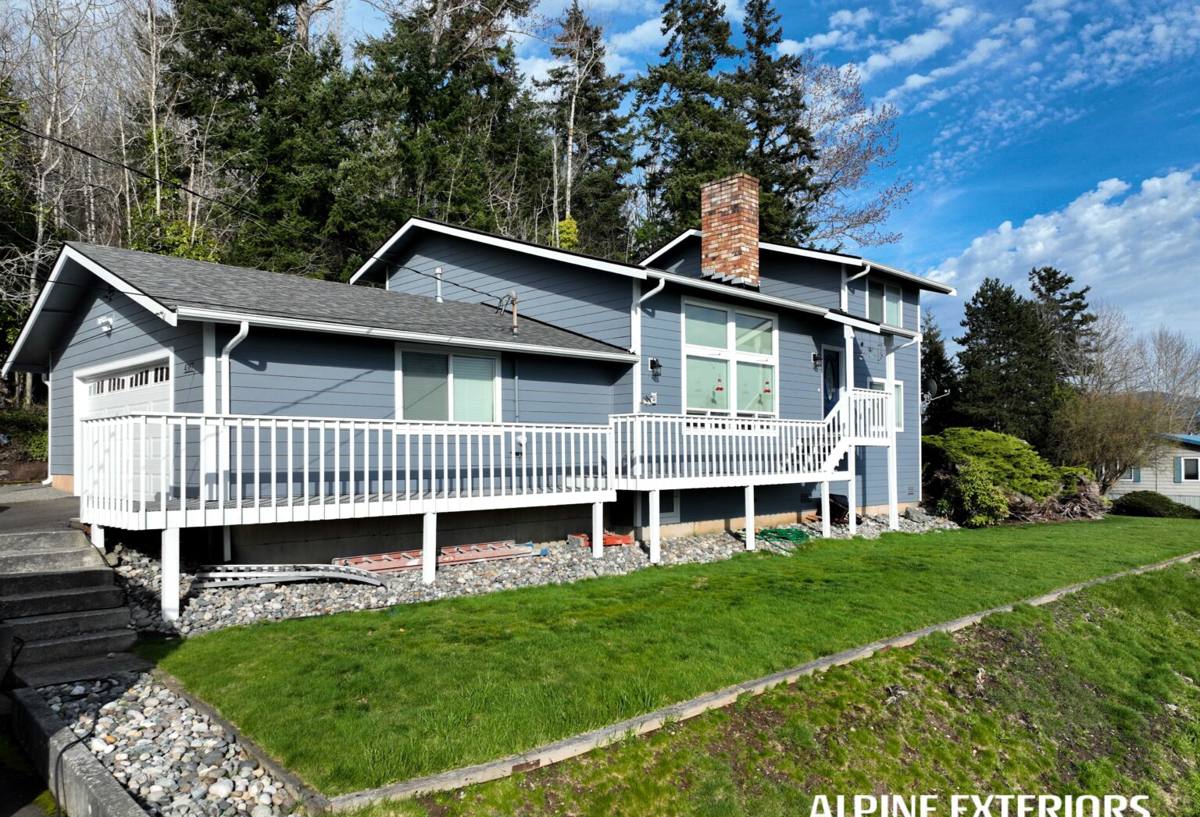
Birch Bay sits right where Whatcom County meets the water, and that location is exactly why roofs here wear out differently than roofs ten or fifteen miles inland. Homes along the bay take a steady dose of salt-laden air, wind-driven rain that gets pushed sideways instead of falling straight down, and long stretches of damp, shaded weather that keep moss and moisture active for most of the year. A roof repair that works fine in a drier, more sheltered part of Bellingham can fail early in Birch Bay if it doesn't account for these conditions. We've repaired enough roofs in this specific stretch of coastline to know which failure patterns show up here again and again, and we build every repair around them instead of treating Birch Bay like any other neighborhood.
Why Salt Air and Wind-Driven Rain Change the Job
Salt Air's Slow Damage
Salt doesn't destroy a roof overnight. It works gradually, accelerating corrosion on exposed metal fasteners, flashing, and vent stacks, and breaking down certain sealants faster than they'd wear in a non-coastal setting. On an older roof, this often shows up as rust streaks below metal components, fasteners that back out or lose their grip, and flashing seams that open up years before they should. Any repair we do near the bay uses corrosion-resistant fasteners and flashing materials rated for coastal exposure — not because it's overkill, but because standard hardware genuinely doesn't hold up as long here.
Wind-Driven Rain
Water that hits a roof at an angle behaves differently than water falling straight down. It can work under shingle edges, push past standard flashing laps, and find its way into gaps that would stay dry in calmer weather. Birch Bay's open exposure to wind off the water means wind-driven rain is a regular event here, not an occasional storm fluke. Repairs that only address the visible damage and ignore how water actually moves during a wind event tend to fail again within a season or two. We look at wind direction and exposure on every job, not just the leak itself.
Signs a Birch Bay Roof Needs Repair
Some warning signs are the same anywhere in Whatcom County. Others are more specific to homes sitting close to the water. Here's what we watch for on inspections in this area:
- Rust-colored streaking or discoloration below metal flashing, vents, or fasteners
- Curling, cracking, or granule loss on shingles facing the prevailing wind and weather
- Soft or discolored decking visible from the attic, especially near eaves and valleys
- Moss buildup on north-facing or shaded slopes that traps moisture against the roof surface
- Flashing around chimneys, skylights, or wall intersections that's lifted, cracked, or gapping
- Water stains on interior ceilings that appear only during wind-driven storms, not calm rain
- Gutters or downspouts overwhelmed or pulling away, pushing water back toward the roof edge
If more than one of these is present, it's usually a sign the roof has been dealing with coastal exposure for a while, not a one-time event.
Moss: A Longer Season Than Most Homeowners Expect
Moss is a problem across most of Bellingham and Whatcom County, but the combination of shade, moisture, and mild temperatures around Birch Bay tends to stretch the active moss season longer than in drier, sunnier parts of the region. Moss holds water against the roofing material, keeps the surface damp long after the rest of the neighborhood has dried out, and can lift shingle edges as it grows and expands. Left alone, it accelerates granule loss and shortens the life of an otherwise sound roof.
A proper repair doesn't just clean off visible moss — it addresses why moss is establishing there in the first place, whether that's overhanging branches keeping a slope shaded, poor attic ventilation keeping the roof deck warmer and more humid than it should be, or simply a north-facing slope that never gets a chance to dry. We treat and clear moss as part of the repair, then talk through what will keep it from coming back as fast.
What a Correct Roof Repair Actually Involves
Diagnosis Before Patching
The most common mistake in roof repair — anywhere, not just Birch Bay — is patching the spot where water showed up inside the house instead of finding where it actually entered the roof. Water travels along decking and rafters before it drips somewhere visible, so the leak point and the stain point are often several feet apart. We trace the path back to the real entry point before doing any repair work, because patching the wrong spot means the same leak reappears next season.
Matching the Repair to the Roof's Age and Material
A five-year-old roof with one storm-damaged section needs a different approach than a twenty-year-old roof showing widespread wear. On newer roofs, we match materials as closely as possible and integrate the repair so it sheds water the same way the surrounding roof does. On older roofs nearing the end of their service life, we're honest about whether a repair is a smart short-term fix or whether it's delaying a replacement that's coming regardless. We'd rather tell a homeowner that upfront than sell a repair that won't hold.
Flashing and Sealant Work
Given how much of Birch Bay's roof damage traces back to flashing and fastener corrosion, most of our repairs in this area include a close look at every flashing detail near the repair zone — chimneys, vents, valleys, wall intersections — not just the section that failed. It's common to find a second weak point nearby that hasn't leaked yet but is heading that direction.
Our Repair Process
- On-site inspection. We walk the roof and the attic when accessible, checking decking condition, flashing, ventilation, and the areas most exposed to wind and salt.
- Honest assessment. We explain what we found in plain terms — what needs repair now, what's worth watching, and what doesn't need touching yet.
- Written scope and estimate. Before any work starts, the homeowner knows exactly what's being repaired and roughly what it will cost.
- Repair work. Decking replaced where soft or rotted, flashing rebuilt where compromised, shingles or roofing material matched and integrated, fasteners and hardware chosen for coastal durability.
- Final check. We confirm water sheds correctly across the repaired section and that surrounding areas weren't disturbed in the process.
Cost Factors for Birch Bay Roof Repairs
Every roof is different, but the factors that most often move the price on a Birch Bay repair are consistent enough to lay out honestly:
| Factor | Why It Matters Here |
|---|---|
| Extent of decking damage | Water that's been working under flashing or shingles for a while often means rotted decking underneath, not just surface damage |
| Roofing material | Composition shingle, metal, and cedar all repair differently, and matching older material can take more time to source |
| Flashing complexity | Chimneys, skylights, and multiple roof planes mean more flashing seams — and more places salt and wind can find a weakness |
| Roof pitch and access | Steeper slopes near the water often mean more safety setup and slower, more careful work |
| Moss and organic buildup | Heavier moss growth adds cleaning and treatment time before repair work can even begin |
| Age of surrounding roof | Older roofs may need broader hardware and fastener upgrades to match the durability of the repair itself |
We'd rather walk through these factors on-site than quote a number blind — a five-minute look at the roof tells us far more than a phone description ever could.
When Repair Makes Sense vs. When It Doesn't
Not every damaged roof needs replacing, and not every leak can be permanently solved with a patch. As a general guide:
- Repair usually makes sense when damage is isolated, the roof is under roughly two-thirds through its expected service life, and the decking underneath is sound
- Replacement is usually the smarter call when damage is spread across multiple slopes, decking is soft in several areas, or the roof has already had multiple repairs in recent years
We'll always tell you honestly which category your roof falls into rather than defaulting to whichever answer is more profitable for us.
Why Local Experience in Birch Bay Matters
A roofing crew that mostly works inland doesn't see salt-accelerated corrosion, wind-driven rain patterns, or extended moss seasons often enough to build habits around them. That gap shows up in the small decisions — which fastener gets used, how a flashing detail gets built, whether moss treatment is even part of the conversation. Working regularly in Birch Bay and along the rest of Whatcom County's coastline means we're not guessing at how these conditions behave; we're applying what consistently holds up here and skipping what consistently doesn't.
It also means faster, more accurate estimates. We're not learning the neighborhood's quirks on your roof — we already know what to look for before we climb up.
Maintaining a Repaired Roof in Birch Bay's Climate
A good repair lasts longer with a little upkeep, especially this close to the water. A few habits go a long way:
- Keep gutters clear so water isn't backing up toward roof edges during heavy or wind-driven rain
- Trim back branches shading north-facing slopes to reduce moss regrowth
- Have flashing and fasteners visually checked every couple of years, since corrosion here progresses faster than in drier inland areas
- Address small leaks quickly — in a salt-air, high-moisture environment, small problems compound faster than homeowners expect
Get a Straight Answer About Your Roof
If you're dealing with a leak, storm damage, or a roof that's just showing its age near Birch Bay, we're happy to take a look and give you an honest read on what it needs. There's no pressure and no obligation — just a clear assessment from a crew that already knows how this stretch of Whatcom County treats a roof. Use the form below to request a free estimate.