 Bellingham Exterior
 Ferndale's Climate Is Harder on Siding Than It Looks
Ferndale sits close enough to the water that salt-laden air is a real, daily factor for exterior materials here — not just a coastal-town talking point. Combine that with Whatcom County's long wet season, driving rain that comes in sideways off the Strait, and moss and algae that get a running start every fall and don't let go until late spring, and you have a climate that will find every weakness in a siding system within a few years. We install siding in Ferndale regularly, and the failures we get called out to inspect almost always trace back to the same three things: moisture getting behind the cladding, fasteners or trim that couldn't handle the salt exposure, and a surface that stayed damp long enough for moss and mildew to take hold.
None of that is unusual for this part of Whatcom County. It just means the siding and the installation have to be matched to the environment, not just picked off a sample board.
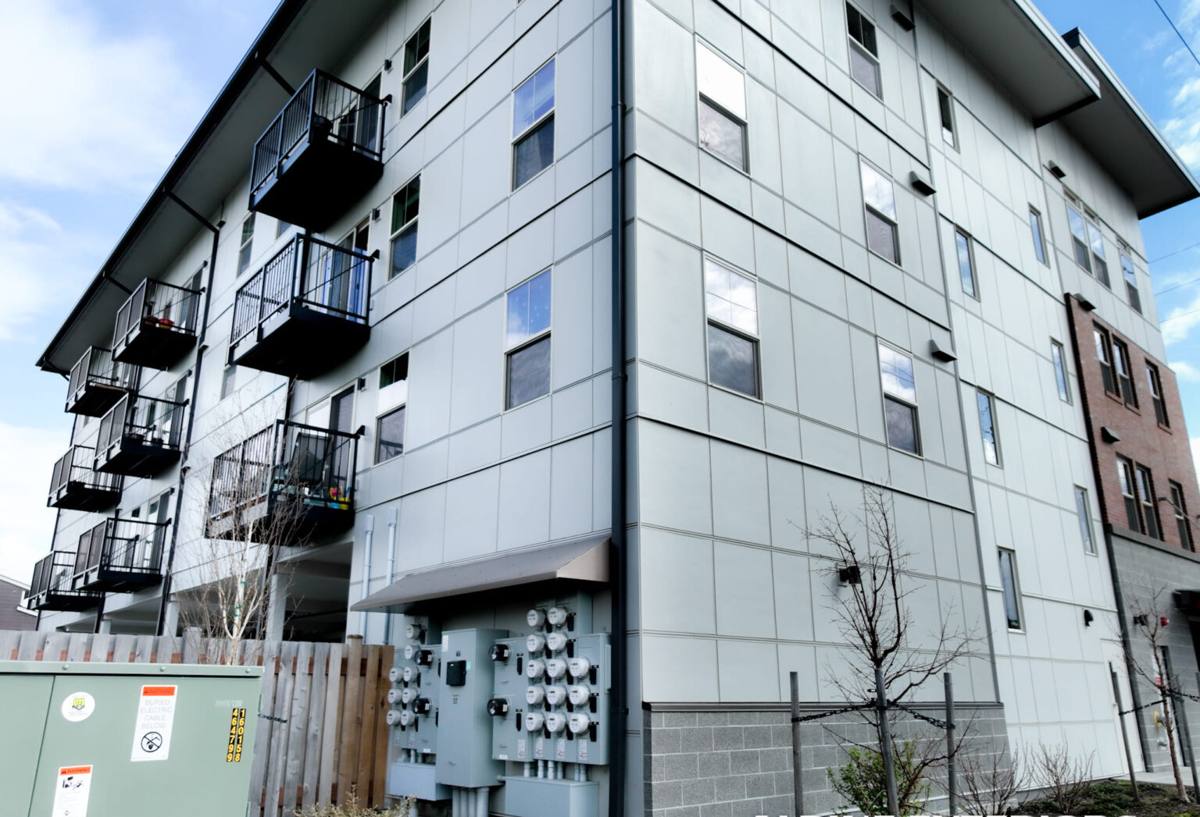
What Ferndale Homes Specifically Need From Their Siding
Resistance to salt-air corrosion
Homes closer to the water deal with airborne salt settling on every exterior surface. Over time this accelerates corrosion on fasteners, flashing, and any hardware that isn't rated for it, and it degrades paint and coatings faster than inland homes ever see. Siding material, trim, and fastener choice all need to account for this from day one — retrofitting corrosion resistance after the fact isn't really possible.
A siding system that sheds water, not one that just repels it
Driving rain doesn't hit a wall straight on — it gets pushed sideways and upward by wind, which means laps, seams, and penetrations (hose bibs, vents, light fixtures) take on water pressure that a calm-weather install would never see. The siding itself matters less here than the water-management details behind it: house wrap, flashing, and correct lap coverage.
Surface stability through a long moss season
Shaded north and west walls in Ferndale can stay damp for months at a stretch. Materials that swell, cup, or hold moisture on the surface give moss, mildew, and algae something to grip. A siding surface that dries out and doesn't absorb water resists this naturally instead of relying on the homeowner to power-wash it every year.
Why We Only Install James Hardie Fiber Cement Here
We don't install vinyl, LP SmartSide, primed spruce, cedar, or other fiber cement brands, and Ferndale's climate is a big part of why. Vinyl expands and contracts with temperature swings and can warp or crack under sustained wind-driven rain; it also doesn't hold paint well if a homeowner ever wants to change the color. Wood and wood-composite products need consistent maintenance to keep moisture out of the substrate, and in a climate with this much sustained dampness, that maintenance window is unforgiving — miss a year and rot can set in before it's visible.
James Hardie fiber cement is engineered specifically around moisture and climate performance. It's non-combustible, doesn't swell or rot the way wood-based products can, and the HZ5 product line is formulated for exactly the freeze-thaw and moisture-cycling conditions the Pacific Northwest sees. The factory-applied ColorPlus finish is baked on under controlled conditions, which gives it better fade and moisture resistance than a field-applied paint job, and it comes with a real transferable warranty. We stand behind one product because we've seen how it performs here over time — not because it's the only thing on the market.
How the Main Options Compare in Ferndale's Climate
| Factor | James Hardie Fiber Cement | Vinyl | Wood / LP SmartSide |
|---|---|---|---|
| Salt air / corrosion exposure | Stable; unaffected by salt on the cladding itself | Can become brittle and discolor faster near the coast | Coatings degrade faster; fasteners need upgrading |
| Moisture / rot resistance | Won't rot; engineered for wet climates | Doesn't rot but traps moisture behind it if installed poorly | Vulnerable to rot if moisture gets past the coating |
| Moss / algae resistance | Dense surface sheds water, resists growth | Can trap moisture at seams, promoting growth | Absorbs moisture, more prone to surface growth |
| Maintenance burden | Occasional wash; repaint only after many years if ever | Low, but color fades and can't be easily repainted | Regular recoating and caulk maintenance required |
| Fire resistance | Non-combustible | Melts/deforms under heat | Combustible |
What a Correct Siding Installation Actually Involves
Siding failures in this climate are almost never about the cladding material — they're about what happened underneath it. A correct Hardie installation in Ferndale includes:
- A continuous, correctly lapped water-resistive barrier behind the siding, with no gaps at seams or penetrations
- Properly flashed windows, doors, and any wall penetrations, so driving rain has nowhere to track behind the cladding
- Correct minimum clearance between the bottom of the siding and grade, decks, or roof lines, so splash-back and standing water can't wick into the material
- Stainless steel or hot-dip galvanized fasteners rated for coastal/corrosive exposure, driven to Hardie's specified depth and spacing
- Factory-cut and properly sealed field cuts, since exposed raw edges are the one place fiber cement can take on moisture
- Correct caulking and sealant at trim joints — the right amount, not just any amount
Any one of these done wrong can undercut an otherwise good product. This is why we treat installation quality as at least as important as the material choice.
Our Process for Ferndale Siding Jobs
1. On-site assessment
We walk the exterior, check the current siding and sheathing condition, look at drainage and grade around the foundation, and identify problem areas — shaded walls, low clearance spots, areas with a history of moisture intrusion.
2. Tear-off and substrate check
Once old siding comes off, we inspect the sheathing underneath for hidden rot or moisture damage before anything new goes up. This is often the point where a homeowner learns whether their previous siding was doing its job — problems found here get addressed before the wall is closed back up, not painted over.
3. Water management first
House wrap, flashing, and trim go in before a single piece of Hardie board is installed. This layer is what actually keeps Ferndale's driving rain out of the wall assembly long-term.
4. Installation to manufacturer spec
Fastener type, spacing, lap coverage, and clearances are installed to James Hardie's published requirements — not shortcuts, since those requirements are also what keeps the warranty valid.
5. Final walkthrough
We review the finished job with the homeowner, including care and cleaning basics for the local climate, before considering the job done.
Signs Ferndale Homeowners Should Watch For
If your current siding is showing any of the following, it's worth having it looked at before it becomes a bigger repair:
- Persistent green or black staining that comes back quickly after cleaning
- Soft, spongy, or visibly swollen sections, especially near the bottom courses or trim
- Paint that's peeling, bubbling, or has stopped holding color in the same way across the wall
- Visible gaps, warping, or separation at seams and corners
- Rusty streaking coming from fastener heads or trim
- Rooms that feel damp or drafty along exterior walls
Why It Matters to Hire a Crew That Already Works in Ferndale
Installation details that matter here — clearance heights given local rainfall patterns, fastener choice for salt exposure, where moss tends to establish on a given lot's shade pattern — aren't things a crew learns from a manual. They're things a crew learns by working Whatcom County homes repeatedly and seeing what holds up and what doesn't a few years later. A crew that treats Ferndale the same as a dry-climate install is more likely to skip details that don't seem urgent on install day but matter within a few wet seasons.
Cost Factors for a Ferndale Siding Project
| Factor | Why It Affects Cost |
|---|---|
| Home size and wall complexity | More corners, gables, and trim details mean more cutting and labor time |
| Substrate condition | Rotted sheathing found during tear-off adds repair scope before new siding goes on |
| Siding profile and accessories | Lap width, trim style, and soffit/fascia work all factor into material and labor cost |
| Access and site conditions | Tight lots, second-story work, or landscaping that limits staging can affect labor time |
| Color and finish | Factory ColorPlus finishes vs. field-painted options have different material costs |
Every home is different, and the only way to give a real number is to see the house and walk the walls with you.
If you're weighing a siding replacement in Ferndale, or just want a second opinion on what your current siding is telling you, we're happy to take a look. Reach out using the form below for a free, no-pressure estimate.