 Bellingham Exterior
 Siding Repair in Cordata: What Bellingham's Weather Does to Your Home's Exterior
Cordata sits in north Bellingham, close enough to the water and open enough to weather that homes here take a steady beating from salt-laden air, driving rain off the Sound, and the long gray stretch of moss season that Whatcom County is known for. None of that damage happens overnight. It happens in small increments — a hairline crack that lets water behind a board, a caulk joint that gives up two winters before anyone notices, a patch of moss that holds moisture against the siding long after the rain has stopped. By the time it's visible from the street, the damage underneath is usually further along than it looks.
Siding repair done right in Cordata isn't about slapping a patch over a bad spot. It's about understanding why that spot failed in the first place, fixing the actual cause, and matching the repair to the rest of the wall so it holds up under the same conditions that took out the original material. That's the standard we work to on every repair call in this neighborhood.
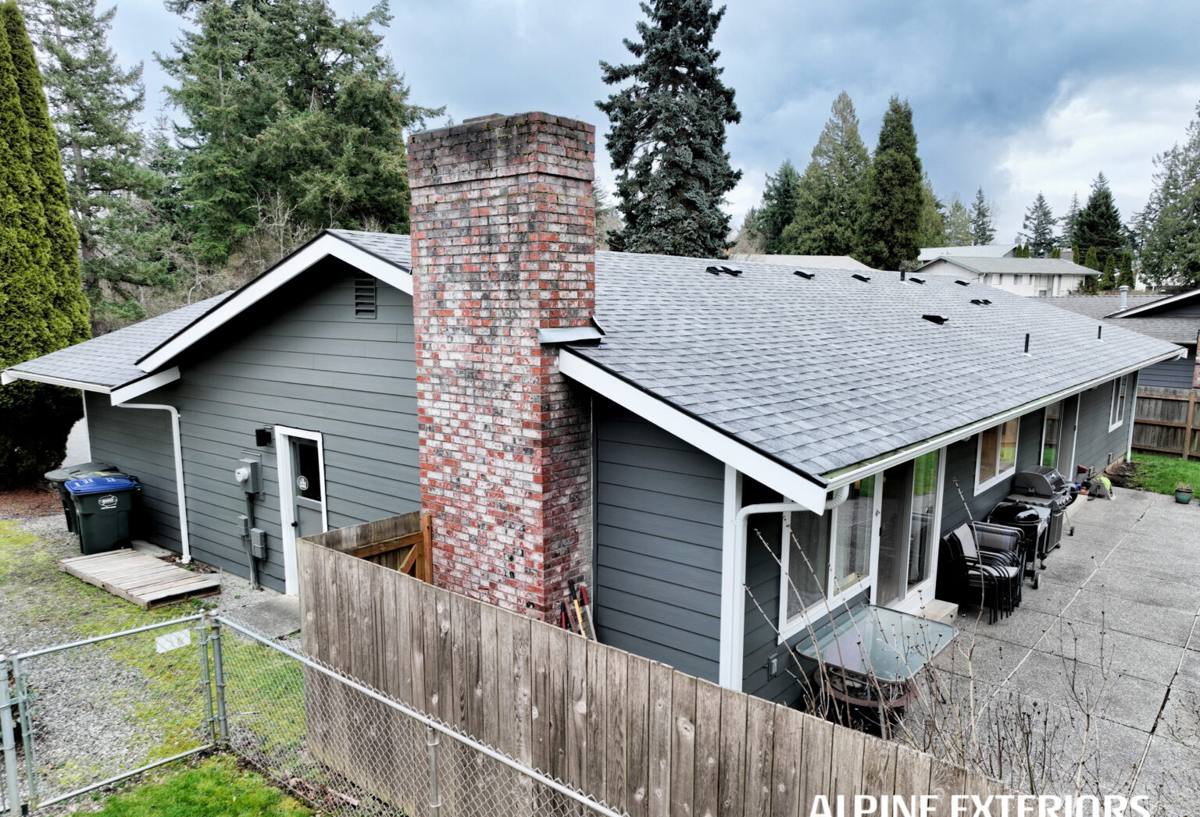
Signs Your Cordata Home Needs Siding Repair
Some damage is obvious. Some isn't — and the damage you can't see is usually the kind that costs the most to ignore. Here's what we tell homeowners to watch for:
- Soft or spongy spots when you press on the siding, especially near the bottom courses or around windows
- Paint that's bubbling, peeling, or failing in one localized area while the rest of the wall looks fine
- Visible cracks, splits, or gaps at seams and corner boards
- Persistent moss or dark streaking that keeps coming back after cleaning
- Warping, buckling, or boards that have pulled away from the wall
- Musty smells or discoloration on interior walls that back onto exterior siding
- Caulk joints that have shrunk, cracked, or separated from the siding edge
Any one of these can be a small fix if it's caught early. Left alone through another Whatcom County winter, most of them turn into sheathing and framing repairs — a different job entirely, and a much more expensive one.
Why Siding Fails Faster in This Corner of Whatcom County
Cordata's exposure is a mix of factors that don't show up the same way in drier climates. The salt air moving in off the water accelerates corrosion on fasteners and metal flashing, which are often the first failure point behind an otherwise intact-looking wall. Driving rain — rain that comes in sideways during a windstorm rather than falling straight down — finds its way into seams, laps, and butt joints that would stay dry in calmer weather. And the moss and algae that thrive in Bellingham's damp, mild winters hold moisture against the siding surface for weeks at a time, which is exactly the condition that breaks down paint film and, eventually, the substrate underneath it.
Wood-based and wood-composite sidings are the most vulnerable to this combination, because once moisture gets past the paint layer, the material itself starts to absorb it. Vinyl handles moisture better but doesn't handle the temperature swings and impact damage as well, and it can't really be "repaired" in the same sense — damaged panels usually just get swapped. Fiber cement, installed correctly with the right clearances and flashing, is the most forgiving of the group in this climate, which is a big part of why we've standardized on it for full siding jobs. But repair work often means working with whatever is already on the house, and that changes the approach.
Repair or Replace? How We Make That Call
Not every damaged section needs a full re-side, and not every repair is worth doing instead of planning a replacement. We look at the extent of the damage, the age and condition of the material around it, and what's actually happening behind the siding before we recommend either one.
| Factor | Leans toward repair | Leans toward replacement |
|---|---|---|
| Extent of damage | Isolated to one or two areas | Spread across multiple walls or elevations |
| Underlying sheathing | Dry, solid, no rot | Soft, delaminated, or water-stained |
| Age of existing siding | Still well within its expected service life | Near or past the end of its expected life |
| Material availability | Matching material or close match is available | Original product discontinued or badly faded/mismatched |
| Repair history | First repair in this area | Same area has been patched before and failed again |
A house where the damage is contained and the sheathing behind it is sound is usually a good repair candidate. A house where we open up one bad spot and find soft sheathing, rusted fasteners, or moisture damage spreading along a seam is telling us something bigger is going on — and in that case, a patch is just delaying a bigger bill.
What a Correct Siding Repair Actually Involves
Finding the actual water path
Visible damage is a symptom, not the diagnosis. Before we touch a board, we trace where water is actually getting in — a failed flashing detail above a window, a caulk joint that's opened up, a butt seam with no gap for drainage, or grading and gutter issues pushing water up against the wall from below. Replacing the damaged board without fixing the entry point just buys you a few more years before the same spot fails again.
Matching material and finish
A repair that doesn't match the surrounding siding — in profile, exposure, and finish — stands out for the life of the house and can also create its own water problems if the reveal or overlap doesn't line up correctly. Where we're repairing existing fiber cement, we match profile and color as closely as the product line allows. Where a repair is on older wood, composite, or vinyl siding, we're honest with homeowners about what a clean match looks like and, when the damage is extensive or recurring, when it makes more sense to talk about replacing that section — or the wall — with James Hardie instead of chasing more patches on a product that's already showing its age.
Flashing and moisture barrier details
Most siding failures we open up trace back to flashing, not the siding material itself — around windows, doors, deck ledgers, and roof-to-wall transitions. A proper repair reinstates or corrects the flashing and weather-resistive barrier underneath, not just the visible siding on top of it. This is the step that gets skipped in a rushed patch job and is almost always the reason a "repaired" spot fails again within a couple of years.
Why We Repair Cordata Homes With James Hardie in Mind
We install James Hardie fiber cement siding exclusively for full siding jobs, and it shapes how we think about repairs too. Hardie's HZ5 product line is engineered for the kind of wet, humid, freeze-thaw-adjacent climate that Whatcom County sits in — it doesn't absorb moisture the way wood or wood-composite products do, it carries a factory-applied ColorPlus finish that resists the fading and peeling that drives a lot of our repair calls in the first place, and it's non-combustible. When a repair area on an existing home is small and contained, we work with what's there. When the damage is extensive, recurring, or the existing material is a product we wouldn't install new — LP SmartSide, vinyl, primed spruce, or cedar — we'll say so plainly and lay out what a partial or full re-side in Hardie would look like, including the honest cost trade-offs, so you can decide with real information instead of guesswork.
Our Siding Repair Process
- On-site inspection. We walk the exterior, check the areas you've flagged, and look for related damage nearby — failed repairs are often near a failure that was never fully addressed.
- Diagnosis and a written scope. We tell you what's actually failing, why, and what fixing it correctly involves — not just what's visible from the ground.
- Material sourcing and matching. We source matching material where possible and flag honestly where a perfect match isn't realistic.
- Repair or reconstruction. Damaged material comes off, the substrate and flashing get inspected and corrected, and new siding goes back on to manufacturer spec — proper clearances, fastening, and sealant details.
- Final check. We confirm the repair is watertight and sits flush with the surrounding siding before we call the job done.
Why a Crew That Already Works Cordata Matters
A repair crew that knows this neighborhood knows what kind of damage shows up here and why — which elevations take the worst of the wind-driven rain, where moss builds up fastest, and what the older housing stock in this part of Bellingham was originally built with. That local pattern recognition matters when you're diagnosing a problem, because the fastest way to a bad repair is guessing at the cause instead of recognizing it. It also means a crew that's accountable — familiar faces doing consistent work in the same area, not a one-time job with nobody to call back if something doesn't hold up.
A Homeowner's Siding Repair Checklist
- Walk your exterior once or twice a year, especially after a stretch of hard winter storms
- Press on suspect areas — softness is a bigger red flag than discoloration alone
- Keep gutters clean and downspouts directing water away from the foundation and walls
- Clean moss and algae buildup before it spreads, using methods that won't damage the siding surface
- Recheck caulk joints around windows, doors, and trim every couple of years
- Don't ignore a "small" repair — get the cause diagnosed, not just the symptom patched
- Ask any contractor what they found behind the damaged siding, not just what they replaced
If you're seeing signs of siding damage on a Cordata home, we're happy to take a look and give you a straight answer — repair, partial replacement, or full re-side — with no pressure either way. Reach out for a free estimate using the form below.