 Bellingham Exterior
 Why Roofs Age Faster in Silver Beach
Silver Beach sits in a part of Bellingham that gets the full range of what Whatcom County weather can do. Marine air moving in off Bellingham Bay carries salt and moisture that settles on exterior surfaces year-round, driving rain off Puget Sound storm systems drives water sideways into laps, flashing, and fastener heads instead of straight down, and a long, cool moss season stretches from fall through spring. None of these factors is dramatic on its own. Together, over years, they shorten the working life of a roof that would last longer in a drier, sunnier climate.
That's the practical reason a roof replacement here isn't a one-size-fits-all job. The materials, underlayment, ventilation, and flashing choices that hold up in Silver Beach are the same categories used everywhere, but the details — how much overlap at the eaves, how the valleys are built, how much attic airflow is designed in — matter more here than they do in a mild, dry climate. Get those details right and a roof will comfortably outlast its warranty. Get them wrong and you'll see problems well before the shingles themselves wear out.
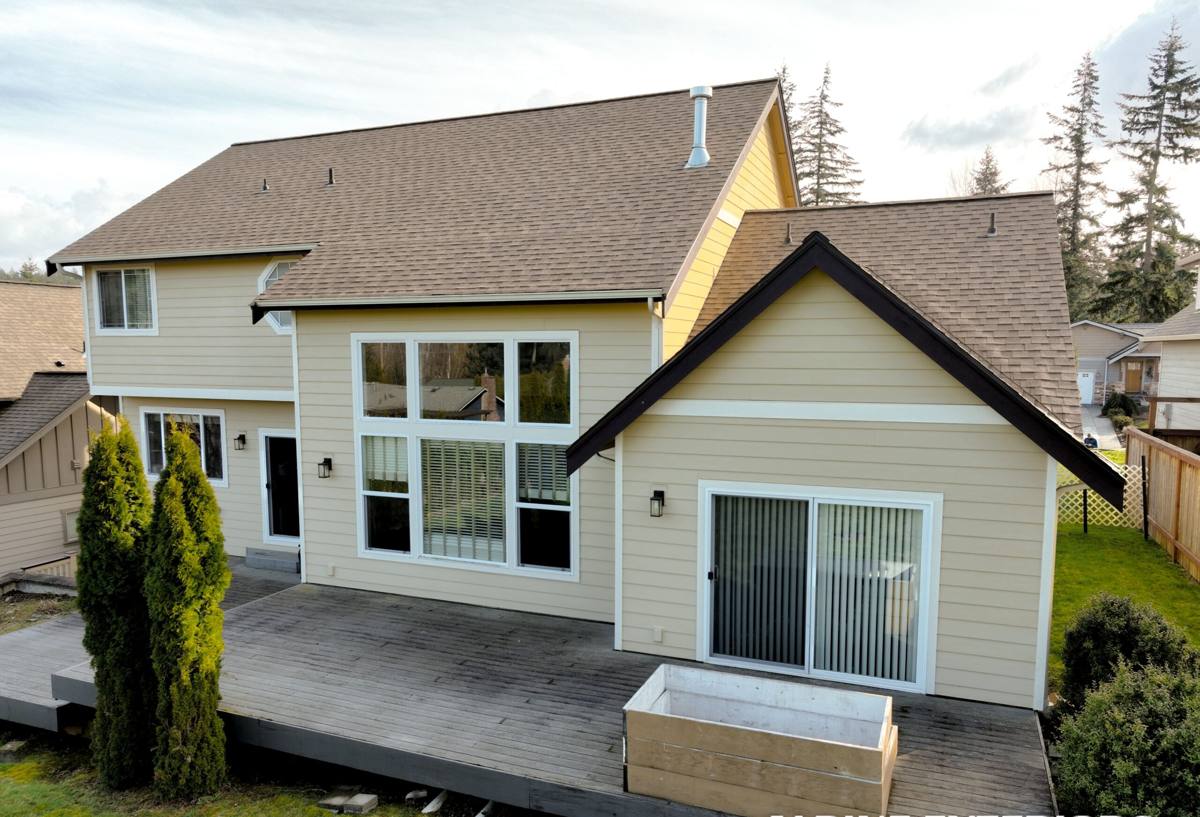
Signs a Silver Beach Roof Is Due for Replacement
From Inside the Attic
The attic tells the truth before the roofline does. Daylight visible through the roof boards, damp or discolored sheathing, rusted nail tips, or a musty smell all point to moisture getting past the roofing system. Rising heating bills without an obvious cause can also mean insulation has gotten wet or ventilation has failed.
From the Ground and Roofline
Outside, look for granule loss showing up in gutters, shingles that are curling, cupping, or cracking, dark streaking across the surface, and thick moss mats — especially on shaded, north-facing slopes or sections under tree cover, both common around Bellingham neighborhoods. Soft or spongy spots underfoot (visible to a roofer walking the surface) usually mean the decking underneath has already started to fail.
What a Correct Roof Replacement Actually Involves
Tear-Off and Deck Inspection
In a climate this wet, we don't recommend roofing over an existing layer. A full tear-off is the only way to actually see the decking, confirm it's dry and sound, and replace any boards that have soaked through or gone soft — problems that are common on older Silver Beach roofs where moss has been trapping moisture against the surface for years.
Underlayment and Water Barrier
Self-adhered, waterproof underlayment belongs at the eaves, in the valleys, and around any roof penetration, with synthetic underlayment across the rest of the field. This is the layer that protects the home if wind-driven rain gets past the roofing material itself, which happens more often here than in calmer climates.
Flashing Details
Chimneys, skylights, sidewalls, and roof-to-wall transitions are where most leaks actually start — not in the open field of shingles. Correct flashing means new metal, properly stepped and lapped, not caulk smeared over old flashing to save time.
Ventilation
Balanced intake and exhaust ventilation keeps the attic close to outdoor temperature and moisture levels. Without it, trapped moisture condenses on the underside of the deck, shortens the life of the new roof from the inside, and feeds the same moss and algae growth you're trying to get away from on the outside.
Choosing a Roofing Material for This Climate
There's no single "best" material — the right choice depends on budget, roof pitch, how much moss and shade the property deals with, and how long the homeowner plans to stay in the home. Here's how the common options compare for a wet, moss-prone climate like Bellingham's:
| Material | Moisture & Moss Behavior | Maintenance | Typical Lifespan |
|---|---|---|---|
| Asphalt composition shingle (architectural) | Good with proper underlayment and algae-resistant granules; needs decent ventilation | Low; occasional moss treatment | 25–30 years |
| Standing seam metal | Sheds water and moss very well due to smooth, sloped surface | Very low | 40–50+ years |
| Cedar shake | Attractive but absorbs moisture; needs consistent airflow underneath and regular upkeep to resist rot in a wet climate | High; periodic treatment and inspection | 20–30 years with upkeep |
| Synthetic/composite shingle | Resists moisture absorption well; performance varies by product line | Low | 30–50 years depending on product |
We'll walk through these trade-offs with you directly rather than pushing one product — the right call depends on your roof's pitch, sun exposure, and how much long-term maintenance you want to take on.
Moss and Algae: A Long-Season Problem
Moss doesn't just sit on top of a roof — its root structure holds moisture against the surface, which is exactly what shortens shingle life and eventually works its way into fasteners and decking. Shaded, tree-covered lots and north-facing slopes, both common throughout Bellingham, are the areas that need the most attention. During a replacement, we install zinc or copper strips near the ridge on moss-prone roofs, which release trace metals with every rain that inhibit regrowth, and we can spec algae-resistant shingle products where that fits the material choice. None of this replaces the basics — keeping gutters clear and doing an occasional gentle moss removal — but it meaningfully slows how fast moss comes back after a fresh roof goes on.
Our Roof Replacement Process
- On-site inspection and a written estimate that covers the whole job, not just materials
- Walkthrough of material and color options based on your roof's pitch, exposure, and budget
- Permitting handled before work starts, where required
- Full tear-off, with the decking inspected board by board before anything new goes down
- Underlayment, flashing, and ventilation installed to spec, not shortcuts
- New roofing material installed to manufacturer requirements to keep the warranty intact
- Full site cleanup, including a magnetic sweep for stray nails and staples
- Final walkthrough with you and warranty paperwork handed over
What Drives the Cost of a Roof Replacement
Every quote should be specific to your roof, but these are the factors that move the price up or down on most Silver Beach jobs:
| Cost Factor | Why It Matters |
|---|---|
| Roof size (in squares) | More surface area means more material and labor hours, the largest single driver of cost |
| Pitch and steepness | Steeper roofs take longer to work safely and often need extra fall-protection setup |
| Number of existing layers | Removing multiple old layers adds tear-off time and disposal cost |
| Decking condition | Rotten or soft boards found during tear-off need replacement before new roofing goes on |
| Material choice | Standing seam metal and premium shingle lines cost more upfront than standard asphalt |
| Roof complexity | Valleys, dormers, skylights, and multiple chimneys all add flashing and labor time |
As a broad range, a straightforward asphalt shingle replacement on an average single-family home typically runs in the low-to-mid five figures, with metal roofing and roofs needing significant decking repair running higher. The only way to get a real number is a physical inspection — we won't quote a roof from a photo or a square-footage guess.
Why Local Experience in Silver Beach Matters
A crew that regularly works Bellingham roofs knows which parts of a roof fail first in this climate — the north-facing valley that never fully dries out, the section shaded by mature trees that grows moss twice as fast as the rest of the roof, the flashing detail that's fine in a dry climate but marginal here. That knowledge shapes real decisions: where to add extra underlayment, where ventilation needs to be stronger than code minimum, and which materials are worth the extra upfront cost given how long they'll actually last locally. It also means we're close by if a warranty question comes up down the road, not a crew that worked the area once and moved on.
Questions to Ask Before You Hire
- Are you licensed, bonded, and insured in Washington State — and can you provide proof?
- Is the estimate itemized, covering tear-off, decking, underlayment, flashing, and ventilation separately?
- What happens to the price if decking repair is needed once tear-off starts?
- What's the manufacturer's warranty on materials, and what's your separate workmanship warranty?
- How do you handle site cleanup and nail sweep at the end of the job?
- Can you explain your ventilation plan for this specific roof, not just a generic answer?
- Do you have recent work you can point to in the Bellingham or Whatcom County area?
If you're weighing a roof replacement for a Silver Beach home, we're happy to take a look and give you a straight, no-pressure estimate — what your roof actually needs, what it'll cost, and why. There's a form below to get started.