 Bellingham Exterior
 Why Silver Beach Homes Are Hard on Siding
Silver Beach sits close enough to Bellingham Bay that homes here deal with a different set of conditions than siding a few miles inland has to handle. Salt-laden air off the water, wind-driven rain that hits walls at an angle instead of falling straight down, and a long, damp moss season all work on exterior cladding at the same time. None of these forces alone is unusual for Whatcom County. Together, on a waterfront-adjacent lot, they shorten the life of the wrong siding material and expose sloppy installation work faster than they would in a drier, more sheltered part of Bellingham.
Salt Air and Corrosion
Airborne salt doesn't just affect boats and railings. It settles on siding, trim, and — more importantly — on the fasteners, flashing, and hardware behind the siding. Over years, that steady exposure accelerates corrosion on anything not rated for it and can degrade certain coatings and adhesives faster than manufacturers' general climate ratings assume. Material choice and fastener choice both matter more here than they do a mile or two inland.
Driving Rain and Wind-Driven Moisture
Open water means open wind. Rain in Silver Beach doesn't always fall straight down — it gets pushed sideways into walls, seams, and trim joints. That kind of wind-driven rain finds every installation shortcut: a lap that's short an eighth of an inch, a butt joint that wasn't flashed, a nail driven too tight against the board. Siding that's merely "installed" rather than installed to a wet-climate standard will eventually let water behind the cladding, and once it's behind the siding, it's against your sheathing and framing.
Moss, Shade, and Tree Canopy
Much of Bellingham carries tree cover that keeps siding shaded and damp for long stretches of the fall and winter. Moss and algae take hold wherever a wall stays wet and shaded, and they hold moisture against the surface even after the rain stops. On some materials that's mostly cosmetic. On others, sustained dampness at the surface eventually works its way into the material itself.
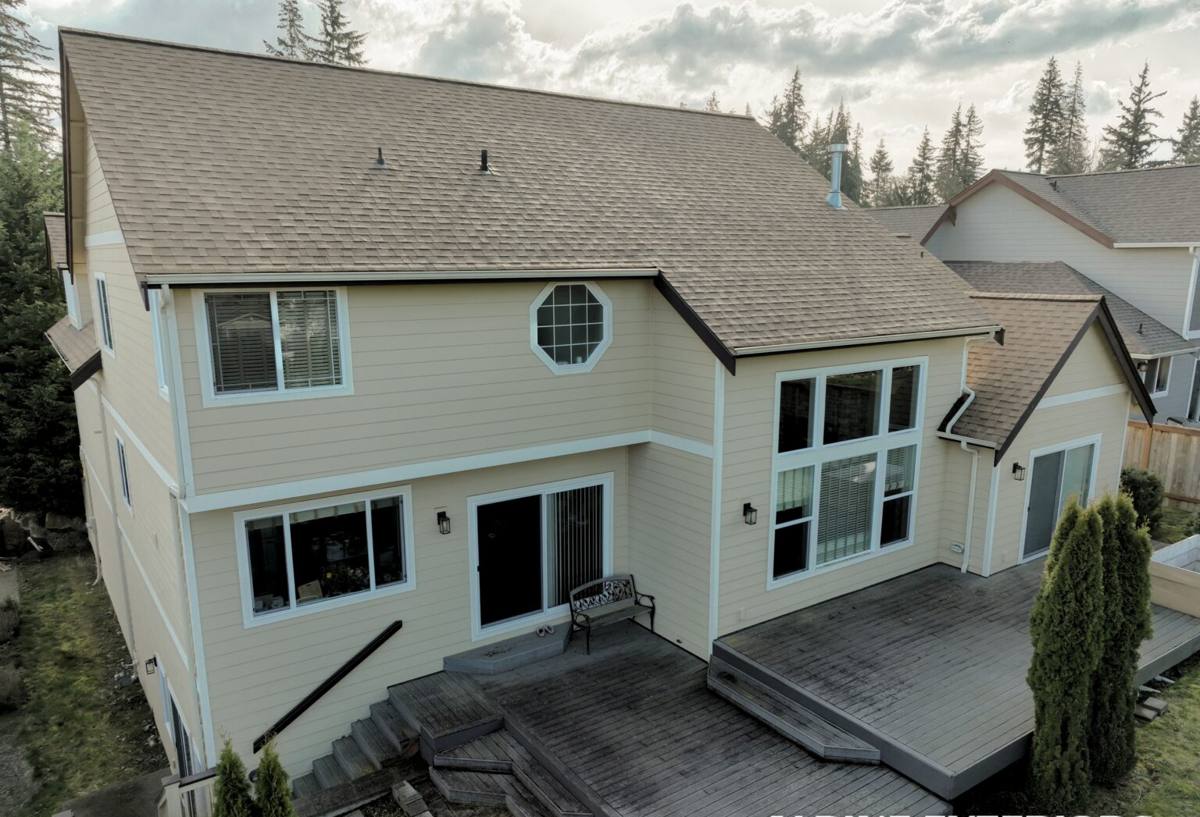
What Correct Siding Installation Actually Requires Here
"Correct installation" isn't a marketing phrase — it's a specific set of details that either get done right or don't. In a driving-rain, salt-air environment, skipping any of these is where premature failures start.
Weather-Resistive Barrier and Drainage Plane
Behind every board, there needs to be a continuous, correctly lapped weather-resistive barrier, and in most wet-climate installations, a drainage gap that lets any moisture that does get past the siding find its way back out instead of sitting against the sheathing. This layer does the real waterproofing work — the siding is the first line of defense, not the only one.
Flashing at Every Penetration
Windows, doors, hose bibs, light fixtures, vents — every penetration through the siding is a place water can enter if it isn't flashed correctly. In a wind-driven rain environment, flashing has to shed water outward at every one of these points, not just at the obvious ones like window heads.
Fastening, Clearances, and Joint Treatment
Fastener spacing, nail penetration depth, and gaps at butt joints all have manufacturer specifications for a reason — get them wrong and you create entry points for wind-driven moisture or stress points where the material can crack. Ground clearance and clearance from roof lines also matter more on a lot with heavy moisture exposure, since low clearance keeps the bottom courses wet longer.
Why We Install Only James Hardie Fiber Cement
We stopped installing vinyl, LP SmartSide, and primed wood siding years ago, and we don't install other fiber cement brands either. That's a deliberate standard, not a lack of options. James Hardie is the one product system we've found holds up to this specific combination of salt air, wind-driven rain, and shaded moss exposure without the trade-offs those other materials carry:
- Non-combustible core — fiber cement doesn't feed a fire the way wood-based or vinyl products can.
- HZ5 climate engineering — Hardie's HZ product lines are formulated for specific climate zones, including the wet Pacific Northwest, rather than a one-size-fits-all mix.
- ColorPlus factory finish — a baked-on finish applied under controlled conditions holds color and resists the fading and chalking that field-applied paint struggles with in a damp, shaded climate.
- Dimensional stability — fiber cement doesn't swell, warp, or rot the way wood-based products can when they stay damp for weeks at a time.
- Transferable warranty backing — a real manufacturer warranty structure that survives a change of ownership, which matters on a coastal property that may change hands.
None of this means other products are junk — vinyl is inexpensive and low-maintenance in the right setting, and LP SmartSide has genuine fans. But for the specific conditions on a lot like Silver Beach, we've made a professional call: we'd rather install one product system well than offer several and hope each one performs.
How the Main Siding Options Compare in This Climate
| Factor | Vinyl | LP SmartSide / Wood | James Hardie Fiber Cement |
|---|---|---|---|
| Salt air exposure | Can become brittle and fade faster near the water | Coatings and edges vulnerable to moisture intrusion | Cement composition unaffected by salt; factory finish resists fade |
| Wind-driven rain | Panels can flex and let water track behind at seams | Wood-based core swells if water reaches it | Rigid panels; correctly flashed joints shed water |
| Moss/shade tolerance | Moss grows on the surface; doesn't damage material | Sustained dampness risks rot at the core | Moss is a surface issue, cleanable, no core damage |
| Fire resistance | Combustible | Combustible | Non-combustible |
| Finish longevity | Color molded in, can chalk over time | Field-applied paint needs repainting cycles | Factory ColorPlus finish, long repaint interval |
Our Installation Process
The process doesn't change dramatically from house to house, but the details we pay closest attention to shift based on exposure. On a Silver Beach home, we spend extra time on the water-facing walls and any low-clearance or shaded sections.
- Assessment and tear-off. We inspect the sheathing once the old siding is off — this is where hidden moisture damage from years of a failing weather barrier shows up, and it needs to be dealt with before anything new goes on.
- Sheathing repair. Any soft, delaminated, or rotted sheathing gets replaced. Installing new siding over compromised sheathing just hides a problem instead of fixing it.
- Weather-resistive barrier installation. Correctly lapped, taped at seams, and integrated with window and door flashing.
- Flashing at all penetrations. Windows, doors, vents, and fixtures — every one gets flashed to direct water outward, not into the wall.
- James Hardie panel or lap installation to manufacturer fastening and clearance specifications, with attention to butt joint treatment on the sides that catch the most wind-driven rain.
- Trim, caulking, and final inspection to confirm every joint and penetration is sealed and the finished job matches the manufacturer's installation requirements — which is also what keeps the warranty valid.
Signs Your Current Siding Is Already Failing
Because moisture problems build behind the siding before they're visible on the surface, it helps to know what early warning signs actually look like:
- Soft or spongy spots when you press on the siding, especially near the bottom courses
- Paint that's peeling or bubbling in patches rather than evenly across the wall
- Persistent moss or algae that returns within weeks of cleaning
- Visible gaps, warping, or separation at butt joints and trim
- Rust streaking below fastener heads
- A musty smell near exterior walls inside the home
- Siding that flexes or feels loose when pushed
Maintenance in a Salt Air, Moss-Prone Setting
Even the right material benefits from some upkeep in this environment. A periodic gentle rinse to clear salt residue and moss growth, prompt attention to any caulking that's cracked or pulled away, and keeping vegetation trimmed back so walls get some airflow and sun all go a long way. Fiber cement lowers the maintenance burden significantly compared to wood-based products, but "low-maintenance" isn't "no-maintenance" on a waterfront-adjacent lot.
Why Hiring a Crew That Already Works Silver Beach Matters
Installation quality is what determines whether any siding material performs the way it's supposed to — and a crew that's already worked on homes exposed to Bellingham Bay's wind and salt air isn't guessing at flashing details or fastener choices for this exposure. We know which walls typically take the worst of the wind-driven rain, where moss tends to establish first, and where sheathing damage tends to hide on homes built to older standards. That local pattern recognition is part of what keeps a new installation from repeating the same failures the old siding had.
If you're weighing a siding replacement or just want an honest read on what your current siding's condition actually means, we're glad to take a look. Reach out for a free, no-pressure estimate — we'll walk the exterior with you and tell you straight what we see.