 Bellingham Exterior
 Siding Repair in South Hill: Why This Neighborhood Wears Its Siding Hard
South Hill sits up above downtown Bellingham with a mix of older homes, mature tree canopy, and enough elevation to catch weather coming off Bellingham Bay in ways that flatter, exposed neighborhoods don't. That combination is tough on exterior siding. Salt-tinged air off the water, long stretches of driving rain through fall and winter, and a moss season that can run half the year all work on siding surfaces and seams. Add in mature trees dropping needles and leaves into gutters and against wall lines, and you get the kind of slow, cumulative damage that homeowners often don't notice until it's already behind the siding, not just on top of it.
We repair siding on South Hill homes regularly, and the patterns are consistent: moisture finding its way in through failed caulk joints, moss and algae holding dampness against the wall longer than it should sit there, and older siding materials that were never built for this climate starting to show their age at the same time. A good repair job in this neighborhood isn't just about making a damaged section look better. It's about understanding why that section failed in the first place, so the same problem doesn't show up six feet away next winter.
What Actually Damages Siding in a Neighborhood Like This
Moisture That Doesn't Dry Out
Whatcom County's marine climate means siding here rarely gets the long dry stretches that let a wall system fully shed moisture. On hillside lots with tree cover, shaded north and east walls can stay damp for days after a storm. Over time, that moisture works into seams, nail penetrations, and any spot where caulk has shrunk or pulled away, and it starts affecting the wall assembly behind the siding, not just the surface.
Moss, Algae, and Trapped Moisture
Bellingham's moss season is long enough that it's practically a fifth season here. Moss and algae don't just look bad — they hold water against the siding surface far longer than bare siding would, which accelerates rot in wood-based products and can stain and degrade even more moisture-resistant materials if it's left to build up year after year.
Impact and Age-Related Wear
Falling branches, ladders, lawn equipment, and simple age all take a toll. Older siding materials — untreated wood, aging masonite, early-generation composites — were often not engineered for this level of sustained moisture exposure, and by the time cracking or soft spots show up on the surface, there's usually more going on underneath.
Signs Your South Hill Home Needs Siding Repair
Most siding problems give some warning before they become expensive. Homeowners who catch these early save real money on the repair.
- Soft or spongy spots when you press on the siding, especially near the bottom courses or window trim
- Visible cracking, warping, or buckling in one section while the rest of the wall looks fine
- Persistent moss or algae growth that comes back within weeks of cleaning
- Paint that's bubbling, peeling, or failing faster on one wall than the others
- Gaps opening up at seams, corners, or where siding meets trim, window, or door frames
- Discoloration or staining that tracks downward from a specific point, suggesting a leak above
- A musty smell or visible moisture inside on an exterior wall
Repair or Replace? How We Make That Call
Not every damaged section needs a full re-side, and not every "small" repair should stay small. The honest answer depends on how far the damage has spread and what's happening behind the siding, which is why we always inspect before quoting either option.
| Situation | Repair Usually Makes Sense | Replacement Is the Better Call |
|---|---|---|
| Damage location | Isolated to one or two boards or a small section | Spread across multiple walls or recurring in the same spots |
| Sheathing condition | Dry and solid once siding is removed | Soft, discolored, or showing rot when opened up |
| Siding material | Still structurally sound elsewhere on the home | Original material is failing broadly (common with older wood or early composite products) |
| Age of siding | Relatively recent, good condition overall | Nearing or past its practical service life |
| Underlying cause | One-time event — impact damage, a single failed seal | Chronic moisture pattern tied to the material itself |
We'll always tell you honestly which side of that table your home falls on. A targeted repair on a sound home saves you money. Recommending a full re-side on a home that only needed a repair would just be padding the invoice — that's not how we operate.
What a Correct Siding Repair Actually Involves
Diagnosis Before Demolition
We start by figuring out why the siding failed, not just where. That means checking behind the damaged section for moisture intrusion, inspecting the flashing at windows and rooflines nearby, and confirming whether the problem is isolated or part of a broader pattern across the wall.
Addressing the Cause, Not Just the Symptom
If failed flashing or a caulk gap let water in, that gets corrected as part of the repair — patching over the visible damage without fixing the entry point just guarantees a repeat visit. Any wet or compromised sheathing found underneath gets dried out and addressed before new material goes back on.
Matching Materials the Right Way
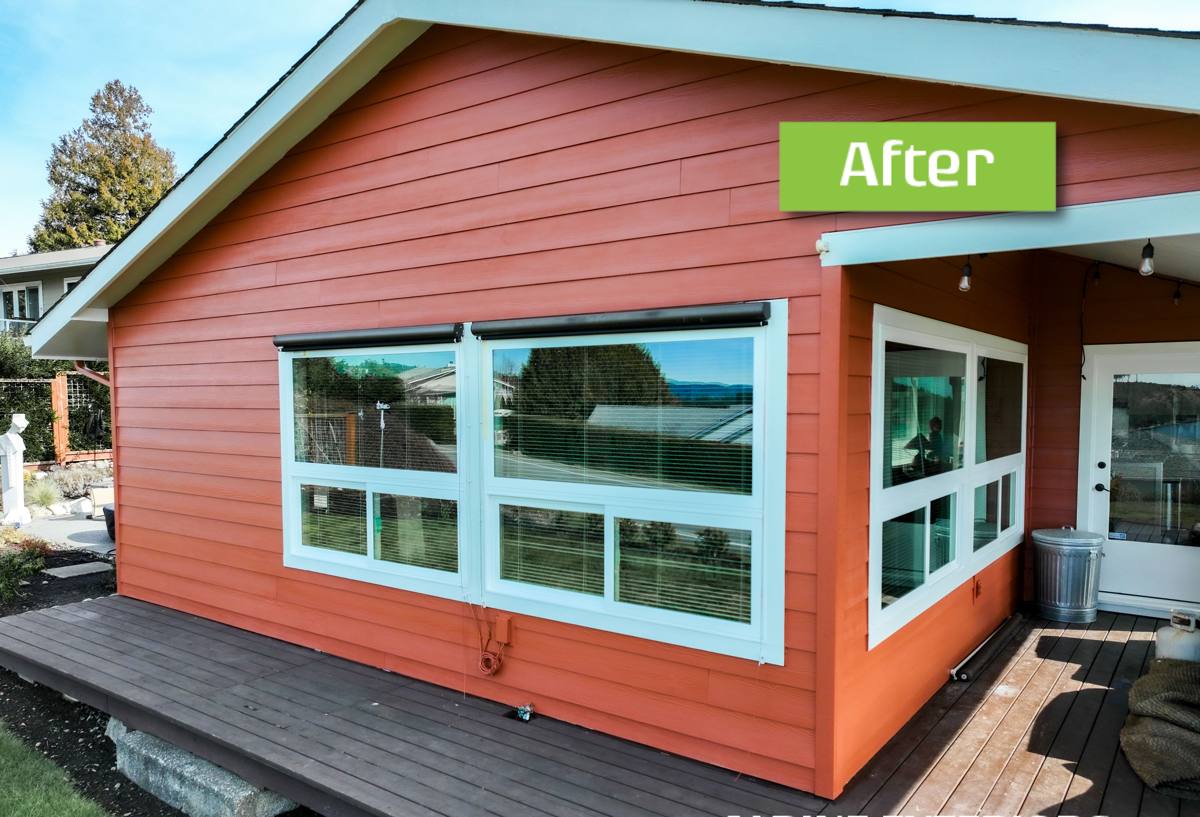
When we're patching an area on a home with existing James Hardie siding, we match profile, reveal, and color so the repair is close to invisible. When a repair on non-Hardie siding requires replacing more than a small patch — which happens often once we see what's behind the surface — we'll walk you through using James Hardie fiber cement for that section rather than sourcing discontinued or mismatched materials that won't perform the same way going forward.
Sealing and Finishing
Proper sealant at seams and penetrations, correct fastening, and attention to how water will shed off that section going forward — repairs that skip this step tend to fail again within a season or two, especially in a climate that doesn't give siding much time to dry out between storms.
Why We Standardize on James Hardie for Repair Sections
When a repair calls for new material rather than a patch pulled from leftover stock, we use James Hardie fiber cement. It's the reason we don't stock or install vinyl, LP SmartSide, Cemplank, Allura, primed spruce, or cedar as replacement material, even for a small repair section. Fiber cement doesn't feed moss and algae the way wood-based products can, it holds up to the moisture cycling that's constant in this climate, and Hardie's ColorPlus factory finish means a repaired section can be color-matched with a finish that's engineered to weather evenly rather than a field-mixed paint that ages differently than the rest of the wall. For a homeowner, that means a repair that still looks right in five years, not just on the day we finish.
We're not going to tell you your existing siding is garbage if it isn't — plenty of siding on South Hill homes is doing fine and just needs a targeted fix. But when the material itself is the reason for repeat failures, we'll say so plainly, and we'll tell you what we'd put there instead and why.
Our Repair Process
- On-site inspection — we look at the damaged area and the wall assembly behind it, not just the visible symptom
- Honest diagnosis — you get a plain-English explanation of what caused the damage and whether it's isolated
- Written scope and estimate — repair or replacement, with the reasoning laid out, no surprise upsells
- Correct the cause — flashing, sealant, or moisture issues get fixed as part of the job, not left for next time
- Match and finish — profile, reveal, and color matched as closely as the situation allows
- Final walk-through — so you can see exactly what was done and why
Why a Crew That Already Works South Hill Matters
South Hill's hillside lots, tree cover, and mix of home ages mean the same siding problem can have different causes than it would in a flatter, more exposed part of Bellingham. A crew that already works this neighborhood knows to check drainage patterns on sloped lots, understands how shaded walls hold moisture differently than sun-exposed ones, and has seen how the local moss and algae cycle plays out on the specific mix of siding materials common to older homes here. That local pattern recognition shortens the diagnosis and helps us catch related problems — a gutter dumping water against a wall, a flashing detail that's about to fail nearby — before they turn into the next repair call.
We serve homeowners across Bellingham and Whatcom County, and South Hill's particular combination of elevation, tree canopy, and proximity to the bay is one we see often enough to know what to look for the moment we start the inspection.
If you're dealing with damaged, aging, or moss-stained siding on a South Hill home, we're happy to take a look and give you a straight answer on what it needs. Request a free, no-pressure estimate using the form below and we'll walk the property with you.